
Selecting your first 88-key keyboard is a foundational step that shapes your entire piano-learning journey. For beginners in Singapore, navigating the vast array of digital instruments requires balancing authentic playability with the practical realities of urban living. A full-sized, 88-key keyboard provides the complete range of a traditional acoustic piano, ensuring you do not run out of keys as your repertoire expands. However, the market ranges from lightweight, unweighted controllers to heavy, furniture-style digital pianos, making a structured evaluation essential before you make an investment.
By focusing on key action, sound generation, connectivity, and total cost of ownership, you can find an instrument that supports proper finger technique while fitting seamlessly into your home. This guide outlines the critical technical specifications, physical testing methods, and practical budgeting steps to help you select a keyboard that will serve you reliably from your very first scales to advanced classical or contemporary pieces.
Determining If an 88-Key Weighted Keyboard Fits Your Goals
Before purchasing an instrument, you must clarify whether your primary goal is to emulate an acoustic piano or to explore modern music production. If you are following a classical curriculum, such as the ABRSM syllabus, a full-sized 88-key keyboard with weighted keys is non-negotiable. Classical pieces frequently utilize the extreme upper and lower registers of the instrument, and learning on anything less than 88 keys will eventually stall your progress. Furthermore, the physical resistance of weighted keys is necessary to build the finger strength, control, and muscle memory required to play on a traditional acoustic piano.
Products mentioned in this guide
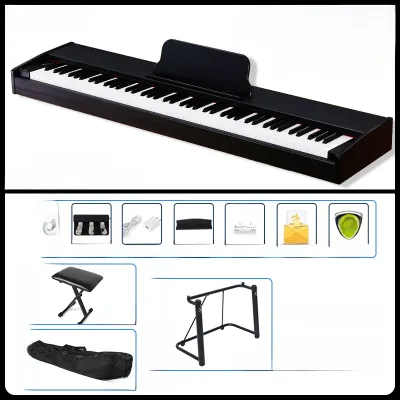
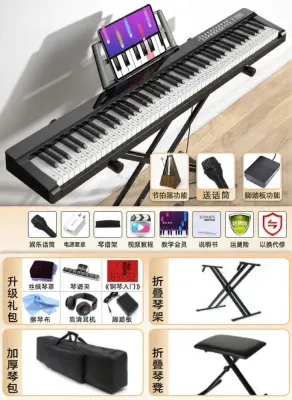
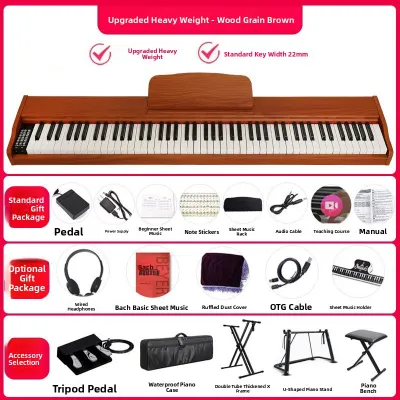
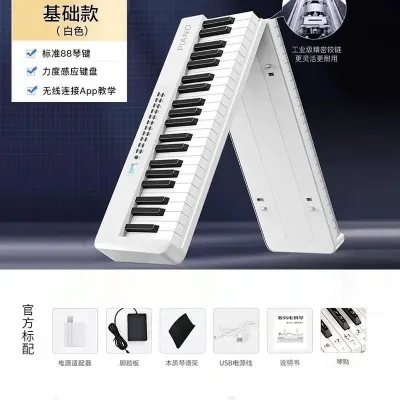
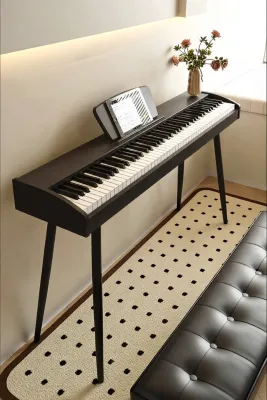
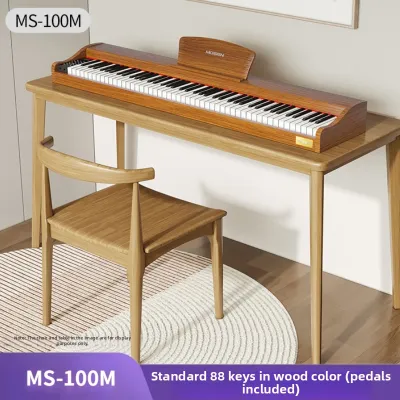
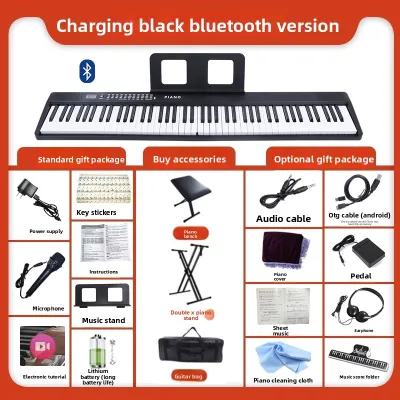

Prices are valid at publication and may change. Please refer to the product page for the latest price.
Conversely, if your interest lies primarily in electronic music production, synthesizer arrangements, or casual songwriting, a smaller 61-key or 73-key unweighted MIDI controller might suffice. These instruments prioritize portability and integration with software over acoustic realism. However, for anyone serious about learning proper piano technique, starting on an unweighted or short-keyed instrument can introduce poor habits, such as excessive finger tension or an inability to control dynamics, which are difficult to correct later.
Space is another critical factor, particularly in Singapore’s high-density housing environments like HDB flats and condominiums. An 88-key keyboard typically measures between 130 and 140 centimeters in width and 30 to 45 centimeters in depth. Before committing to a purchase, measure your designated practice area carefully, keeping in mind that you will also need space for a bench and proper seating posture. If space is exceptionally tight, a portable 88-key digital piano that can be stored away when not in use is a highly practical alternative to a bulky, fixed-cabinet model.
Evaluating Key Action and Touch Sensitivity Labels
The mechanism beneath the keys is the most critical component of a digital piano, as it directly determines how closely the instrument mimics the feel of an acoustic piano. Manufacturers use various proprietary terms to describe their keybeds, but these generally fall into three categories: fully weighted, semi-weighted, and synth-action. Fully weighted keys, often labeled as “hammer action” or “graded hammer action,” use actual mechanical weights or counterweights to simulate the physical hammers of an acoustic piano. Graded action means the keys feel heavier in the lower register and lighter in the treble, precisely like a traditional grand piano.

Semi-weighted keys use springs combined with light weights to provide some resistance, offering a compromise between portability and playability. While suitable for casual playing, they do not provide the authentic resistance needed for formal piano training. Synth-action keys are entirely spring-loaded and offer virtually no resistance, making them unsuitable for learning piano technique but excellent for rapid synthesizer leads or organ passages. When reading product specifications, look for terms like “escapement” or “let-off,” which emulate the subtle clicking sensation felt when pressing an acoustic piano key down very slowly.
When visiting a retail showroom in Singapore to test keyboards, perform a series of physical checks to evaluate the key action. First, play the keyboard with the power turned off; this allows you to hear the mechanical noise of the keybed without the distraction of the speaker output. A high-quality keybed should operate quietly, without loud clacking, thumping, or rattling sounds. Next, press a single key down slowly to feel its resistance curve; it should feel smooth and consistent throughout the downward stroke. Finally, gently wiggle a few keys from side to side to check for excessive lateral play, which can indicate poor build quality or premature wear on the key guide pins.
Checking Sound Engines, Polyphony, and Connectivity
A digital piano’s sound engine determines the quality and realism of the tones it produces. Most entry-level to mid-range keyboards rely on sampling, which involves playing back high-resolution audio recordings of premium acoustic grand pianos. When evaluating sound engines, pay close attention to the polyphony specification, which represents the maximum number of individual notes or voices the keyboard can sound simultaneously. For a beginner, a minimum of 64-note polyphony is acceptable, but 128-note or 256-note polyphony is highly recommended.
High polyphony is crucial when you begin using the sustain pedal. When you hold the pedal down, every note you play continues to ring out alongside its natural decay and harmonic resonances. If you play a rapid run of notes with the sustain pedal depressed on an instrument with low polyphony, older notes will be abruptly cut off to make room for new ones, resulting in a choppy, unnatural sound. Furthermore, stereo samples and layered sounds (such as piano combined with strings) consume multiple notes of polyphony for every single key pressed, quickly exhausting a limited polyphony count.
Connectivity options are equally vital for modern learning methods and home practice. Ensure the keyboard features a dedicated headphone output—ideally with both a 1/4-inch jack for professional studio headphones and a 3.5mm jack for standard consumer headphones. This allows for silent practice at any hour without disturbing family members or neighbors in close-quarters apartments. Additionally, verify the presence of a USB-to-Host port, which allows you to connect the keyboard to a computer, tablet, or smartphone. This connection is essential for using interactive learning applications, sheet music readers, or digital audio workstations (DAWs) for recording. Some modern keyboards also offer Bluetooth MIDI or Bluetooth Audio, allowing you to stream backing tracks through the keyboard’s speakers or connect wirelessly to educational software.
Budgeting for the Instrument and Essential Accessories
When planning your purchase, it is important to budget for the entire setup rather than just the keyboard itself. Many entry-level 88-key keyboards are sold as “slab” models, meaning the base price includes only the keyboard unit, a basic power adapter, and a plastic sustain switch. To create a stable and comfortable practice environment, you will need to allocate approximately 70% to 80% of your budget to the keyboard and the remaining 20% to 30% to essential structural accessories.
The most critical accessory is a sturdy stand. Cheap, single-braced X-stands are prone to wobbling, especially when playing dynamic passages on a heavy 88-key instrument. A double-braced X-stand, a heavy-duty Z-stand, or a dedicated wooden furniture stand designed specifically for your keyboard model will provide the stability needed to practice safely. Additionally, invest in an adjustable bench to ensure you can maintain the correct forearm alignment relative to the keybed, which prevents wrist strain and fatigue. Replace the basic plastic sustain switch that comes in the box with a proper, weighted metal sustain pedal that resembles an acoustic piano pedal and supports half-damper expression.
In Singapore, total costs can be influenced by local shipping fees, GST, and import duties if you choose to purchase from overseas online marketplaces. While importing an instrument might occasionally seem cheaper upfront, shipping a heavy, bulky package internationally carries a high risk of damage and can incur significant freight charges. Budgeting for a local purchase from an authorized dealer often proves more economical when you factor in free local delivery, professional assembly services, and the peace of mind that comes with local customer support.
Building a Conditional Shortlist Based on Your Space and Use
To narrow down the vast market of 88-key keyboards, construct a personalized shortlist based on your specific living space and learning path. If you are a classical student committed to long-term study, your shortlist should prioritize instruments with graded hammer action, triple-pedal unit compatibility, and a dedicated wooden stand. These models are heavier and less portable, but they offer the most authentic acoustic piano experience and look like a piece of furniture in your living room.
If you are a casual hobbyist, a student living in a shared space, or a musician who needs to transport the instrument, prioritize portable digital pianos. Look for models that weigh under 15 kilograms, feature slim profiles, and offer optional gig bags with backpack straps or wheels. These portable models can be easily set up on a folding stand for practice sessions and stored in a closet or under a bed when you need to reclaim floor space in your apartment.
Once you have identified three or four candidate models, download their official user manuals from the manufacturers’ websites. Do not rely solely on retail product descriptions, which can sometimes be vague or misleading. Reviewing the actual user manual allows you to confirm crucial details, such as whether the USB port supports both MIDI and audio transfer, the exact dimensions and weight of the unit, the specific power requirements, and the step-by-step process for adjusting touch sensitivity or transpose settings.
Verifying Warranties and Bundle Contents Before Checkout
Before finalizing your purchase, take steps to protect your investment by verifying the seller’s credentials and the exact terms of the transaction. Always check if the seller is an authorized dealer for the brand you are purchasing. In Singapore, buying from an authorized dealer ensures that your instrument is covered by an official local warranty, which typically ranges from one to three years. This warranty is vital for digital pianos, as repairing a faulty keybed sensor or an internal mainboard can be highly expensive if you have to pay out of pocket.
Be cautious of parallel imports sold on online marketplaces. While these units may be priced lower, they often come with seller-backed warranties rather than official manufacturer warranties. If the seller goes out of business, you may be left with no recourse for repairs. Furthermore, parallel imports may be packaged with power adapters designed for foreign electrical outlets, requiring you to use unsafe adapters or purchase a separate, compatible local power supply that matches Singapore’s 230V, 50Hz electrical grid and Type G plug standard.
Finally, scrutinize the bundle descriptions carefully before clicking the checkout button. Retailers frequently offer “starter bundles” that package the keyboard with stands, benches, headphones, and bag accessories. Calculate the individual costs of these bundled items to ensure you are receiving genuine value rather than low-quality, generic accessories that you will need to replace within a few months. Confirm that the package explicitly includes essential items like the music rest, the power adapter, and a functional sustain pedal, so you can begin playing the moment your new instrument arrives.
Frequently Asked Questions (FAQ)
Do I need a dedicated amplifier for home practice?
For standard home practice in a typical Singapore apartment, you do not need a dedicated external amplifier. Most entry-level 88-key digital pianos come equipped with built-in stereo speakers, typically ranging from 6 to 15 watts per channel, which are more than adequate for filling a small to medium-sized room with clear sound. In fact, because of close-quarters living, you will likely find yourself using headphones for a significant portion of your practice time to avoid disturbing others. An external amplifier or dedicated studio monitors are only necessary if you plan to perform in larger venues, play alongside loud acoustic instruments, or require high-fidelity audio monitoring for music production and recording purposes.
How often should I clean and maintain the keys?
You should clean your keyboard’s keys at least once a week to prevent the buildup of dust, skin oils, and sweat, which can make the keys slippery and eventually seep into the keybed sensors. To clean the keys safely, use a clean, dry microfiber cloth to gently wipe away surface dust. For stubborn dirt or finger marks, slightly dampen the microfiber cloth with water—ensuring it is damp, not wet—and gently wipe the keys from back to front, avoiding any moisture dripping between the keys. Never use harsh household chemicals, alcohol-based sanitizers, or abrasive cleaners, as these can strip away the specialized textured coatings on synthetic ivory or ebony keys and degrade the plastic over time. Additionally, always cover your keyboard with a fitted dust cover when it is not in use to protect the internal electronics from Singapore’s humid and dusty tropical environment.

Community discussion
Share your experience or ask a question. Comments are reviewed before publication.