
Embarking on your musical journey with a full-size digital piano is one of the most rewarding decisions you can make. For beginners in Singapore, selecting the right 88-key keyboard involves navigating a diverse market of technical specifications, physical form factors, and local retail options. A proper instrument does not merely produce sound; it translates your physical touch into expressive dynamics, builds correct finger strength, and fits seamlessly into your living space. By focusing on key action, sound generation, and practical connectivity, you can secure an instrument that supports your progress from the first scale to complex classical or contemporary pieces.
Why Start with an 88-Key Keyboard?
A standard acoustic piano features exactly 88 keys, spanning over seven octaves. While compact keyboards with 61 or 76 keys are highly portable and tempting for beginners, they quickly impose limitations. Classical repertoire, from basic Bach pieces to advanced Beethoven sonatas, frequently utilizes the extreme upper and lower registers of the instrument. Learning on a smaller keyboard forces you to transpose octaves or skip notes entirely, which disrupts your spatial awareness of the keyboard layout. Starting with a full-size 88-key instrument ensures that your muscle memory develops accurately, allowing your hands to instinctively gauge distances across the entire keybed.
In Singapore, where residential spaces like Housing & Development Board (HDB) flats and condominiums require careful spatial planning, the physical footprint of an 88-key keyboard is a vital consideration. A typical 88-key digital piano measures approximately 130 to 140 centimeters in length. While this requires a dedicated wall space or a sturdy stand, modern slimline designs are remarkably compact compared to traditional acoustic upright pianos. They offer the full range of keys without the massive weight, high maintenance costs, or environmental sensitivity of acoustic instruments.
Products mentioned in this guide
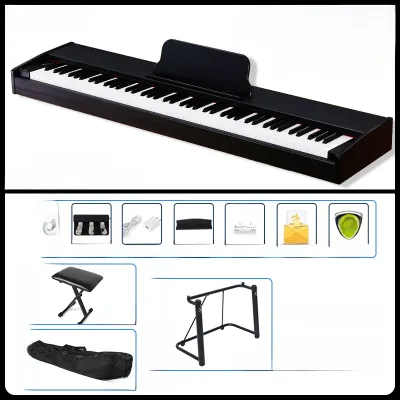
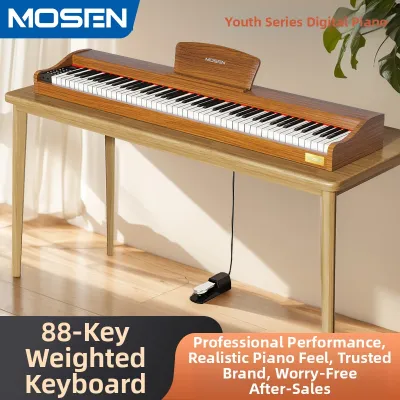
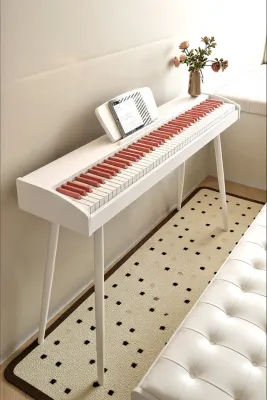
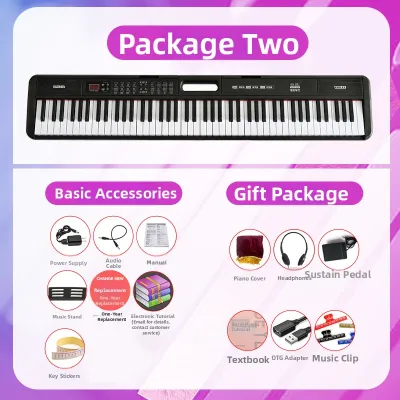
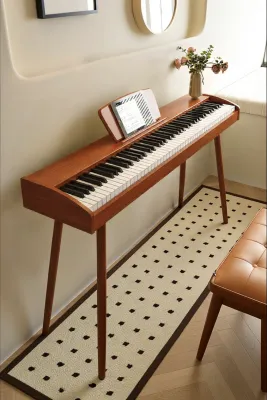
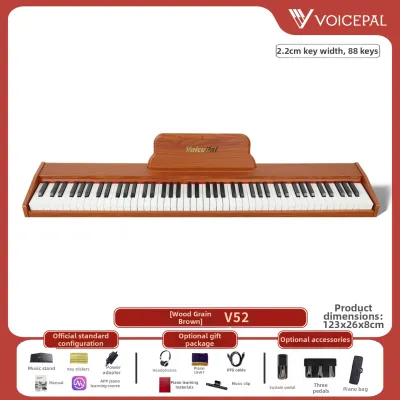
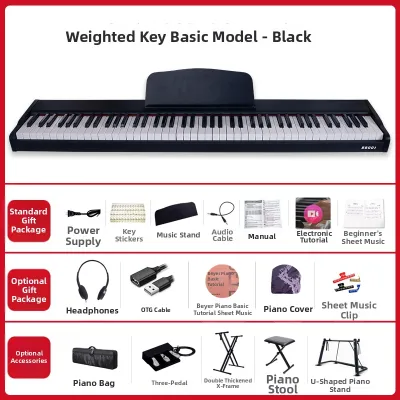
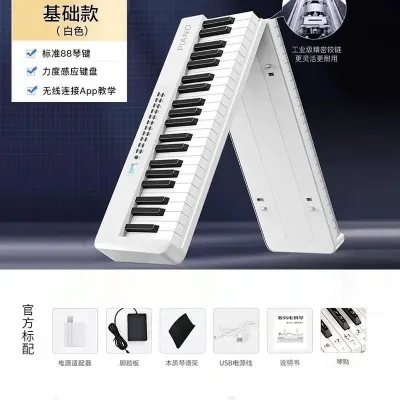
Prices are valid at publication and may change. Please refer to the product page for the latest price.
Smaller keyboards do have their place, particularly for those focusing strictly on electronic music production, synthesizer programming, or basic MIDI sequencing within a compact home studio. If your primary goal is to learn traditional piano technique, read sheet music, and play expressive arrangements, a full-size keyboard is indispensable. Investing in 88 keys from the outset saves you the cost and inconvenience of upgrading your instrument within the first year of study.
Core Specifications to Evaluate
To make an informed purchase, you must look beyond aesthetic appeal and brand names. Evaluating a digital piano requires a basic understanding of how the instrument mimics its acoustic counterpart. By analyzing the physical key mechanism, the internal sound engine, and the available digital integration features, you can objectively compare different models and find the best fit for your learning style.

Key Action and Touch Sensitivity
The physical feel of the keys is the single most critical factor in your development as a pianist. Acoustic pianos use a complex system of wooden keys, felt hammers, and levers to strike strings. To replicate this resistance, digital keyboards employ various key actions. Non-weighted keys, often found on budget keyboards, offer almost no resistance and spring back instantly, which can lead to weak finger technique. Semi-weighted keys use springs and light weights to add some resistance, but they still fall short of the authentic feel required for serious practice.
For genuine skill development, beginners should prioritize fully weighted keys, commonly referred to as hammer action or graded hammer action. Graded action replicates the natural characteristics of an acoustic piano, where the keys in the lower register feel slightly heavier than those in the treble. This resistance forces your fingers to exert controlled pressure, building the necessary hand strength, dexterity, and control over dynamics (playing softly versus loudly).
When evaluating keyboards in person, pay close attention to the physical response of the keys. Press a key slowly to feel if there is a subtle resistance point, which mimics the escapement mechanism of an acoustic grand piano. Listen to the mechanical noise of the keys when the volume is turned down; high-quality keybeds operate quietly without excessive clacking or thumping. Additionally, check if the key surfaces have a textured finish, such as synthetic ivory or ebony, which prevents your fingers from slipping during long practice sessions in Singapore’s warm climate.
Sound Quality and Polyphony
A digital piano produces sound by playing back high-resolution audio recordings (samples) of world-class acoustic grand pianos. The quality of the sound engine determines how realistic and inspiring your practice sessions will be. Basic keyboards often use short, compressed samples that sound artificial and decay abruptly. High-quality instruments utilize multi-layered sampling, where different recordings are triggered depending on how hard you strike the key, capturing the rich tonal variations of an acoustic instrument.
Another critical technical specification is polyphony, which refers to the maximum number of individual notes or voices the keyboard can produce simultaneously. When you play a chord while holding down the sustain pedal, every note continues to ring out. If your keyboard has low polyphony, older notes will be abruptly cut off to make room for new ones. For beginners, a minimum of 64-note polyphony is acceptable, but 128-note or 256-note polyphony is highly recommended to accommodate complex classical pieces and expressive pedaling without any dropouts.
The built-in speaker system also plays a major role in sound delivery. Consider the wattage and placement of the speakers. For home practice in a typical living room, a stereo speaker system with at least 6 to 12 watts per channel provides sufficient volume and clarity. If the speakers are downward-facing, the sound may become muffled depending on the surface of your floor or stand. Ensure the instrument delivers a balanced tone across all registers, with clear treble and resonant, muddy-free bass.
Connectivity and Learning Features
Modern digital pianos offer a suite of connectivity options that can significantly enhance your learning experience. A USB-to-Host port (or MIDI connectivity) is essential for connecting your keyboard to a computer, tablet, or smartphone. This allows you to interact with educational software, interactive sheet music apps, and Digital Audio Workstations (DAWs) for recording and music production. Some contemporary models also feature integrated Bluetooth MIDI or Bluetooth Audio, enabling wireless connection to smart devices for playing along with backing tracks or instructional videos.
For dedicated practice, certain built-in features are incredibly practical. A built-in metronome is a fundamental tool for developing a steady sense of rhythm and timing. Dual headphone jacks are highly beneficial for lessons, allowing both you and your teacher to listen to the performance simultaneously without disturbing others. Additionally, look for basic recording functions that let you record your practice sessions and play them back; listening to your own playing is one of the most effective ways to identify rhythm errors and uneven dynamics.
Building Your Shortlist: Entry-Level Categories to Explore
When organizing your search, it helps to categorize 88-key instruments into two primary design formats: portable slab keyboards and console-style digital pianos. Portable slab keyboards are lightweight, compact, and designed to be placed on portable stands or desks. They typically focus on delivering solid hammer action and core piano sounds without extra cabinet weight. These models are highly versatile, making them ideal for students who need to store the keyboard when not in use or transport it to different locations.
In contrast, console-style or cabinet digital pianos are integrated into a fixed wooden frame. They are designed to look like traditional furniture and often feature built-in sliding key covers, integrated music rests, and a complete triple-pedal board (sustain, soft, and sostenuto). While they occupy a permanent space in your home and are heavier to move, they offer superior stability, larger speaker enclosures for richer sound, and a more authentic aesthetic that complements home decor.
As you build your shortlist, it is crucial to verify the exact specifications and regional compatibility of your chosen model. Always check the manufacturer’s official website or consult authorized local distributors in Singapore to confirm that the product comes with a local warranty. Ensure the power adapter is compatible with Singapore’s Type G electrical outlets and standard 230V voltage. Be cautious of parallel imports purchased from unauthorized online sellers, as these may lack local warranty coverage and could feature incompatible power plugs or voltage requirements.
Where to Test and Purchase in Singapore
While online research provides valuable technical data, nothing replaces the experience of physically testing a keyboard before buying. Singapore hosts several specialized music retail hubs where you can compare different brands side by side. Locations such as the Bras Basah Complex and Peninsula Plaza are renowned for housing established music schools and instrument retailers. Visiting these physical showrooms allows you to feel the weight of the keys, hear the speaker output in a real room, and assess the overall build quality of various models.
When purchasing, you have the choice between authorized brick-and-mortar dealers and official brand stores on major e-commerce platforms. Buying from an authorized physical store offers the advantage of personalized advice from sales specialists, immediate stock verification, and sometimes the opportunity to negotiate package deals. If you prefer the convenience of online shopping, stick to the official flagship stores of recognized brands on reputable online marketplaces to ensure you receive genuine products with valid local warranties.
Before finalizing your purchase, carefully review what accessories are included in the price. Some entry-level keyboards are sold as bare units, requiring you to purchase a stand, bench, and sustain pedal separately. Other retailers offer comprehensive bundle packages that include these essentials. Additionally, inquire about delivery and assembly services. A console-style digital piano can be heavy and challenging to assemble; paying for professional delivery and on-site installation can save time and prevent accidental damage to your new instrument.
Essential Accessories and Setup Considerations
To ensure a comfortable and ergonomically correct practice environment, you must budget for a few essential accessories. A sturdy, height-adjustable stand is critical for supporting the weight of an 88-key keyboard. Avoid cheap, flimsy single-X stands that wobble when you play dynamically; instead, opt for double-braced X-stands, Z-stands, or dedicated wooden stands designed specifically for your keyboard model. Pair this with a properly padded, height-adjustable bench to ensure your elbows are at the correct height relative to the keys, which prevents wrist strain and fatigue.
The sustain pedal is another accessory where quality matters. Many entry-level keyboards include a small, plastic foot-switch that easily slides across the floor and feels unrealistic. Upgrading to a heavy, metal, piano-style sustain pedal with a rubberized base provides a much more authentic pedaling experience and stays firmly in place during practice.
Proper placement of your digital piano within your home is essential for its longevity. Singapore’s tropical climate features high humidity levels, which can affect the internal electronic components and physical key mechanisms over time. Position your keyboard away from open windows where rain or direct sunlight could reach it, and avoid placing it directly under air conditioning vents where rapid temperature changes can cause condensation. Ensure all cables are neatly routed and secured to prevent tripping hazards, and plug the instrument into a stable, surge-protected power outlet to safeguard its digital components.
Frequently Asked Questions (FAQ)
Do I need an 88-key keyboard if I only want to play pop songs?
While many popular songs can technically be played within a 61-key or 76-key range, starting with an 88-key keyboard is still highly recommended. Modern pop arrangements often feature lush, wide-ranging piano accompaniments that utilize deep bass notes and high-register highlights. Furthermore, learning on a full-size keyboard ensures you do not develop artificial boundaries in your hand placement. Having the full 88 keys prevents the frustration of running out of notes as your skills progress, saving you from having to purchase a replacement instrument later.
Can I use a keyboard stand instead of a fixed furniture base?
Yes, a portable keyboard stand is an excellent, space-saving alternative to a fixed wooden furniture base. Double-braced X-stands or heavy-duty Z-stands offer excellent stability and can be folded away when you need to clear floor space in smaller apartments. However, if you plan to practice classical pieces that require intensive pedaling, a fixed furniture base is superior. It prevents the keyboard from shifting or wobbling during energetic play and allows for the secure installation of a traditional triple-pedal unit.
Is it safe to buy a used 88-key keyboard online?
Buying a pre-owned digital piano can be a cost-effective option, but it requires careful physical inspection. When evaluating a used instrument, turn it on and play every single one of the 88 keys individually to check for sticking, uneven resistance, or dead notes that produce no sound. Test all physical buttons, sliders, and connection ports—especially the headphone jacks and power input—to ensure they function without static or intermittent connection. Finally, inspect the power adapter for frayed wires and ask the seller about the instrument’s exposure to humidity or direct sunlight.

Community discussion
Share your experience or ask a question. Comments are reviewed before publication.