
Selecting your first piano is a significant milestone that shapes your musical journey, budget, and living space. In Singapore, this decision requires balancing personal learning goals with practical realities, such as high tropical humidity and apartment living constraints. By understanding how to evaluate key technical specifications, assess local dealer support, and match an instrument to your specific household environment, you can make an investment that supports proper skill development for years to come.
Rather than searching for a single universal brand, focus on finding an instrument that meets established industry standards for touch and tone. The right choice depends on whether you commit to a traditional acoustic upright or opt for the convenience of a modern digital model. Both paths offer reliable entry-level options, provided you know how to verify their quality and local warranty terms before purchasing.
Acoustic vs. Digital: Defining Your Core Requirement
The choice between an acoustic and a digital piano is the first and most critical decision any beginner must make. In Singapore, where high-density housing like Housing & Development Board (HDB) flats and condominiums are the norm, space and noise are primary considerations. Acoustic pianos produce sound through physical hammers striking strings, which creates a rich, resonant tone but cannot be silenced. If you live in close proximity to neighbors or plan to practice late at night, a digital piano with a headphone jack offers an invaluable advantage.
Products mentioned in this guide
![Casio CT-S1 Digital Keyboard [FREE X-STAND] Portable 61 Keys Musical Instrument for Beginners](https://img.lazcdn.com/g/p/70d2952777c0faa1d5c43d84321fe320.jpg_400x400q80.jpg_.webp)
![Yamaha PSR-E283 Portable Digital Keyboard ⚫ Black 61 Keys PSRE283 AC Power Adapter PSR E283 Kids Musical Electronic Electric Instrument Absolute Piano The Music Works Store [LIMITED STOCK]](https://img.lazcdn.com/g/p/16a0f813c10e32e5e036a774ae933031.jpg_400x400q80.jpg_.webp)
![[✅SG Ready Stock] 61 Key High Quality Music Keyboard Piano kids toys new player beginner Electric Piano](https://img.lazcdn.com/g/p/1f34b80fc1c4ffa462a06ed0ad2ca2fd.jpg_400x400q80.jpg_.webp)

Prices are valid at publication and may change. Please refer to the product page for the latest price.
Maintenance is another area where these two categories diverge significantly. Acoustic pianos are crafted from wood and metal, making them highly sensitive to environmental changes. To maintain their structural integrity and pitch, they require regular tuning by a professional technician, typically once or twice a year. Digital pianos, conversely, rely on electronic sound samples or modeling, meaning they never require tuning and demand minimal upkeep beyond basic dust protection.
From a financial perspective, the initial budget and long-term value retention differ substantially between the two types. Entry-level digital pianos are generally much more affordable, making them an excellent choice for testing a beginner’s long-term interest without a massive upfront financial commitment. Acoustic pianos require a larger initial investment, but they tend to retain their value better over decades and can last generations if properly maintained. Digital instruments, like most consumer electronics, gradually lose value as newer sound technology and processing chips enter the market.
Ultimately, your choice should align with your living situation and practice habits. If you have a dedicated space where ambient sound is not an issue and you are prepared for ongoing maintenance, an acoustic piano provides an unmatched tactile and acoustic experience. If you require portability, volume control, and a lower entry cost, a digital piano serves as a highly practical and effective tool for a beginner’s developmental years.
Key Specifications to Evaluate Across Any Brand
Regardless of the brand name on the fallboard, certain technical baselines are non-negotiable for a beginner’s proper skill development. The most fundamental requirement is a full-sized keyboard containing 88 keys. Some compact keyboards feature 61 or 76 keys, but these are insufficient for standard classical repertoire and will quickly limit a student’s progress. Starting with a full-sized keyboard ensures that the physical distance between octaves matches what the student will encounter during exams or public performances.

For digital pianos, the key action must simulate the physical resistance of an acoustic instrument. Look for specifications labeled as “weighted,” “fully weighted,” or “hammer-action.” These mechanisms use actual physical weights or levers inside the keyboard to mimic the feel of hammers striking strings. This resistance is crucial for building finger strength, control, and dynamic expression; non-weighted or semi-weighted keys can lead to poor hand posture and a lack of control when transitioning to an acoustic piano.
Another critical digital specification is polyphony, which refers to the maximum number of individual notes or tones the piano can produce simultaneously. When you play a chord with the sustain pedal pressed, each note continues to sound, consuming polyphony. For a beginner, a minimum of 64-note polyphony is acceptable, but 128-note or 256-note polyphony is highly recommended to prevent notes from cutting off abruptly during complex passages or expressive pedaling.
When evaluating acoustic pianos, the focus shifts to mechanical responsiveness and material quality. Inspect the action mechanism to ensure the keys return to their resting position quickly and evenly without sticking. The soundboard, which projects the sound, should ideally be made of solid spruce rather than laminated wood, as solid wood provides superior resonance and tonal depth. Additionally, examine the tuning pins and the cast iron plate; these components must be robust enough to hold high string tension over long periods.
Assessing Brand Reliability and Local Support in Singapore
When purchasing a piano in Singapore, the strength of the local distributor network is just as important as the manufacturer’s global reputation. Buying through an authorized local distributor ensures that your instrument is covered by a valid manufacturer’s warranty. Parallel-imported instruments, while sometimes offered at a discount, often lack local warranty coverage, leaving you responsible for expensive repairs if a component fails.
After-sales support is particularly vital for acoustic pianos, which require specialized care. Before choosing a brand, verify that the local dealer employs qualified, factory-trained technicians who understand the specific mechanical nuances of that brand. Access to genuine replacement parts, such as original hammer felts or key tops, is essential for maintaining the instrument’s performance and resale value over time.
Singapore’s tropical climate, characterized by high temperatures and relative humidity levels that frequently exceed 80 percent, presents a unique challenge for musical instruments. Excessive moisture can cause wooden acoustic components to swell, keys to stick, and strings to rust. When evaluating brands, ask about climate resilience features, such as tropicalized wood treatments or specialized soundboard finishes designed to withstand high humidity.
For acoustic pianos kept in Singapore, installing a dedicated moisture control system is standard practice. Many local dealers include a low-wattage internal heater rod with the purchase, which runs continuously to keep the interior of the piano dry. For digital pianos, while they are less susceptible to humidity-induced tuning issues, high moisture can still damage internal circuit boards, making a well-ventilated room or a protective dust cover highly beneficial.
Building Your Shortlist: A Conditional Selection Framework
To simplify your search, it helps to categorize your options into distinct scenarios based on your household budget, available space, and long-term musical goals. By identifying which scenario best describes your situation, you can narrow down the vast market of piano brands to a manageable shortlist of models to test in person.
Scenario A: Strict Budget and Limited Space
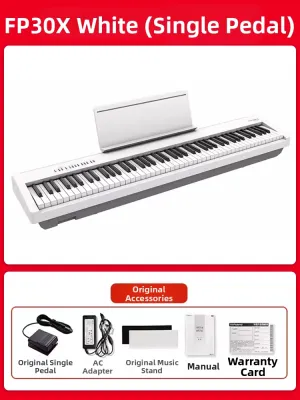
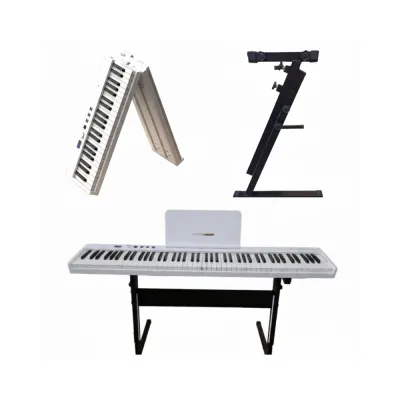
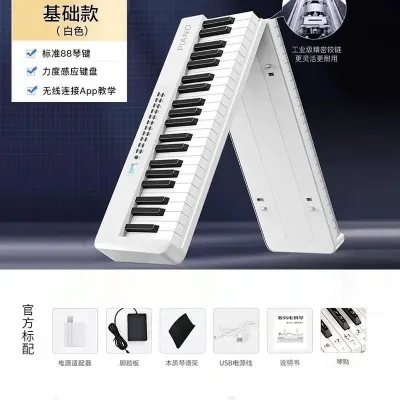
If you are working with limited floor space and want to keep your initial investment low, focus on compact, portable digital pianos. Look for entry-level models from established digital manufacturers that offer a basic keyboard package, including a sustain pedal and a music rest. These instruments can be placed on a sturdy metal stand and stored away when not in use, making them ideal for smaller study rooms or shared living spaces.
Scenario B: Long-Term Acoustic Commitment
If you are certain of the student’s commitment and want the authentic touch and resonance of a traditional instrument, target entry-level acoustic upright pianos. Focus on established manufacturers known for producing durable institutional models. These pianos are built to withstand hours of daily practice and are highly favored by local music schools, ensuring a reliable supply of spare parts and a stable resale market should you choose to upgrade later.
Scenario C: Hybrid Needs and Silent Practice
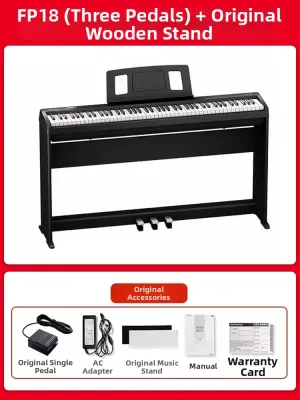
If you want the premium touch of an acoustic-style action but require the volume control of a digital instrument, consider high-end digital console pianos or hybrid models. These instruments feature elegant wooden cabinets that resemble traditional upright pianos, advanced multi-speaker sound systems, and sophisticated key actions that closely replicate the physical escapement of an acoustic grand. They allow for silent practice via headphones while serving as an attractive piece of furniture in your home.
Regardless of the scenario that fits your needs, always cross-reference the marketing claims made by sales representatives with the manufacturer’s official user manuals. These manuals, which are easily accessible online, provide objective technical specifications, power consumption details, and exact dimensions. Comparing these specifications across different brands prevents you from paying a premium for proprietary marketing terms that offer little practical benefit to a beginner.
Pre-Purchase Inspection and Dealer Verification
Before finalizing your purchase, a hands-on inspection at a local showroom is essential. Even if you are a complete beginner, you can perform basic physical tests to ensure the instrument is free from manufacturing defects. Press every single key individually from left to right; the resistance should feel consistent across the entire keyboard, and no key should stick, squeak, or feel noticeably lighter than its neighbors.
Test the pedals to ensure they operate smoothly without mechanical clicking sounds. On a digital piano, plug in a pair of high-quality headphones to verify that the audio output is clean, balanced between the left and right channels, and free from background hiss or static. On an acoustic piano, play a few loud chords to listen for any unwanted vibrations or buzzing sounds coming from the soundboard or the cabinet panels.
Always clarify exactly what accessories are included in the purchase price. A complete beginner package should ideally include a height-adjustable bench to promote proper playing posture, a sturdy music stand, and a dust cover. For digital pianos, confirm whether the power adapter and a sustain pedal are included in the box, or if they must be purchased separately.
Finally, obtain written confirmation of the delivery logistics and after-sales policies. In Singapore, professional delivery is crucial, especially for heavy acoustic pianos that require specialized transport equipment and careful handling up stairs or into lifts. Confirm whether the dealer provides professional assembly services upon delivery, and read the fine print regarding their return, exchange, and warranty claim procedures to protect your investment.
Frequently Asked Questions (FAQ)
Do I need to buy a piano with built-in learning features?
Built-in learning features, such as lighted keys, pre-programmed lesson songs, and interactive display screens, can be engaging for young children, but they are not strictly necessary for proper musical development. Most formal music curricula in Singapore focus on traditional notation, ear training, and physical technique, which do not rely on automated keyboard guides.
Instead of paying a premium for proprietary built-in software, consider whether a basic metronome and a simple recording function are sufficient. These two tools are highly valuable for tracking progress and developing a steady sense of rhythm. If you wish to use interactive learning apps, choosing a digital piano with standard Bluetooth or USB MIDI connectivity allows you to connect the instrument to an external tablet or computer, giving you access to a wider and more frequently updated selection of educational software.
How often should an acoustic piano be tuned in a humid climate?
In Singapore’s tropical climate, an acoustic piano should generally be tuned at least twice a year. The constant high humidity causes the wooden soundboard to absorb moisture and swell, which increases tension on the strings and pushes the pitch sharp. Conversely, when air conditioning is turned on, the sudden drop in humidity causes the wood to contract, pulling the strings flat. This continuous cycle of expansion and contraction destabilizes the tuning.
If you notice that octaves sound discordant, or if individual notes produce a wavering, out-of-tune sound, it is time to call a professional tuner. To minimize tuning instability, place your acoustic piano away from direct sunlight, open windows, and air conditioning vents. Running a dedicated piano heater rod continuously inside the cabinet is highly effective at maintaining a stable internal microclimate, which helps preserve the tuning and protects delicate action parts from moisture damage.

Community discussion
Share your experience or ask a question. Comments are reviewed before publication.