
Choosing your first musical instrument is an exciting milestone, but navigating the technical specifications can feel overwhelming. For a complete beginner in Singapore, selecting the right Roland digital piano involves balancing authentic key action, space-saving designs, and modern connectivity features. By focusing on how the instrument fits into your daily practice routine and your living space, you can secure a reliable foundation for your musical journey without overspending.
Essential Specifications for a Beginner's First Piano
To build proper playing technique from day one, a beginner needs an instrument that closely mimics the physical response of an acoustic piano. The most critical hardware requirement is a full-size keyboard featuring 88 fully weighted keys. This standard layout ensures you have access to the complete range of notes found in classical and contemporary repertoire, preventing the need for an early upgrade as your skills progress.
Fully weighted keys utilize physical hammers or counterweights rather than springs to create resistance. This design is essential for developing finger strength, hand posture, and muscle memory. Touch sensitivity is equally vital, as it allows the instrument to produce a louder or softer tone depending on how hard you strike the keys. Without these features, a beginner cannot learn to control dynamics, which is the cornerstone of expressive piano playing.
Products mentioned in this guide
![Roland LX-9 Upright Digital Piano 88 Keys Weighted Hammer Action Flagship Classic Luxury LX9 [LIMITED STOCK]](https://img.lazcdn.com/g/p/4d57cc8bff55fcebf8a6f2373e0e43b8.jpg_400x400q80.jpg_.webp)
![Roland FP10 FP30X Portable Digital Piano 88 Keys Weighted Keyboard FP-10 FP-30X FP 10 30 [LIMITED STOCK]](https://img.lazcdn.com/g/p/8ff54f39d9dc48d55a708fc9d97b73f2.jpg_400x400q80.jpg_.webp)
![Roland FP10 Portable Digital Piano Keyboard 88 Keys PHA-4 FP-10 Wooden Stand Sustain Pedal FP 10 The Music Works [LIMITED STOCK]](https://img.lazcdn.com/g/p/ab601b64de205b079bb27e5f39b4b736.jpg_400x400q80.jpg_.webp)
![Roland FP10 Digital Piano Portable Electronic 88 Keys PHA-4 Standard Keyboard SuperNATURAL Engine The Music Works FP-10 [LIMITED STOCK]](https://img.lazcdn.com/g/p/43dab64b8442873baf090a7394869fcc.jpg_400x400q80.jpg_.webp)
![Roland GO:PIANO88X GO-88PX Digital Electronic Keyboard Keys Touch Sensitive LCD gopiano Bluetooth Support GO PIANO 88 GO-88P X GO88PX [LIMITED STOCK]](https://img.lazcdn.com/g/p/018b696bffe28b86f978fb8774a4d489.png_400x400q80.png_.webp)
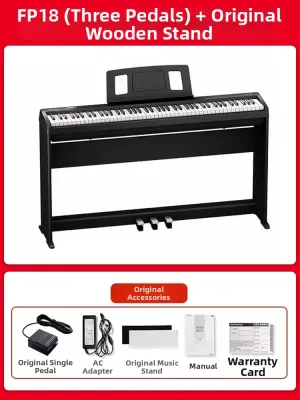
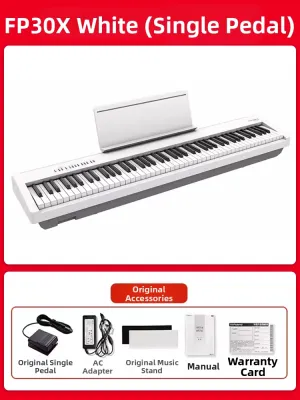
![Roland E-X20 Portable Keyboard Arranger 61 Keys Velocity Sensitive EX20 with Power Adapter EX 20 Arranger Keyboard Absolute Piano The Music Works Store [PREORDER]](https://img.lazcdn.com/g/p/92ed80a4b5740c71196f747e18036c1c.jpg_400x400q80.jpg_.webp)
Prices are valid at publication and may change. Please refer to the product page for the latest price.
When evaluating entry-level Roland pianos, pay close attention to the specific key action mechanism integrated into the model. Many of their beginner-friendly instruments utilize the PHA-4 Standard Keyboard action. This mechanism features progressive hammer weighting, meaning the lower keys feel slightly heavier than the higher keys, just like on an acoustic grand piano. It also includes an escapement simulation, which replicates the subtle click felt when pressing a key slowly, and a textured surface that mimics the grip of natural ivory.
Flexible practice options are another major consideration for modern learners. A suitable beginner piano must feature dedicated headphone jacks and granular volume controls. These tools allow you to practice at any hour of the day or night without disturbing family members or neighbors. Look for models that offer spatial headphone sound technology, which projects the audio in a way that simulates a three-dimensional acoustic space, reducing ear fatigue during long practice sessions.
Finally, ensure the instrument is compatible with a standard sustain pedal. The sustain pedal is introduced early in piano lessons to connect notes smoothly and add resonance to your playing. Avoid unweighted or semi-weighted synthesizer keyboards, as their spring-loaded keys do not provide the physical feedback required to transition successfully to an acoustic piano later on.
Portable vs. Console: Choosing the Right Roland Form Factor
Digital pianos generally fall into two main categories: portable slab-style models and furniture-style console models. Choosing between them depends largely on your living arrangements, budget, and aesthetic preferences.

Portable digital pianos are highly popular among Singaporean households due to their compact footprint and lighter weight. These instruments can be placed on a folding stand and easily moved between rooms or stored away when not in use, making them excellent for multi-purpose spaces or smaller apartments. However, buyers should be aware that the base price typically covers only the keyboard unit itself and a basic sustain switch. Sturdy wooden stands and matching three-pedal boards are usually sold separately, which will increase your total S$ investment if you decide to upgrade later.
In contrast, console digital pianos are designed as permanent furniture pieces. They feature a traditional upright cabinet, an integrated sliding key cover to protect against dust, and a built-in three-pedal board. These models offer exceptional physical stability, ensuring the keyboard does not wobble during energetic practice sessions. They also tend to house larger, more powerful speaker systems that project sound forward and downward, creating a more immersive acoustic experience in your home.
The trade-offs between these two form factors involve balancing space constraints with long-term stability. A console model serves as an elegant focal point in a living room and encourages regular practice because it is always set up and ready to play. A portable model offers a lower initial cost and maximum flexibility, allowing you to build your setup incrementally as your commitment to the instrument grows.
Before making a decision, it is highly recommended to verify current model availability, exact physical dimensions, and S$ pricing directly with authorized local retailers. Product lineups and bundle packages update periodically, and having precise measurements of your designated practice area will prevent any delivery-day surprises.
Aligning Your Choice with Space, Noise, and Connectivity Needs
Living in high-density residential environments like HDB flats or condominiums requires thoughtful planning around noise management. Even when practicing with headphones, the physical thumping of weighted keys striking the keybed can transmit vibrations through the floor. To mitigate this, consider placing a dense, high-quality rug or a specialized acoustic dampening mat beneath your piano stand to absorb the physical impact.
Modern digital connectivity can significantly enhance the learning process for beginners. When comparing models, check for USB-to-Host ports and built-in Bluetooth MIDI capabilities. These features allow you to connect the piano wirelessly or via cable to tablets, smartphones, and computers. This connectivity opens up access to interactive educational applications, digital sheet music readers, and music notation software that can guide you through lessons at your own pace.
Onboard practice tools are also incredibly beneficial for self-guided study. A built-in metronome is a fundamental tool for developing a steady sense of rhythm and timing. Many models also feature basic onboard recording functions, allowing you to record your performances and play them back to objectively assess your progress, identify uneven phrasing, and correct mistakes.
The physical placement of your piano within your home also plays a role in your overall learning experience. Ensure the designated spot has adequate ventilation and is free from clutter to create an inviting practice environment. Invest in a high-quality, adjustable piano bench to ensure proper ergonomic seating; your elbows should sit slightly above the keyboard level, and your feet should rest flat on the floor to prevent physical strain during extended practice sessions.
In-Store Checks and Buying Safely in Singapore
While online reviews and video demonstrations provide valuable insights, testing a digital piano in person is an essential step before purchasing. Visiting an authorized local showroom allows you to experience the physical key action and hear the sound engine firsthand. Pay close attention to how the keys rebound under your fingers, the ease of navigating the control buttons, and the physical resistance of the pedals.
When buying in Singapore, always purchase from an authorized dealer to ensure your instrument is covered by a valid local warranty. This protection is crucial for resolving any potential manufacturing defects and guarantees access to certified technicians and genuine replacement parts. Additionally, verify that the retail package includes a regional power adapter compatible with Singapore’s Type G electrical outlets and 230V/50Hz power supply.
Confirm exactly what accessories are included in the advertised retail price. Some retailers offer comprehensive bundles that include a matching bench, a music rest, headphones, and a sustain pedal, while others sell these items individually. Clarifying these details beforehand will help you calculate the true total cost of ownership and avoid unexpected S$ expenses.
Finally, review the manufacturer’s guidelines regarding environmental conditions. Singapore’s tropical climate, characterized by high humidity and warm temperatures, can affect electronic components over time. Ensure your planned home placement keeps the piano away from direct sunlight, which can warp plastic parts and fade finishes, and positions it away from the direct airflow of air-conditioning units to prevent rapid temperature fluctuations.
Frequently Asked Questions (FAQ)
Do I need an acoustic piano to start learning?
No, you do not need an acoustic piano to begin learning. A high-quality digital piano with 88 fully weighted keys and touch sensitivity is widely accepted by music schools and private instructors for early to intermediate levels of piano education. Digital pianos offer several practical advantages for beginners, including silent practice options, a smaller physical footprint, and zero tuning maintenance costs.
How do I protect my digital piano from Singapore's humidity?
To protect your digital piano from Singapore’s high relative humidity, place the instrument away from open windows, direct sunlight, and air-conditioning vents. These locations are prone to rapid temperature and humidity changes, which can impact the internal electronics and key action. Using a room dehumidifier or placing approved dehumidifying agents near the instrument can help maintain a stable environment and extend the lifespan of your piano.
Can I connect my Roland piano to learning apps on my tablet?
Yes, most modern Roland digital pianos support Bluetooth MIDI or USB connectivity, allowing you to link the instrument to tablets, smartphones, and computers. This enables you to use interactive learning apps, digital sheet music, and recording software. Always consult your specific piano model’s user manual for detailed pairing instructions and compatibility requirements for your device’s operating system.

Community discussion
Share your experience or ask a question. Comments are reviewed before publication.