
Starting piano lessons is an exciting milestone, and selecting the right instrument is the first critical decision. For beginners in Singapore, Yamaha is often the default starting point due to its long-standing reputation, reliable build quality, and widespread availability. Choosing the ideal model requires balancing your living space, budget, and long-term musical goals. While acoustic uprights offer unmatched mechanical feedback and natural resonance, digital alternatives provide practical solutions for high-density housing. By evaluating your specific environment and learning objectives, you can select an instrument that supports proper technique from the very first scale.
Understanding Your Needs: Acoustic vs. Digital Pianos
Living in Singapore presents unique environmental and spatial considerations that directly influence the type of piano you should choose. High-density residential developments, such as Housing & Development Board (HDB) flats and condominiums, mean that shared walls are a standard part of daily life. Acoustic pianos produce a rich, organic sound that naturally carries through concrete structures, which can sometimes lead to noise concerns with neighbors. Digital pianos offer a practical solution to this challenge, featuring volume control knobs and dual headphone jacks that allow students to practice at any hour of the day or night without disturbing others.
Maintenance is another critical differentiator between the two formats. An acoustic piano is a complex mechanical instrument constructed from wood, felt, and metal, making it highly sensitive to environmental changes. In Singapore’s tropical climate, high humidity can cause wooden components to swell, keys to stick, and strings to rust. To prevent this, acoustic owners must commit to regular professional tuning—typically once or twice a year—and keep a dedicated dehumidifier rod running inside the piano cabinet. Digital pianos, by contrast, rely on electronic sensors and recorded samples, requiring zero tuning, zero internal climate control, and minimal ongoing maintenance.
Products mentioned in this guide
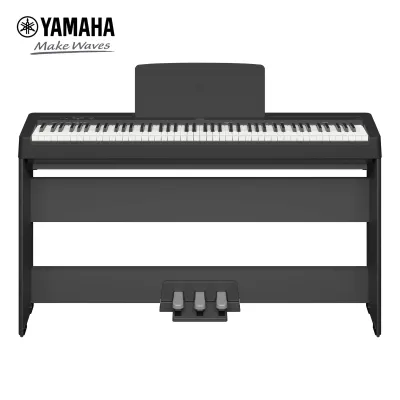
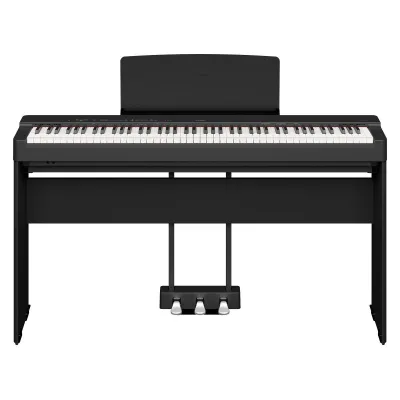
![Yamaha NP-15 NP-35 Portable Digital Piano 61 76 Keys Touch Response NP 15 35 NP15 NP35 Electronic Instrument Battery Operated The Music Works Store [LIMITED STOCK]](https://img.lazcdn.com/g/p/10826ae896d6b2be9f7dcd5500fb7a57.jpg_400x400q80.jpg_.webp)
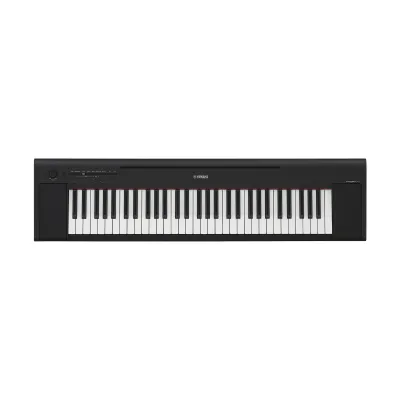
![Yamaha NP-15 Portable Keyboard Piano 61-Key Black/White Piaggero Digital Musical Instrument NP15 [LIMITED STOCK]](https://img.lazcdn.com/g/p/0ec95af5f3240a6cd4d0139cd77da0f4.jpg_400x400q80.jpg_.webp)
![Yamaha PSR-EW320 PSR-EW310 76-key Portable Digital Electronic Keyboard Touch Response Sensitive The Music Works Singapore [LIMITED STOCK]](https://img.lazcdn.com/g/p/2be0d94091483249c22888c0a53144d8.jpg_400x400q80.jpg_.webp)
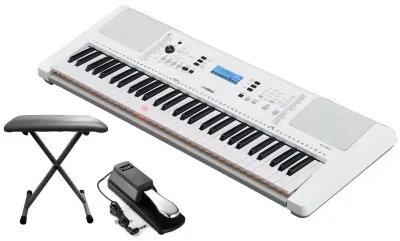
![Yamaha PSR-E473 61-key [With Keyboard Adapter]](https://img.lazcdn.com/g/p/259e70c609cfb678481a45d2fa3de44e.jpg_400x400q80.jpg_.webp)
Prices are valid at publication and may change. Please refer to the product page for the latest price.
Budget and long-term commitment also play a major role in this decision. Acoustic pianos represent a significant upfront financial investment and a long-term physical commitment. Moving an acoustic instrument requires specialized piano movers, which incurs additional costs whenever you relocate. Digital pianos are far more portable, with lightweight designs that can be easily repositioned within a room or packed up for a move. However, a well-maintained acoustic piano can last for decades and often retains a higher percentage of its resale value compared to digital models, which may see their technology become dated over time.
Key Features to Look for in a Beginner Yamaha Piano
To ensure a beginner develops proper technique and finger strength, the instrument must meet specific mechanical standards. The most critical requirement is a full keyboard of 88 fully weighted keys. Many entry-level keyboards feature unweighted or semi-weighted keys that offer little to no resistance. Practicing on these lightweight keys can prevent a student from developing the necessary hand strength and finger independence required to play a traditional piano. A weighted keyboard simulates the physical resistance of acoustic hammers, ensuring that the transition from home practice to a teacher’s acoustic piano is seamless.

Touch sensitivity and dynamic response are equally important for artistic development. A high-quality beginner piano must respond accurately to the force of the player’s touch. When a key is struck softly, it should produce a quiet whisper; when struck firmly, it should deliver a bold, loud tone. This dynamic range teaches beginners how to control their expression and interpret musical markings like piano (soft) and forte (loud). Without this responsive feedback, students may develop a flat, mechanical playing style that lacks musicality.
Modern learning tools built directly into the instrument can significantly enhance the daily practice experience. A built-in metronome is indispensable for developing a steady sense of rhythm and tempo control. Headphone connectivity allows for focused, distraction-free practice sessions. Additionally, many contemporary digital models feature USB or wireless connectivity, allowing students to connect the piano to educational applications on tablets or computers. These apps can guide beginners through interactive sight-reading exercises, music theory games, and step-by-step song tutorials, keeping young learners engaged between formal lessons.
Exploring Yamaha's Beginner-Friendly Piano Series
Yamaha offers several distinct product lines designed to accommodate different budgets, space constraints, and musical preferences. Understanding the core characteristics of these series makes it easier to narrow down your options before visiting a showroom. When shopping, it is always wise to verify current model availability, exact technical specifications, and local S$ pricing with authorized dealers in Singapore, as product lineups and promotional packages can vary throughout the year.
Portable Digital Keyboards (P-Series)
Yamaha’s P-Series is designed for students who prioritize space-saving design and portability without sacrificing key action. These instruments feature a slim, lightweight chassis that can be placed on a folding metal stand or stored away when not in use. Despite their compact size, they are equipped with fully weighted key actions designed to mimic the resistance of an acoustic piano, alongside high-quality stereo grand piano samples.
For a complete setup, these portable models can be paired with matching wooden furniture stands and three-pedal units, transforming them into stable home instruments. They are highly compatible with standard sustain pedals, which are essential as students progress beyond basic note-reading. This series is ideal for families living in smaller apartments, students who need to transport their instrument for school performances, or those who want a high-quality starter instrument with a lower initial investment.
Console Digital Pianos (Arius/YDP-Series)
The Arius, or YDP-Series, represents a step up in terms of aesthetics, stability, and acoustic projection. These console-style digital pianos are housed in traditional wooden cabinets with integrated sliding key covers and fixed three-pedal systems. The cabinet design not only makes the instrument look like an elegant piece of furniture but also provides a highly stable platform that does not wobble during energetic playing.
The physical structure of a console piano allows for larger, strategically positioned speakers. This design provides a richer, more immersive sound that projects downward and outward, closely mimicking the acoustic experience of sitting in front of an upright piano. While they occupy a permanent footprint on the floor and are heavier to move than portable models, they offer an excellent middle ground for families who want the look and feel of a traditional piano without the maintenance requirements of an acoustic instrument.
Entry-Level Acoustic Pianos (b-Series)
For families committed to a traditional learning path, the b-Series upright pianos serve as the entry point into Yamaha’s acoustic lineup. These instruments feature genuine wooden soundboards, steel strings, and complex mechanical hammer actions. The physical vibration of the strings and the natural resonance of the wooden cabinet produce a depth of tone and a tactile feedback that digital sensors cannot fully replicate.
Owning an acoustic piano in Singapore requires careful environmental management. Because wood and felt are highly sensitive to moisture, you must install a dedicated piano heater rod inside the cabinet and keep it plugged in to maintain a stable internal climate. It is also important to place the piano away from direct sunlight and air conditioning vents, which can cause rapid temperature fluctuations. While the b-Series requires a larger upfront budget and regular professional tuning, it offers an authentic playing experience that can carry a student from their very first lesson all the way through advanced examinations.
Where to Buy and What to Verify Before Purchasing
When you are ready to make a purchase, it is highly recommended to buy through official Yamaha showrooms or authorized local dealers in Singapore. Purchasing from authorized channels ensures that you receive a genuine product designed for the local electrical voltage and climate conditions. It also guarantees access to official manufacturer warranties and professional after-sales support. Be cautious of parallel imports or unauthorized online sellers, as these instruments may not be covered by local warranties, leaving you responsible for expensive repair costs if a component fails.
Before finalizing your purchase, take the time to verify the specific terms of the warranty and delivery services. Confirm the duration of the warranty—which typically ranges from one to several years depending on whether the model is digital or acoustic—and clarify what parts and labor are covered. Ask if professional delivery, home installation, and assembly are included in the S$ purchase price. For acoustic pianos, inquire whether the first in-home tuning session is provided free of charge, as the instrument will need time to settle into your home’s environment after transport.
If you are evaluating a pre-owned Yamaha piano, a thorough physical inspection is essential. For digital models, test every single key to ensure they all play at consistent volumes, check that all buttons and connection ports function correctly, and inspect the power adapter for wear. For used acoustic pianos, look inside the cabinet to check for signs of rust on the strings, cracks in the wooden soundboard, or excessive wear on the hammer felts. If you are not confident assessing an acoustic instrument yourself, consider hiring an independent piano technician to inspect the piano before you commit to the purchase.
Frequently Asked Questions (FAQ)
Do I need an 88-key weighted keyboard for my first piano?
Yes, piano teachers strongly recommend starting with an 88-key fully weighted keyboard. Standard piano music is written for 88 keys, and developing proper finger strength, hand posture, and control requires the realistic resistance that only weighted keys can provide. Unweighted or semi-weighted keyboards do not prepare a student’s hands for the heavy action of an acoustic piano, which can lead to frustration during lessons and exams. A smaller, unweighted keyboard should only be used as a temporary placeholder for the first few weeks of basic note-reading if a weighted instrument is not immediately available.
How much space does a beginner Yamaha piano require?
A standard 88-key piano, whether digital or acoustic, is approximately 130 to 150 centimeters wide. Portable digital models on folding stands have a shallow depth of about 30 to 40 centimeters, making them highly space-efficient. Console digital pianos and acoustic uprights are deeper, typically requiring a floor footprint of about 140 centimeters in width and 45 to 65 centimeters in depth. When planning your room layout, remember to allow an additional 50 to 60 centimeters of clearance behind the keyboard for the piano bench and the player to sit comfortably. Keep the instrument away from direct sunlight, high-humidity areas, and direct air conditioning drafts.
Should I buy a new or used Yamaha piano for a beginner?
Buying a new Yamaha piano offers peace of mind, a full manufacturer’s warranty, modern digital features, and the assurance that the instrument has no hidden wear and tear. This is often the safest choice for beginners who do not know how to evaluate an instrument’s mechanical condition. A used piano can offer significant cost savings, but it carries risks such as worn-out key bushings, outdated sound engines, or hidden structural damage in acoustic models. If you decide to purchase a pre-owned acoustic piano, always have it inspected by a qualified piano technician to ensure it can hold its tune and is mechanically sound.

Community discussion
Share your experience or ask a question. Comments are reviewed before publication.