
Starting your musical journey as an adult is a deeply rewarding decision. Unlike children, adult beginners bring focused motivation, analytical thinking, and specific musical tastes to their practice. However, before playing your first chord, you must choose between an acoustic piano, a digital piano, and an electronic keyboard. The right choice depends entirely on your personal goals, living environment, budget, and how much time you can dedicate to maintenance.
An acoustic piano represents the traditional gold standard, offering an unmatched physical connection to the music through mechanical hammer action and natural soundboard resonance. Yet, its substantial physical footprint, heavy weight, and susceptibility to environmental changes make it a challenging fit for many modern homes. A digital piano bridges this gap by pairing weighted keys that mimic the feel of an acoustic instrument with modern conveniences like volume control, headphone jacks, and zero maintenance. Meanwhile, a portable keyboard offers an accessible, lightweight, and budget-friendly entry point, though its unweighted keys can limit your ability to develop proper classical piano technique.
Understanding the Core Differences
To make an informed choice, you must first understand what makes these three instruments fundamentally different in their construction and design. An acoustic piano is a fully mechanical instrument. When you press a key, a complex wooden action triggers a felt-covered hammer to strike steel strings, which vibrate over a wooden soundboard to project sound. This physical process creates a rich, complex web of natural harmonics and physical vibrations that you can feel through your fingertips and the pedals.
Products mentioned in this guide
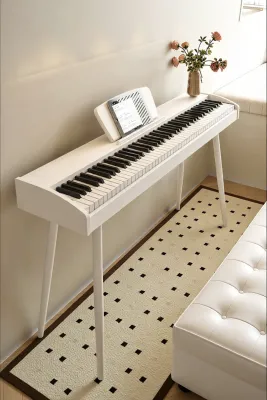
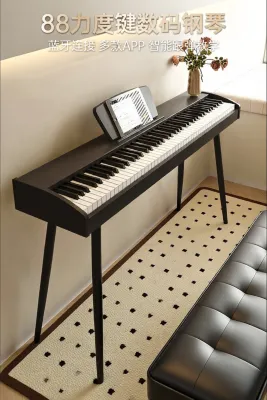
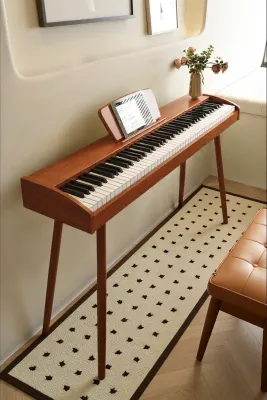
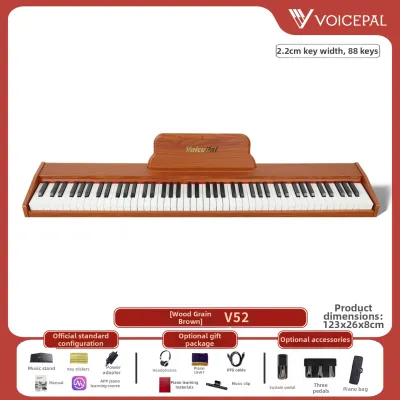
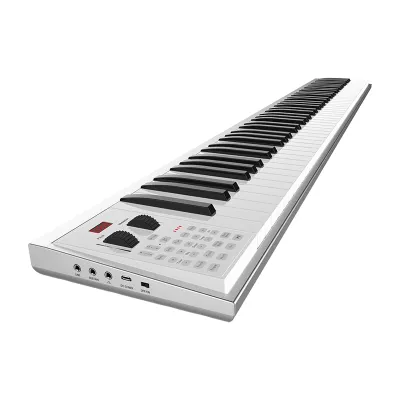
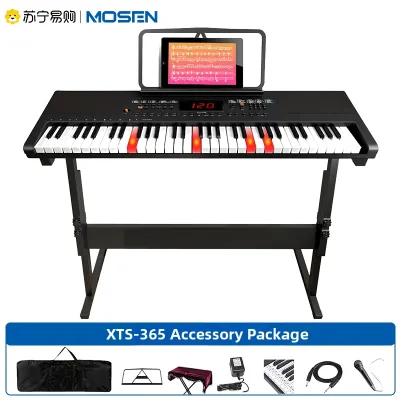
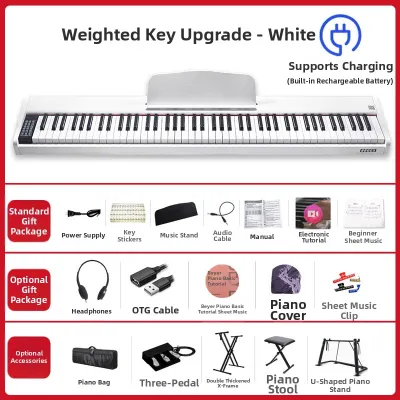
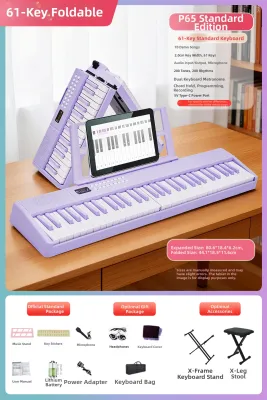
Prices are valid at publication and may change. Please refer to the product page for the latest price.
A digital piano is an electronic instrument designed specifically to replicate the acoustic piano experience as closely as possible. It features 88 keys—the standard piano range—that are weighted to simulate the resistance of mechanical hammers. Instead of strings, it uses high-resolution digital recordings (samples) or computer algorithms (modeling) of world-class concert grand pianos, which play back through built-in speakers or headphones when a key is pressed.
An electronic keyboard, often referred to simply as a keyboard, prioritizes portability, affordability, and sonic variety over acoustic realism. These instruments typically feature 61 or 76 unweighted, plastic keys that offer very little physical resistance. Rather than focusing solely on piano sounds, keyboards are packed with hundreds of different instrument voices, synthesized sounds, automatic backing rhythms, and drum loops, making them highly versatile tools for casual entertainment and modern music production.
Key Comparison Dimensions for Adult Learners
Choosing the right instrument requires looking beyond the technical specifications to evaluate how each option fits into your daily life. For an adult learner, the ideal instrument must balance three critical dimensions: the physical feel of the keys, the practical constraints of your living space, and the versatility of the sound engine.

Touch, Action, and Learning Effectiveness
The physical feel of the keys—often referred to as the action—is the single most important factor in developing proper playing technique. Acoustic pianos feature a complex mechanical action where the weight of the key changes depending on how hard you strike it and where it sits on the keyboard (bass keys are heavier than treble keys). This graded hammer action allows for an extraordinary level of dynamic control, enabling you to play with subtle nuances from a delicate whisper to a powerful roar.
Digital pianos are engineered to replicate this graded hammer action. High-quality digital models use actual wooden keys and physical counterweights to simulate the resistance and “escapement” feel of an acoustic grand. Practicing on a weighted digital piano ensures that you build the necessary finger strength, hand endurance, and muscle memory required to play on any acoustic piano. This makes the transition between your home practice instrument and a teacher’s acoustic piano seamless.
In contrast, most standard keyboards feature unweighted or semi-weighted “synth-action” keys that rely on simple plastic springs rather than gravity-based hammers. Because these keys offer minimal resistance, they do not build the finger strength or fine motor control needed for classical piano repertoire. If you practice exclusively on unweighted keys, you may find that your fingers feel weak and uncontrollable when you attempt to play on a weighted instrument. For adult beginners aiming to play classical music or complex jazz, starting on unweighted keys can create technical habits that are difficult to unlearn later.
Space, Maintenance, and Lifestyle Fit
For many adults, the decision is ultimately dictated by practical living conditions. An acoustic piano is a massive, heavy piece of furniture, often weighing between 180 to over 400 kilograms. Moving one requires professional piano movers, and its placement is highly restricted; it cannot be placed near direct sunlight, air conditioning vents, or damp walls without risking damage to the delicate wooden soundboard. Furthermore, acoustic pianos are highly sensitive to humidity and temperature fluctuations, requiring professional tuning at least once or twice a year to maintain their pitch. In humid climates, keeping an acoustic piano in tune also requires running a dedicated internal heater rod continuously, adding to your utility bills.
Digital pianos and keyboards offer a much more flexible lifestyle fit. A digital piano is significantly lighter, with portable slab models weighing under 15 kilograms and console models with wooden cabinets weighing around 40 to 80 kilograms. They never require tuning, as their sounds are digitally stored, and they are completely unaffected by humidity or temperature changes.
Perhaps the greatest advantage of digital instruments for adult learners is the ability to practice silently. With a pair of quality headphones, you can practice late at night or early in the morning without disturbing family members or neighbors. This silent practice capability is particularly valuable for busy adults who may only find time to practice after a long workday.
Sound Quality and Versatility
The sonic experience of playing an instrument directly impacts your motivation to practice. An acoustic piano produces a complex, organic sound that is incredibly difficult to replicate perfectly. The sympathetic resonance of unstruck strings vibrating in harmony with the notes you play creates a rich, three-dimensional sound field that envelops the player. For purists, this natural acoustic interaction remains unmatched.
However, modern digital pianos have closed this gap significantly. High-end digital models use advanced physical modeling to simulate sympathetic string resonance, key-off samples, and damper noise, creating a highly convincing acoustic illusion. Additionally, digital pianos offer the versatility of multiple piano characters—such as a bright pop grand, a warm classical grand, or an intimate upright—allowing you to match the sound to the genre you are playing.
Keyboards take this versatility to the extreme. While their piano sounds may not be as refined as those of a dedicated digital piano, they offer an expansive library of non-piano sounds, including electric pianos, organs, synthesizers, brass, strings, and woodwinds. Many keyboards also feature built-in arranger functions, allowing you to play along with a full virtual band that adapts to your chord changes in real time. For adults interested in songwriting, pop music, or electronic music production, this sonic variety can be incredibly inspiring.
Budget and Value Considerations
Investing in a musical instrument requires a clear understanding of both upfront costs and long-term financial commitments. For adult beginners, establishing a realistic budget helps narrow down the options without overcommitting financially before you know if the hobby will stick.
At the entry-level tier, portable electronic keyboards are the most affordable option, typically ranging from S$150 to S$400. In this price bracket, you can expect basic unweighted keys, a wide variety of fun sounds, and simple plastic construction. While excellent for testing your initial interest, these instruments have limited long-term value for serious piano study.
If you decide on a digital piano, entry-level portable models with fully weighted keys generally range from S$600 to S$1,200. These instruments provide the essential weighted key action and high-quality piano samples needed for proper technique development. Mid-range digital pianos, which often feature elegant wooden cabinets, integrated three-pedal units, and superior speaker systems, typically cost between S$1,500 and S$3,500. High-end digital pianos can exceed S$5,000, offering wooden keys, advanced sound engines, and premium cabinet designs.
Acoustic pianos represent a much larger financial commitment. A new, entry-level acoustic upright piano typically starts around S$5,000, while high-quality mid-range uprights can easily range from S$8,000 to S$15,000. Grand pianos are premium luxury items that start in the tens of thousands of dollars.
When budgeting, it is vital to account for hidden costs. For an acoustic piano, you must budget for professional delivery (often S$150 to S$300 depending on stairs), professional tuning (S$120 to S$200 per session, required once or twice annually), and the electricity cost of running an internal dehumidifier rod. Digital instruments have no maintenance costs, but you may need to purchase essential accessories separately. These include a sturdy double-braced stand or a matching wooden stand, a sustain pedal, a comfortable adjustable bench to ensure proper playing posture, and a high-quality pair of over-ear headphones.
Resale value is another factor to consider. High-quality acoustic pianos from reputable brands tend to hold their value well over decades if they are meticulously maintained. Digital pianos, like most consumer electronics, depreciate more quickly as newer technology is released, though well-known brands still command a decent price on the secondhand market. Keyboards depreciate the fastest due to their lower initial cost and rapid technological cycles.
Before making a purchase, use this quick checklist to verify your investment:
- Warranty: Ensure the instrument comes with a local manufacturer's warranty (typically 1 to 3 years) and that there is an authorized local service center.
- Included Accessories: Check if the purchase price includes a power adapter, a sustain pedal, and a music rest, as some budget models package these separately.
- Key Action Verification: If buying a digital piano, double-check the specifications to confirm it features "fully weighted" or "graded hammer action" keys, rather than "touch-sensitive" or "semi-weighted" keys.
- Return Policy: Confirm the retailer's return and exchange policy, especially if you are purchasing online without testing the instrument first.
Decision Framework: Which Instrument Should You Choose?
To help you make the final decision, evaluate your personal circumstances against this conditional framework.
You should choose an acoustic piano if:
- You have a dedicated, climate-controlled space in your home where the instrument can sit permanently.
- Your primary goal is to study classical piano and you prioritize the authentic physical touch and organic resonance of a mechanical instrument.
- You have the financial flexibility to cover ongoing professional tuning and maintenance costs.
- Noise is not a major concern, or you have a detached home where daily practice will not disturb others.
You should choose a digital piano if:
- You want a realistic piano-playing experience but live in an apartment, HDB flat, or shared housing where silent practice with headphones is essential.
- You prefer a zero-maintenance instrument that never needs tuning and is unaffected by humidity.
- You have limited floor space but still want an instrument that looks and feels like a traditional piano.
- You want to utilize modern learning tools, such as connecting the instrument to educational apps on a tablet or computer.
You should choose an electronic keyboard if:
- You are on a strict budget and want to test your interest in playing music before making a larger financial commitment.
- Your musical interests lie in pop, rock, electronic music, or music production rather than classical piano.
- Portability is a high priority, and you need an instrument that you can easily pack up, store in a closet, or transport to rehearsals.
- You enjoy experimenting with a wide variety of instrument sounds, backing tracks, and synthesizer controls.
Before finalizing your purchase, it is highly recommended to visit a local music showroom to test the instruments in person. Sit at the keys, feel the weight of the action, and listen to the sound through both the speakers and headphones. Measure your available home space carefully, leaving enough room for a proper bench and comfortable seating posture, to ensure your new instrument fits perfectly into your home and your life.
Frequently Asked Questions (FAQ)
Can I learn classical piano on a keyboard?
While you can learn the absolute basics of note reading, rhythm, and basic hand coordination on an unweighted keyboard, it is not suitable for long-term classical piano study. Classical repertoire relies heavily on dynamic expression (playing softly and loudly) and subtle touch variations, which require the resistance of weighted keys. Practicing classical pieces on unweighted keys can lead to poor finger technique, lack of dynamic control, and difficulty playing on an actual piano. If you start on a keyboard, plan to upgrade to a weighted digital or acoustic piano within the first six months of your learning journey.
Do digital pianos need tuning?
No, digital pianos do not require tuning. Their sounds are digitally recorded or mathematically modeled, meaning the pitch is permanently locked and will never drift. This makes them incredibly low-maintenance compared to acoustic pianos. To keep your digital piano in optimal condition, simply dust the keys regularly with a dry microfiber cloth, keep liquids away from the console, perform any recommended manufacturer firmware updates, and ensure all power and pedal cables are securely connected and free of tension.
Is it too late for an adult to start learning the piano?
It is absolutely never too late to start learning the piano. In fact, adult beginners often progress faster in the early stages than children because they possess superior analytical skills, self-discipline, and a clearer understanding of music theory. Learning an instrument as an adult also offers significant cognitive benefits, helping to improve memory, focus, and fine motor coordination while serving as an excellent creative outlet for stress relief. For the best results, focus on consistent, daily practice sessions of 20 to 30 minutes rather than trying to cram hours of practice into a single weekend session.

Community discussion
Share your experience or ask a question. Comments are reviewed before publication.