
Choosing your first ukulele is an exciting step, but the modern market presents a fundamental choice that goes beyond aesthetics: should you opt for a cutting-edge carbon fiber composite instrument like the Enya Nova Go, or stick with a traditional wooden ukulele? For most beginners, the decision hinges on where you plan to play, how much effort you want to dedicate to instrument maintenance, and your personal sound preferences. While traditional wooden ukuleles offer the classic, warm acoustic resonance that has defined the instrument for generations, carbon fiber alternatives provide unmatched durability and resistance to environmental changes, making them highly practical for modern lifestyles.
Material Basics: Carbon Fiber vs. Traditional Wood
To understand how these instruments perform, it is essential to look at what they are made of. Traditional wooden ukuleles are crafted either from solid wood (such as mahogany, koa, or spruce) or laminate wood, which consists of thin layers of wood glued together. Wood is an organic, porous material that naturally breathes, absorbing and releasing moisture depending on the surrounding air. This organic structure gives wooden instruments their unique, evolving tonal characteristics, but it also makes them sensitive to physical impacts and climate shifts.
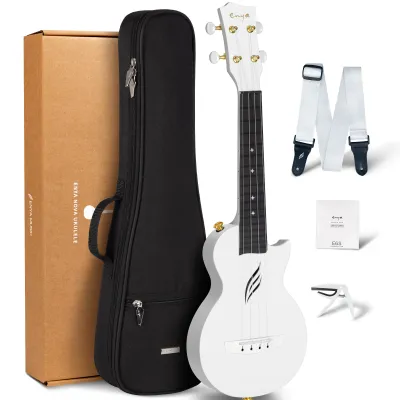
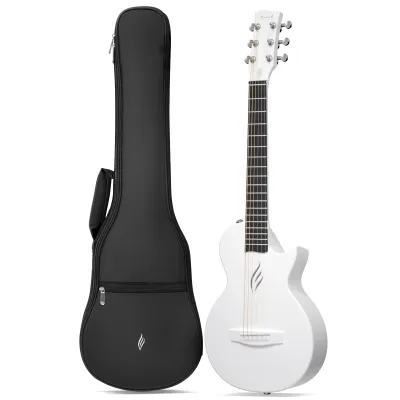
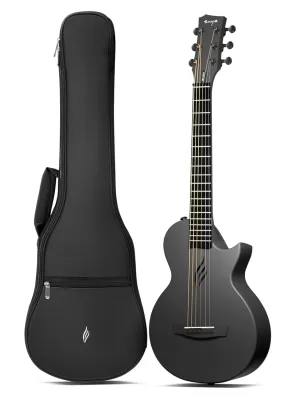
In contrast, the Enya Nova Go is constructed from a carbon fiber and polycarbonate composite. This synthetic material is created by mixing carbon fibers with a polymer resin, which is then molded under high pressure into a single, cohesive structure. This manufacturing process ensures incredible consistency; unlike wood, which has natural knots, grain variations, and structural weak points, every composite body is virtually identical. This eliminates the risk of structural warping and allows for innovative design choices, such as a thinner body profile and integrated neck-and-body construction that removes the traditional neck joint—a common point of failure on wooden instruments.
Products mentioned in this guide
Prices are valid at publication and may change. Please refer to the product page for the latest price.
A common misconception is that synthetic instruments sound like cheap plastic toys. While early plastic ukuleles did suffer from poor acoustic properties, modern carbon fiber composites are engineered specifically to mimic the stiffness and resonant qualities of high-quality tonewoods. The result is a lightweight, highly durable instrument that projects sound efficiently while remaining incredibly resistant to physical wear.
How They Compare for Beginner Needs
For a beginner, the ideal instrument is one that stays in tune, is comfortable to hold, and does not require a complex maintenance routine that distracts from actual practice. Comparing how carbon fiber and traditional wood handle these daily demands reveals distinct advantages for each type of player.

Durability and Climate Resilience
In tropical or highly variable climates, such as Singapore’s year-round high humidity, wood care can be a significant chore. Traditional wooden ukuleles, especially those made of solid wood, are highly susceptible to humidity fluctuations. When exposed to high humidity, wood swells, which can raise the action (the height of the strings above the fretboard) and make the instrument harder to play. Conversely, when kept in air-conditioned rooms where the air is dry, the wood can shrink, leading to cracks in the body, loose braces, or sharp fret ends that sprout from the sides of the fingerboard.
Carbon fiber composites completely bypass these climate-related issues. Because the material is non-porous and chemically stable, it does not expand, contract, or warp when exposed to humidity changes or temperature swings. You can transition a carbon fiber ukulele from a humid outdoor park to an air-conditioned bedroom without worrying about structural damage or sudden tuning instability.
This resilience makes carbon fiber highly practical for travel, outdoor gatherings, or beach trips. A wooden ukulele requires careful storage in a padded, humidified case and must be shielded from direct sunlight and sudden temperature drops. A composite instrument, on the other hand, can be tossed into a backpack or left on a stand in your living room year-round, requiring nothing more than an occasional wipe-down with a dry cloth to keep it clean.
Sound Profile and Playability
The sonic differences between these materials are distinct and will appeal to different musical tastes. Traditional wooden ukuleles are celebrated for their warm, woody, and organic tone. They tend to have a softer attack and a rich midrange resonance that matures and improves as the wood ages and is played over time. If you are searching for the classic, mellow Hawaiian ukulele sound, a well-made wooden instrument remains the gold standard.
The Enya Nova Go and similar carbon fiber models offer a different acoustic profile characterized by brightness, clarity, and impressive projection. Because the composite material is stiff and highly reflective, sound waves bounce off the interior walls with minimal absorption, resulting in a crisp, modern tone with excellent note separation. While it may lack some of the deep, woody warmth of a traditional instrument, its bright voice cuts through ambient noise exceptionally well, making it highly audible during outdoor practice sessions.
Playability is another crucial factor for beginners, and here, design innovations play a major role. The Enya Nova Go features a radius fretboard, meaning the fingerboard is slightly curved rather than completely flat. This curvature conforms more naturally to the human hand, making it easier to press down barre chords and reducing hand fatigue during long practice sessions. Additionally, many composite models feature a “zero fret” near the tuning pegs, which helps maintain a consistently low string action across the entire neck, preventing the common beginner frustration of high strings that are painful to press down. Traditional wooden ukuleles can also be set up for excellent playability, but they often require manual adjustment by a professional luthier to achieve the same level of low action out of the box.
Budget and Long-Term Value
When evaluating the cost of a beginner ukulele, it is important to look at the total package rather than just the sticker price. Many entry-level wooden ukuleles are sold as standalone instruments, meaning you will need to purchase a gig bag, strap, tuner, and extra strings separately. These individual accessories can quickly add up, increasing your initial investment.
Carbon fiber models like the Enya Nova Go are frequently sold as comprehensive starter bundles. These packages often include a custom-fitted hardshell case or a high-quality gig bag, a matching strap, a clip-on tuner, and replacement strings. For a beginner, this all-in-one approach offers excellent value and eliminates the guesswork of finding compatible accessories.
In terms of long-term value, laminate wooden ukuleles are often the most budget-friendly option initially, but they may lack the durability to survive years of rough handling. Solid wood ukuleles are a larger financial investment and require ongoing care, but they hold their value well among collectors and serious musicians. Carbon fiber represents a highly cost-effective middle ground: it offers a modern, highly durable instrument with premium playability features at a price point that is highly competitive with mid-range laminate wood models. Beginners should check current local retailer listings to compare exact S$ pricing and bundle inclusions before making a final decision.
Decision Framework: Which Ukulele Fits Your Lifestyle?
To help you decide which instrument deserves a spot in your home, consider how your daily habits, environment, and musical goals align with each material’s strengths.
Choose the Enya Nova Go (or a similar carbon fiber composite ukulele) if:
- You live in a highly humid environment or frequently use air conditioning, and you do not want to manage humidifiers or worry about wood cracking.
- You plan to travel with your instrument, take it to the beach, go camping, or practice outdoors.
- You prefer a modern, sleek aesthetic with a thin body profile that is easy to hold and pack.
- You want a low-maintenance instrument that is ready to play at a moment's notice without requiring seasonal setups.
- You appreciate a bright, clear, and highly projecting sound profile.
Choose a Traditional Wooden Ukulele if:
- You love the classic, warm, and mellow acoustic tone traditionally associated with the ukulele.
- You prefer the organic look, feel, and smell of natural wood grain over synthetic materials.
- Your practice sessions will take place primarily indoors in a stable, climate-controlled environment.
- You enjoy the process of caring for a traditional instrument and watching its tone mature over years of dedicated play.
- You are looking for a specific traditional aesthetic, such as a classic satin or high-gloss wood finish.
Verify first if:
- You have specific physical constraints; some players with very large hands may find the thin neck profile of certain travel-sized carbon fiber models slightly cramped, while others may find the radius fretboard highly beneficial.
- You are purchasing the instrument for a very young child; a highly durable composite model is virtually drop-proof, making it an excellent choice to withstand accidental bumps and falls.
Pre-Purchase Checklist and Quality Verification
Regardless of which material you choose, performing a thorough quality check upon receiving your instrument is essential to ensure a smooth learning journey.
First, inspect the body for any manufacturing defects. For a wooden ukulele, check the joints where the top, back, and sides meet to ensure there are no gaps or visible glue squeeze-out. Inspect the bridge to make sure it is securely glued to the body without any lifting. For a carbon fiber ukulele, check the molded seams and the finish for any rough edges or cosmetic imperfections.
Next, test the playability and hardware. Turn each tuning machine to ensure they rotate smoothly without slipping or sticking. Play every single fret on every string to check for fret buzz, which occurs when a string vibrates against a fret wire because the action is too low or a fret is uneven. If you hear a buzzing sound, the instrument may require a setup adjustment.
Finally, always verify the retailer’s return policy and warranty terms. Ensure that you purchase from an authorized dealer who offers a clear return window, allowing you to exchange the instrument if you discover any structural flaws or playability issues within the first few weeks of ownership.
Frequently Asked Questions (FAQ)
Do carbon fiber ukuleles need humidifiers?
No, carbon fiber composite ukuleles do not require humidifiers. Unlike natural wood, synthetic materials do not absorb moisture, meaning they will not warp, swell, or crack in response to humidity changes. However, if your composite ukulele features any traditional wooden components, such as a wooden bridge plate or decorative wood inlays, you should follow the manufacturer’s specific care guidelines to protect those elements.
Can I change the strings on an Enya Nova Go to standard nylon?
Yes, you can change the strings on an Enya Nova Go to standard nylon or fluorocarbon strings. The bridge and tuning pegs are designed to accommodate standard ukulele strings. However, because carbon fiber has a naturally bright sound profile, pairing it with warmer-sounding nylon strings can help mellow out the tone, while fluorocarbon strings will emphasize its bright, clear projection. Always check the manufacturer’s instructions to ensure proper string installation.
Is a laminate wooden ukulele a better middle ground?
A laminate wooden ukulele can be an excellent middle ground for beginners on a budget. Laminate wood is more resistant to humidity cracks than solid wood and is generally more affordable. However, it still lacks the absolute climate immunity and impact resistance of carbon fiber, and it may not offer the same rich, evolving tone as a solid wood instrument. It remains a popular, cost-effective choice for those who want a traditional look without the high maintenance of solid wood.

Community discussion
Share your experience or ask a question. Comments are reviewed before publication.