
Choosing your first tenor ukulele involves balancing playability, tone, and long-term durability. Enya tenor ukuleles have gained a strong reputation among beginners, primarily due to their use of alternative materials like High-Pressure Laminate (HPL) and carbon fiber composites, alongside comprehensive accessory packages. However, whether an Enya tenor represents the ideal choice for you depends on your specific playing environment, your willingness to maintain a traditional wood instrument, and your tonal preferences. While Enya offers excellent stability in humid climates, traditional wood-laminate or solid-wood instruments from other established brands provide a classic acoustic warmth that some players prefer.
To make the right choice, you must understand how different materials perform over time and what to look for when inspecting an instrument in person. This guide breaks down the observable specifications, material choices, and package offerings to help you make an informed decision at local music retailers.
What Defines Value in a Beginner Tenor Ukulele?
When evaluating a beginner tenor ukulele, the choice of material is the most significant factor influencing both sound and maintenance. Traditional tonewoods, such as solid mahogany, spruce, or acacia, offer a rich, organic tone that matures and improves as the wood ages. However, solid wood is highly sensitive to environmental changes, particularly in tropical climates like Singapore, where relative humidity consistently hovers between 70% and 90%. High humidity can cause solid wood to swell, warp, or lift at the bridge, while sudden drops in humidity—such as moving into an air-conditioned room—can cause the wood to crack.
Products mentioned in this guide
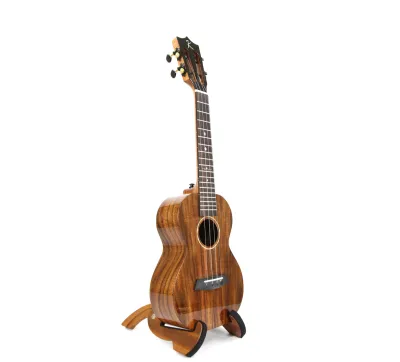
Prices are valid at publication and may change. Please refer to the product page for the latest price.
To mitigate these climate risks, many beginner instruments utilize laminate wood, which consists of thin layers of wood pressed together. Laminate is far more stable than solid wood and resists cracking, though it generally lacks the complex tonal resonance of solid timber. Modern alternatives like High-Pressure Laminate (HPL) and carbon fiber composites take this stability a step further. These materials are virtually impervious to temperature and humidity fluctuations, making them highly durable options for players who do not want to worry about climate control.
Beyond materials, the inclusion of high-quality accessories significantly impacts the overall value of a beginner package. A starter bundle that includes a well-padded gig bag, a reliable clip-on tuner, a comfortable strap, and spare strings saves you from making immediate secondary purchases. When comparing packages, evaluate the quality of these accessories; a thin, unpadded dust cover offers little protection, whereas a thick, padded gig bag adds genuine value by safeguarding your instrument during travel.
Finally, physical playability is critical for a new player. When visiting a local music shop, physically check the action height, which is the distance between the strings and the fretboard. If the action is too high, pressing down on the strings will be difficult and painful, which can discourage consistent practice. Conversely, if the action is too low, the strings will buzz against the frets when plucked. You should also run your fingers along the edges of the neck to ensure the fret ends are smooth and do not protrude, as sharp frets can scratch your hand while playing.
Enya Tenor Ukuleles: Build, Materials, and Bundles
Enya has carved out a distinct niche in the ukulele market by focusing heavily on modern, alternative materials. Many of their popular tenor models utilize HPL or carbon fiber composites rather than traditional wood. HPL is manufactured by pressing wood fibers and synthetic resins under extreme heat and pressure, resulting in a dense, uniform material. This process allows Enya to create instruments that are highly resistant to physical impacts, scratches, and extreme weather conditions, ensuring the ukulele remains structurally stable over years of use.

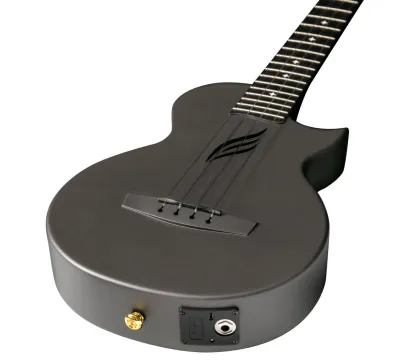
Their carbon fiber models are often molded as a single piece, integrating the neck, fretboard, and body into a unified structure. This seamless construction eliminates the traditional joints that can fail under physical stress or humidity changes. From a playability standpoint, these composite materials allow for highly consistent manufacturing, meaning the fret height and neck relief are uniform across individual instruments. The resulting tone is typically bright, clear, and punchy, with excellent projection and sustain, though it may lack the deep, woody warmth of a traditional acoustic instrument.
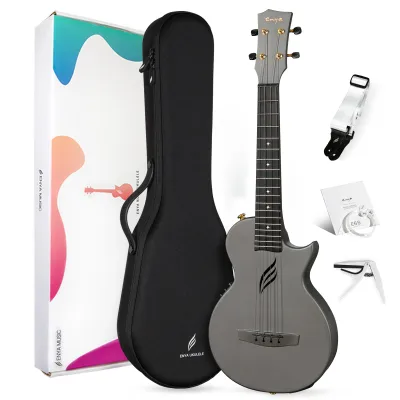
Enya is also widely recognized for its comprehensive accessory bundles. Most of their tenor models are sold as complete kits, which typically include a custom-fit, heavily padded gig bag, a strap that attaches to pre-installed strap buttons, a clip-on tuner, a capo, and a polishing cloth. Additionally, several Enya models feature built-in electronics, such as transacoustic pickup systems. These systems use an internal actuator to project effects like reverb, delay, and chorus directly from the ukulele’s body without needing an external amplifier, offering an engaging way for beginners to experiment with different sounds.
When shopping for an Enya tenor ukulele, it is important to verify the product label and packaging to confirm the exact model specifications. Because Enya produces models in various materials—ranging from full carbon fiber to HPL and even traditional laminate woods—double-check the product description before purchasing. Additionally, ensure you buy from an authorized local distributor in Singapore to secure a valid manufacturer warranty, which is essential for protecting your purchase against any potential electronic or structural defects.
Comparing Enya with Other Popular Beginner Brands
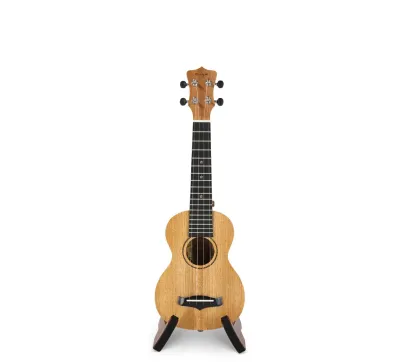
Comparing Enya with traditional beginner-friendly brands highlights a fundamental difference in design philosophy. Traditional heritage brands typically focus on classic wood construction, utilizing laminate mahogany, spruce, or koa for their entry-level tenor models. These instruments appeal to players who prefer a classic, organic aesthetic and a warmer, more traditional acoustic tone. While these wood laminates are reasonably stable, they still require more careful handling and environmental monitoring than Enya’s composite and HPL models.
In terms of the price-to-accessory ratio, Enya often provides higher immediate out-of-the-box value for absolute beginners. Many traditional brands sell their ukuleles as standalone instruments or with only a basic, unpadded gig bag. This means you must budget separately for essential accessories like a tuner, strap, and capo, which can easily add S$30 to S$80 to your initial investment. If you are starting from scratch, Enya’s all-inclusive bundles are highly cost-effective; however, if you already own these accessories, you might prefer directing your entire budget toward a wood-focused brand that prioritizes raw acoustic resonance over bundled extras.
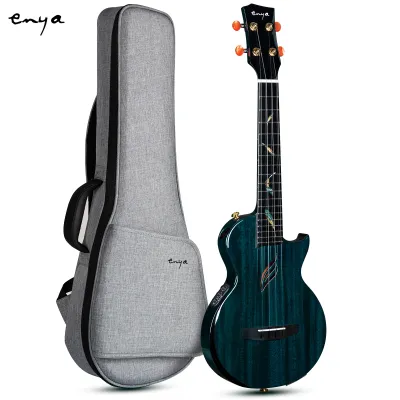
Aesthetic and design choices also differ significantly between Enya and its competitors. Traditional brands generally stick to classic double-bout body shapes, natural wood grain finishes, and standard center soundholes. Enya, on the other hand, frequently incorporates modern design elements, such as offset soundholes, cutaway bodies for easier access to the higher frets, and thin, ergonomic body profiles. They also offer instruments in a wide array of non-traditional colors, including matte black, blue, pink, and red, which may appeal to players looking for a modern, eye-catching instrument.
Ultimately, neither approach is universally superior; instead, they serve different player preferences. Traditional wood-laminate models excel at delivering a classic, mellow tone that fits beautifully into traditional folk and acoustic music. Enya’s composite models excel in durability, consistency, and modern functionality, making them highly reliable travel companions and versatile tools for players who want to experiment with plugged-in tones and built-in effects.
Which Brand Fits Your Playing Needs?
If your primary goal is to own a durable, low-maintenance instrument that you can leave on a stand in your living room without worrying about Singapore’s high humidity, Enya is an excellent fit. Their HPL and carbon fiber tenor models are ideal for players who travel frequently, perform outdoors, or simply want a hassle-free instrument that stays in tune regardless of weather changes. The inclusion of a complete accessory bundle and modern design features makes Enya a highly convenient, all-in-one solution for beginners who want to start playing immediately.
Conversely, you should choose a traditional wood-focused brand if you prioritize a warm, classic acoustic tone and appreciate the natural beauty of real wood grain. If you enjoy the process of caring for a traditional instrument and are willing to manage its storage conditions, a wood laminate or solid-top tenor ukulele will reward you with a more organic sound profile. Keep in mind that choosing a wood instrument means you must be prepared to monitor humidity levels, potentially storing the ukulele in a hard case with desiccant packs when not in use.
Before making your final purchase, verify whether you need built-in electronics. If you plan to perform live, record into a computer, or use effects pedals, look for a model equipped with an active pickup system. Ensure the output jack matches standard 1/4-inch instrument cables and check whether the system is powered by easily replaceable batteries or an internal rechargeable battery. Testing the pickup system on an amplifier at a local music shop will ensure the output is clean, balanced, and free of unwanted hum.
Frequently Asked Questions (FAQ)
Do I need a humidifier for a tenor ukulele in Singapore?
In Singapore, the primary environmental concern is high humidity rather than dryness, meaning you actually need to protect traditional wood instruments from excess moisture rather than adding more. Solid wood tenor ukuleles are highly sensitive to high humidity and should be stored in a dry environment—ideally between 45% and 55% relative humidity—using silica gel packs or a dedicated dehumidifier to prevent warping and glue failure. In contrast, laminate wood, HPL, and carbon fiber instruments are highly stable and do not require strict humidity control, though keeping them in a standard gig bag when not in use is always recommended to protect them from dust and sudden temperature drops.
Is a tenor ukulele too large for a beginner?
A tenor ukulele is not too large for a beginner and is often the preferred size for adults and players with larger hands. While it has a longer scale length and a slightly larger body than soprano or concert models, the wider fret spacing actually makes it easier to press down chords cleanly without crowding your fingers. Crucially, a tenor ukulele uses the exact same standard tuning (G-C-E-A) as soprano and concert models, meaning all chord shapes, scale patterns, and online tutorials remain identical, allowing you to learn comfortably from the start.

Community discussion
Share your experience or ask a question. Comments are reviewed before publication.