
Preparing for the GCE O-Level English examination requires a strategic approach to selecting study aids. To build comprehensive exam readiness, you need a balanced mix of topical assessment books, full-length mock papers, model essay compilations, and targeted comprehension workbooks. These resources must align with the latest syllabus requirements set by the Ministry of Education and the Singapore Examinations and Assessment Board (SEAB). Rather than buying every book on the shelf, success lies in identifying your specific weak areas—whether in situational writing, inferential comprehension, or oral communication—and purchasing structured materials that offer detailed, step-by-step marking schemes rather than just bare answers.
Understanding the O-Level English Syllabus Requirements
Aligning your study material purchases with the specific components and grading criteria of the current O-Level English syllabus is the first step toward effective preparation. The examination is divided into four distinct papers, each testing a unique set of language skills. Paper 1 focuses on writing, which includes editing for grammatical errors, situational writing, and continuous writing. Paper 2 tests comprehension through visual, narrative, and non-narrative texts, alongside a critical summary writing task. Paper 3 evaluates listening comprehension, while Paper 4 assesses oral communication through reading aloud and a planned response or spoken interaction.
When browsing for study aids, it is essential to identify which books target specific papers versus those that offer general language proficiency. A general grammar guide might help with basic sentence structure, but it will not prepare a student for the nuanced demands of analyzing a visual text or structuring a formal proposal. Furthermore, recent syllabus updates have shifted significantly away from rote memorization toward critical thinking, evaluation of the writer’s craft, and real-world application. Modern exam questions require students to analyze the tone, purpose, and target audience of various texts. Consequently, the study aids you purchase must feature exercises that challenge students to think critically rather than simply locate literal answers in a passage.
Products mentioned in this guide
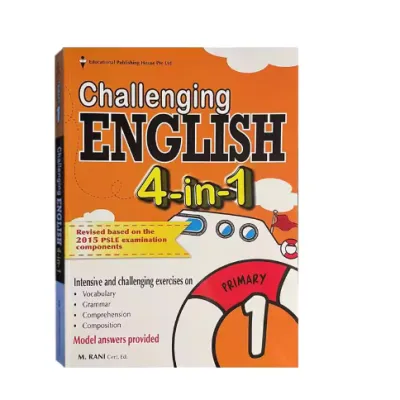
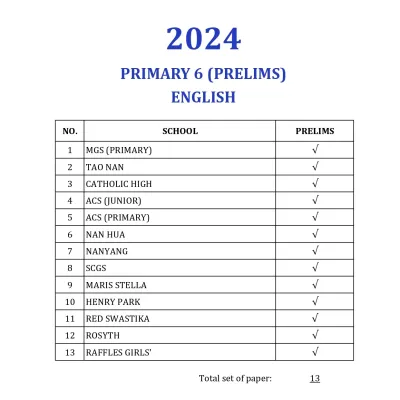
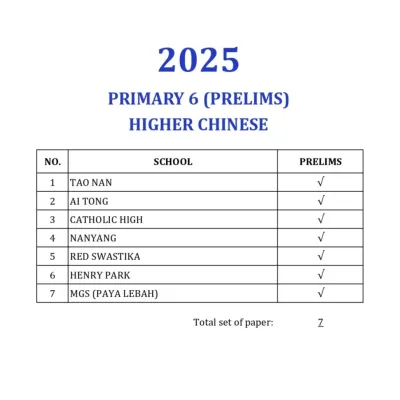
Prices are valid at publication and may change. Please refer to the product page for the latest price.
Must-Have Categories of English Study Materials
Singapore has a robust assessment book culture, with retail shelves filled with hundreds of supplementary titles. While this abundance offers many choices, it can also lead to decision fatigue and resource duplication. To prevent overwhelming a student, it is crucial to build a balanced library of study materials that covers all exam papers systematically.

Instead of buying multiple books that serve the same purpose, aim for a curated selection. A complete preparation toolkit typically consists of three core pillars: a comprehensive syllabus guidebook or set of practice papers for exam simulation, a dedicated writing guide with model essays, and a specialized comprehension workbook. This structured approach ensures that all components of the English syllabus are addressed without causing study fatigue.
Assessment Books and Practice Papers
Practice books generally fall into two categories: topical practice books and full-length mock exam papers. Topical books are highly effective during the earlier stages of preparation, as they allow students to isolate and drill specific components, such as editing exercises or visual text analysis. These books help build foundational confidence and accuracy. On the other hand, full-length mock exam papers are indispensable during the final run-up to the examination. They simulate the actual exam experience, helping students master time management and build the mental stamina required to sit through papers that last nearly two hours.
When purchasing practice papers, always verify that they align with the latest syllabus year and exam format. Even minor changes in mark allocation or question styling can affect how a student prepares. Furthermore, the value of a practice book lies almost entirely in the quality of its answer key. Avoid books that only provide a list of final answers. Instead, look for publications that offer detailed marking schemes, explain why certain answers are correct, and provide alternative acceptable answers or common pitfalls to avoid.
Model Essay Compilations and Writing Guides
Writing accounts for a significant portion of the overall English grade, making model essay compilations and writing guides essential purchases. However, simply reading essays passively is rarely enough to improve writing skills. The most effective compilations feature graded model essays accompanied by detailed examiner commentary. This commentary explains why an essay qualifies for a top-band mark, highlighting the use of sophisticated vocabulary, varied sentence structures, and strong paragraph development.
In addition to model essays, look for writing guides that offer practical frameworks for different essay genres, such as argumentative, discursive, narrative, and situational writing. A good guide will provide structural templates, such as the Point, Evidence, Explanation, Link (PEEL) framework, and offer character banks or plot outlines for narrative writing. It is also important to ensure that the writing styles and topics in these guides reflect current O-Level trends, which often focus on contemporary global issues, technology, environmental sustainability, and local Singaporean contexts.
Comprehension and Summary Practice Workbooks
Paper 2 requires students to engage deeply with various text types, making specialized comprehension workbooks a vital part of exam preparation. A high-quality workbook should feature a diverse range of texts, including visual advertisements, literary narrative passages, and expository or argumentative essays. Exposure to different writing styles helps students adapt quickly to whatever text types appear in the actual examination.
Summary writing is another critical component of Paper 2 that requires a systematic approach. Look for workbooks that offer step-by-step guides on how to identify key points in a text, group them logically, and paraphrase them using synonyms without altering the original meaning. Additionally, the workbook should provide detailed explanations for challenging inferential and vocabulary-in-context questions, helping students understand the subtle clues and context markers that lead to the correct answers.
How to Choose the Right Study Aids for Your Needs
Selecting the right study aids requires an honest assessment of the student’s current proficiency level and target grade. If a student is currently scoring in the C5 to D7 range, purchasing highly advanced mock papers designed for top-tier students can lead to frustration and discouragement. For these students, it is wiser to prioritize foundational books that focus on grammar correction, basic sentence structure, and literal comprehension. Once these fundamentals are secure, they can gradually transition to more challenging materials.
Conversely, students who are already scoring consistently in the B3 to A2 range should look for books that push their boundaries. These students will benefit most from advanced comprehension workbooks featuring complex, non-routine texts and model essay compilations that showcase sophisticated vocabulary and nuanced arguments. When evaluating books in the bookstore, always prioritize those with clear, comprehensive explanations over those that offer only bare answer keys, as self-directed learning is highly dependent on understanding past mistakes.
Finally, balance the purchase of comprehensive guides with targeted topical workbooks based on the student’s specific weak areas. If school feedback indicates that a student consistently loses marks in situational writing but excels in continuous writing, allocate your budget to a specialized situational writing guide rather than a general essay book. This targeted approach ensures that study time is spent where it is needed most, maximizing the return on your investment.
Where to Buy and What to Verify Before Purchasing
When looking to purchase O-Level English study aids, major physical bookstores in Singapore, such as Popular Bookstore, remain the most reliable options. Visiting a physical store allows you to flip through the pages, assess the layout, read the preface, and evaluate the difficulty level of the exercises before making a purchase. For convenience and potential cost savings, reputable online book retailers and local ecommerce platforms also stock a wide range of educational materials, often offering user reviews and bundle discounts.
Before finalizing any purchase, there are several critical verification steps to follow. First, check the International Standard Book Number (ISBN) and the publication or reprint year. Publishers frequently update their assessment books to align with subtle syllabus tweaks, and buying an outdated edition could mean practicing obsolete question formats. Look for labels on the cover indicating alignment with the latest syllabus code.
Second, perform a quick physical inspection of the book if purchasing in-store. Ensure that the answer key booklet, which is often inserted loosely in the middle or back of the book, is intact and has not been lost or removed. Check for any printing defects, such as blank pages, misaligned text, or detached binding, which can disrupt the student’s learning experience.
Maximizing the Value of Your English Study Aids
Simply purchasing the right books is not enough; students must integrate them into a consistent and active study routine to see real improvement. One of the most effective strategies is to implement timed practice sessions. Doing exercises without a time limit does not prepare a student for the pressure of the exam hall. By using a timer to simulate actual exam conditions, students learn how to allocate their time efficiently—such as spending no more than 50 minutes on continuous writing or 20 minutes on a comprehension section.
Another essential habit is maintaining a dedicated error log. Whenever a student completes an exercise and marks it, they should record any incorrect answers in a notebook. Alongside the mistake, they should write down the correct answer and a brief explanation of why they made the error. Reviewing this log before starting a new practice session helps prevent the repetition of the same grammatical or conceptual mistakes.
Finally, encourage active analysis when using model essay compilations. Instead of reading them like storybooks, students should actively highlight useful vocabulary, note down transition phrases, and outline the essay’s structure. By dissecting how a writer builds an argument or transitions between paragraphs, students can internalize these techniques and apply them to their own writing.
Frequently Asked Questions (FAQ)
Are ten-year series books still relevant for the current O-Level English syllabus?
Yes, the Ten-Year Series (TYS) remains a highly relevant and valuable resource for O-Level preparation. It provides students with direct exposure to the actual standard of difficulty and the style of questions set by Cambridge examiners. However, because the syllabus undergoes periodic updates, some older papers in the TYS may feature formats, mark allocations, or question types that are no longer tested. To use the TYS effectively, focus on timeless skills like comprehension analysis, summary writing, and continuous writing, and cross-reference your practice with the latest syllabus guidelines to avoid spending time on obsolete formats.
Should I buy separate books for vocabulary and grammar?
This depends largely on the student’s existing language foundation. For students who struggle with persistent grammatical errors in tense, agreement, or sentence structure, a dedicated grammar workbook can provide the structured drilling needed to correct these issues. However, for most students, vocabulary and grammar are best learned in context. Instead of memorizing lists of words from a standalone vocabulary book, students should build their vocabulary by reading widely, analyzing model essays, and noting down unfamiliar words encountered in comprehension passages. This contextual learning makes it much easier to apply new vocabulary correctly in writing exams.

Community discussion
Share your experience or ask a question. Comments are reviewed before publication.