
Foldable cajons offer a practical solution for percussionists who need to balance acoustic performance with travel convenience. While traditional solid-shell cajons are known for their deep resonance, their bulky dimensions make them challenging to transport on public transit or pack into tight storage spaces. Foldable designs address this issue by allowing the instrument to collapse into a flat or highly compact profile, making them ideal for commuting musicians, buskers, and travelers.
However, altering the structural design of a percussion instrument introduces specific physical trade-offs. To make an informed purchase, you must understand how these mechanical changes affect sound projection, structural integrity, and long-term durability. By evaluating the construction methods and materials of different folding designs, you can select an instrument that meets your portability needs without sacrificing your acoustic standards.
Key Decision Factors for Foldable Cajons
The primary challenge of any folding cajon design is maintaining the acoustic properties of a traditional wooden box. A standard cajon relies on a sealed, rigid internal air volume to produce its characteristic bass tone. When you strike the front plate, the air inside compresses and escapes through the sound port, creating a deep, resonant thump. Folding designs, by nature, introduce seams, joints, and hinges that can disrupt this sealed environment.
Products mentioned in this guide
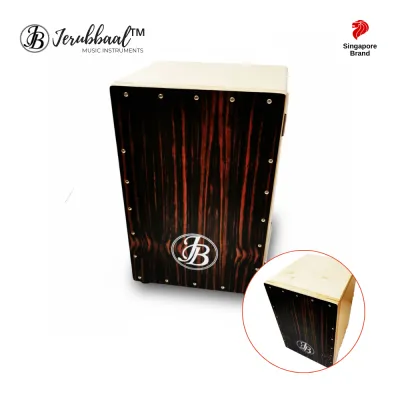
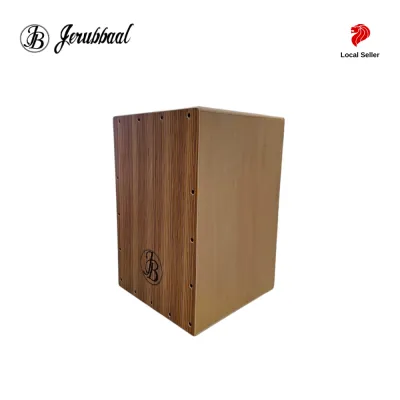
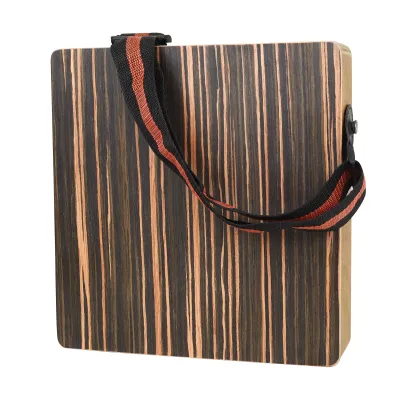
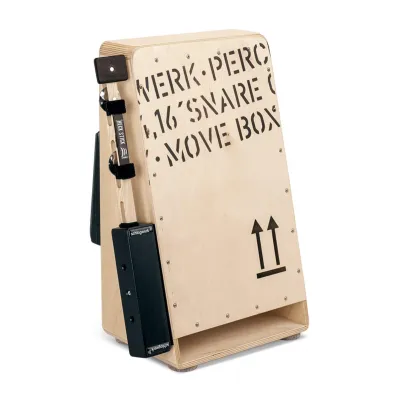
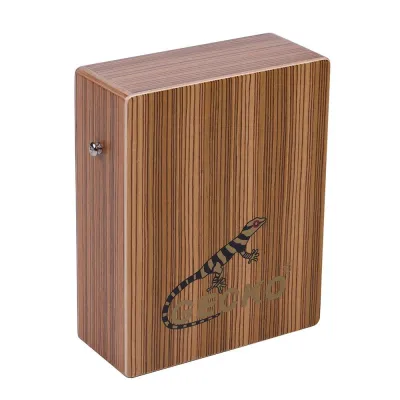
Prices are valid at publication and may change. Please refer to the product page for the latest price.
Air leakage is the most common cause of weak bass performance in collapsible instruments. If the panels do not seal tightly against one another when assembled, the internal air pressure escapes through the seams rather than the sound port. This loss of compression results in a thin, hollow bass sound that lacks punch. When comparing designs, look closely at how the panels join together and whether the design includes gaskets or tight-tolerance interlocking edges to minimize air loss.
Panel thickness and material selection also play a critical role in both sound quality and structural rigidity. Thinner panels reduce the overall weight of the instrument, making it easier to carry, but they are more prone to flexing. Excessive flexing absorbs acoustic energy, which dampens the volume and clarity of your playing. Hardwoods like birch and beech offer excellent rigidity and bright, clear tones, but they add weight. You must decide whether your priority is a lightweight instrument that is easy to carry or a heavier, more rigid box that projects sound more effectively.
Finally, the presence of moving parts introduces the risk of unwanted mechanical noise. During high-impact play, the vibrations traveling through the instrument can cause loose hinges, latches, or locking pins to rattle. This unwanted buzzing can ruin the clean separation between your bass and snare tones. Evaluating the quality of the hardware and how securely the components lock together is essential to preventing these distracting noises during a performance.
Evaluating Sound Performance and Build Quality
To predict how a foldable cajon will sound without relying on promotional claims, you must analyze the materials and construction of its key components. The front plate, or tapa, is the most critical element for sound production. It must be flexible enough to respond to delicate finger strikes, yet strong enough to withstand heavy slaps. Birch is a highly regarded material for tapas due to its balanced frequency response, offering crisp highs and warm mids. Some modern designs utilize synthetic laminates, which are highly resistant to temperature and humidity fluctuations—a significant advantage if you frequently play outdoors or live in a humid climate.

The internal snare system is another crucial factor in determining the instrument’s tonal versatility. Most foldable cajons use either guitar strings or snare wires pressed against the back of the tapa. Adjustable snare systems allow you to fine-tune the tension to achieve either a dry, tight snare sound or a loose, buzzy effect. However, the folding mechanism can place physical stress on these internal wires. When the cajon is collapsed, the snare system must be secured in a way that prevents the wires from bending, warping, or losing tension. Look for designs where the snare mechanism is either fully protected within the collapsed panels or easily removable for transit.
Structural integrity is the foundation of both safety and sound quality. Because you sit directly on the cajon while playing, the assembled frame must support your full body weight while subjected to the dynamic forces of your strikes. High-quality models use robust locking joints, such as heavy-duty latches, threaded tension rods, or reinforced interlocking channels, to hold the panels securely in place. When inspecting a model, verify that the locking mechanisms are made of durable materials like steel or high-strength composites rather than cheap plastics, which can crack under pressure or degrade over time.
Assessing Portability and Folding Mechanisms
The real-world convenience of a foldable cajon depends heavily on its collapsed dimensions and the design of its folding mechanism. For musicians who rely on public transport, such as the MRT in Singapore, or those with limited storage space in compact apartments, a flat-packing design is highly beneficial. Ideally, the folded instrument should slide easily into a backpack or a slim carrying case, leaving your hands free for other gear.
When evaluating portability, compare the folded dimensions against standard travel limits. If you plan to travel by air, a cajon that collapses to a thickness of under 10 centimeters can easily fit into standard airline carry-on luggage. This allows you to keep your instrument safe in the passenger cabin rather than risking damage by checking it into the cargo hold. Weight is another critical factor; a portable cajon should ideally weigh between 3 to 5 kilograms, striking a balance between ease of transport and structural stability.
The mechanical lifespan of the folding system is a common point of failure in lower-quality instruments. Every time you assemble and disassemble the cajon, the hinges, latches, and joints experience wear and tear. Metal hinges screwed directly into soft wood can loosen over time as the wood fibers degrade around the screws. Superior designs utilize through-bolts with locking nuts or reinforced metal inserts to ensure the hardware remains securely attached to the wooden panels over hundreds of assembly cycles.
Additionally, consider the practicalities of setting up the instrument at a venue. A design that requires external tools, loose screws, or a complicated multi-step process is highly impractical for quick stage changeovers or spontaneous jam sessions. Look for intuitive, tool-free assembly systems that allow you to go from a flat pack to a fully playable instrument in under a minute. The inclusion of a high-quality, padded gig bag is also essential, as it protects the delicate tapa from scratches and provides dedicated compartments for any removable parts.
Specification Comparison Matrix
To help you evaluate different options, the following matrix outlines the key specifications of the three primary design categories of foldable cajons. When researching specific models online or at local retailers, use this framework to compare their physical and mechanical characteristics.
| Design Category | Typical Folded Thickness | Average Weight | Common Tapa Materials | Snare Configuration | Locking Mechanism |
|---|---|---|---|---|---|
| Flat-Pack Interlocking | 5 cm – 8 cm | 3.0 kg – 4.0 kg | Birch plywood, synthetic laminates | Removable snare bar or fixed strings | Interlocking slots with tension straps |
| Hinged Collapsible | 10 cm – 15 cm | 4.5 kg – 5.5 kg | Beech, birch, or medium-density fiberboard | Adjustable internal snare wires | Heavy-duty metal latches or locking pins |
| Segmented Shell | 12 cm – 18 cm | 5.0 kg – 6.0 kg | Hardwood laminates, ash | Fixed guitar strings | Threaded hand knobs or internal tension rods |
When reviewing manufacturer specification sheets, always verify whether the listed weight includes the carrying bag, as heavy padding and straps can add significant weight to your travel setup. Furthermore, avoid relying solely on promotional images to judge the thickness of the folded instrument; always look for exact millimeter measurements to ensure the collapsed cajon will fit into your intended storage space or travel luggage.
How to Choose the Right Foldable Cajon for Your Needs
Choosing the right foldable cajon requires a clear understanding of your primary playing environment and travel habits. If you perform mostly unplugged acoustic gigs in intimate settings, your priority should be sound quality. In this scenario, a hinged collapsible design with thicker birch panels and robust locking latches is highly recommended. Although these models are slightly heavier and bulkier when folded, their superior structural rigidity and tighter air seals deliver a deeper, more satisfying bass response that can hold its own alongside acoustic guitars and vocals.
Conversely, if you are a frequent traveler, busker, or commuter who relies on public transit, portability should be your primary focus. An ultra-compact, flat-pack interlocking design is highly suitable for these situations. While these lightweight models may lose some acoustic bass projection due to their thinner panels and minimal internal volume, this limitation can easily be overcome if you use amplification. By placing a dedicated instrument microphone inside or behind the cajon and adjusting the low-end frequencies on a portable PA system, you can achieve a full, professional sound regardless of the instrument’s physical size.
Whether you are looking at entry-level models around S$150 or premium professional options exceeding S$400, visiting a local music retailer to test a display model in person is highly recommended. Take the time to assemble and disassemble the instrument yourself to evaluate the ease of use and the durability of the joints. While playing, test the cajon at various dynamic levels—from soft finger rolls to forceful slaps. Listen closely for any unwanted buzzing, rattling, or air escaping from the seams, and ensure that the snare response remains crisp and distinct from the bass tone.
Frequently Asked Questions (FAQ)
Do foldable cajons sound as good as standard wooden cajons?
Traditional solid-shell cajons generally offer superior bass resonance because their continuous, glued wooden joints create a perfectly sealed acoustic chamber that maximizes low-frequency projection. Foldable cajons, by contrast, feature seams and joints that can allow minor air leakage, slightly reducing the depth and warmth of the bass tone. However, high-quality folding designs utilize precise engineering, rubber gaskets, and tight-locking mechanisms to minimize this loss. For mid-range tones, high-end slaps, and snare crispness, a well-constructed foldable cajon can perform remarkably close to a standard instrument, making the minor acoustic trade-off well worth the immense gain in portability.
Are folding mechanisms prone to breaking during live performances?
The structural integrity of a foldable cajon depends heavily on the quality of its hardware and how well it is maintained. When you sit on the instrument, your body weight applies static load to the vertical panels, which are engineered to support adult weight when fully locked. However, the dynamic stress of active playing can strain the joints if the locking mechanisms are not fully engaged. To prevent damage during a performance, always perform a pre-gig inspection to ensure all latches, pins, or straps are tightly secured. Regularly checking for loose screws and keeping the hinges clean will ensure the folding mechanism remains reliable and safe for long-term use.

Community discussion
Share your experience or ask a question. Comments are reviewed before publication.