
Quick Guide to Choosing Your First Foldable Keyboard
A foldable piano keyboard offers an innovative solution for aspiring musicians in Singapore facing space constraints or needing a highly portable instrument. However, choosing the right model requires balancing the convenience of a folding design with the tactile feedback necessary for developing proper playing technique. Beginners must carefully weigh the trade-offs between extreme portability and authentic acoustic piano feel before making a purchase.
To find the ideal instrument, you should prioritize verifying the key action, polyphony limits, and structural stability of the folding mechanism. Evaluating these factors against your specific practice environment—such as a compact HDB apartment—and your long-term learning goals will ensure you select a keyboard that supports your musical journey rather than hindering your progress.
What Beginners Should Look for in a Foldable Keyboard
When shopping for a foldable piano keyboard, the technical specifications listed on the box or manufacturer’s website are your primary guide to its capabilities. Understanding these specifications helps you avoid purchasing an instrument that you will quickly outgrow as your skills advance.
Products mentioned in this guide
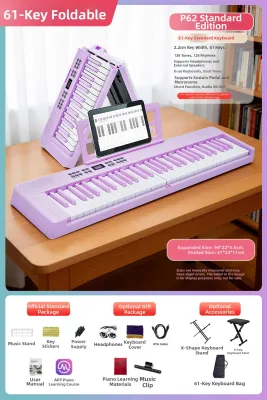
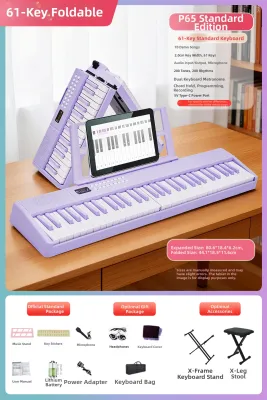
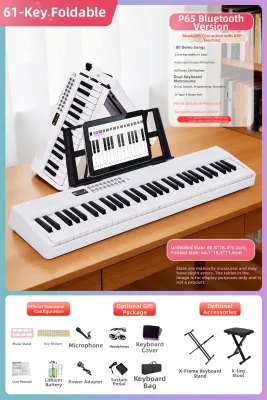
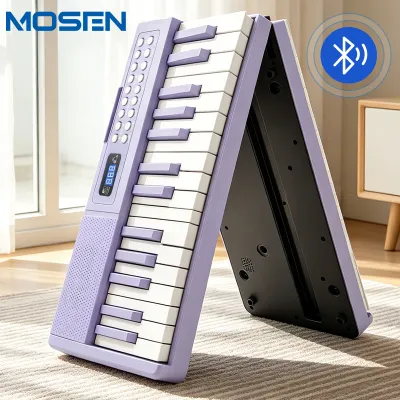
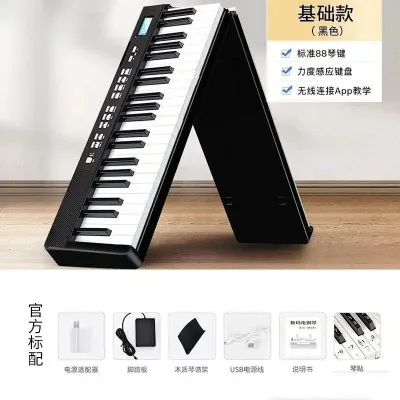
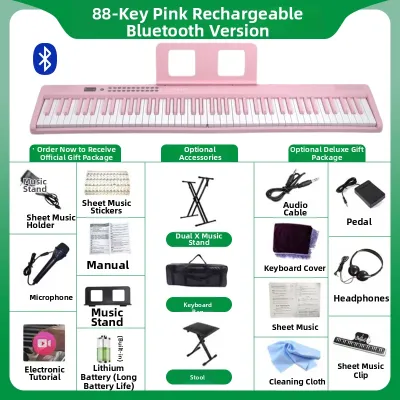
Prices are valid at publication and may change. Please refer to the product page for the latest price.

Key Count and Repertoire Limits The number of keys determines the range of music you can play. While a 61-key keyboard is highly compact and suitable for basic melodies, it will eventually limit your ability to play classical repertoire. An 88-key keyboard provides the full standard range of an acoustic piano, allowing you to practice any piece of music without running out of keys at either end.
Key Action and Finger Strength Key action refers to the mechanical response of the keys. Unweighted keys offer very little resistance, making it difficult to develop finger strength. Semi-weighted keys introduce light spring resistance, offering a middle ground that is easier on beginner fingers while providing some tactile feedback. Fully weighted or hammer-action keys simulate the actual weight of acoustic piano hammers, which is essential for learning dynamics and proper hand posture.
Polyphony Limits and Sound Quality Polyphony is the maximum number of individual notes the keyboard can produce simultaneously. When you play a chord while holding down the sustain pedal, each note continues to sound, quickly consuming polyphony. If a keyboard has a low polyphony limit, older notes will be cut off abruptly, resulting in a thin sound. For smooth transitions, look for a keyboard with a polyphony limit of at least 128 notes.
Evaluating the Folding Mechanism and Build Quality
The defining feature of a foldable piano keyboard is its ability to collapse into a fraction of its full length. However, this convenience introduces mechanical joints that can affect the instrument’s durability and playing experience.
Hinge Configurations and Stability Foldable keyboards typically use either a bi-fold (folding once in the middle) or a quad-fold (folding into four sections) design. Bi-fold models generally offer greater structural stability because they have fewer moving parts, though they remain longer when folded. Quad-fold models achieve maximum compactness but require more setup time and have more potential points of wear.
Physical Checks for Structural Integrity Before committing to a specific model, inspect the physical build quality of the folding joints. Look closely at the hinges for any signs of flexing, structural wobble, or uneven gaps along the seams when unfolded. A high-quality foldable keyboard should lock securely into place, creating a flat, rigid surface that does not sag or bounce when you press the keys.
Weight and Ergonomic Handling Portability is not just about size; weight plays a significant role in how easily you can transport your instrument. A keyboard that is too heavy will quickly become a chore to carry to music lessons or rehearsals. Look for a model that strikes a balance, typically weighing between two to four kilograms, and check if it includes a dedicated carrying case with comfortable straps.
Connectivity, Sound Engines, and Accessories
Modern digital keyboards rely heavily on external connections and accessories to enhance their functionality and provide a more versatile learning experience.
MIDI and USB Capabilities A USB-MIDI port is an invaluable feature for modern beginners, allowing you to connect the keyboard directly to a computer, tablet, or smartphone. This connection enables you to use interactive learning applications, music notation software, or digital audio workstations (DAWs) for recording and music production.
Headphone Jack Placement for Silent Practice In Singapore’s high-density housing environments, such as HDB flats, practicing the piano at odd hours can easily disturb family members or neighbors. A dedicated headphone jack is essential for silent practice, allowing you to play whenever inspiration strikes. Pay attention to the placement of the headphone jack; a front-mounted or side-mounted jack is generally more convenient than one located on the back panel.
Sustain Pedals and Music Rests Many foldable keyboards come bundled with basic accessories, but their quality and compatibility can vary. A sustain pedal is crucial for adding expression to your playing, so verify whether the keyboard uses a standard 1/4-inch jack that allows you to upgrade to a more robust pedal later on. Additionally, check the sturdiness of the included music rest to ensure it can hold a tablet or a heavy music book.
How to Build Your Shortlist Based on Practice Goals
To narrow down the wide variety of foldable keyboards available on the market, you must align the instrument’s features with your personal learning objectives and lifestyle.
Identifying Your Primary Use Case Before browsing retail listings, clearly define what you hope to achieve with the keyboard. If your goal is casual playing, learning basic chords, or having a portable instrument for travel, a lightweight model with semi-weighted keys may be perfectly adequate. However, if your ambition is to transition to an acoustic piano or prepare for formal classical training, you must prioritize key action realism and a full 88-key layout.
Adjusting Expectations for Realism It is important to maintain realistic expectations regarding the sound and touch of a foldable keyboard. Because these instruments are designed to be lightweight, their built-in speakers and sound engines may not match the depth of a high-end, non-folding digital piano. Recognizing these limitations allows you to focus on finding a model that offers the best possible compromise for your budget.
Using Specification Sheets to Filter Models Manufacturer specification sheets are your best tool for filtering out unsuitable options. Create a checklist of your non-negotiable features—such as a minimum polyphony of 128, a specific weight limit, or the presence of a USB-MIDI port—and compare them against the official specifications of the models you are considering.
Matching Keyboards to Casual Playing and Travel Needs
For many beginners, the primary appeal of a foldable keyboard is the freedom to practice anywhere, whether in a local park, a friend’s home, or while traveling abroad.
Prioritizing Compactness and Battery Power If mobility is your top priority, look for highly compact folding designs that can easily fit into standard carry-on luggage. Battery operation is another crucial feature for travel, allowing you to play in locations without easy access to electrical outlets. Check the manufacturer’s specifications for the estimated battery life and whether the keyboard can be powered via a standard USB power bank.
Accepting Unweighted Keys for Basic Practice When travel convenience is paramount, accepting unweighted or synth-action keys is often a necessary compromise. While these keys do not replicate the feel of an acoustic piano, they are significantly lighter and allow the instrument to have a much slimmer profile when folded. This type of key action is perfectly suitable for practicing basic finger patterns or memorizing chord progressions.
Expanding Sound Libraries with Software Portable keyboards often feature simplified onboard sound engines to keep the instrument lightweight. If you find the built-in piano sounds lacking, you can easily bypass them by connecting the keyboard to a smartphone or tablet via USB. By using mobile apps, you can access high-fidelity piano samples, transforming your compact travel keyboard into a highly versatile performance tool.
Meeting the Requirements for Serious Study and Exams
If you are preparing for graded music examinations, such as those conducted by ABRSM or Trinity College London, your instrument requirements are much stricter.
The Necessity of 88 Fully Weighted Keys Formal piano examinations require students to demonstrate a wide range of dynamics and expressive control. To develop these skills, you must practice on an instrument with 88 fully weighted or hammer-action keys that respond accurately to the speed and force of your touch. Unweighted or semi-weighted keys do not provide the physical resistance needed to build the finger strength required to perform successfully on acoustic pianos.
Ensuring Structural Integrity Under Heavy Play Advanced classical pieces often involve rapid passages and heavy chords. A foldable keyboard used for serious study must have an exceptionally robust folding mechanism that can withstand this level of physical force without flexing or shifting. If the keyboard’s joints are weak, the instrument may bounce during intense playing, which can negatively affect your technique and accuracy.
Verifying Pedal and Exam Board Compliance Before purchasing a foldable keyboard for exam preparation, carefully review the current syllabus and instrument regulations of your specific examination board. Many boards require the use of a progressive sustain pedal that supports half-pedaling techniques, which may not be compatible with basic foldable models. Additionally, verify whether the board permits the use of foldable instruments in exam preparation.
Essential Pre-Purchase Checks Before You Buy
Purchasing a musical instrument is a significant investment, and taking the time to perform thorough pre-purchase checks can save you from costly mistakes and disappointment.
Cross-Referencing Retailer Listings When shopping online or in-store, always cross-reference the retailer’s product descriptions with the official manufacturer specifications. Online marketplace listings can sometimes contain errors regarding dimensions, weight, key action, or included accessories. Verifying these details directly on the manufacturer’s official website ensures you know exactly what you are purchasing.
Checking Warranty and Local Support in Singapore Because foldable keyboards contain delicate electronic components and complex mechanical joints, having a reliable warranty is essential. Check the duration of the warranty and, crucially, whether there is an authorized local service center in Singapore. Purchasing from a retailer that offers local warranty support means you can easily get assistance or repairs if you encounter any manufacturing defects, avoiding the hassle of sending the instrument overseas.
Verifying Return and Exchange Policies Since touch and feel are highly subjective, a keyboard that looks perfect on paper may not feel comfortable to play in reality. Before making a purchase, especially from an online store, carefully read the return and exchange policy. Ensure that you can return or exchange the instrument within a reasonable timeframe if you find the key action too stiff, the folding mechanism unstable, or the sound quality unsatisfactory upon unboxing.
Setting Up and Maintaining Your Foldable Keyboard
Proper care and maintenance are vital to ensuring your foldable keyboard remains in excellent working condition and provides years of reliable service.
Proper Folding and Unfolding Techniques The folding joints of your keyboard house delicate internal ribbon cables that connect the electronic components of each section. To prevent damaging these cables or putting undue stress on the hinges, always follow the manufacturer’s instructions for folding and unfolding the instrument. Avoid forcing the joints if you encounter resistance, and ensure that the locking mechanism is fully disengaged before attempting to fold the keyboard.
Safe Storage and Dust Prevention When the keyboard is not in use, store it in a clean, dry environment away from direct sunlight and extreme temperature fluctuations, which can warp the plastic casing. Dust is one of the primary enemies of digital keyboards, as fine particles can settle into the keybed and interfere with the sensors under the keys. Always cover your keyboard with a dust cover or store it inside its padded carrying case when you are finished practicing.
Routine Visual and Mechanical Checks Over time, the repeated action of folding and unfolding can cause screws to loosen or hinges to become stiff. Periodically inspect your keyboard for any loose hardware, signs of wear on the joints, or misalignment along the seams when unfolded. If you notice any stiffness in the hinges, do not apply household lubricants unless specifically recommended by the manufacturer, as these can attract dust and damage the plastic.
Frequently Asked Questions (FAQ)
Can I use a foldable keyboard for formal piano exams?
Generally, foldable keyboards are not recommended as the primary instrument for formal piano examinations. Most examination boards, such as ABRSM, require a standard 88-key instrument with fully weighted hammer-action keys and a compatible progressive sustain pedal to properly assess a student’s dynamic control and technique. While a high-quality foldable keyboard can serve as an excellent portable practice tool for learning notes and fingerings while traveling, you should consult the specific regulations of your examination board to ensure your instrument meets all requirements before registering for an exam.
Do foldable keyboards require external power sources?
Most foldable keyboards offer dual power options, allowing them to run on either an external power source or internal rechargeable batteries. When practicing at home, using the included AC adapter or a USB power source ensures a stable supply of electricity. If you plan to practice outdoors or in areas without power outlets, you can rely on the built-in battery. However, keep in mind that running the keyboard on low battery power can sometimes affect the maximum volume of the built-in speakers or cause slight performance fluctuations, so it is best to keep the instrument fully charged.

Community discussion
Share your experience or ask a question. Comments are reviewed before publication.