
Finding a compatible ukulele bag for your Kala, Mahalo, or Enya instrument is more than just a matter of matching brands. While these three manufacturers dominate the beginner and intermediate ukulele market, their instruments feature diverse body shapes, neck lengths, and depths that do not fit into a single, universal bag. A soprano ukulele from Mahalo might slide easily into a standard entry-level sleeve, while a concert-sized Enya Nova U—with its modern composite body and thin profile—or a deep-bodied Kala tenor will require highly specific internal dimensions to remain secure. To protect your instrument from physical impact and high humidity, you must evaluate the exact physical specifications of your instrument and match them against the structural features of a dedicated gig bag.
Choosing the right bag involves understanding how your instrument will be transported and stored. A student commuting on public transit during peak hours faces different hazards than a player who primarily keeps their instrument at home to keep off the dust. By focusing on precise measurements, structural padding, and climate-conscious materials, you can find a gig bag that keeps your ukulele safe, dry, and securely tuned wherever you go.
Identifying Your Ukulele Size and Brand Specifications
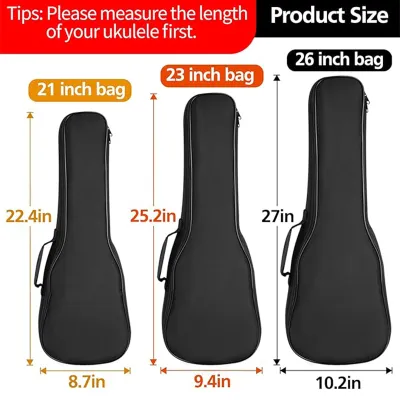
To select a compatible ukulele bag, you must first identify the exact size category of your instrument. Ukuleles are primarily classified into four main sizes: soprano, concert, tenor, and baritone. Soprano models are the traditional, compact size, typically measuring around 53 centimeters in total length. Concert models are slightly larger, averaging 58 centimeters, offering a longer fretboard and a deeper tone. Tenor models generally measure around 66 centimeters, providing a larger body and a wider fretboard that appeals to solo performers. Because each size has a distinct scale length and body volume, a bag designed for a soprano will not accommodate a concert or tenor instrument, while a bag that is too large will allow a smaller instrument to slide around, risking damage to the neck and tuning pegs.
Products mentioned in this guide
![TMW Ukulele Bag Soprano Concert Tenor 21 24 26 Inch Padded Non-Padded Durable Lightweight Accessories [LIMITED STOCK]](https://img.lazcdn.com/g/p/e90aa04e52be6081bb59361ef099b06e.jpg_400x400q80.jpg_.webp)
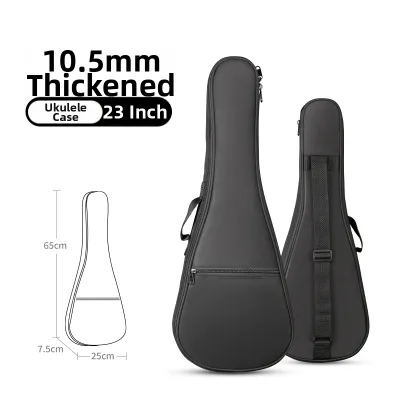
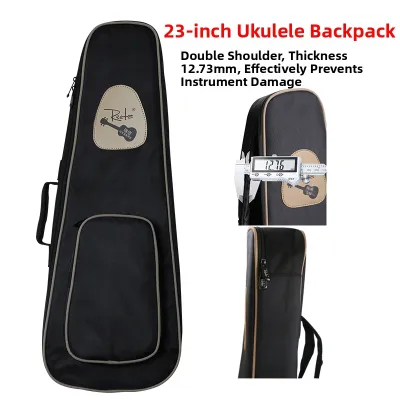
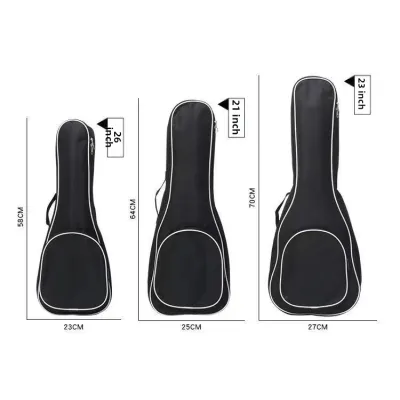
Prices are valid at publication and may change. Please refer to the product page for the latest price.
Relying solely on the brand name when purchasing a bag is a common mistake that often leads to compatibility issues. For example, Kala produces hundreds of different models across all size categories, ranging from their ultra-compact pocket sopranos to their large baritone and U-Bass models. Similarly, Mahalo is famous for its colorful soprano models, but they also manufacture high-quality concert and tenor instruments. Enya has gained massive popularity with its Nova U series, which features a carbon fiber composite body that is significantly thinner than traditional wooden ukuleles but has a slightly wider, asymmetrical headstock. If you simply search for a bag using only the brand name, you may end up with a product designed for a completely different model line, resulting in a fit that is either too tight to zip shut or too loose to provide real protection.
To find the exact specifications of your instrument, look inside the soundhole of your ukulele. Most manufacturers place a paper label or a stamp inside the body that lists the exact model number. For instance, a Kala model starting with “KA-S” indicates a soprano, “KA-C” indicates a concert, and “KA-T” indicates a tenor. Once you have this model number, you can visit the manufacturer’s official website or consult their specification sheets to find the precise physical dimensions, including the total length, body depth, and upper and lower bout widths. Keeping these exact numbers on hand is the most reliable way to cross-reference potential gig bags and ensure a snug, secure fit.
Body shape variations also play a significant role in bag selection. While the traditional figure-eight shape is the most common, pineapple-shaped ukuleles, cutaway designs, and models with elongated headstocks require extra consideration. Pineapple ukuleles lack the waist indentation of standard models, meaning they have a wider middle section that may stretch the sides of a standard form-fitting bag. Cutaway models, which feature a scooped-out upper shoulder to allow easier access to higher frets, generally fit into standard bags but may have different weight distributions. If your instrument has an unconventional shape, verifying the internal width of the bag at all points is essential to prevent structural strain on the zippers and seams.
Evaluating Protection and Comfort Features for Daily Use
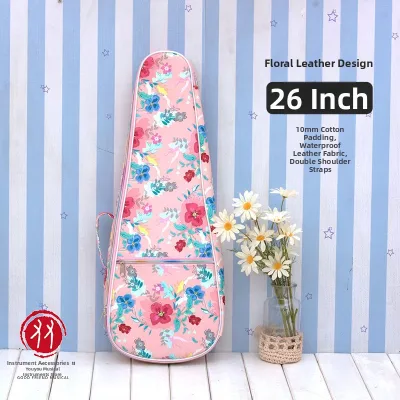
When evaluating a ukulele bag, the level of protection it offers is directly tied to the thickness and density of its padding. Entry-level bags often feature no padding at all, consisting of a single layer of thin nylon designed primarily to keep off dust and light scratches. For daily transport, look for bags with at least 10mm to 20mm of high-density foam padding. This padding acts as a shock absorber, cushioning the instrument against accidental bumps, drops, and crowded commutes. The interior lining should also be soft and non-abrasive, such as brushed polyester or velvet, to prevent the finish of your Kala, Mahalo, or Enya from scratching over time.

Another critical protective feature is the internal neck support mechanism. The neck is the most vulnerable part of a ukulele, and a sudden impact can easily cause a fracture at the headstock joint. High-quality gig bags often include a dedicated neck cradle made of dense foam, complete with a hook-and-loop strap to secure the neck in place. This cradle suspends the headstock within the bag, preventing it from contacting the outer edges and absorbing the brunt of any physical shocks. Additionally, look for bags that feature protective rubber bumpers or reinforced patches on the exterior bottom, which prevent the strap buttons and lower body from hitting the ground hard when you set the bag down vertically.
For those who commute regularly, comfort and ergonomic features are just as important as physical protection. Adjustable, padded backpack-style straps are highly recommended, as they distribute the weight of the instrument evenly across both shoulders, leaving your hands free. The shoulder straps should feature breathable mesh backing to prevent heat buildup during warm commutes. The main carrying handle should also be heavily padded and secured to the bag’s body with reinforced cross-stitching or metal rivets, ensuring it can withstand the constant tension of being picked up and set down throughout the day. High-quality, dual-zipper pulls made of durable nylon or rust-resistant metal are also essential, as cheap zippers are often the first component to fail on a gig bag.
Storage capacity is another practical consideration for daily use. A good gig bag should feature at least one spacious exterior accessory pocket to hold your essential gear. When commuting to lessons or jam sessions, you will need space to carry a clip-on tuner, a capo, spare nylon or fluorocarbon strings, a cleaning cloth, and perhaps a small chord book or sheet music. Ensure the pocket is deep enough to hold these items without pressing tightly against the face of the ukulele, which could put unwanted pressure on the bridge and soundboard. Some modern bags even feature dedicated cable ports or internal mesh organizers to keep your accessories neat and easily accessible.
In tropical climates, weather resistance is a crucial factor that should not be overlooked. Sudden downpours are common, and high humidity can warp wooden instruments or cause metal tuning gears to rust. Look for gig bags constructed from water-resistant exterior fabrics, such as high-denier Oxford cloth or heavy-duty polyester. While these materials may not make the bag completely waterproof during a heavy storm, they provide valuable protection against light rain and splashes as you run for cover. Some premium gig bags also include a dedicated, tuck-away rain cover that can be quickly pulled over the entire bag for excellent moisture protection during wet weather.
Measuring Your Instrument to Verify Bag Compatibility
Before finalizing your purchase on any e-commerce platform or local music store website, you should physically measure your ukulele to verify its compatibility with your chosen bag. Do not rely on general size labels alone, as manufacturing tolerances and design variations can differ between brands. To get accurate measurements, you will need a standard flexible measuring tape or a long ruler. Place your ukulele flat on a stable, level surface, such as a table or floor, to ensure your measurements are precise and consistent.
First, measure the total length of the instrument. Run the measuring tape from the very top of the headstock down to the bottom edge of the lower bout, keeping the tape parallel to the fretboard. Next, measure the width of the lower bout, which is the widest part of the ukulele’s body located below the waist. After that, measure the upper bout width, which is the widest part of the body located above the waist. Finally, measure the body depth by placing the ruler flat against the side of the instrument, measuring from the backboard to the top edge of the soundboard. If your ukulele has a protruding bridge or pickup knobs, make sure to include these in your depth measurement to ensure the bag can zip shut without compressing these components.
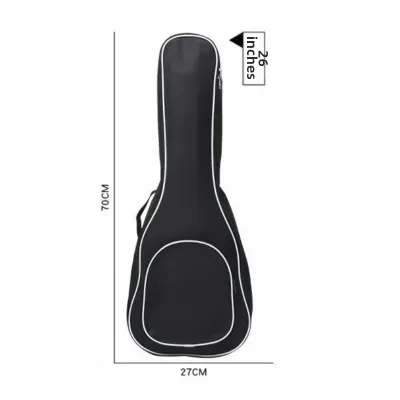
Once you have these four measurements, compare them directly against the internal dimensions listed by the gig bag manufacturer. It is vital to understand the difference between a bag’s external and internal dimensions. External dimensions represent the outer boundaries of the bag, including the thick padding, exterior pockets, and carry handles. Internal dimensions represent the actual usable space inside the padded compartment. If a bag’s external length is 60 centimeters, its internal length may only be 56 centimeters due to thick 20mm padding on both ends. Always ensure that your ukulele’s measurements are at least one to two centimeters smaller than the bag’s internal dimensions to allow for a comfortable fit that does not strain the zippers.
When shopping online, it is highly recommended to check the seller’s return policies and sizing guarantees before checking out. Even with careful measurement, slight variations in bag construction or instrument shape can occasionally result in an imperfect fit. Look for reputable sellers on local e-commerce platforms that offer hassle-free returns or exchanges if the bag does not fit your specific Kala, Mahalo, or Enya model. Reading customer reviews can also provide valuable insights, as other buyers often share their experiences regarding how well specific ukulele models fit into the bag, helping you make a highly informed decision.
Creating a Shortlist Based on Your Transport Needs
To narrow down your options and create a practical shortlist, you must match the type of gig bag to your specific lifestyle, transport habits, and budget. If you primarily play your ukulele at home and only need a cover to keep off dust and pet hair, a basic unpadded nylon sleeve is a lightweight and cost-effective choice. These sleeves are incredibly easy to store when not in use, but they offer virtually no protection against drops or impacts, making them unsuitable for regular travel or commuting.
For the vast majority of players, a standard padded gig bag offers a balanced combination of weight, protection, and storage. These bags typically feature 10mm to 15mm of foam padding, comfortable backpack straps, and spacious accessory pockets. They are lightweight enough to carry comfortably on long walks or public transit, yet sturdy enough to protect your instrument from the typical bumps of daily life. A quality padded gig bag is generally the most versatile option for students attending weekly lessons, hobbyists meeting up with friends, or musicians traveling to local gigs.
If you frequently travel long distances, commute on highly crowded transit routes, or own a high-value solid-wood ukulele, a heavy-duty hybrid case or semi-rigid foam case is a highly protective choice. These cases combine the lightweight portability of a gig bag with the structural rigidity of a hard case, featuring thick molded foam walls, a reinforced plastic frame, and plush interior lining. While hybrid cases are heavier, bulkier, and generally more expensive than standard gig bags, they offer excellent impact protection and climate insulation, keeping your instrument safe from sudden temperature and humidity swings.
Before making your final purchase, use this quick pre-purchase checklist to verify that your chosen bag meets all your requirements:
- Have you physically measured your ukulele and confirmed that its dimensions are smaller than the bag's internal dimensions?
- Does the bag offer adequate padding thickness (at least 10mm for regular travel) and a dedicated neck support strap?
- Are the exterior materials water-resistant to protect against sudden tropical rain?
- Are the shoulder straps and carrying handles reinforced with heavy-duty stitching?
- Does the seller offer a clear return or exchange policy in case of sizing issues?
By systematically verifying each of these points, you can confidently select a ukulele bag that provides the ideal blend of fit, protection, and convenience for your Kala, Mahalo, or Enya instrument.
Frequently Asked Questions (FAQ)
Is a hard case necessary for beginner ukuleles?
A hard case is generally not necessary for most beginner ukuleles, especially if you primarily use your instrument at home or commute carefully. Padded gig bags with 10mm to 15mm of foam offer more than enough protection for daily transport, while being lighter and easier to carry. However, a hard case becomes essential if you travel frequently by air and need to check your instrument as luggage, or if you own a high-end, solid-wood ukulele that is highly sensitive to humidity changes. For durable composite instruments like the Enya Nova U, a standard padded gig bag is perfectly sufficient for almost all everyday scenarios.
How to clean and maintain a nylon ukulele gig bag?
To clean a nylon ukulele gig bag, start by emptying all pockets and shaking out any loose dust or debris from the interior. For exterior dirt and stains, use a soft cloth dipped in lukewarm water mixed with a small amount of mild liquid soap, gently scrubbing the affected areas. Avoid soaking the bag completely or submerging it in water, as excess moisture can seep into the thick foam padding, leading to mold and mildew growth which is especially problematic in humid climates. Once spot-cleaning is complete, wipe down the bag with a clean, damp cloth to remove any soap residue, and hang it to air dry completely in a well-ventilated indoor space away from direct sunlight.

Community discussion
Share your experience or ask a question. Comments are reviewed before publication.