
Selecting the right Yamaha 88-key keyboard as a beginner in Singapore requires balancing realistic key feel, physical space constraints, and essential learning features. Because a digital piano is a long-term investment in your musical journey, understanding how different models align with your home environment and practice habits is crucial. By focusing on key technical specifications rather than marketing jargon, you can find an instrument that supports proper technique development from day one.
For most beginners, the decision comes down to choosing between a highly portable slab-style keyboard and a more permanent, furniture-style console. Both options offer distinct advantages depending on whether you prioritize space flexibility in a typical local apartment or a traditional playing experience. Navigating these choices involves examining keybed mechanisms, connectivity options, and local warranty support to ensure a reliable purchase.
Evaluating Keyboard Action for an Authentic Feel
The most critical factor in choosing a beginner keyboard is the key action, which determines how closely the instrument mimics the feel of an acoustic piano. Acoustic pianos use a complex system of wooden hammers and gravity to produce sound, creating a natural resistance when keys are pressed. To replicate this, quality digital keyboards employ weighted or hammer-action keybeds rather than light, spring-loaded plastic keys.
Products mentioned in this guide
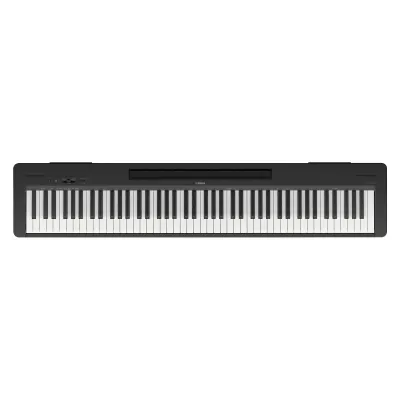
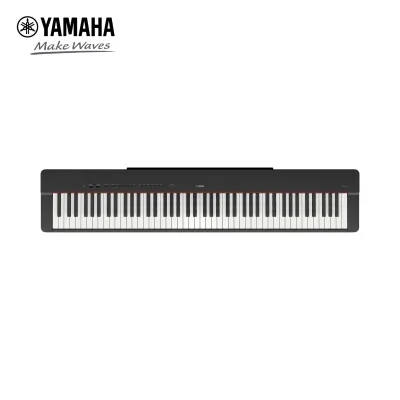
![Yamaha P-143BT Portable Digital Piano 88 Weighted Keys Bluetooth Beginners Instrument P143 P-143 [LIMITED STOCK]](https://img.lazcdn.com/g/p/b40c0a5d1400f3afb2c14a886464b0ef.jpg_400x400q80.jpg_.webp)
Prices are valid at publication and may change. Please refer to the product page for the latest price.
When browsing Yamaha’s specifications, you will encounter terms like Graded Hammer Standard (GHS) or Graded Hammer Compact (GHC). These systems use actual physical weights inside the keyboard to simulate the resistance of acoustic hammers. The term “graded” indicates that the keys on the lower register feel heavier to the touch, while the keys on the higher register feel lighter, precisely matching the physics of an acoustic grand piano.
Touch sensitivity is another essential feature to verify on any entry-level spec sheet. This technology ensures that the volume and tonal character of a note change based on how quickly or firmly you strike the key. Beginners should look for models that offer adjustable touch sensitivity settings, typically categorized as Hard, Medium, Soft, or Fixed, allowing you to customize the keybed response to your finger strength.
While technical specifications provide a solid baseline, testing the keyboard in person at an authorized showroom in Singapore is highly recommended. When testing a model, pay close attention to the physical resistance of the keys and how quickly they return to their resting position. Additionally, turn the volume down completely and play the keys to assess the mechanical noise of the keybed; a quiet, smooth mechanism is essential for distraction-free practice.
Adapting to Space and Lifestyle Constraints
Living in Singapore often means managing limited floor space, making the physical footprint of your keyboard a primary consideration. Portable slab keyboards, often referred to as stage or portable digital pianos, offer excellent space-saving flexibility. These models can be easily set up on a temporary stand, moved between rooms, or stored away in a closet or under a bed when not in use.

In contrast, console-style digital pianos feature integrated wooden cabinets that mimic the look of a traditional upright piano. While these models provide a highly stable playing platform and an elegant aesthetic, they occupy a permanent footprint in your living room or bedroom. They are also significantly heavier, making them difficult to reposition without assistance once assembled.
For apartment dwellers, sound management is another critical lifestyle factor to evaluate before buying. Check the placement of the built-in speakers on your chosen model, as upward-facing or rear-projecting speakers interact differently with nearby walls and furniture. Furthermore, ensure the keyboard features at least one standard headphone jack—and preferably two if you plan to practice with a teacher—to allow for silent practice at any hour of the day or night.
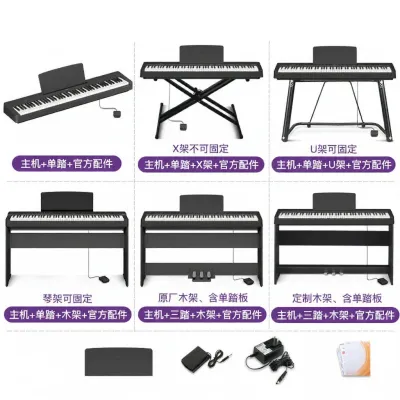
Your choice of stand also plays a major role in space optimization and playing comfort. Foldable X-stands or Z-stands are highly portable and budget-friendly, but they can sometimes wobble during expressive playing. If space permits, opting for a dedicated wooden stand designed specifically for your keyboard model provides superior stability and allows you to attach a secure triple-pedal unit.
Checking Connectivity and Learning Features
A digital keyboard’s internal processing power and connectivity options directly influence how you practice and progress. One of the first specifications to check is polyphony, which represents the maximum number of individual notes that can sound at the same time. For beginner practice, a minimum of 64-note polyphony is necessary, though 128-note or 192-note polyphony is highly recommended to prevent notes from cutting off when using the sustain pedal or layering multiple sounds.
Modern learning methods frequently utilize interactive software, making digital connectivity a vital feature to verify. Ensure the keyboard includes a USB-to-Host port, which allows you to connect the instrument directly to a tablet, smartphone, or computer. This connection enables you to use interactive learning apps, notation software, and digital audio workstations to enhance your daily practice sessions.
Some contemporary Yamaha models also offer Bluetooth MIDI or Bluetooth Audio capabilities, allowing for wireless integration with mobile devices. While wireless connectivity reduces cable clutter, it is important to note that wired connections generally offer the lowest latency and most stable performance. Check the compatibility of the keyboard with official companion apps, such as Yamaha’s Smart Pianist, which simplifies adjusting settings and selecting voices.
In addition to external connectivity, look for built-in tools that facilitate structured practice. A physical metronome button is indispensable for developing a steady sense of rhythm and timing. Other helpful features include a basic onboard MIDI recorder to capture and critique your playing, and split or dual modes that let you layer two different instrument sounds or divide the keyboard into two identical pitch ranges for side-by-side instruction.
Understanding Yamaha's Entry-Level Series
To narrow down your search, it helps to understand how Yamaha categorizes its entry-level 88-key instruments into distinct product lines. The P-series is Yamaha’s dedicated line of portable digital pianos, designed for musicians who need a compact, lightweight instrument. These models focus heavily on delivering a high-quality piano sound and realistic key action in a streamlined chassis that fits easily into smaller rooms or temporary setups.
The Arius series, often designated by the prefix YDP, represents Yamaha’s console-style digital pianos. These instruments are built into wooden cabinets and are designed to serve as a permanent musical centerpiece in the home. Arius models typically feature more powerful built-in speaker systems, integrated sliding key covers, and a complete three-pedal assembly, offering an experience that closely mirrors playing an acoustic upright piano.
Because product lineups and specific model designations evolve over time, buyers should always verify current availability on the official Yamaha Singapore website. Avoid relying on outdated online reviews or international forums, as model availability and bundled features can vary significantly by region. Visiting an authorized local dealer allows you to view the latest product catalog and compare the physical characteristics of each series side by side.
Setting a Realistic Budget and Value Expectations
When establishing your budget, it is important to prioritize features that directly contribute to your development as a pianist. Beginners are often tempted by keyboards that boast hundreds of built-in instrument voices, drum rhythms, and digital effects. However, for serious piano study, these features are secondary to a high-quality weighted key action and a realistic primary piano tone.
To maximize the value of your investment, look for bundle deals offered by authorized local retailers. These packages often combine the keyboard with essential accessories like a matching stand, a bench, headphones, and a sustain pedal at a lower total cost than purchasing each item individually. Ensure that the bundled accessories are of good quality, particularly the stand and bench, which must support your body weight and playing posture safely.
Always verify current retail prices in S$ directly with authorized local distributors rather than relying on third-party online listings or overseas marketplaces. Local pricing often reflects regional promotions, shipping costs, and local taxes, making direct dealer inquiries the most accurate way to plan your budget. Additionally, purchasing locally ensures you are paying the correct market rate for genuine products.
Pre-Purchase Verification and Accessories
Before completing your purchase, perform a thorough check of what is included in the retail box to avoid unexpected secondary expenses. Some entry-level keyboards do not include a sustain pedal, or they may only come with a basic plastic footswitch that slides around on tiled floors. If a realistic piano-style sustain pedal is not included, you will need to budget for one separately to practice proper pedaling techniques.
Verify that the package includes a music rest capable of holding your sheet music or tablet securely, as well as the correct power adapter. Because Singapore uses Type G electrical plugs and a standard voltage of 230V, purchasing from an authorized local dealer guarantees that the included power supply is fully compatible and safe for local use without the need for hazardous adapters.
Warranty coverage is another critical factor that highlights the importance of buying from authorized local channels. Instruments purchased through parallel import channels or unauthorized online marketplaces often lack local manufacturer warranty support, meaning any technical issues or component failures could result in costly out-of-pocket repairs. Confirm that your purchase includes a valid local warranty and register the product online immediately after purchase.
Finally, remember to factor in the cost of a comfortable, height-adjustable bench if one is not included in your bundle. Proper seating height is essential for maintaining correct hand and wrist alignment, which helps prevent fatigue and repetitive strain injuries during long practice sessions. Investing in a decent pair of closed-back headphones will also ensure you can practice comfortably without external distractions.
Frequently Asked Questions (FAQ)
Do I need an amplifier for a beginner Yamaha 88-key keyboard?
No, you do not need an external amplifier for home practice, as almost all beginner Yamaha 88-key digital pianos feature built-in stereo speakers. To evaluate the volume capability of a specific model, check the speaker wattage listed in the user manual’s technical specifications. External keyboard amplifiers or active monitors are only necessary if you plan to perform in large venues, play in a band with loud acoustic instruments, or require high-volume projection beyond what a standard living room requires.
How often should a digital keyboard be maintained?
Unlike acoustic pianos, digital keyboards do not contain physical strings or hammers under tension, meaning they never require professional tuning or mechanical regulation. Maintenance is exceptionally simple and focuses primarily on keeping the instrument clean and dust-free. Regularly wipe down the keys and cabinet with a dry, soft microfiber cloth, and always use a fitted dust cover or close the integrated key cover when the instrument is not in use to prevent dust from accumulating in the key sensors.

Community discussion
Share your experience or ask a question. Comments are reviewed before publication.