
Starting to learn the piano is an exciting journey, but the sheer variety of instruments available can quickly feel overwhelming. For beginners in Singapore, choosing a keyboard with 88 fully weighted keys is a highly impactful decision to ensure long-term success. This configuration directly replicates the layout, range, and physical response of a traditional acoustic piano, allowing you to develop correct finger strength, hand posture, and expressive control from your very first lesson.
To understand why this matters, it helps to look at the physical differences between key actions. Synth-action keys are light and springy, offering almost no resistance, which makes them suitable for fast organ or synthesizer leads but highly detrimental to piano technique. Semi-weighted keys add a small amount of spring resistance, but they still lack the mechanical leverage of a real piano. Fully weighted keys, often utilizing a hammer-action mechanism, simulate the actual weight of the wooden hammers inside an acoustic piano. Without this resistance, your fingers will not develop the muscle memory and control needed to play with varying levels of volume and expression.
Furthermore, a standard acoustic piano has exactly 88 keys. While beginner pieces often focus on the center of the keyboard, classical repertoire, modern pop arrangements, and examination pieces quickly expand to the upper and lower registers. Starting on a smaller keyboard, such as a 61-key or 76-key model, means you will inevitably run out of notes as you progress, forcing an early and costly upgrade. While a smaller, non-weighted keyboard might serve as a temporary, budget-friendly option for the first few weeks of basic note recognition, it quickly becomes a bottleneck for anyone serious about learning proper piano technique.
Products mentioned in this guide
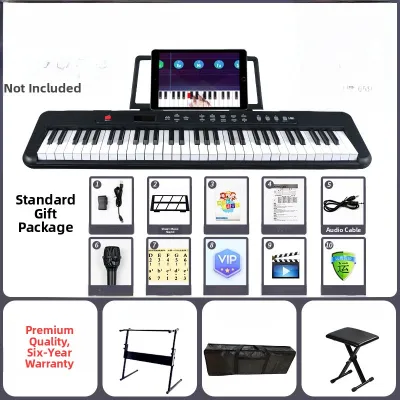
![Casio CDP-S110 Digital Piano [FREE X-STAND] Portable 88 Weighted Keys Instrument for Beginners](https://img.lazcdn.com/g/p/d40c3133bab175e5ba2ea3c8e22a63d9.png_400x400q80.png_.webp)
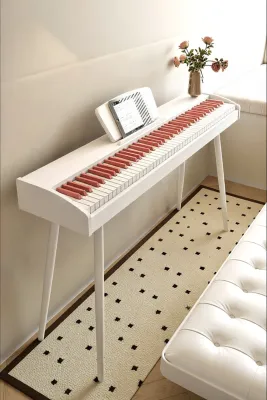
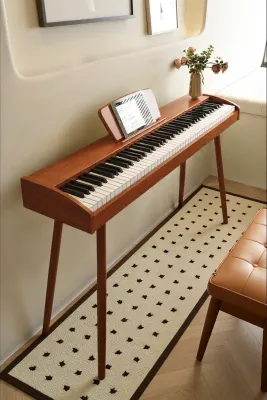
![Roland FP10 Portable Digital Piano Keyboard 88 Keys PHA-4 FP-10 Wooden Stand Sustain Pedal FP 10 The Music Works [LIMITED STOCK]](https://img.lazcdn.com/g/p/c22997b08d0f6f3184d539150f91cb18.jpg_400x400q80.jpg_.webp)
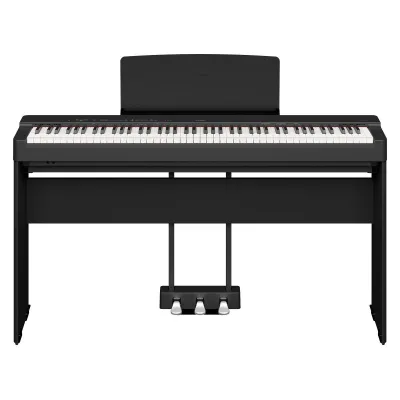
Prices are valid at publication and may change. Please refer to the product page for the latest price.
Core Specifications to Check Before Buying
When evaluating digital keyboards, the technical specifications on the box can look like a different language. Understanding a few core metrics will help you cut through the marketing jargon and find an instrument that offers genuine playability. The first and most critical specification to examine is the key action type. Manufacturers use various proprietary names for their hammer-action systems, but you should look for terms like “graded hammer action” or “progressive hammer action.” This indicates that the keys feel heavier in the lower register and lighter in the higher register, precisely mimicking the physics of an acoustic grand piano where the bass hammers are larger than the treble hammers.
Another vital specification is polyphony, which refers to the maximum number of individual notes or voices the keyboard can produce simultaneously. When you play a chord with the sustain pedal pressed down, each note continues to sound, consuming polyphony. If you play a fast run over a sustained chord, a low polyphony limit (such as 32 or 48 notes) will cause the oldest notes to cut off abruptly, ruining the sound. For a beginner, a minimum of 64-note polyphony is acceptable, but aiming for 128-note or 192-note polyphony ensures the instrument can handle complex classical pieces and layered sounds as your skills advance.
The quality of the sound engine and the built-in speakers also play a massive role in your practice experience. Most digital pianos use stereo sampling, which involves recording high-quality acoustic grand pianos at multiple volume levels. Look for instruments that offer multi-layered sampling, meaning the tone changes dynamically depending on how hard you strike the key, rather than just getting louder. Additionally, pay attention to the speaker output, measured in watts. For home practice in a typical Singapore living room, a built-in speaker system of at least 2 x 6 watts to 2 x 12 watts is usually sufficient to deliver a rich, full-bodied sound without distorting.
Finally, modern connectivity options are essential for contemporary learning methods. A USB-to-Host port (often a USB Type-B connection) allows you to connect the keyboard to a computer, tablet, or smartphone, transforming it into a MIDI controller for educational software, interactive learning apps, or music production software. Dual headphone jacks are incredibly useful for silent practice sessions, allowing both the student and a teacher or parent to listen simultaneously without disturbing the household. Some models also feature Bluetooth audio and MIDI, which simplifies wireless connection to mobile devices for playing along with backing tracks.
Matching Keyboard Features to Your Learning Goals
Your choice of keyboard should align closely with your specific musical aspirations and your home environment. Classical piano students, for instance, require an instrument that prioritizes an authentic acoustic feel and a highly responsive pedal system. For these learners, a digital piano with minimal digital buttons, a high-quality graded hammer action, and support for a continuous half-damper pedal is ideal. A clean, uncluttered interface helps minimize distractions, keeping the focus entirely on technique, tone production, and sheet music.

If your interests lean more toward modern pop music, jazz, or music production, your feature requirements will look quite different. You will likely benefit from a keyboard that offers a wider variety of built-in sounds, such as electric pianos, organs, strings, and synthesizers. Look for models with robust MIDI integration, dedicated pitch bend wheels, and compatibility with Digital Audio Workstations (DAWs). These features allow you to use the keyboard as a versatile production tool, enabling you to record, arrange, and produce your own tracks on a computer while still enjoying the expressive feel of 88 weighted keys.
For many households in Singapore, physical space is a primary consideration. Living in a high-rise apartment or a compact HDB flat means a traditional acoustic piano or a bulky cabinet-style digital piano may not be practical. In these scenarios, a portable 88-key digital piano is an excellent solution. These slim, lightweight models can be placed on a sturdy, foldable double-X or Z-stand and easily stored away when not in use. When evaluating portable designs, check the physical depth of the keyboard; some modern models are designed with an ultra-slim footprint of under 30 centimeters, making them exceptionally easy to integrate into tight living spaces without sacrificing key action quality.
Navigating Brands and Series Available in Singapore
Navigating the market requires understanding how major manufacturers structure their product lineups. Established brands like Yamaha, Roland, Casio, and Korg offer dedicated entry-level series designed specifically for beginners. For example, you will often see portable, budget-friendly series designed for home practice, alongside more advanced console-style series meant to look like traditional furniture. By identifying these series, you can easily compare models within the same class rather than getting confused by professional-grade stage pianos or complex workstations that are unnecessary for a beginner.
To make an informed comparison, you must learn to read manufacturer specification sheets objectively. Do not rely solely on marketing buzzwords like “natural feel” or “grand sound.” Instead, look at the specific name of the key action mechanism (such as Yamaha’s GHS, Roland’s PHA-4, or Casio’s Smart Scaled Hammer Action) and research how users describe their physical resistance and key texture. Compare the weight of the instruments if portability is important to you, and check the exact dimensions to ensure the keyboard will fit your designated space. Comparing these hard specifications across similar price tiers will reveal which model offers the optimal balance of action, sound, and features for your budget.
It is also crucial to exercise caution when browsing general e-commerce platforms and online marketplaces. You will frequently encounter unbranded or ultra-budget 88-key keyboards advertised with terms like “fully weighted” or “professional touch” at prices that seem too good to be true. In many cases, these instruments use cheap spring-loaded mechanisms that offer no genuine hammer action, resulting in a poor playing experience that can actively harm a beginner’s technique. Additionally, these budget options often suffer from poor sound sampling, unreliable electronics, and a lack of local warranty support, making them a risky investment compared to entry-level models from reputable, established brands.
Where to Buy and What to Verify at Checkout
When you are ready to make a purchase, choosing where to buy is just as important as choosing what to buy. Purchasing from authorized local music retailers or official brand stores in Singapore is highly recommended. These retailers provide the opportunity to test the instruments in person, allowing you to feel the key action and hear the speakers before committing. Furthermore, buying through authorized channels ensures you receive a genuine product backed by a valid local warranty, which is essential for resolving any electronic or mechanical issues that may arise.
Before finalizing your purchase, there are several critical technical and logistical details to verify. First, ensure the power adapter supplied with the keyboard is fully compatible with Singapore’s electrical standards, which require a Type G three-pin plug operating at 230V and 50Hz. If you are purchasing an imported model, verify whether you will need a local adapter or if the retailer provides a compliant local power supply. Additionally, clarify the terms of the local warranty, including its duration and whether it covers in-home servicing or requires you to transport the instrument to a service center. Given Singapore’s warm and humid climate, electronic components and key beds can be sensitive to moisture over time. Verifying that your purchase includes a robust local warranty provides peace of mind against humidity-related wear.
Finally, remember to budget for essential accessories that are rarely included with the keyboard itself. A sturdy, adjustable stand is vital; cheap, flimsy stands can wobble during energetic playing, which is distracting and potentially unsafe. An adjustable keyboard bench is equally important to ensure you can sit at the correct height, preventing wrist strain and promoting good posture. Lastly, while many beginner keyboards include a basic plastic foot switch, investing in a high-quality, heavy-duty sustain pedal that mimics the physical resistance and shape of an acoustic piano pedal will significantly improve your playing experience.
Frequently Asked Questions (FAQ)
Do I need a digital piano or a keyboard synthesizer?
For a beginner focused on learning traditional piano technique, a digital piano is almost always the most suitable choice. Digital pianos are specifically designed to emulate the touch, sound, and feel of an acoustic piano, featuring 88 weighted keys and high-quality piano samples. Synthesizers, on the other hand, are designed for sound design, electronic music production, and performance versatility. They typically feature unweighted or semi-weighted keys, hundreds of synthetic sounds, and complex modulation controls, which can be distracting and counterproductive for someone trying to build fundamental piano playing skills.
Can I use a keyboard with fewer than 88 keys to start learning?
While you can technically learn the absolute basics of note reading and simple melodies on a 61-key or 76-key keyboard, it is not recommended for long-term progress. Smaller keyboards almost always feature unweighted or semi-weighted keys, which will not help you build the finger strength required for an acoustic piano. Additionally, as you progress past the first few months of lessons, you will quickly encounter pieces that require the extended range of an 88-key instrument. Starting with 88 weighted keys saves you the hassle and expense of upgrading your instrument early in your learning journey.
How much space does a standard 88-key keyboard require?
A standard 88-key digital piano typically measures between 130 and 140 centimeters in width, and between 28 and 35 centimeters in depth for portable models. Console or cabinet-style models may have a slightly larger footprint, often reaching up to 45 centimeters in depth. When planning your space in a Singapore home, you must also account for the depth of the keyboard stand and the space required for an adjustable bench, which typically adds another 50 to 60 centimeters of clearance behind the instrument to allow for comfortable seating and proper playing posture.

Community discussion
Share your experience or ask a question. Comments are reviewed before publication.