
Finding the right chemistry assessment books for the Singapore-Cambridge GCE O-Level can feel overwhelming. With shelves packed with various titles, selecting the wrong resource can lead to wasted study hours or, worse, preparing with outdated syllabus requirements. This guide provides a systematic framework to evaluate and select chemistry assessment books that align perfectly with the Singapore Examinations and Assessment Board (SEAB) syllabus, helping you maximize your revision efficiency.
By focusing on syllabus alignment, answer key quality, and matching materials to your current proficiency level, you can build a targeted study plan. Rather than buying multiple books randomly, selecting a few high-quality resources tailored to your specific needs will yield much better results on exam day.
Aligning Your Practice with the SEAB O-Level Chemistry Syllabus
To ensure your study sessions are productive, any assessment book you purchase must align with the current SEAB syllabus. The O-Level Chemistry curriculum is structured around several core branches, including Physical Chemistry, Inorganic Chemistry, and Organic Chemistry. Physical Chemistry covers foundational concepts like atomic structure, chemical bonding, and stoichiometry. Inorganic Chemistry focuses on the periodic table, acids, bases, salts, and metals. Organic Chemistry introduces hydrocarbons, alcohols, carboxylic acids, and polymers.
Products mentioned in this guide
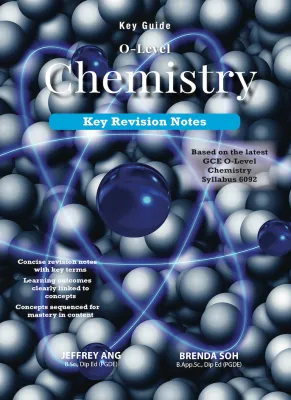
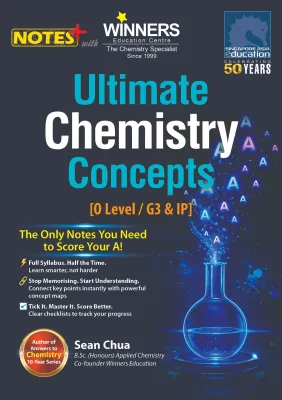
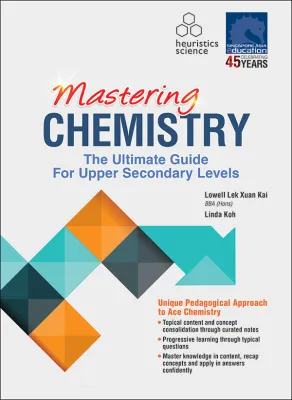
Prices are valid at publication and may change. Please refer to the product page for the latest price.
A critical step in your selection process is distinguishing between the Pure Chemistry (Syllabus 6092) and the Combined Science (Chemistry) (Syllabus 5076 or 5078) pathways. Pure Chemistry requires a much deeper conceptual understanding, more complex calculations, and a dedicated practical exam. Combined Science has a reduced content load and a different practical assessment format. Purchasing a Pure Chemistry book for a Combined Science student leads to unnecessary stress over untested topics, while the reverse leaves a Pure Chemistry student underprepared.
Furthermore, you must check the publication or revision year against the current SEAB syllabus update cycle. SEAB periodically reviews and updates the curriculum to reflect modern scientific advancements and educational standards. An assessment book published several years ago might contain topics that have since been removed, or it might lack coverage of newly introduced concepts. Always cross-reference the book’s copyright page with the official syllabus document available on the SEAB website.
What to Look for in a High-Quality Chemistry Practice Book
When browsing options at a local bookstore or school bookshop, you should look beyond the cover design and evaluate the internal quality of the practice material. The most critical component of any assessment book is the answer key. A high-quality book must feature fully worked, step-by-step solutions rather than just a list of final answers or multiple-choice letters. For structured questions, the solutions should demonstrate how to construct balanced chemical equations, include state symbols, and write clear ionic equations.

The marking schemes in the answer key should also align with current SEAB marking standards. In O-Level Chemistry, specific command words dictate how a question must be answered. For instance, “describe” requires you to state physical observations or experimental steps, whereas “explain” demands the underlying chemical reasons, such as molecular interactions or electron transfers. The best practice books explicitly highlight these command words and show how marks are allocated for each part of the response.
Additionally, look for books that include sections on common student misconceptions and error analysis. Understanding why certain answers are incorrect is often more valuable than simply knowing the correct response. High-quality books frequently feature examiner-style notes that warn students against common pitfalls, such as confusing the strength of an acid with its concentration, or failing to balance diatomic molecules in gas calculations.
Finally, assess the clarity of the diagrams, chemical equations, and structural formulas. This is particularly important for Organic Chemistry, where structural representations of polymers and isomers must be precise and easy to read. Poorly printed diagrams or crowded layouts can lead to confusion and make self-directed study unnecessarily difficult.
Choosing the Right Format for Your Study Phase
Chemistry assessment books are generally organized into three main formats, each serving a distinct purpose depending on where you are in your academic year. Selecting the right format ensures that your practice matches your current revision goals.
Topical Practice Books
Topical practice books organize questions by specific chapters, such as the Mole Concept, Electrolysis, or Chemical Energetics. These books are ideal for early-stage revision, allowing you to reinforce concepts immediately after they are taught in school. When choosing a topical book, look for one that offers graduated difficulty levels within each chapter. This structure allows you to start with basic recall questions to build confidence before progressing to complex, multi-step application problems.
Yearly Past Year Papers (Ten-Year Series)
The Ten-Year Series is an essential tool for the final months of preparation. This format compiles actual past O-Level examination papers chronologically. Utilizing these papers for timed practice is crucial for mastering exam pacing, understanding the overall paper structure, and identifying recurring question patterns. When purchasing a Ten-Year Series, verify that the publisher has updated the marking schemes to reflect current syllabus requirements and has annotated any questions that are no longer relevant to the current curriculum.
Comprehensive Revision Guides with Mock Papers
These all-in-one guides combine concise summary notes with full-length mock exams. They are highly effective for final-stage consolidation and simulating actual exam conditions. The summary notes should be concise enough for quick reference, featuring key definitions, chemical test tables, and essential formulas, without attempting to replace your official school textbook. The mock papers should challenge your ability to integrate knowledge from different topics under strict time constraints.
Matching Practice Materials to Your Current Proficiency
To avoid frustration or false confidence, it is vital to select practice materials that match your current academic proficiency. Using a book that is too difficult can lead to discouragement, while a book that is too easy will not prepare you adequately for the actual examination.
For students who are currently struggling with chemistry concepts or scoring below a passing grade, the primary focus should be on foundational mastery. Look for books that offer simple drills, clear concept summaries, and guided worked examples. These resources break down complex processes, such as balancing redox equations or calculating empirical formulas, into manageable, step-by-step instructions that build confidence and establish a solid foundation.
For average students who are consistently passing but want to secure an A, standard practice books are the most suitable choice. These books should feature typical exam-style questions and standard application scenarios. Focus on resources that help you refine your use of chemical keywords and teach you how to structure your answers to secure maximum marks in the structured question sections.
For high-achieving students who are already scoring well and aiming for an A1, seek out books that feature higher-order thinking questions, data analysis, and challenging application scenarios. These books often present chemistry concepts within unfamiliar contexts, such as industrial manufacturing or environmental science, forcing you to apply your fundamental knowledge to novel situations. This level of challenge is essential for developing the critical thinking skills required for the most difficult questions on the O-Level paper.
Purchasing Tips and Pre-Use Verification Checks
When you are ready to purchase your chemistry assessment books, comparing different retail options can help you find the most accurate and high-quality editions. Local bookstores and school bookshops are excellent places to start, as they allow you to physically inspect the books before buying. School bookshops often stock specific titles recommended by teachers that are highly aligned with your school’s internal curriculum.
If you prefer the convenience of online marketplaces, you must exercise extra caution. Always verify the exact edition year, publisher details, and syllabus code before finalizing your purchase. Online listings can sometimes feature outdated covers or incorrect descriptions, so reading customer reviews or contacting the seller for clarification can prevent purchasing the wrong book.
Before you begin using any new assessment book, perform a few quick physical and content checks. Ensure that the book contains the complete answer key, as some copies may have printing defects or missing pages. Check that the chemical structures, periodic tables, and diagrams are clearly printed and legible. Taking a few minutes to verify these details beforehand will ensure a smooth and uninterrupted study experience.
Frequently Asked Questions (FAQ)
Do I need both a topical guide and a Ten-Year Series?
Yes, topical guides and the Ten-Year Series serve complementary roles in your preparation. Topical books are designed for consistent use throughout the academic year to master individual concepts as they are taught. The Ten-Year Series is best introduced in the final months leading up to the exam to build stamina, practice time management, and learn how to integrate multiple topics within a single paper. A practical approach is to focus on topical practice until your mid-year or preliminary exams, then transition fully to yearly papers as the final O-Level approaches.
Are assessment books from previous years still useful for the current syllabus?
Older or second-hand assessment books can still be useful, but they must be used with caution. Core chemistry topics like atomic structure, chemical bonding, and stoichiometry remain highly stable across syllabus updates. However, topics like organic chemistry, environmental chemistry, and practical assessment formats are subject to more frequent revisions. If you choose to use an older book, always cross-reference the questions with the current SEAB syllabus to ensure you are not wasting time on obsolete material or missing newly introduced topics.

Community discussion
Share your experience or ask a question. Comments are reviewed before publication.