
Learning to speak Korean through self-study requires more than just memorizing vocabulary lists and grammar rules. To build genuine conversational confidence, self-learners must select resources that actively bridge the gap between passive comprehension and active oral production. The most effective approach involves combining structured dialogue books with interactive audio tools that encourage immediate, spoken output.
While traditional textbooks excel at explaining grammatical structures, they often fall short in teaching the natural rhythm, intonation, and colloquial flow of everyday spoken Korean. By pairing these written guides with high-quality audio resources, you can develop both the structural understanding and the auditory familiarity needed to speak naturally.
Popular learning ecosystems, such as the Talk To Me In Korean series, offer highly structured pathways designed specifically for self-directed learners. However, because no single resource fits every learner, success depends on matching your materials to your current proficiency level, study habits, and specific speaking goals.
Products mentioned in this guide
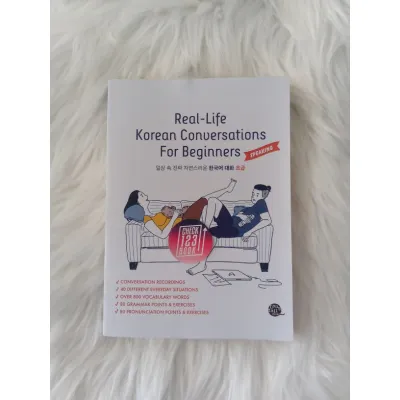
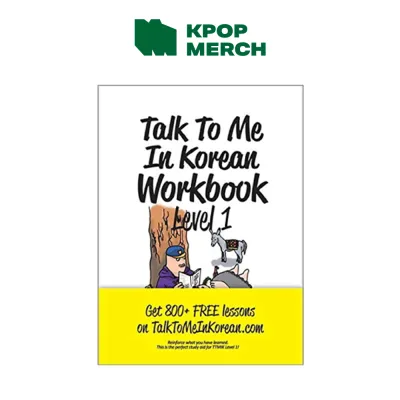


Prices are valid at publication and may change. Please refer to the product page for the latest price.
Quick Strategy for Building Your Korean Conversation Toolkit
To build a highly functional Korean conversation toolkit, you should avoid relying on a single textbook or app. A balanced self-study setup requires a combination of structured written content and dynamic audio input. This dual-resource approach ensures that you are not only learning how sentences are constructed on paper but also how they sound when spoken by native speakers.
When selecting your core materials, prioritize resources that offer high-quality, native speaker audio recordings. Passive listening is rarely sufficient for speaking fluency; instead, look for tools that facilitate active shadowing exercises, where you repeat sentences immediately after hearing them. This practice helps train your vocal muscles to produce unfamiliar Korean sounds and rhythms.
Ecosystems like Talk To Me In Korean provide excellent, step-by-step pathways that integrate books, audio lessons, and workbooks. However, before investing in an entire series, it is essential to evaluate your current proficiency level. Choosing materials that are too advanced can lead to frustration, while overly simple resources may stall your progress. Start with one core dialogue book and one interactive audio tool, then expand your toolkit as your speaking confidence grows.
Key Criteria for Evaluating Korean Speaking Resources
With hundreds of Korean learning products available on the market, identifying the ones that will actually improve your speaking skills requires careful evaluation. To ensure your chosen books and tools are worth your time and financial investment, consider the following essential criteria.

Audio Quality and Native Input The quality of the accompanying audio is the most critical factor in any conversation resource. Always verify that the audio features natural recordings of native Korean speakers rather than synthesized text-to-speech voices. Synthesized audio often lacks the natural pitch contours, emotional nuances, and subtle sound changes that characterize authentic spoken Korean. Exposure to genuine native voices is crucial for developing accurate pronunciation and natural intonation.
Contextual Relevance Evaluate whether the dialogues and vocabulary presented in the resource reflect modern, everyday situations. Older or overly formal textbooks often focus heavily on stiff, academic language or highly formal speech levels that are rarely used in casual conversations among friends or colleagues. Look for materials that teach polite yet natural everyday speech, as well as common colloquialisms, so you can communicate comfortably in real-world scenarios.
Grammar and Vocabulary Support While the focus is on speaking, a good conversation book must still provide clear, accessible explanations of the underlying grammar. The resource should explain colloquial sentence structures, common sentence connectors, and natural conversational fillers without overwhelming you with dense linguistic jargon. Understanding how to connect ideas naturally allows you to move beyond simple, robotic sentences and hold more fluid conversations.
Interactivity and Output An effective speaking tool must prompt you to produce language actively. Look for books that include speaking prompts, role-play exercises, or fill-in-the-blank dialogues. For digital tools, prioritize features like pause-and-repeat functions, interactive speaking drills, or automated speech recognition feedback. These interactive elements force you to think on your feet and practice vocalizing your thoughts, which is essential for building muscle memory and spontaneous speaking skills.
Types of Conversation Practice Books and Digital Tools
Korean learning resources come in various formats, each serving a distinct purpose in your study routine. Understanding these categories allows you to select the formats that best align with your personal learning style and daily schedule.
Structured Dialogue Textbooks These are comprehensive books designed around situational conversations, such as ordering food at a restaurant, asking for directions, or discussing hobbies. They typically feature a core dialogue, followed by detailed breakdowns of vocabulary, grammar explanations, and cultural notes. Many of these textbooks are accompanied by physical or digital workbooks that offer written and oral exercises to reinforce the material. They are ideal for learners who prefer a highly organized, visual, and academic approach to self-study.
Audio-First Series and Podcasts Audio-first resources, such as the Talk To Me In Korean ecosystem, blend conversational podcast-style lessons with supplementary reading materials. These lessons often feature natural discussions between hosts who explain grammar points and cultural nuances in an engaging, conversational tone. Because they focus heavily on listening and speaking, these series are excellent for auditory learners and those who want to utilize their daily commute or household chore time for active language practice.
Phrasebooks and Survival Guides Typically compact and highly practical, phrasebooks are designed for quick reference. They focus on immediate, high-utility expressions needed for specific travel or survival scenarios, such as checking into a hotel or navigating public transport. While they do not provide deep grammatical explanations, they are incredibly useful for absolute beginners or travelers who need to learn functional phrases quickly without committing to a long-term, structured curriculum.
Speech Recognition and Language Apps Digital applications offer interactive features that physical books cannot replicate. Many modern language apps utilize speech recognition technology to analyze your pronunciation and provide instant feedback. These tools often incorporate gamified speaking drills, spaced repetition systems for vocabulary retention, and interactive role-play scenarios. While they should rarely be your sole learning resource, they serve as excellent supplementary tools to keep you engaged and practice your pronunciation on the go.
Pre-Purchase Checks for Language Learning Materials
Before purchasing physical books or subscribing to digital platforms, performing a few quick checks can save you from buyer’s remorse and ensure you receive high-quality, compatible materials.
Edition and Language Always check the publication year of the book or the last update of the digital tool. Spoken Korean evolves rapidly, and older editions may contain outdated vocabulary or formal expressions that sound unnatural to modern native speakers. Additionally, verify the base language used for explanations. Ensure that the grammar explanations, vocabulary translations, and instructions are written in your preferred language so you can fully comprehend the nuances of the material.
Format and Compatibility For digital tools and app subscriptions, confirm the device compatibility and system requirements. Check whether the platform requires a continuous internet connection or offers offline access for studying on the go. Be aware of any regional restrictions or subscription models that might affect your access. If you are purchasing physical books from an online marketplace, ensure you are buying from an authorized distributor to guarantee access to any digital companion features.
Audio Access Since audio is vital for conversation practice, verify exactly how the audio files are delivered. Many older textbooks still package physical CDs, which can be highly inconvenient if you do not own a CD player. Look for modern editions that provide easily accessible audio via QR codes, direct streaming links, or downloadable MP3 files. Having seamless access to the audio on your smartphone or tablet makes it much easier to integrate listening practice into your daily routine.
Content Completeness Ensure the resource focuses on the standard Seoul dialect, which is the standard form taught in most international curriculums and used in mainstream media. Check the table of contents or sample pages to confirm that the difficulty level aligns with your current skills. A resource that is too simple will not challenge you, while one that is too difficult can lead to cognitive overload and stall your learning momentum. If you are purchasing a physical book online for around S$25 to S$40, verify that it includes the complete set of chapters and is not just a supplementary workbook.
How to Build a Daily Conversation Practice Routine
Acquiring speaking skills requires consistent, active practice. Simply reading through a textbook or listening to an audio track passively will not translate into conversational fluency. To get the most out of your books and tools, establish a structured daily routine using these active learning techniques.
Shadowing Technique Shadowing is one of the most effective methods for developing natural pronunciation and rhythm. To practice shadowing, play a short audio clip of a native speaker and attempt to repeat what they say with as little delay as possible. Do not wait for the sentence to finish; instead, try to mimic their intonation, stress patterns, and speed in real time. Start with slow, simple sentences, and gradually progress to faster, more complex dialogues as your mouth muscles adapt to the sounds of the language.
Self-Recording and Comparison To identify areas for improvement, record your own voice while reading a dialogue or practicing a phrase. Play back your recording and compare it objectively against the native speaker’s audio track. Pay close attention to differences in vowel pronunciation, consonant clarity, and sentence flow. This feedback loop helps you pinpoint specific pronunciation gaps that you might not notice while speaking, allowing you to make targeted adjustments.
Role-Play and Scenario Adaptation Instead of merely reading textbook dialogues verbatim, actively adapt them to fit your personal life. Replace the names, locations, and hobbies in the textbook with your own details. For example, if a dialogue discusses meeting a friend at a cafe in Seoul, rewrite and practice the conversation using a local cafe or landmark in your neighborhood. This personalization makes the vocabulary highly relevant to your daily life, making it much easier to recall during actual conversations.
Consistency over Volume When it comes to language acquisition, short, daily practice sessions are far more effective than long, sporadic study blocks. Dedicate a realistic amount of time—such as 15 to 20 minutes every day—to active speaking practice. Focus entirely on vocalizing the language during this time, rather than passive reading or writing. Consistent daily exposure helps build the neural pathways and muscle memory required for spontaneous speech, leading to steady, long-term progress.
Frequently Asked Questions (FAQ)
Can I learn to speak Korean fluently using only books and self-study tools?
Books and self-study tools are highly effective for building a strong foundation in Korean vocabulary, grammar, and pronunciation mechanics. They provide the structured input and theoretical knowledge necessary to understand how the language works. However, achieving true conversational fluency and spontaneous reaction skills ultimately requires real-time interaction with native speakers or language partners. Use your self-study materials as a structured preparation phase to build your confidence, vocabulary, and sentence-building speed, then actively seek out language exchange opportunities or conversation classes to apply what you have learned in dynamic, real-world settings.
Is the Talk To Me In Korean series suitable for absolute beginners?
Yes, the Talk To Me In Korean series is highly suitable for absolute beginners. The ecosystem is specifically designed to guide self-learners from the ground up, starting with basic pronunciation, the Korean alphabet, and foundational grammar structures in Level 1. Because the series places a strong emphasis on audio-first learning and practical, everyday conversations, it helps beginners start listening to and speaking natural Korean from day one. To ensure a smooth learning experience, beginners should start with the introductory grammar books and accompanying audio lessons before moving on to more specialized conversation workbooks within the ecosystem.

Community discussion
Share your experience or ask a question. Comments are reviewed before publication.