
Selecting the right Secondary 4 exam paper collections is a pivotal decision that directly shapes how effectively you prepare for the O-Level examinations. Rather than purchasing every book available on the shelf, a strategic approach involves matching each subject’s unique demands with the right type of practice paper. The most effective collections are those that align perfectly with the current syllabus, offer clear and instructive answer keys, and match your current stage of revision.
By focusing on targeted selection rather than sheer volume, you can optimize your study hours, reduce exam anxiety, and build the specific cognitive skills required for each subject. This guide provides a structured framework to help you assess, compare, and purchase the most effective Secondary 4 exam papers for your academic needs.
Aligning Exam Papers with the Current O-Level Syllabus
Ensuring that your practice materials match the active syllabus is the most critical step in your preparation. The Singapore Examinations and Assessment Board (SEAB) updates subject syllabuses periodically to reflect modern educational standards and real-world applications. Practicing with outdated papers can lead to wasted effort on topics that have been phased out, or worse, leave you unprepared for newly introduced concepts.
Products mentioned in this guide
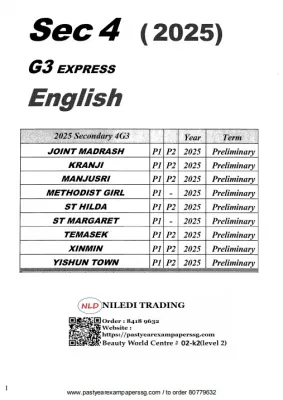
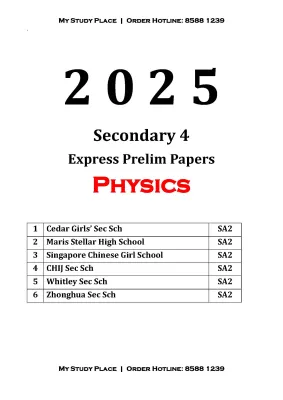
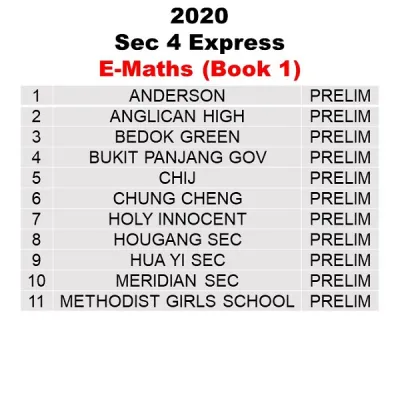
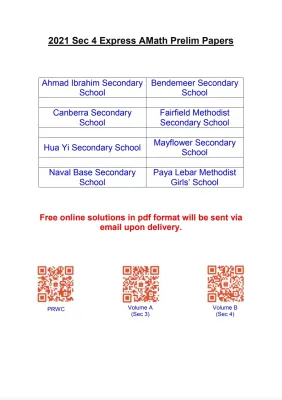
Prices are valid at publication and may change. Please refer to the product page for the latest price.
To verify syllabus alignment, always check the specific four-digit syllabus code printed on the cover of the exam paper collection. Cross-reference this code with the official SEAB website for your examination year. Even a minor change in the syllabus code can indicate a shift in exam format, question weightage, or topic coverage that you must be aware of before you begin practicing.
In addition to the syllabus code, pay close attention to the publication year and edition of the book. Reputable publishers will explicitly state which examination years the collection covers. Avoid using older editions passed down from seniors without first verifying that the curriculum has remained unchanged since those books were printed.
When inspecting a collection, look closely at the table of contents to identify any recently modified or added topics. For instance, if a subject has recently integrated data-response questions or practical-planning components, your practice papers must include these specific question types. Ensuring your materials are fully updated prevents unexpected surprises when you sit for the actual papers.
Evaluating Answer Keys and Explanation Quality
An exam paper collection is only as good as its answer key. While final-answer keys are useful for quick grading, they offer very little educational value when you are struggling to understand a complex concept. For effective self-study and error correction, you need detailed, step-by-step worked solutions that explain the underlying logic behind each answer.

When evaluating Mathematics and Science paper collections, look for solutions that show the complete derivation of formulas and intermediate working steps. The best guides do not just present the final numerical value; they explain why a specific formula was chosen and how to manipulate variables correctly. This level of detail helps you identify the exact step where your calculation went wrong, preventing the repetition of similar mistakes.
For Humanities and Language subjects, where answers are subjective and essay-based, the quality of the marking scheme is even more critical. Look for collections that provide comprehensive level-of-response marking matrices. These matrices outline the specific criteria required to achieve top-tier marks, helping you understand how examiners assess argument structure, evidence integration, and critical analysis.
Furthermore, high-quality answer keys often include model essays accompanied by detailed annotations. These annotations explain why a particular paragraph is effective, how the writer linked their points back to the question, and how to avoid common structural pitfalls. This guidance is invaluable for refining your writing style and mastering time-constrained essay papers.
Finally, check if the collection integrates supplementary learning aids, such as examiner reports or common error highlights. These sections point out frequent misconceptions, mathematical traps, and poorly phrased explanations that cost students marks every year. Learning what not to write is often just as important as learning the correct answers.
Matching Paper Formats to Subject Requirements
Different O-Level subjects demand different cognitive skills, meaning a paper format that works well for one subject may be entirely unsuitable for another. To maximize the effectiveness of your revision, you must match the physical and structural format of the exam papers to the specific requirements of each discipline.
For Mathematics and Sciences, foundational mastery is built through repetitive, targeted practice. Topical exam paper collections are highly beneficial during the early stages of Secondary 4. These books group questions by chapter, allowing you to isolate weak areas and master specific problem-solving techniques before attempting full-length papers.
In contrast, Humanities and Language subjects require a holistic understanding of paper structure and time management. For these disciplines, yearly exam paper collections are far superior. They force you to practice synthesizing information across different topics, managing your time across multiple sections, and building the physical stamina required to write continuously for several hours.
When choosing the physical format of your exam papers, consider the trade-offs between bound books and loose-leaf or detachable papers. Bound books are highly durable and keep all your practice materials organized in one place, making them convenient for reference and transport. However, they can make it difficult to simulate realistic exam conditions, as the temptation to flip to the answer key at the back is always present.
Detachable or loose-leaf exam papers are excellent for simulating actual exam conditions. You can pull out a single paper, set a timer, clear your desk of all reference materials, and complete the paper under strict exam constraints. This physical separation not only prepares you mentally for the exam hall but also makes marking and filing your completed papers much more manageable.
Sourcing Authentic Papers from Reliable Channels
To ensure you are practicing with accurate, high-quality materials, it is essential to source your exam paper collections from authorized and reliable channels. The market often contains unauthorized reprints or low-quality compilations that can severely hinder your revision efforts.
In Singapore, the safest places to purchase legitimate exam papers are official school bookshops and established physical bookstore chains. These retailers work directly with authorized educational publishers who hold the official licenses to print past O-Level examination papers. Purchasing from these sources guarantees that the content is accurate and legally compliant.
When buying online or from secondary marketplaces, always verify the authenticity of the book. Check for official publisher logos, clear ISBN barcodes, and holographic security seals on the cover. Legitimate publishers invest in high-quality printing processes, ensuring that all text, mathematical symbols, and diagrams are sharp and legible.
Using unauthorized photocopies or poorly scanned digital compilations carries significant academic risks. In Science and Geography papers, low-resolution or blurred diagrams can make it impossible to interpret data, read map scales, or identify key features, directly impacting your ability to answer the questions correctly. Additionally, unofficial reprints are frequently riddled with typographical errors, missing pages, and incorrect answer keys that can lead to confusion and incorrect learning.
By investing in authentic, officially licensed exam paper collections, you ensure that your practice is based on the exact standards set by the examination board. This reliability gives you the confidence that your preparation is accurate, complete, and aligned with what you will face on exam day.
Frequently Asked Questions (FAQ)
Should I buy topical guides or full past year papers first?
You should prioritize topical guides during the first half of Secondary 4, as they allow you to consolidate your learning and address specific conceptual gaps immediately after a topic is taught in school. Once you have built a strong foundation across all topics, transition to full past year papers during the final months leading up to the exams. This transition helps you develop essential exam stamina, practice realistic time management, and learn how to switch quickly between different topics under exam conditions.
Are school preliminary exam papers better than commercial collections?
School preliminary exam papers and commercial collections serve different, complementary purposes. Preliminary papers from various schools are excellent for exposing you to highly challenging, creative, and non-standard question styles that stretch your critical thinking. However, commercial collections of actual past O-Level papers remain the gold standard for understanding the baseline difficulty, standard phrasing, and exact marking expectations of the official examination board. A balanced preparation strategy utilizes both resources to build both depth and adaptability.

Community discussion
Share your experience or ask a question. Comments are reviewed before publication.