
Learning to stop letting everything affect you is not about becoming a cold, unfeeling robot. Instead, it is about building a reliable psychological buffer between an external trigger—such as a critical comment from a colleague or an unexpected disruption in your daily routine—and your emotional response. The self-help market is flooded with titles promising instant peace of mind, but many rely on superficial motivational slogans that fail when real-world stress hits. To find a book that genuinely helps you build emotional resilience, you must look for works grounded in established psychological frameworks, structured with practical exercises, and suited to your personal learning style.
Choosing the right book involves evaluating the underlying methodology, verifying the author’s credentials, and selecting a format that fits your daily routine. By focusing on evidence-based strategies rather than empty platitudes, you can acquire practical tools to manage your cognitive patterns, establish healthy interpersonal boundaries, and maintain your composure in high-pressure environments. This guide provides a systematic framework to help you filter through the noise and select the literature that will best support your journey toward emotional stability.
Identifying the Right Psychological Framework for Your Mindset
To stop letting external events dictate your internal state, you need a book that aligns with your natural cognitive style. Different authors utilize different psychological frameworks to address emotional reactivity, and understanding these methodologies beforehand allows you to select a book that resonates with how you process information.
Products mentioned in this guide
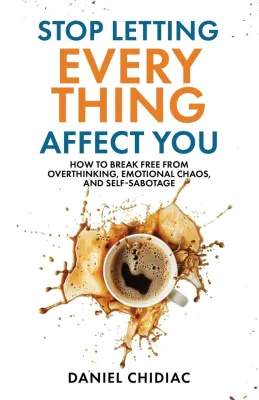
Prices are valid at publication and may change. Please refer to the product page for the latest price.
Cognitive and rational approaches, primarily derived from Cognitive Behavioral Therapy (CBT), focus on the relationship between your thoughts, feelings, and behaviors. Books in this category teach you to identify and challenge cognitive distortions—such as personalization, where you assume external events or other people’s actions are a direct reaction to you, or catastrophizing, where you assume the worst possible outcome. If you prefer logical, structured problem-solving, a CBT-based book will help you systematically dismantle automatic negative thoughts and replace them with more balanced, objective interpretations of reality.
Acceptance and mindfulness-based frameworks, such as those rooted in Acceptance and Commitment Therapy (ACT), offer a different pathway to resilience. Rather than trying to change or argue with your thoughts, these books teach you to observe your emotions and external triggers without immediate judgment or reaction. This approach emphasizes “cognitive defusion,” which is the ability to see your thoughts merely as passing mental events rather than absolute truths. If you struggle with constant mental chatter or find yourself exhausted by trying to control your thoughts, a mindfulness-based book can help you develop the capacity to sit with discomfort without letting it drive your actions.
Philosophical perspectives, particularly modern interpretations of Stoicism, focus heavily on the dichotomy of control. Stoic-influenced self-help books teach you to draw a sharp, uncompromising line between what is within your personal power—your thoughts, actions, and responses—and what is not, which includes other people’s opinions, market conditions, and unexpected setbacks. This framework is highly effective for individuals who feel overwhelmed by global events, workplace politics, or circumstances beyond their immediate influence, offering a practical philosophy for conserving mental energy.
Finally, books grounded in interpersonal psychology and family systems theory focus on separating your self-worth from the behaviors and moods of others. These texts explore concepts like differentiation of self, emotional codependency, and boundary setting. If your emotional reactivity is primarily triggered by relationship dynamics, family expectations, or a deep-seated need for external validation, an interpersonal psychology book will provide the tools needed to establish healthy emotional boundaries and recognize where your responsibility ends and someone else’s begins.
Evaluating Books for Actionable Tools Over Empty Platitudes
The self-help industry is notorious for books that offer temporary inspiration but lack the substance required to create lasting behavioral change. To avoid wasting time and money on books that merely tell you to “stay positive,” you must actively evaluate the content and structure of a book before making a purchase.

First, investigate the author’s background and credentials. While personal memoirs can be deeply moving, books designed to teach emotional regulation should ideally be written by licensed clinical psychologists, psychiatrists, academic researchers, or experienced mental health practitioners. Look for authors who hold advanced degrees (such as a PhD, PsyD, or LCSW) and have a documented history of clinical practice or scientific research. This ensures that the strategies presented are not just individual anecdotes, but are instead backed by empirical evidence and clinical efficacy.
Next, examine the table of contents and sample pages for structured, actionable exercises. A book that truly teaches you to stop letting everything affect you will not just explain concepts; it will require you to do active work. Look for chapters that include journaling prompts, thought records, behavioral experiments, or step-by-step coping protocols. If the table of contents consists entirely of vague, metaphorical chapter titles without any indication of practical application, the book is likely to be more inspirational than educational.
It is also crucial to assess the tone of the book by reading the introduction or the first few pages. A high-quality self-help book validates the reality of emotional pain and the difficulty of behavioral change. It avoids toxic positivity—the belief that one should maintain a positive mindset regardless of how dire or painful a situation is. If the author suggests that emotional resilience is simply a matter of “choosing happiness” or dismissing valid struggles, the book may leave you feeling guilty for experiencing normal human emotions rather than helping you manage them.
Lastly, verify that the text addresses the root causes of emotional reactivity rather than just offering superficial coping mechanisms. Effective books explain the physiological and psychological mechanisms behind why we get triggered, such as the amygdala hijack or early childhood conditioning. Understanding the “why” behind your emotional responses is essential for long-term change, as it allows you to anticipate your triggers and apply the book’s techniques before your emotions reach an overwhelming level.
Choosing the Right Format for Your Current Mental Bandwidth
Building emotional resilience is a demanding cognitive task, and your ability to absorb and apply new concepts depends heavily on your current mental bandwidth. Selecting the appropriate media format ensures that you can engage with the material consistently, even during periods of high stress or exhaustion.
Audiobooks are highly beneficial for passive absorption and can easily be integrated into a busy daily schedule. If you spend significant time commuting on public transit, driving, or performing routine household chores, listening to an audiobook allows you to internalize resilience concepts without needing to carve out dedicated reading time. Furthermore, during periods of intense burnout or acute stress, sitting down to read dense text can feel cognitively overwhelming; hearing a calm, professional narrator deliver the material can make the concepts much more accessible and less intimidating.
Physical books and e-readers, on the other hand, are superior for active study and deep cognitive processing. When you read a physical copy, you can easily highlight key passages, write reflections in the margins, and flip back and forth between chapters to compare concepts. This active engagement helps transfer information from short-term memory to long-term understanding. If you choose this format, consider keeping a dedicated notebook nearby to write down your responses to the author’s prompts, turning your reading sessions into active study periods.
For those who find standard prose difficult to translate into daily action, workbooks and guided journals offer a highly structured, hands-on alternative. These publications typically feature minimal theoretical text and instead focus on daily exercises, mood trackers, and structured worksheets. Spending S$20 to S$40 on a structured workbook is a highly practical investment for individuals who thrive on routine and need clear, daily instructions to build new habits. By committing to completing just one or two pages a day, you can systematically practice emotional regulation techniques in a highly manageable, low-pressure format.
Spotting Red Flags and Avoiding Toxic Positivity in Self-Help
Not all self-help books are beneficial; some can actually exacerbate emotional reactivity by promoting unrealistic expectations or unhealthy coping mechanisms. Being able to spot these red flags during your selection process will protect you from psychological frustration and counterproductive advice.
A major red flag is any book that promises instant emotional detachment or guarantees that you will never feel hurt, angry, or offended again. Emotional resilience is not the absence of emotion; it is the capacity to experience intense emotions without letting them dictate your behavior. Any author claiming to offer a quick fix or a permanent shield against emotional pain is ignoring basic human biology and psychology. Such promises set up unrealistic expectations, leading readers to feel like failures when they inevitably experience natural emotional reactions to difficult situations.
Additionally, avoid books that engage in subtle victim-blaming or dismiss genuine interpersonal boundary violations. Some self-help literature pushes the idea that because you cannot control others, you must tolerate disrespectful or abusive behavior without reacting. While it is true that you cannot control other people, a healthy psychological approach emphasizes setting firm boundaries, walking away from toxic environments, and validating your own anger as a signal that a boundary has been crossed. Books that encourage you to simply “rise above” mistreatment without addressing the necessity of boundaries can lead to emotional suppression and prolonged distress.
Finally, be cautious of authors who rely entirely on personal anecdotes, spiritual platitudes, or unverified success stories without referencing established psychological principles. While personal stories can make a book engaging, they do not constitute scientific proof that a method works for the general population. If a book lacks references to peer-reviewed studies, clinical frameworks, or established behavioral science, the advice may be highly subjective and difficult to replicate in your own life.
Frequently Asked Questions (FAQ)
Can reading self-help books replace professional therapy for emotional reactivity?
Self-help books are valuable tools for managing everyday stress, understanding minor emotional triggers, and learning general personal growth strategies. They can provide an excellent, cost-effective starting point for individuals looking to improve their daily emotional habits and build basic mental boundaries. However, self-guided reading cannot replace the personalized care of a licensed therapist or clinical counselor, especially when dealing with deep-seated emotional reactivity. If your emotional responses are rooted in unresolved trauma, chronic anxiety, clinical depression, or if they consistently disrupt your relationships and ability to function at work, professional intervention is necessary. A therapist provides tailored feedback, safety monitoring, and specialized therapeutic modalities that a book simply cannot offer.
How long does it typically take to see changes in emotional resilience from reading?
The timeline for developing emotional resilience varies significantly depending on how actively you apply the book’s concepts to your daily life. Passive reading rarely leads to lasting behavioral change; resilience is built through the consistent, real-world practice of the exercises outlined in the text. Generally, if you actively practice cognitive restructuring or mindfulness exercises for fifteen to twenty minutes daily, you may begin to notice subtle shifts in your reactivity within four to six weeks. However, rewiring long-standing emotional habits and neural pathways is a gradual process that typically takes several months of consistent effort. Factors such as the complexity of your personal triggers, the depth of your existing habits, and your overall stress levels will also influence how quickly these new mental boundaries become automatic.

Community discussion
Share your experience or ask a question. Comments are reviewed before publication.