
Choosing the right Arabic textbook as an absolute beginner requires aligning the book’s pedagogical methodology with your specific learning goals. Because Arabic is not a single spoken language but a vast linguistic family with distinct written and spoken forms, selecting a book without a clear strategy often leads to frustration, wasted study hours, and incompatible materials. To build a solid foundation, you must evaluate how a textbook introduces the script, structures its grammar progression, and provides audio support.
A systematic textbook serves as your roadmap through the complexities of the language, including its right-to-left script, unique phonetic sounds, and root-and-pattern grammatical structure. By understanding what to look for in a beginner curriculum, you can avoid common pitfalls and select a resource that keeps you motivated and progressing.
Defining Your Goal: Modern Standard Arabic vs. Regional Dialects
Before purchasing any learning material, you must decide which variety of Arabic fits your personal or professional objectives. The Arabic language exists in a state of diglossia, meaning there is a significant difference between the written, formal language and the spoken, everyday dialects.
Products mentioned in this guide
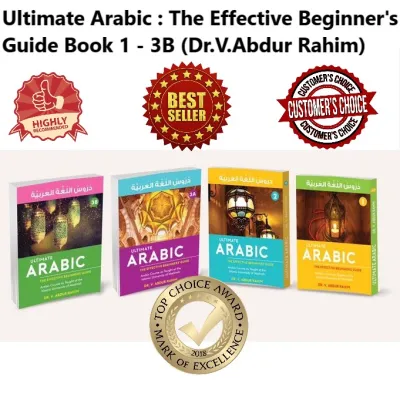
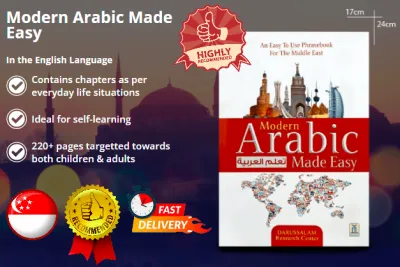
Prices are valid at publication and may change. Please refer to the product page for the latest price.
Modern Standard Arabic (MSA), historically known as Fusha, is the universal written standard across the Arab world. It is the language of literature, journalism, formal speeches, academic lectures, and official documents. If your primary goal is to read classical texts, understand news broadcasts, work in international diplomacy, or conduct formal business, MSA is the essential starting point. Most traditional academic textbooks focus exclusively on MSA because it provides a highly structured grammatical framework that is universally recognized.
However, MSA is not spoken as a native mother tongue in daily life. For casual conversations, travel, and integrating into local communities, people use regional dialects, known collectively as Ammiyya. These dialects vary significantly by region, with the most prominent being Levantine (spoken in Syria, Lebanon, Jordan, and Palestine), Egyptian (widely understood across the Arab world due to Egypt’s media and film industry), Gulf (spoken in the United Arab Emirates, Saudi Arabia, Qatar, and Kuwait), and North African or Maghrebi (spoken in Morocco, Algeria, and Tunisia). If your goal is to converse with family members, travel comfortably, or enjoy popular music and television dramas, starting with a dialect-focused textbook is often more practical.
To help you align your learning goals with the correct textbook focus, consider the following decision matrix:
| Learner Goal | Recommended Arabic Variant | Primary Textbook Focus |
|---|---|---|
| Reading literature, news, or religious texts | Modern Standard Arabic (MSA) | Formal grammar, extensive vocabulary, script mastery |
| Daily conversation, travel, or family connection | Regional Dialect (e.g., Levantine, Egyptian) | Conversational phrases, listening comprehension, local idioms |
| Academic research or professional diplomacy | Modern Standard Arabic (MSA) | Advanced syntax, formal writing, media analysis |
| General interest with future travel plans | MSA with a spoken dialect supplement | Dual-track methodology, basic script with conversational drills |
Selecting a textbook that matches this decision matrix ensures that you do not spend months mastering complex formal grammar rules when your immediate need is to order food or ask for directions in a specific city.
Core Features to Look for in Absolute Beginner Textbooks
Once you have identified your target variant, you must evaluate the pedagogical quality of potential textbooks. A high-quality beginner book should act as a patient guide, breaking down complex linguistic concepts into manageable steps.

First, look for a dedicated, paced introduction to the Arabic alphabet and script. Arabic is written from right to left, and most letters change their shape depending on whether they appear at the beginning, middle, or end of a word, or in isolation. A good beginner textbook should not assume any prior knowledge of the script. It should provide clear stroke-order diagrams, handwriting practice grids, and exercises that teach you how to connect letters to form words. Avoid books that rely heavily on English transliteration beyond the first few chapters, as this can delay your ability to read the actual script.
Second, verify the quality and accessibility of the integrated audio materials. Arabic features several unique consonant sounds—such as the pharyngealized “heavy” letters and the glottal stop—that do not exist in English. Learning these sounds purely from a printed page is impossible and can lead to deeply ingrained pronunciation errors. Ensure the textbook includes audio recorded by native speakers. Modern editions typically provide access to these audio tracks via QR codes printed on the pages, companion websites, or downloadable MP3 files, which are far more convenient than older editions that rely on physical CDs.
Third, assess the pacing of the grammar introduction. Arabic grammar is highly systematic, built on a system of three-letter roots that generate related words through predictable patterns. While this system is logical, it can overwhelm beginners if introduced too rapidly. Look for a textbook that introduces grammar incrementally, starting with basic noun-adjective agreement and simple nominal sentences before moving on to complex verb conjugations, dual nouns, or case endings.
Finally, check for exercise variety and the inclusion of an answer key. Effective language learning requires active recall, which is achieved through diverse exercises such as fill-in-the-blank sentences, translation drills, and listening comprehension tasks. If you are studying independently, verify that the textbook includes a comprehensive answer key. Many academic textbooks omit the answer key from the student edition, requiring a separate purchase of a teacher’s manual that may be difficult for individual learners to obtain.
Evaluating Book Formats and Supplementary Materials
The format of your learning materials can significantly impact your study habits and overall progress. While digital resources offer convenience, physical books remain highly effective for language acquisition.
Physical workbooks are particularly valuable for absolute beginners because they facilitate handwriting practice. Writing Arabic letters by hand helps build muscle memory and reinforces the flow of the script in a way that typing on a keyboard or tapping a screen cannot replicate. If you prefer the portability of an e-book, consider pairing it with a physical notebook or a tablet with a stylus so you can still practice writing out the exercises by hand.
Many modern textbook publishers offer supplementary digital tools to reinforce your learning. These may include companion mobile apps, interactive flashcard decks, or online portals with auto-graded quizzes. These digital supplements are excellent for quick vocabulary review during your daily commute or spare moments, allowing you to maximize your dedicated textbook study time for deeper grammar and reading comprehension.
As you progress, you may find it helpful to supplement your primary textbook with additional reference materials. A dedicated, beginner-friendly grammar reference guide can provide alternative explanations for complex rules. Additionally, a reliable bilingual dictionary is essential. For absolute beginners, look for a dictionary organized alphabetically by word rather than by the traditional root system, as searching by root requires a level of morphological understanding that takes time to develop.
How to Verify Editions and Compatibility Before Buying
Textbook series often undergo frequent revisions, which can lead to compatibility issues if you are not careful when purchasing your materials.
Always check the publication date and edition number of the textbook you are considering. A newer edition may feature updated vocabulary reflecting modern technology, improved layout designs, and more accessible audio formats, such as online streaming instead of physical CDs. If you are purchasing a textbook that is part of a multi-book series, ensure that all the volumes you buy belong to the same edition to maintain consistency in vocabulary and grammatical progression.
When ordering physical textbooks in Singapore, pay close attention to regional availability and shipping logistics. Specialized academic textbooks published overseas may have limited stock in local brick-and-mortar bookstores. While you can easily find these books on international online marketplaces or local ecommerce platforms, check the shipping origin, estimated delivery times, and potential import fees. Ordering from a reputable local distributor or an online seller with regional warehouses can help you avoid long shipping delays and high delivery costs.
Furthermore, confirm whether the textbook requires separate purchases to form a complete learning set. Some popular Arabic courses split their curriculum into multiple components, such as a student textbook, a separate workbook for written exercises, and a standalone audio guide. Read the product descriptions carefully to determine if these items are sold as a bundle or must be acquired individually, as purchasing them separately can significantly increase your overall investment.
To avoid purchasing the wrong book, always cross-reference the 13-digit International Standard Book Number (ISBN). Publishers often release student editions, teacher editions, international versions, and answer keys with nearly identical cover designs. Verifying the exact ISBN on the publisher’s official website ensures that you receive the precise version required for self-study, complete with the necessary exercises and answer keys.
Structuring Your Self-Study Routine with Your Chosen Book
Acquiring a high-quality textbook is only the first step; establishing a consistent and structured study routine is what leads to fluency.
Create a realistic weekly pacing guide that prevents burnout. For the first two to three weeks, focus entirely on mastering the alphabet, pronunciation, and basic greetings. Dedicate 20 to 30 minutes a day, five days a week, to your studies rather than attempting a single, multi-hour study session on the weekend. Short, daily exposure is far more effective for memory retention and helps your brain adapt to the new script and sounds.
Combine active and passive learning methods to maximize your progress. Active study involves sitting down with your textbook, writing out vocabulary, completing grammar exercises, and practicing script tracing. Passive study, on the other hand, can be integrated into your daily routine. Listen to the textbook’s audio tracks while commuting, doing household chores, or exercising. Even if you do not understand every word, this passive exposure helps familiarize your ears with the natural rhythm, intonation, and phonetic boundaries of spoken Arabic.
Finally, learn to recognize the observable signs that indicate it is time to supplement your textbook with external resources. Once you can comfortably read the script without hesitation and understand basic sentence structures, you should begin incorporating simple graded readers, bilingual children’s books, or slow-speaking podcasts into your routine. Transitioning to real-world media and seeking out language exchange partners will help bridge the gap between academic exercises and natural, spontaneous communication.
Frequently Asked Questions (FAQ)
Do I need to learn the Arabic alphabet before using a beginner textbook? (FAQ)
While some conversational textbooks use English transliteration (Romanization) to help beginners speak immediately, relying on this method long-term is highly counterproductive. Transliteration cannot accurately represent many unique Arabic sounds, which often leads to poor pronunciation habits that are difficult to correct later. Learning the Arabic alphabet from day one builds a strong foundation for accurate reading, correct pronunciation, and efficient dictionary usage. Fortunately, the Arabic alphabet is highly logical and can be mastered in just a few weeks of dedicated practice.
Can I learn Arabic effectively using only a textbook without a tutor? (FAQ)
A well-structured textbook provides the essential grammatical framework and vocabulary needed to learn Arabic, but self-study has inherent limitations, particularly regarding pronunciation and conversational flow. Without a native speaker or tutor to provide real-time feedback, you may develop incorrect pronunciation habits. To overcome this, supplement your textbook study with online language exchange platforms, pronunciation apps, or occasional sessions with a qualified tutor who can correct your accent and help you apply your textbook knowledge to real-world conversations.

Community discussion
Share your experience or ask a question. Comments are reviewed before publication.