
Selecting a foldable piano keyboard in Singapore requires a careful balance between space-saving convenience and the technical demands of learning a new instrument. For beginners, the market offers a wide array of folding models designed to fit into compact living spaces, but not all of these instruments provide the necessary tactile feedback or structural durability required for proper skill development. By understanding how to evaluate key action, hinge design, and local support, you can select an instrument that supports your learning journey without cluttering your home.
Why Choose a Foldable Keyboard for Beginner Practice?
Living in Singapore often means managing limited floor space, especially in modern HDB flats and condominiums where dedicating a permanent area to a full-sized acoustic or digital piano is not always feasible. A foldable piano keyboard addresses this spatial challenge directly, allowing you to set up a practice station on a dining table or study desk and pack it away into a wardrobe or under a bed when finished. This flexibility makes it possible to introduce music into a household without committing to major furniture rearrangements.
Portability is another significant advantage for beginners who may need to transport their instrument. Whether you are taking your keyboard to external music lessons, attending community jamming sessions, or traveling, a folding model reduces the physical burden of transport. Most of these instruments weigh under four kilograms and fold down to half their playing length, fitting easily into a backpack or a compact gig bag that can be carried on public transport.
Products mentioned in this guide
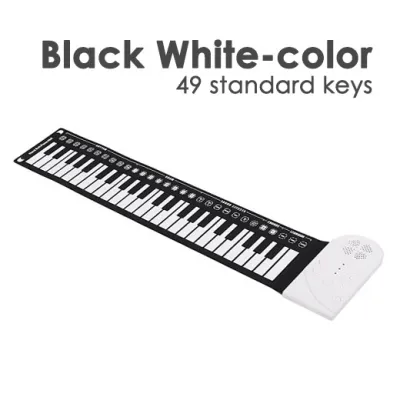
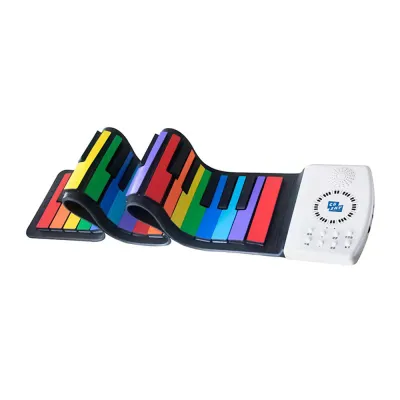
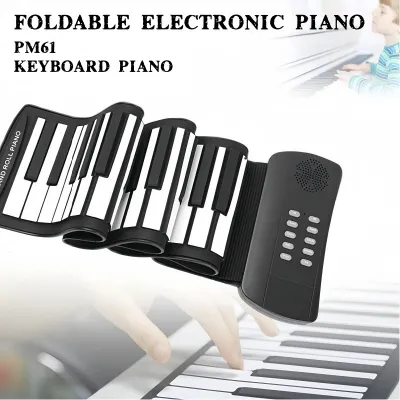
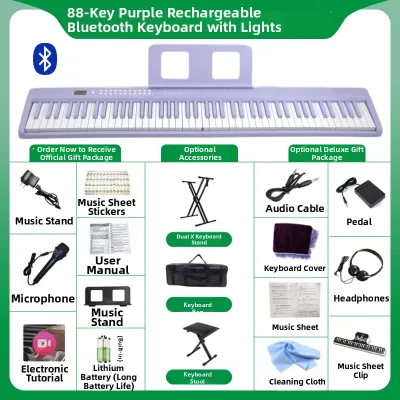
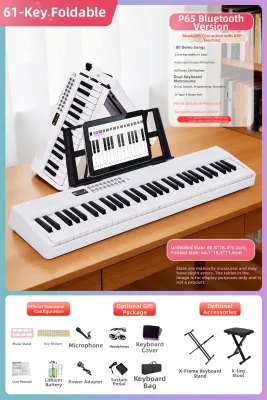
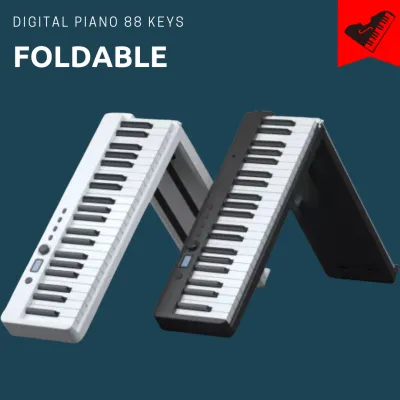
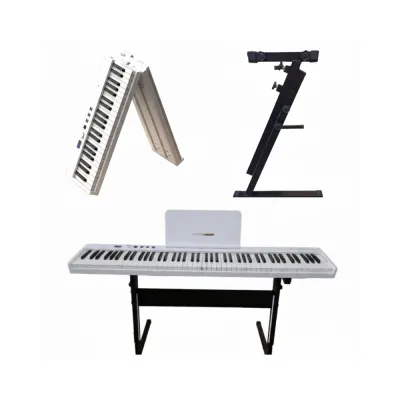
Prices are valid at publication and may change. Please refer to the product page for the latest price.
However, choosing a foldable keyboard involves accepting certain design trade-offs. The most notable compromise is in the key action and structural stability; because the keyboard must fold in half, the central hinge introduces a potential point of instability if the instrument is not placed on a completely flat, rigid surface. Additionally, the slim profile of these keyboards limits the size of their built-in speakers, which often results in a thinner, less resonant sound compared to standard digital pianos. The lightweight nature of the unit also means that accessories, such as sustain pedals, can easily slide around on tiled or vinyl flooring during practice, requiring additional securing measures.
Essential Features to Look for in Beginner Foldable Keyboards
When evaluating different models, the physical dimensions of the keys should be your primary consideration. To build correct finger placement and muscle memory that can eventually transition to a traditional piano, look for keyboards that feature full-size keys. Some ultra-portable models utilize narrower or shorter keys to save space, which can lead to poor hand positioning and difficulty when playing on standard instruments.

The choice between a 61-key and an 88-key configuration depends on your immediate learning goals and space constraints. An 88-key keyboard represents the full standard range of a piano, which is essential if you plan to study classical music or take formal lessons where pieces utilize the extreme upper and lower registers. For absolute beginners focusing on basic pop melodies, chords, or music theory, a 61-key model offers a more compact and lighter alternative that still covers the necessary range for most introductory curriculum.
Touch sensitivity, or velocity sensitivity, is a non-negotiable feature for any beginner keyboard. This technology ensures that the volume of the sound corresponds to how hard or soft you strike the keys, allowing you to practice dynamics and expression. Without touch sensitivity, every key press produces the same volume, which prevents you from developing the finger control required for expressive playing. While foldable keyboards rarely feature fully weighted hammer-action keys due to weight limitations, you should look for models that offer semi-weighted or touch-sensitive spring action to provide at least some physical resistance.
Modern learning features can significantly enhance your practice sessions. Look for keyboards with built-in metronomes to help develop your sense of rhythm and timing. Connectivity options, such as USB-MIDI or Bluetooth MIDI, are highly beneficial as they allow you to connect the keyboard to a tablet or computer. This connectivity enables you to use interactive learning applications, music notation software, or digital audio workstations, turning your keyboard into a versatile educational tool.
How to Evaluate and Compare Foldable Keyboard Brands
Because you cannot rely solely on brand names to guarantee quality, you must know how to evaluate the physical specifications of individual models. The hinge mechanism is the most critical structural component of a foldable keyboard. Examine the manufacturer’s specifications to determine if the hinge is made of reinforced polymer or metal, and check whether it features a secure locking latch. A high-quality hinge should lock the two halves of the keyboard into a perfectly flat plane, preventing any flexing or bowing when you apply downward pressure on the keys near the center joint.
The educational ecosystem provided by the manufacturer is another important factor to compare. Some brands bundle their instruments with proprietary learning software, instructional videos, or companion apps that guide beginners through the basics of note reading and finger placement. Evaluate these offerings by checking if the software requires a paid subscription after an initial trial period, and verify whether the app is compatible with your existing devices, such as iOS or Android tablets.
Local warranty support is a crucial consideration when purchasing electronics in Singapore. The high humidity and ambient temperatures can affect electronic components, sensors, and battery life over time. Before choosing a brand, verify that they have an authorized local distributor or service center in Singapore. A brand with a dedicated local presence ensures that you can easily access repairs, replacement parts, or technical support without the hassle and expense of shipping the instrument back to an overseas manufacturer.
Building Your Shortlist: Matching Brands to Learning Goals
To build a practical shortlist, categorize the available brands based on how their design philosophies align with your specific learning objectives. If your primary goal is maximum portability and casual play, focus on brands that prioritize lightweight materials and compact folding dimensions. These models are often highly budget-friendly, making them an excellent low-risk entry point for children or casual hobbyists. The trade-off is that these brands typically offer non-weighted keys with minimal physical resistance, which may not support advanced classical training.
If you intend to transition to an acoustic piano or prepare for formal music education, look for brands that specialize in semi-weighted key actions. These manufacturers design their keyboards with internal spring mechanisms or small weights to simulate the feel of a traditional piano action. While these models are heavier and slightly bulkier even when folded, the added resistance helps build finger strength and control, making the eventual transition to a weighted digital or acoustic piano much smoother.
Additionally, compare how different brands handle connectivity and software integration. Some brands focus on closed, proprietary ecosystems with dedicated apps designed specifically for their hardware. While these can be highly intuitive for absolute beginners, they may limit your options as you progress. Conversely, brands that prioritize open-standard USB-MIDI and Bluetooth compatibility allow you to connect to a wide variety of third-party educational apps and recording software, offering greater long-term flexibility as your musical skills develop.
Buying Safely and Verifying Authenticity in Singapore
When you are ready to make a purchase, it is essential to buy from authorized sources to ensure you receive a genuine product with valid local support. Online marketplaces and ecommerce platforms often feature listings from parallel importers or unauthorized third-party sellers. While these listings may offer slightly lower prices, they frequently come without a local warranty, leaving you with no recourse if the instrument develops a defect. Always check the seller’s profile to confirm they are an authorized local distributor or the official brand store.
Electrical safety is another critical factor to verify before finalizing your purchase. Ensure that the keyboard package includes a power adapter that is compatible with Singapore’s electrical standards, which require a Type G 3-pin plug operating at 230V and 50Hz. If the keyboard is powered via USB, verify that the power requirements can be met by a standard local USB charger. Avoid using uncertified power adapters or cheap multi-plug converters, as they can pose electrical hazards or damage the keyboard’s internal circuitry.
Finally, take the time to confirm the physical location and contact details of the brand’s local service center in Singapore. A reputable distributor will clearly state their warranty terms, which typically cover manufacturing defects for a period of 12 months. Knowing where to go for physical inspections, repairs, or warranty claims provides peace of mind and ensures that your investment remains protected throughout your early learning stages.
Frequently Asked Questions (FAQ)
Can I use a foldable keyboard for formal piano exams?
No, foldable keyboards are generally not suitable for formal piano examinations conducted by boards such as the ABRSM or Trinity College London. These examination boards require candidates to perform on instruments with fully weighted, hammer-action keys and a proper sustain pedal mechanism to demonstrate dynamic control and correct technique. Foldable keyboards are excellent tools for initial practice, travel, and learning notes, but you should plan to upgrade to a standard digital piano or an acoustic piano as you prepare for graded exams.
Do foldable keyboards require special care for the hinges?
Yes, the folding hinge is a delicate mechanical component that requires careful handling to prevent damage. Always unfold and fold the keyboard on a flat, stable surface, and ensure that the locking mechanism is fully engaged before you begin playing. Avoid applying excessive downward force on the center joint, and store the keyboard in a padded gig bag when not in use to protect the hinge from dust, moisture, and physical impacts that could misalign the internal connections.
Is a sustain pedal necessary for a beginner foldable keyboard?
While a sustain pedal is not strictly necessary for the first few weeks of absolute beginner lessons, it becomes essential as you progress to intermediate pieces that require connected, flowing notes. Most foldable keyboards include a basic on/off switch pedal in the box, which is sufficient for learning the basic coordination of pedaling. However, these basic pedals do not support advanced techniques like half-pedaling, which require a continuous damper pedal and a more advanced digital piano setup.

Community discussion
Share your experience or ask a question. Comments are reviewed before publication.