
Selecting your first set of ukulele strings is one of the most impactful decisions you can make when starting your musical journey. The right strings transform a stiff, hard-to-tune instrument into a responsive, comfortable companion that encourages daily practice. For beginners, the primary goal is to find strings that minimize finger soreness, hold their pitch reliably, and match the physical dimensions of your specific ukulele.
While many new players focus entirely on the wood or brand of their ukulele, the strings are the actual physical interface between your fingers and the instrument. Upgrading to a high-quality, beginner-friendly set is a cost-effective way to dramatically improve the playability and sound of even the most basic entry-level ukulele.
Why Your First Set of Ukulele Strings Matters
Your choice of strings directly shapes your early learning experience, particularly when it comes to physical comfort. Standard factory strings on budget ukuleles are often made of low-grade, stiff plastic that requires significant finger pressure to press down against the frets. This excessive tension can lead to rapid finger fatigue and soreness, which frequently discourages beginners before they can build up basic calluses.
Products mentioned in this guide
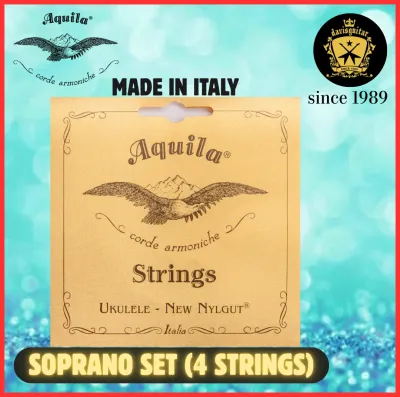


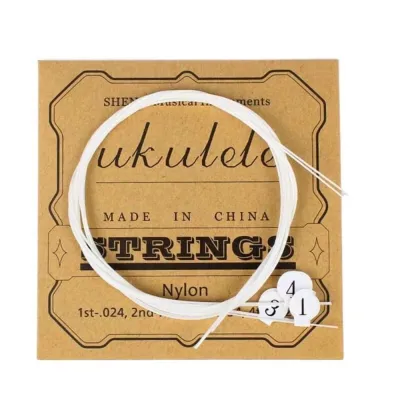
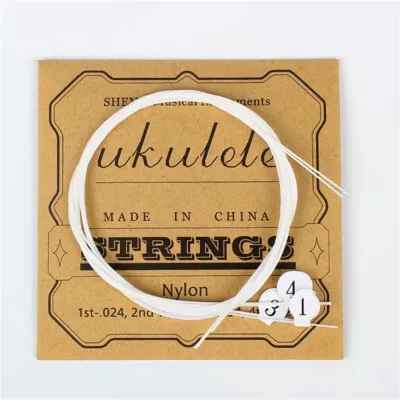
Prices are valid at publication and may change. Please refer to the product page for the latest price.
Tuning stability is another critical factor influenced by string quality. All synthetic strings stretch when first installed, but low-grade strings often suffer from inconsistent thickness along their length, meaning they may never hold a stable pitch or intonate correctly across the fretboard. Spending more time tuning than playing quickly leads to frustration.
Furthermore, poor-quality strings can produce buzzing sounds, dull tones, or inaccurate notes that mimic structural defects in the instrument itself. Beginners often mistake these string-related issues for personal playing errors or a broken ukulele. By starting with a reliable, well-manufactured set of strings, you eliminate these frustrating variables and can focus entirely on developing proper fretting and strumming techniques.
Key Factors to Consider When Choosing Beginner Strings
To find a set of strings that supports your learning, you need to evaluate three primary specifications: the material composition, the tension level, and the physical size of your instrument. Each of these dimensions directly affects how the strings feel under your fingertips and how easily they press down to make a clean sound.

As a beginner, your priority should always be playability and ease of fretting rather than chasing complex, professional-grade tonal characteristics. A string set that feels comfortable and allows you to transition between chords smoothly is far more valuable to your progress than a high-tension set designed solely for maximum acoustic projection.
String Materials: Nylon vs. Fluorocarbon vs. Nylgut
Traditional nylon strings are highly regarded for their exceptionally soft, flexible feel under the fingers. They produce a warm, mellow, and classic acoustic tone that many associate with the traditional Hawaiian ukulele sound. However, nylon is highly elastic, meaning these strings require a longer break-in period to stretch out and hold their tuning consistently.
Fluorocarbon strings are made from a denser polymer material, resulting in a thinner string gauge for the same tension level. Many beginners find this thinner profile easier to press down cleanly, especially when playing complex chord shapes. Fluorocarbon strings deliver a brighter, punchier tone with excellent clarity, and they generally settle into stable tuning much faster than traditional nylon.
Nylgut is a proprietary synthetic material designed to replicate the acoustic properties of historical gut strings while offering modern durability. It provides a balanced middle ground, offering the warm, resonant volume of traditional materials alongside a comfortable, smooth tactile feel. Nylgut strings are highly stable under changing environmental conditions, making them a reliable choice for consistent daily practice.
When shopping, always verify the material claims by reading the technical specifications on the packaging. Avoid relying on the visual color of the strings alone, as some basic nylon strings are colored black or white to mimic the appearance of fluorocarbon or synthetic gut without offering any of their performance benefits.
String Tension and Playability
String tension refers to the pulling force required to bring a string up to its correct pitch. For beginners, lower-tension strings are generally recommended because they require less physical effort to press down against the frets. This lower resistance helps you practice for longer periods without experiencing severe hand fatigue or finger soreness.
To identify the tension of a string set, look for explicit labels such as “light tension” or “low tension” on the product packaging. Some manufacturers also list specific gauge measurements; thinner gauges typically indicate lower tension and a more flexible feel, while thicker gauges point to higher tension and a stiffer response.
However, there is a practical trade-off to keep in mind. While low-tension strings are exceptionally easy on the fingers, they vibrate with a wider arc when strummed. If your ukulele has a slightly uneven fretboard or a very low saddle, low-tension strings may vibrate against the metal frets, causing an annoying buzz. If you notice fret buzz, switching to a medium-tension set often resolves the issue while remaining comfortable for learning.
Matching Strings to Your Ukulele Size
Ukuleles are built in four primary body sizes, each with a different scale length: Soprano, Concert, Tenor, and Baritone. Because scale length determines how much tension is required to bring a string to pitch, you must purchase a string set specifically designed for your instrument’s size.
Using Soprano strings on a larger Concert or Tenor ukulele is highly problematic. The longer neck requires you to stretch the shorter strings much tighter to reach the correct pitch, resulting in dangerously high tension that can warp the neck, lift the bridge, or cause the strings to snap. Conversely, putting Tenor strings on a Soprano ukulele results in loose, floppy strings that cannot hold their pitch or produce a clear tone.
Before buying, measure your instrument’s scale length—the distance from the nut to the saddle—and check the packaging to ensure compatibility. Additionally, confirm the intended tuning of the string set. Standard Soprano, Concert, and Tenor ukuleles use G-C-E-A tuning, whereas Baritone ukuleles are tuned to D-G-B-E and require entirely different string thicknesses.
What to Look for in Entry-Level String Brands and Retailers
When selecting your first set of strings, prioritize established manufacturers that specialize in musical instrument accessories over generic, unbranded options. Reputable brands maintain strict quality control standards, ensuring that each string has a perfectly uniform diameter along its entire length, which is essential for accurate intonation and tuning.
Always examine the packaging carefully before purchasing. Reliable string sets come in sealed, moisture-resistant packaging that protects the synthetic materials from environmental degradation. In Singapore’s highly humid tropical climate, sealed packaging is especially important to ensure the strings remain in pristine condition from the factory to your instrument, preventing premature wear or loss of elasticity.
To ensure you are getting genuine products, purchase your strings from established local music brick-and-mortar shops or authorized online music specialty stores. Avoid buying from generic online marketplaces where counterfeit strings or poorly stored, degraded stock are common. Local specialty retailers can also offer valuable advice on matching the right strings to your specific ukulele model.
In terms of cost, a reliable, high-quality set of beginner ukulele strings typically ranges from S$10 to S$30. While it may be tempting to buy ultra-cheap strings, they often lack the manufacturing consistency needed for stable tuning. Conversely, premium professional-grade strings are an unnecessary expense for beginners, as their subtle tonal enhancements are rarely noticeable on entry-level instruments.
How to Install and Break In Your New Strings
Changing your ukulele strings is a straightforward process, but it requires care to avoid damaging your instrument. Begin by loosening the tuning pegs completely to release all tension before removing the old strings. Never snap or cut high-tension strings suddenly, as the sudden release of force can shock the wooden bridge or scratch the delicate finish of the soundboard.
Once the old strings are removed, identify the tying method required for your specific ukulele bridge. Tie-bar bridges require you to loop the string around itself to create a secure knot against the back of the bridge. Slotted bridges are simpler, requiring only a sturdy figure-eight knot at the end of the string, which you then slide into the corresponding slot. For bridge-pin systems, insert the knotted end into the hole and secure it firmly with the pin.
After securing the strings at the bridge, thread them through the tuning pegs, leaving a small amount of slack to allow for several neat wraps around the post. Slowly wind the tuning peg while guiding the string into its slot on the nut. Once all strings are installed, bring them up to pitch slowly using a digital chromatic tuner.
New synthetic strings will stretch significantly and go out of tune almost immediately. To speed up the break-in period, gently stretch each string by pulling it upward away from the fretboard along its entire length, then retune it. Repeat this process several times. It typically takes a few days of regular playing and tuning for the material to fully settle and hold its pitch consistently.
If you encounter any resistance during installation—such as a tuning gear that feels completely stuck, a bridge pin that refuses to budge, or a string that slips constantly—stop immediately. Forcing these components can strip the gears or crack the wooden bridge. In these situations, consult a professional technician at a local music shop to complete the installation safely.
Frequently Asked Questions (FAQ)
How often should a beginner change their ukulele strings?
As a general guideline, a beginner practicing regularly should change their ukulele strings every six to twelve months. However, you should rely on physical and visual indicators rather than a strict calendar schedule. Inspect your strings regularly for signs of wear, such as deep grooves worn into the underside of the strings from the metal frets, fraying, or discoloration.
If the strings feel rough to the touch, look visibly dirty, or have lost their natural elasticity, they need to be replaced. Tonally, if your ukulele begins to sound unusually dull, flat, or struggles to stay in tune even after the break-in period, a fresh set of strings will quickly restore the instrument’s clarity and tuning stability.
Do I need to buy expensive strings for my first ukulele?
No, you do not need to purchase expensive, premium strings for your first ukulele. Mid-tier string sets from reputable manufacturers offer excellent durability, comfortable playability, and stable tuning, which are the primary features a beginner needs to practice effectively.
Premium strings are designed to highlight subtle tonal nuances that are typically only noticeable on high-end, solid-wood instruments. On a standard laminate entry-level ukulele, expensive strings will not overcome the physical limitations of the instrument’s construction. It is highly recommended to stick to reliable, budget-friendly standard sets and save your budget for a future instrument upgrade.
Can I use guitar strings on a ukulele?
No, you should never use guitar strings on a ukulele. Guitar strings are designed for a much longer scale length and require significantly higher tension to reach their intended pitch. Applying this level of tension to a ukulele’s delicate wooden body can cause severe structural damage, including warping the neck, lifting the bridge, or cracking the soundboard.
Additionally, the physical thickness and material composition of guitar strings are incompatible with the nut slots and tuning pegs of a ukulele. To protect your instrument and ensure proper playability, always use strings that are explicitly manufactured and labeled for ukulele use.

Community discussion
Share your experience or ask a question. Comments are reviewed before publication.