
Finding the right keyboard bag for a 37-key instrument in Singapore requires balancing precise physical dimensions, transport comfort, and environmental protection. Because 37-key keyboards vary significantly in chassis design—ranging from slim MIDI controllers to bulkier synthesizer units—relying solely on a generic “37-key” label can lead to an ill-fitting bag that fails to protect your gear. For beginners navigating Singapore’s humid climate and busy public transit systems, the ideal bag is one that matches the exact physical footprint of the instrument, offers adequate padding to absorb daily bumps, and features weather-resistant materials to guard against sudden tropical downpours. By focusing on verifiable measurements and structural quality, you can secure a reliable carrying solution that preserves your instrument’s functionality for years to come.
Understanding 37-Key Keyboard Dimensions and Bag Sizing
To ensure your keyboard remains secure during travel, you must begin by obtaining precise physical measurements of your specific instrument. Do not rely on the key count alone, as two different 37-key models can have vastly different physical footprints due to varying key sizes, built-in speakers, pitch bend wheels, or control panels. Use a reliable measuring tape to record the maximum length, width, and height of your keyboard. When measuring, be sure to include any protruding elements such as control knobs, faders, input jacks, or integrated music rests that cannot be detached.
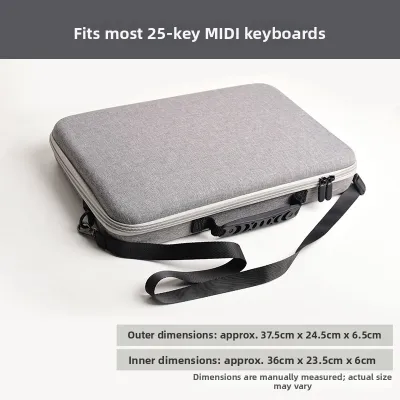
Once you have these measurements, you must carefully distinguish between the internal and external dimensions listed on a bag’s specification sheet. The internal dimensions represent the actual usable space available for your instrument, while the external dimensions reflect the overall bulk of the bag, including padding and outer pockets. Your keyboard’s measurements should be slightly smaller than the bag’s internal dimensions to allow for smooth insertion and removal, but not so small that the instrument slides around freely. A clearance of approximately one to two centimeters on each side is generally sufficient to accommodate the instrument without creating excessive empty space.
Products mentioned in this guide
![TMW Digital Piano Keyboard Bag suitable for 37 44 61 Keys Model Premium Durable Quality Accessories [LIMITED STOCK]](https://img.lazcdn.com/g/p/01098f39a16a9a8c7f3e002aa8139b0d.jpg_400x400q80.jpg_.webp)
Prices are valid at publication and may change. Please refer to the product page for the latest price.
Rather than trusting generic marketing descriptions that claim a bag fits “all 37-key keyboards,” always cross-reference your instrument’s model number with the bag manufacturer’s official compatibility list. Many reputable bag manufacturers publish detailed charts indicating which specific keyboard models fit securely within their products. If your keyboard model is not explicitly listed, compare your manual’s physical specifications directly against the bag’s verified internal dimensions.
Identifying signs of a poor fit early can prevent damage to both your instrument and the bag itself. If a bag is too tight, the zippers will experience excessive tension, leading to premature seam failure or broken zipper teeth. A tight fit can also apply constant, damaging pressure to sensitive keys, knobs, or sliders. Conversely, if the bag is too loose, the keyboard will shift constantly during transport, which can cause internal component wear, cosmetic scratches, or uneven weight distribution that makes carrying uncomfortable.
Key Features to Look for in a Beginner Keyboard Bag
For beginners commuting to music lessons or practice sessions in Singapore, ergonomic carrying features are essential for long-term comfort and physical safety. Look for bags equipped with reinforced, double-stitched carry handles that distribute the weight of the instrument evenly across your hand. Adjustable, padded shoulder straps or backpack-style straps are highly recommended for those who rely on public transport, as they keep your hands free and reduce strain on your shoulders and back during long walks through MRT stations.

The utility of a keyboard bag is also heavily influenced by its storage capacity for essential accessories. A well-designed bag should feature dedicated exterior pockets with secure closures to house your power adapter, sustain pedal, connection cables, and sheet music or notebooks. Keeping these accessories in separate compartments prevents them from scratching the keyboard’s chassis or keys inside the main compartment, while ensuring you have everything needed for a practice session in one organized package.
Given Singapore’s frequent and sudden rainstorms, weather resistance is a critical factor when evaluating a bag’s hardware and construction. Inspect the bag for water-resistant zippers, which feature protective rubber or polyurethane coatings to prevent water from seeping through the zipper teeth. Additionally, check for reinforced stitching at high-stress areas, such as where the straps and handles attach to the main body of the bag, and look for durable metal or high-density polymer hardware rather than thin plastic clips that can easily snap under tension.
Inside the main compartment, look for integrated securing mechanisms that keep the keyboard firmly in place. Adjustable internal Velcro straps or tie-down bands are invaluable features that wrap around the instrument’s body, preventing it from shifting vertically or horizontally when the bag is carried upright or worn as a backpack. This internal stability is crucial for protecting the delicate key mechanism from sudden impacts or vibrations during transit.
Material and Protection: Matching the Bag to Your Transport Needs
Selecting the right level of physical protection requires a realistic assessment of how you plan to transport your keyboard. Lightweight, unpadded gig bags are primarily designed to protect instruments from dust, light scratches, and minor spills in controlled indoor environments or during short car trips where the instrument remains flat on a seat. However, if you plan to carry your keyboard on buses, trains, or through crowded pedestrian areas, a heavily padded bag with high-density foam (typically 10mm to 20mm in thickness) is necessary to absorb physical impacts from accidental bumps and drops.
The interior lining of the bag plays a vital role in preserving the cosmetic condition of your instrument. Ensure the inner lining is made from soft, non-abrasive materials, such as brushed polyester, microfiber, or soft nylon. Rough interior fabrics can rub against the keyboard’s plastic casing, display screen, or key surfaces during transit, leading to unsightly scuffs and wear over time.
For enhanced structural integrity, look for bags that incorporate rigid elements into their design. Some mid-range and premium bags feature rigid plastic or cardboard inserts sewn into the side walls, reinforced rubber base panels, or molded rubber feet on the bottom. These features provide essential impact resistance when setting the bag down on hard surfaces like concrete or tile, and they help the bag maintain its shape, preventing it from collapsing onto the keyboard’s keys when stored vertically.
While maximum protection is desirable, you must balance this against the overall weight and bulk of the carrying case. Heavily armored cases or semi-rigid hybrid bags offer superior impact resistance but can add significant weight, making them tiring for younger beginners or those with longer commutes to carry. Evaluate your physical comfort and typical transit route to find a sensible middle ground between robust structural protection and lightweight portability.
Building Your Shortlist: Where and How to Shop in Singapore
When you are ready to purchase, visiting local musical instrument retailers and official brand showrooms in Singapore is highly recommended. Physical stores allow you to bring your 37-key keyboard with you to test the fit in person, inspect the stitching quality, feel the density of the padding, and try on the shoulder straps to assess comfort. Retail hubs in central areas often house multiple music shops within walking distance, making it easy to compare different brands and models side by side.
Before making a final decision, always clarify the retailer’s return and exchange policies. This is particularly important if you are purchasing a bag as a gift or without having your keyboard present to verify the fit. Ensure the store offers a reasonable window for exchanges or refunds in case you discover the internal dimensions do not align perfectly with your instrument once you return home.
If you prefer the convenience of online shopping, exercise extra diligence when browsing e-commerce platforms and online marketplaces. Avoid relying on promotional images or brief product titles; instead, locate the detailed product specification sheet or download the official user manual to verify the exact internal dimensions. Look for customer reviews that mention specific keyboard models to gain insight into real-world fit and durability, keeping in mind that shipping times and packaging quality can vary.
Compare prices in S$ across different local retailers and authorized online distributors to ensure you are receiving fair value. Additionally, verify whether the bag comes with a local distributor warranty that covers manufacturing defects, such as split seams, broken zippers, or faulty strap attachments. Having access to local after-sales support can save you the hassle and expense of international shipping if a structural issue arises shortly after purchase.
Frequently Asked Questions (FAQ)
Can I use a 49-key keyboard bag for a 37-key keyboard?
While it is physically possible to place a 37-key keyboard inside a larger 49-key bag, doing so introduces significant risks to your instrument. The excessive empty space allows the keyboard to slide back and forth constantly during transit, which can damage the delicate key mechanisms, bend control knobs, or scratch the outer casing. Furthermore, the uneven weight distribution can put improper stress on the bag’s carrying straps, making it uncomfortable to carry and increasing the likelihood of accidental drops. If you must use an oversized bag as a temporary solution, you should fill the empty space with soft, clean padding, such as foam blocks or rolled towels, to secure the instrument firmly in place. However, this approach is not recommended for long-term transport or public commuting.
How should I clean and maintain a padded keyboard bag?
To preserve the structural integrity and appearance of your keyboard bag, establish a regular cleaning routine using gentle methods. For the exterior fabric, wipe away surface dust and dirt using a soft cloth dampened with lukewarm water and a mild, non-corrosive soap. Avoid using harsh chemical solvents, bleach, or abrasive brushes, as these can degrade water-resistant coatings and weaken the fabric fibers. After cleaning, it is absolutely critical to allow the bag to air-dry completely in a well-ventilated indoor area away from direct sunlight before placing your keyboard inside. Storing an instrument in a damp bag can trap moisture, leading to mold growth, musty odors, and potential electrical damage to your keyboard’s internal circuitry. Periodically inspect the zippers, seams, and strap attachments for signs of wear, and discontinue use if you observe structural failures that compromise the bag’s safety.

Community discussion
Share your experience or ask a question. Comments are reviewed before publication.