
Selecting your first musical instrument is an exciting milestone, but navigating the vast array of options can feel overwhelming. If you are looking for a beginner-friendly keyboard in Singapore, Casio is likely one of the first brands you will encounter. The short answer to which Casio keyboard is best depends entirely on your primary learning goal: for space-conscious, casual players who want portability and fun learning features, the Casiotone (CT-S) series is the ideal starting point; for budget-conscious students wanting traditional keyboard features, the CTK series offers excellent value; and for those committed to serious classical piano training, the weighted keys of the CDP or Privia (PX) series are essential.
Making the right choice requires balancing your budget, your physical living space, and your long-term musical aspirations. A keyboard that is too simple may quickly limit your progress, while an overly complex digital piano might exceed your space or budget constraints. By understanding how Casio structures its beginner lines and evaluating key specifications like key count, action, and connectivity, you can confidently select an instrument that supports your musical journey from day one.
Defining Your Musical Goals and Space Constraints
Before comparing technical specifications, you must define what success looks like for your musical journey. Beginner keyboard players generally fall into two distinct camps, each requiring a fundamentally different type of instrument. The first group consists of casual learners who want to play modern pop songs, experiment with different instrument sounds, learn basic chords, or perhaps try their hand at music production. If this matches your ambition, a lightweight, highly interactive keyboard with diverse built-in tones and rhythms will keep you engaged without requiring a massive financial or physical commitment.
Products mentioned in this guide
![Casio CT-S1 Digital Keyboard [FREE X-STAND] Portable 61 Keys Musical Instrument for Beginners](https://img.lazcdn.com/g/p/34b2071d37fa9459c1aa31b1568e43b6.jpg_400x400q80.jpg_.webp)
![CASIO CT-S200 (Black) Keyboard [FREE: X-stand] Compact portable lightweight Casiotone keyboard 61 keys with carry handle optional power by batteries ( CTS200 / CTS 200 )](https://img.lazcdn.com/g/p/76d9e4511d23fdeebe542705ebc514db.jpg_400x400q80.jpg_.webp)
![Casio CT-S200 Digital Keyboard [FREE X-STAND] Portable 61 Keys Musical Instrument for Beginners](https://img.lazcdn.com/g/p/ac8414b4d8c59bdac4f61d81b729086d.jpg_400x400q80.jpg_.webp)
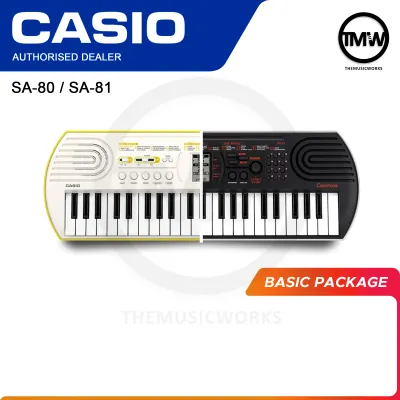
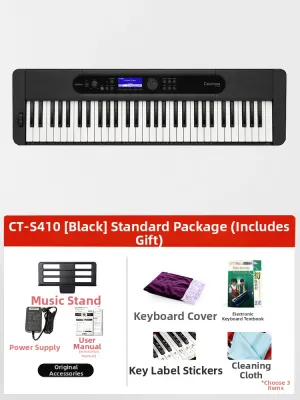
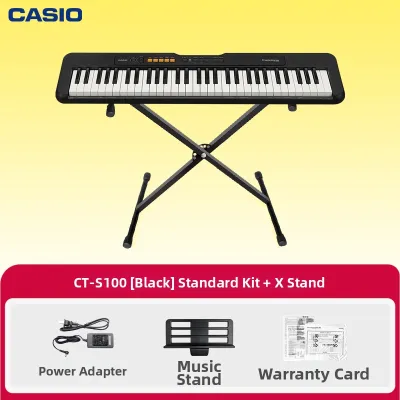
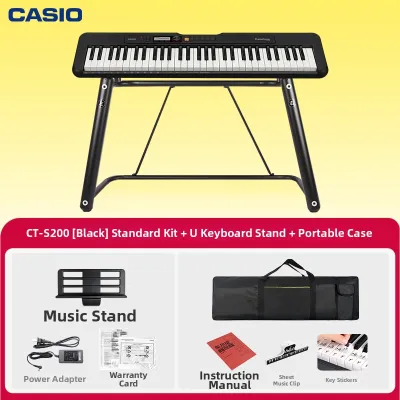
Prices are valid at publication and may change. Please refer to the product page for the latest price.
The second group comprises aspiring classical pianists or students preparing for formal graded examinations, such as those administered by the Associated Board of the Royal Schools of Music (ABRSM). For these learners, the goal is to develop authentic piano technique, which requires building finger strength, mastering dynamic control, and learning to read standard sheet music. If you fall into this category, starting on an instrument that closely mimics the physical response of an acoustic piano is non-negotiable, as learning on unweighted keys can lead to poor habits that are difficult to correct later.
Living in Singapore also introduces unique physical considerations that heavily influence your instrument choice. In a typical Housing & Development Board (HDB) flat or a compact condominium unit, floor space is at a premium. An 88-key digital piano on a fixed wooden stand takes up a permanent footprint similar to a small console table, which may not be feasible in a shared living room or a small bedroom. Conversely, a compact 61-key keyboard can easily sit on a desk, a folding stand, or even be tucked away under a bed or inside a wardrobe when not in use.
This spatial reality highlights the critical trade-off between portability and stability. Lightweight keyboards are incredibly easy to move and store, making them perfect for dynamic households or students who want to bring their instrument to jam sessions. However, they lack the physical stability of a heavier digital piano. When playing expressive, fast, or heavy passages, a lightweight keyboard on a basic folding stand may wobble, which can disrupt your playing posture and concentration. Deciding where your instrument will live—and whether it needs to be packed away daily—is a crucial first step.
Navigating Casio’s Beginner Keyboard Series
Casio has organized its consumer musical instruments into distinct product families, each engineered to serve specific user needs, budgets, and space requirements. Understanding these series-level characteristics allows you to narrow down your options quickly without getting bogged down in minor model variations.

Casiotone (CT-S) Series: Portability and Modern Design
The modern Casiotone, often designated as the CT-S series, represents a complete redesign of the portable keyboard concept, focusing heavily on the lifestyle of contemporary, space-conscious learners. These instruments are characterized by their remarkably slim chassis, rounded edges, and highly integrated physical features, such as built-in carrying handles and minimalist control panels. Many models also feature stylish fabric-finished speaker grilles, allowing them to blend seamlessly into modern home decor rather than looking like clinical pieces of electronic equipment.
This series is specifically tailored for casual learners, bedroom producers, and anyone who values hassle-free storage and transport. Because they are exceptionally lightweight, you can easily carry them around your home or transport them to lessons. The user interface on CT-S models is typically streamlined, replacing the overwhelming wall of buttons found on older keyboards with intuitive dials and digital screens, or offloading deep customization to mobile applications.
While Casiotone models offer high-quality sound engines, their design philosophy prioritizes accessibility and smart integration over massive, complex onboard sound libraries. They are built to connect effortlessly with smartphones and tablets, making them excellent platforms for interactive learning software. If your goal is to get playing quickly with minimal friction, the CT-S series offers a highly approachable, modern gateway to music.
CTK Series: Traditional Budget-Friendly Options
For beginners who prefer a more traditional electronic keyboard experience, the CTK series represents Casio’s classic entry-level lineup. These models retain the familiar, boxier aesthetic of traditional portable keyboards and are designed to offer maximum features per dollar. Unlike the streamlined Casiotone models, CTK keyboards often feature a broader array of dedicated physical buttons on the front panel, giving you direct, immediate access to various settings without navigating digital menus.
The primary appeal of the CTK series lies in its sheer variety of built-in instrument voices, backing rhythms, and auto-accompaniment styles. This makes them incredibly fun for beginners who want to explore different musical genres, from jazz and Latin beats to electronic synth sounds. Playing with auto-accompaniment helps beginners develop a strong sense of rhythm and tempo, acting as a highly engaging alternative to a standard metronome.
Additionally, these models often feature traditional onboard step-up lesson systems that guide you through built-in songs note-by-note. While they are highly versatile, it is important to note that CTK models generally prioritize feature variety and affordability over premium key feel or ultra-slim physical profiles. They are slightly bulkier than their CT-S counterparts, but they remain a solid, reliable choice for budget-conscious learners who want a self-contained musical playground.
CDP and Privia (PX) Series: Digital Pianos for Authentic Touch
When your musical goals demand the touch and feel of a real acoustic piano, you must look beyond portable keyboards and enter the realm of digital pianos, represented by Casio’s CDP and Privia (PX) series. These instruments feature full 88-key layouts and are equipped with fully weighted-hammer action keys. This means the keys have physical weight and resistance that replicates the mechanical hammers of an acoustic piano—requiring more effort to press the lower bass keys than the high treble keys.
This mechanical resistance is absolutely vital for anyone pursuing formal classical training or preparing for graded exams. Without weighted keys, a student cannot develop the necessary finger strength, hand posture, or “touch control” required to play expressively on an acoustic piano. If you practice exclusively on unweighted keys, you will find it incredibly difficult to control your volume and tone when performing on a real piano during an exam or recital.
Within this category, the CDP (Compact Digital Piano) series serves as an excellent, budget-friendly entry point into the world of weighted keys, offering an ultra-slim footprint that fits comfortably on compact stands. The Privia (PX) series represents a step up, featuring more advanced sound engines, multi-dimensional morphing technology for richer acoustic resonance, and premium key textures that simulate ebony and ivory. While heavier and more expensive than portable keyboards, both series are designed to be as compact as possible, making them the gold standard for serious Singaporean students with limited space.
Evaluating Core Specifications: Keys, Touch, and Learning Tools
When comparing specific models within these series, you will encounter a variety of technical specifications. Understanding how these specs translate to your daily practice will help you avoid paying for features you do not need, or conversely, buying an instrument you will quickly outgrow.
Key Count and Physical Dimensions
The number of keys on a keyboard directly dictates the repertoire you can play. A standard acoustic piano has 88 keys, which is the benchmark for all classical music and advanced contemporary pieces. However, many beginner keyboards come in 61-key configurations, which span exactly five octaves. For an absolute beginner, a 61-key setup is perfectly adequate for the first year or two of learning, as it easily accommodates basic melodies, pop chords, scales, and early educational exercises.
Another critical factor is the physical size of the keys themselves. You should strictly avoid “mini-key” models unless you are buying an instrument specifically for a very young toddler. Standard-size (or full-size) keys are crucial for developing proper hand spacing, finger independence, and muscle memory. If you practice on mini-keys, your fingers will struggle to adjust to the spacing of a standard piano, leading to frequent missed notes and hand fatigue.
Before purchasing, always measure the physical space where you plan to place the instrument. A typical 61-key keyboard measures roughly 93 cm in width, making it highly manageable for small desks. An 88-key digital piano, however, requires a width of approximately 132 cm to 140 cm. Ensure you account not only for the width of the keyboard itself but also for the space required for a stand, a bench, and the clearance needed for your arms to move freely while playing.
Touch Response vs. Weighted Hammer Action
Perhaps the most common point of confusion for beginners is the difference between “touch response” (sometimes called touch sensitivity) and “weighted action.” These terms refer to two entirely different aspects of key design, and confusing them can lead to an unsuitable purchase.
Touch Response is an electronic feature. It means the keyboard uses sensors to detect how fast or hard you press a key, translating that physical speed into volume. If you press gently, the sound is soft; if you strike quickly, the sound is loud. This is the absolute minimum requirement for any beginner keyboard, as music without dynamic variation sounds flat and mechanical.
Weighted Hammer Action is a physical, mechanical feature. Inside the keyboard, actual weights or mechanical levers are attached to each key to simulate the physical resistance of an acoustic piano’s hammer mechanism. The keys feel heavy to press, and they spring back with a distinct mechanical rebound.
The decision rule here is straightforward:
- Choose Touch Response if you are a casual hobbyist, want to play synthesizer or organ sounds, need maximum portability, or have a highly restricted budget.
- Choose Weighted Hammer Action if your primary goal is to learn traditional piano, sit for classical exams, or transition to an acoustic piano in the future.
Built-in Lessons and App Connectivity
Modern technology has transformed how beginners interact with their instruments, and Casio has been a pioneer in integrating educational tools directly into their hardware. Many beginner-focused Casio models feature onboard learning systems, such as lighted keys that illuminate to show you which note to play next. These systems often include step-up lessons that break down songs into manageable segments, allowing you to practice the left hand, right hand, and both hands together at a comfortable tempo.
Beyond onboard features, connectivity is a major consideration. Most modern Casio keyboards feature USB-MIDI ports, allowing you to connect the keyboard directly to a tablet, smartphone, or computer using a standard USB-C or Lightning cable. Some mid-range and premium beginner models also support wireless Bluetooth MIDI adapters. This connectivity is incredibly valuable because it unlocks a massive ecosystem of interactive learning apps.
For instance, companion applications like Casio Music Space allow you to visualize MIDI files as falling notes, track your practice consistency, and access interactive sheet music. These gamified learning experiences are highly effective at keeping younger students motivated and helping adult self-learners grasp basic timing and note recognition without feeling discouraged by traditional, dry exercises.
Purchasing, Setup, and Verification in Singapore
Once you have identified the right series and specifications for your needs, the final step is navigating the purchasing and setup process within the Singapore market. Buying a musical instrument requires a slightly different approach than buying standard consumer electronics, as physical feel and local support are paramount.
To ensure you receive a genuine product with a valid local manufacturer’s warranty, always purchase from authorized music retailers, established local instrument showrooms, or official brand storefronts on major e-commerce platforms. Avoid purchasing from unauthorized parallel importers or unverified third-party sellers online. While parallel imports might offer a slightly lower upfront price, they often lack local warranty coverage, meaning you will have to pay out-of-pocket for repairs or shipping if the instrument develops a technical fault.
Another critical detail to verify before finalizing your purchase is the power supply adapter. Singapore uses the Type G three-pin plug, operating on a 230V, 50Hz electrical system. Authorized local distributors will package the keyboard with a safety-certified Type G power adapter. If you buy from an unauthorized overseas seller, you may receive a two-pin plug or an incorrect voltage adapter, forcing you to rely on unsafe travel adapters or risk damaging the keyboard’s internal circuitry.
Whenever possible, visit a physical showroom in Singapore to test the keyboard before buying. Tactile feel and speaker tone are highly subjective; a key action that feels perfectly fine to one person might feel too stiff or too springy to another. Testing the instrument in person allows you to feel the weight of the keys, listen to the speaker quality at different volumes, and navigate the user interface to see if it feels intuitive to you.
Finally, carefully check the product listing or ask the sales representative what accessories are included in the box. Many beginner keyboards are sold as bare units, meaning they include only the keyboard and the power adapter. To set up a functional practice space at home, you will likely need to budget for several essential accessories:
- Keyboard Stand: A sturdy double-braced X-stand or a dedicated wooden stand is crucial to keep the keyboard at the correct height and prevent wobbling.
- Sustain Pedal: Essential for holding notes and creating smooth transitions; ensure the pedal is compatible with your specific Casio model.
- Headphones: A pair of comfortable over-ear headphones with a 3.5mm or 6.35mm jack is invaluable for quiet practice in compact Singaporean homes, allowing you to practice late at night without disturbing family members or neighbors.
- Keyboard Bench: A height-adjustable bench helps you maintain proper playing posture, reducing the risk of wrist strain or back fatigue during long practice sessions.
Frequently Asked Questions (FAQ)
Do I need an 88-key keyboard to start learning piano?
No, an absolute beginner does not strictly need an 88-key keyboard to start learning. A 61-key keyboard is generally sufficient for the first six to twelve months of practice, as it covers the standard range required for basic music theory, scales, simple melodies, and introductory pop chords. However, as you progress to intermediate classical pieces or start playing complex arrangements that require deep bass notes and high-treble flourishes, you will quickly run out of keys. If your long-term goal is serious piano study, investing in an 88-key weighted keyboard from the start will save you the cost and hassle of upgrading later.
Can I connect my Casio keyboard to a tablet for learning apps?
Yes, almost all modern Casio beginner keyboards can connect to tablets and smartphones. You can establish this connection using a physical USB-MIDI cable (which may require a USB-C to USB-B cable or an Apple Camera Adapter, depending on your tablet) or wirelessly via a compatible Bluetooth MIDI adapter. It is important to check your specific model’s specifications to distinguish between Bluetooth Audio and Bluetooth MIDI. Bluetooth Audio allows you to stream music from your tablet through the keyboard’s speakers, while Bluetooth MIDI is what allows the keyboard to send your keypress data to educational apps like Casio Music Space.
What is the difference between touch response and weighted keys?
The fundamental difference lies in the physical mechanism and how the keys respond to your touch. Touch response is an electronic feature where sensors detect the speed of your keystroke to adjust the volume—allowing you to play softly or loudly, though the keys themselves remain light, springy, and easy to press. Weighted keys, on the other hand, utilize physical weights or mechanical levers inside the keyboard to simulate the actual resistance of an acoustic piano’s hammer action. This physical resistance is essential for building finger strength and mastering the precise finger control required for acoustic pianos.

Community discussion
Share your experience or ask a question. Comments are reviewed before publication.