
Choosing your first pair of drumsticks is a foundational step that directly impacts your playing comfort, hand health, and early progress. The ideal choice depends on your physical hand size, your preferred musical genre, and whether you are practicing on an acoustic kit, an electronic kit, or a practice pad. For most beginners, starting with a standard 5A hickory stick with a wood teardrop tip provides the most balanced introduction to drumming dynamics. This versatile baseline allows you to develop proper grip and stroke techniques before you begin customizing your gear to suit highly specific musical styles.
Decoding Drumstick Sizes and Weight for a Comfortable Grip
Understanding the alphanumeric codes stamped on the side of almost every drumstick is the first step to finding your perfect fit. The numbering system can initially seem counterintuitive to beginners: lower numbers generally indicate thicker, heavier sticks, while higher numbers represent thinner, lighter options. For example, a 7A stick is significantly thinner and lighter than a 5A stick, making it easier to maneuver for smaller hands or softer playing styles. Conversely, a 2B stick is thick and heavy, designed to deliver maximum volume and power.
The letters accompanying these numbers carry historical origins that clarify their intended use and physical characteristics. Historically, the letter “A” stood for orchestra, representing sticks designed for softer, symphonic, or big-band arrangements where control and nuance were paramount. The letter “B” stood for band, indicating a thicker stick designed to provide the extra volume and durability needed in brass bands and large ensembles. The letter “S” stood for street, denoting exceptionally large, heavy sticks designed for outdoor marching bands. While modern drummers use these sizes across all genres, these letters remain a reliable guide for predicting the overall weight and diameter of the stick.
Products mentioned in this guide
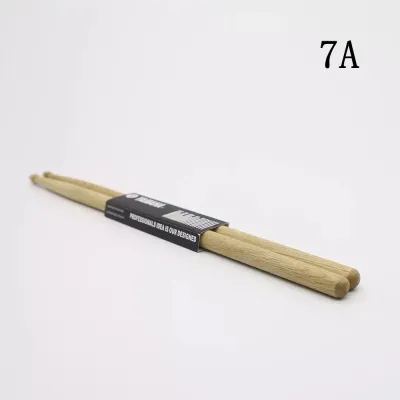
![[ammoon]One Pair of 5B/ 5A/ 7A Wooden Drumsticks Drum Sticks Hickory Wood Drum Set Accessories](https://img.lazcdn.com/g/p/d58739556127e313dfe9e0e64e02ec43.jpg_400x400q80.jpg_.webp)
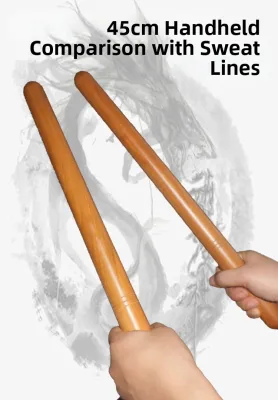
Prices are valid at publication and may change. Please refer to the product page for the latest price.
Beyond the numbers and letters, evaluating the overall weight and balance point of a drumstick is crucial for ensuring proper control and minimizing physical strain. The balance point is largely determined by the taper, which is the sloping section of the stick leading down to the tip. A long taper shifts the center of gravity toward the butt end, making the stick feel lighter and highly responsive with plenty of rebound. A short taper keeps more weight near the front of the stick, providing a forward-heavy feel that maximizes power but requires more wrist effort to control. For beginners, a medium taper offers a neutral balance point that helps build fundamental wrist strength without causing premature hand fatigue during extended practice sessions.
Choosing the Right Wood Type for Durability and Feel
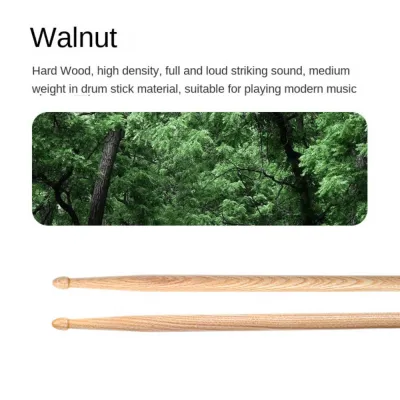
The type of wood used to manufacture your drumsticks plays a significant role in how they feel in your hands, how they sound on your instruments, and how long they will last. Hickory is the industry standard and the most recommended wood type for beginners due to its exceptional physical properties. It offers an outstanding balance of natural weight, structural density, and shock absorption. This shock absorption is particularly important for beginners, as it cushions the impact of each stroke, preventing harsh vibrations from traveling up the stick and causing joint fatigue or wrist strain.

If you prefer a lighter, faster-playing feel, maple is an excellent alternative to hickory. Maple is a highly flexible, low-density wood that produces a very light stick, allowing for rapid, nimble movements and delicate dynamics. Because maple sticks are lighter, you can choose a thicker diameter (such as a 5B) without the added weight, which can be highly comfortable for players with larger hands. However, maple transmits more physical vibration to your hands than hickory and is significantly less durable. If you practice heavy hitting or play high-volume music, maple sticks are prone to cracking and splintering much faster than other wood types.
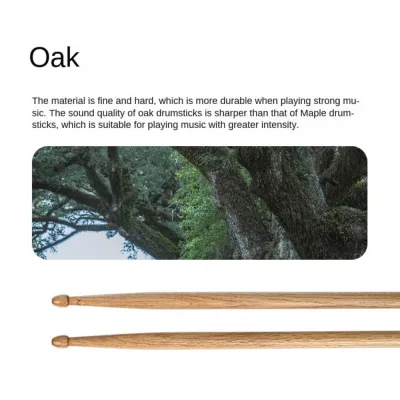
For maximum durability and a solid, heavy feel, oak is the densest and heaviest option available. Oak drumsticks are highly resistant to chipping, denting, and breaking, making them a favorite among heavy-hitting rock and metal drummers. The high density of oak allows it to deliver powerful, loud strokes with minimal physical effort. The trade-off, however, is that oak has very poor shock absorption properties. It transmits almost all the impact vibration directly into your hands and wrists, which can quickly lead to discomfort or repetitive strain injuries if your striking technique is not yet fully developed.
Picking the Best Tip Shape and Material for Your Sound
The tip of the drumstick is the only part that makes direct contact with your drumheads and cymbals, making its geometry and material critical to your overall sound. Common tip shapes include round, teardrop, oval, and acorn, each offering a distinct surface area that influences the focus or spread of your tone. Round tips have a small, consistent contact area, producing a highly focused, bright, and clear sound that remains uniform regardless of the angle at which you strike. Teardrop tips have a larger, elongated contact area, delivering a much warmer, fuller tone with a broader range of acoustic dynamics depending on your hand angle.
Oval tips bridge the gap between round and teardrop shapes, offering a balanced, mid-range tone and a highly predictable rebound that is excellent for beginners learning to control their strokes. Acorn tips feature a large, tapered surface area that produces a dark, rich, and highly articulated sound, making them popular for acoustic jazz and studio recording where subtle tonal differences are highly valued. As a beginner, starting with an oval or teardrop tip provides the most forgiving and versatile sound profile across a wide range of practice environments.
In addition to shape, you must choose between wood and nylon tip materials, each presenting distinct trade-offs in tone and durability. Wood tips produce a warm, natural, and traditional sound on both drums and cymbals, but they are prone to chipping, flattening, and splitting over time. Once a wood tip chips, it can produce an inconsistent sound and, more importantly, its sharp edges can easily puncture or tear your drumheads. Nylon tips are incredibly durable, virtually immune to chipping, and deliver a very bright, cutting, and articulate sound, especially on cymbals. While some players find nylon tips too bright for acoustic settings, their longevity and consistency make them an excellent, cost-effective choice for beginners.
Matching Your Drumsticks to Your Musical Style and Kit
Aligning your drumstick specifications with your intended musical genre and the specific type of drum kit you play is essential for a rewarding learning experience. For general beginners who have not yet committed to a specific musical style, a standard 5A hickory stick serves as the ultimate versatile baseline. It is thick enough to provide a secure, comfortable grip that prevents hand cramping, yet light enough to allow you to practice for hours without fatigue. Starting with a 5A ensures that you develop a neutral, well-rounded technique that can easily adapt to other stick sizes later on.
As you begin to explore specific musical genres, you can make minor adjustments to your stick size to better suit the required dynamics. If you find yourself drawn to heavy rock, punk, or metal, transitioning to a thicker and heavier stick like a 5B or 2B will help you achieve the necessary volume, projection, and durability without overexerting your wrists. If your interests lie in jazz, folk, or acoustic pop, switching to a thinner, lighter 7A stick will allow you to execute delicate ghost notes, quiet cymbal rolls, and nuanced dynamics with ease.
If you are practicing on an electronic drum kit, your stick selection requires a few unique considerations to protect your equipment and ensure accurate triggering. Electronic kits often feature sensitive mesh drumheads that can be easily damaged by splintered wood tips. For this reason, nylon-tipped sticks are highly recommended for electronic players, as they will never splinter or develop sharp edges that could slice through the mesh. Additionally, playing on rubber electronic pads can transmit more physical shock to your hands than playing on acoustic drumheads, so choosing a shock-absorbing hickory stick rather than a stiff oak stick is vital for protecting your joints.
Inspecting and Testing Drumsticks Before You Buy
Whether you are purchasing your drumsticks from a local music store or inspecting a delivery from an online marketplace, performing a few quick quality checks will ensure you receive a structurally sound, high-performing pair. The first and most important check is for straightness and warping, as even brand-new wooden sticks can warp due to changes in humidity and temperature. To test this, place the drumsticks on a completely flat surface, such as a glass counter or a flat table, and roll them back and forth with your hand. If a stick rolls smoothly without any wobbling or lifting, it is perfectly straight; if it wobbles or hops, the wood is warped and should be replaced.
Next, you should test the pitch and resonance of the sticks to ensure they are a well-matched pair. Hold one stick lightly near its taper between your thumb and index finger, and tap it gently against the other stick or a hard surface, listening closely to the pitch of the ring. Repeat this process with the second stick and compare the two pitches. High-quality manufacturers match their sticks by weight and pitch, but budget pairs can sometimes vary significantly. A well-matched pair will produce pitches that are very close in frequency, ensuring that both hands experience the same rebound response and produce a consistent sound on your drums.
Finally, take a moment to evaluate the grip finish options to find a texture that matches your personal comfort and sweat management needs. Standard drumsticks are finished with a thin layer of lacquer, which provides a smooth, polished feel but can become slippery if your hands sweat during long practice sessions. Natural, unlacquered finishes offer a raw, textured wood grip that absorbs moisture well, though they can accumulate dirt and hand oils over time. If you live in a humid climate or struggle with sweaty hands, look for sticks with specialized active-grip coatings or rubber-sleeved handles that become tackier as your body heat rises, ensuring a secure grip without requiring you to squeeze the stick too tightly.
Frequently Asked Questions (FAQ)
How long should a pair of drumsticks last for a beginner?
The lifespan of a pair of drumsticks depends heavily on your playing technique, practice frequency, and the volume at which you play. For a beginner practicing daily on a rubber practice pad or an electronic kit, a single pair of high-quality hickory sticks can easily last several months to a year. However, if you are playing on an acoustic kit with metal cymbals and using improper technique—such as striking the edges of the cymbals directly rather than glancing them—sticks can chip or break within a few weeks. Inspect your sticks regularly for deep cracks, severe splintering along the shoulder, or a flattened tip, as these are clear signs that it is time to replace them.
Should beginners use practice pads with specific drumsticks?
Beginners do not need to buy specialized drumsticks exclusively for practice pads, but using the same size and weight you plan to play on a real drum kit is highly beneficial for building consistent muscle memory. Practicing with a standard 5A hickory stick on a rubber or silicone pad provides a realistic rebound that closely mimics the feel of an acoustic drumhead. Some instructors recommend occasionally practicing with a slightly heavier stick, such as a 5B, on a practice pad to help build wrist strength and endurance, but you should always return to your primary stick size to maintain accuracy and control.
What are the signs that my drumsticks are the wrong size for me?
The most common sign that your drumsticks are the wrong size is physical discomfort, such as hand cramping, wrist fatigue, or muscle tension in your forearms after a short practice session. If you find yourself constantly dropping your sticks or struggling to maintain a secure grip without squeezing tightly, the sticks may be too thick or too heavy for your hand size. Conversely, if you feel like you have to swing excessively hard to get a decent volume or if the sticks feel like toys in your hands, they are likely too thin or too light. Pay close attention to your body; drumming should feel natural and fluid, not painful or physically exhausting.

Community discussion
Share your experience or ask a question. Comments are reviewed before publication.