
Selecting the right bilingual reference tool is a critical decision for students navigating Singapore’s bilingual education system. A reliable English-Chinese dictionary does more than translate words; it bridges cultural gaps, clarifies complex grammatical structures, and serves as an essential companion during high-stakes examinations. Parents and students often find themselves balancing the convenience of digital applications with the strict, non-negotiable regulations of physical exam halls. Finding a tool that satisfies both daily homework needs and official assessment criteria requires a clear understanding of what makes a dictionary effective, compliant, and durable.
Beyond academic utility, the right dictionary builds a student’s confidence. When a learner knows exactly how to find a word quickly during a timed test, their anxiety levels decrease significantly. This familiarity with their reference tool allows them to focus their mental energy on comprehension and creative expression rather than struggling with basic vocabulary retrieval.
Understanding School Requirements and Exam Regulations
In Singapore, the Ministry of Education (MOE) and the Singapore Examinations and Assessment Board (SEAB) maintain strict guidelines on what materials can enter the examination hall. While digital tools, mobile apps, and online translators are excellent for quick homework checks at home, they are strictly prohibited during national examinations like the PSLE, GCE O-Level, and GCE A-Level.
Products mentioned in this guide
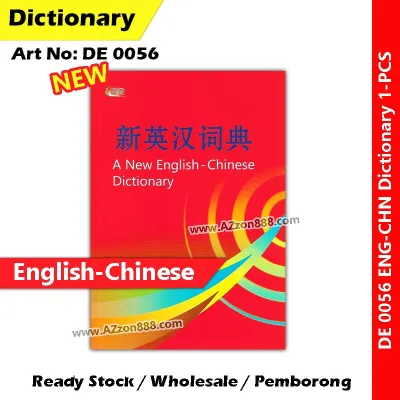
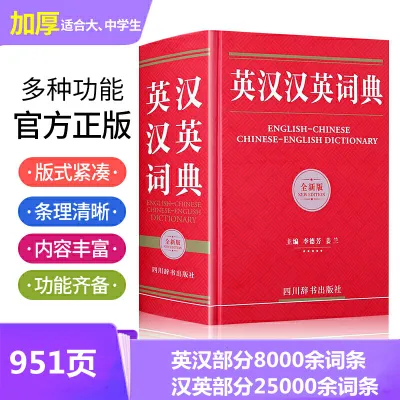
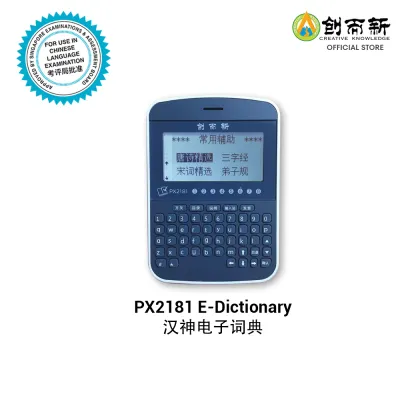
Prices are valid at publication and may change. Please refer to the product page for the latest price.
Even within the category of physical print dictionaries, not every book is permitted. SEAB publishes an annual list of approved dictionaries for use in national examinations. These approved lists specify the exact title, publisher, and edition of the dictionaries allowed. Bringing an unapproved edition, even if it is by the same publisher, can lead to confiscation at the exam venue.
Before making any purchase, parents and students must consult the specific school’s handbook or seek direct recommendations from the Mother Tongue department teachers. Schools often align their internal assessments with national standards, meaning a dictionary required for mid-year exams in Secondary One must match the SEAB-approved list.
Physical print dictionaries remain the gold standard for formal testing environments. They do not possess internet connectivity, storage capabilities, or smart features that could compromise examination integrity. Consequently, training a student to navigate a physical book efficiently is just as important as choosing the right content.
Furthermore, schools may have specific preferences based on the curriculum stream. For instance, students taking Higher Chinese may require different reference tools compared to those taking standard Chinese. Clarifying these requirements with teachers early in the academic year prevents costly purchasing mistakes and ensures the student is well-prepared.
Many schools also conduct dedicated training sessions or mock exams where students practice looking up words under timed conditions. These exercises help students build muscle memory and learn how to use the dictionary’s index systems rapidly. Having the exact model recommended by the school ensures the student can follow along with these classroom exercises without confusion.
Key Features to Evaluate in a Bilingual Dictionary
A student’s dictionary must have a vocabulary range suited to their academic level. However, sheer volume is not the only metric to consider. In Singapore, local curriculum requirements often emphasize specific regional terms or standard terms used in the local Chinese syllabus. The dictionary should feature clear distinctions between simplified Chinese characters (used in Singapore schools) and traditional characters, ensuring students do not accidentally use incorrect scripts in their writing.

The quality of example sentences is another critical factor. A good dictionary does not merely provide a one-word equivalent; it must demonstrate how words function in context. Look for editions that offer rich example sentences illustrating correct prepositional use, verb-noun collocations, and register. For Chinese-to-English or English-to-Chinese translation, understanding the nuance of idioms (chengyu) is vital. The dictionary should explain these idioms clearly and provide examples of how they are integrated into modern essays.
Supplementary learning tools add significant value to a reference book. Beyond the main alphabetical listings, high-quality student dictionaries include valuable appendices. These may feature character stroke order diagrams, pinyin pronunciation guides, lists of common radicals, and brief grammar summaries. Some bilingual dictionaries also include thematic pages covering topics like letter writing, email formats, or common punctuation differences between English and Chinese.
Layout and readability should not be overlooked. A dictionary with cramped text, tiny fonts, and poor contrast can cause eye strain during long study sessions. Look for editions that use clear headings, distinct color coding for headwords, and adequate spacing between entries. A clean layout allows students to locate words quickly under timed exam conditions.
Finally, consider the inclusion of modern vocabulary. Language is dynamic, and new terms enter daily usage regularly. A dictionary that has not been updated in decades may lack common contemporary terms, making it less useful for modern comprehension passages and essay topics that touch on technology, environmental issues, or social media.
Pronunciation support is another pillar of an effective dictionary. For English-Chinese dictionaries, clear phonetic transcriptions (such as the International Phonetic Alphabet) help students pronounce English words correctly. For Chinese-English dictionaries, accurate Hanyu Pinyin with tone marks is essential for mastering oral exams and class presentations.
Matching Dictionary Specifications to Learning Stages
As a student progresses through the education system, their linguistic needs evolve dramatically. A dictionary that is perfect for a primary school child will quickly become inadequate in secondary school, while an advanced academic dictionary will overwhelm a young learner. Matching the dictionary’s complexity to the student’s current academic phase ensures they remain supported without feeling discouraged by overly dense or overly simplistic definitions.
Primary School Learners
For primary school students, the focus is on building a strong foundation in character recognition, pronunciation, and basic sentence structure. Dictionaries designed for this stage should feature clear, large-print simplified Chinese characters accompanied by Hanyu Pinyin. Pinyin is essential for helping young learners read the definitions and example sentences independently.
Visual aids and illustrations are highly beneficial at this stage. Colorful diagrams that group vocabulary by theme—such as household items, school environments, or nature—help children make cognitive connections between words and real-world objects. These visual elements make the dictionary feel less intimidating and encourage self-directed learning.
Furthermore, stroke order guides are indispensable. Primary school assessments often test the correct sequence of writing strokes, so having a dictionary that clearly outlines the step-by-step formation of common characters reinforces classroom learning during homework sessions. The definitions must be written in simple, age-appropriate language that avoids circular explanations.
The physical size of the dictionary also matters for younger children. A massive, heavy volume is difficult for a primary school student to carry in their schoolbag alongside textbooks and water bottles. Opting for a compact, lightweight print dictionary specifically designed for primary levels is usually the most practical choice.
To help primary students learn how to search for words, look for dictionaries with user-friendly indexing features. Color-coded margins, prominent alphabet tabs, and clear radical charts make it much easier for young fingers to navigate the book. These design choices transform a potentially frustrating search into an engaging, skill-building activity.
Secondary and Pre-University Students
Upon entering secondary school and progressing toward pre-university levels, the linguistic demands shift from basic recognition to sophisticated expression. Students are expected to write analytical essays, comprehend complex texts, and translate nuanced arguments. Therefore, their dictionaries must offer a much larger vocabulary database and deeper semantic analysis.
At this level, a dictionary must provide detailed explanations of word collocations, synonyms, and antonyms. It should highlight the subtle differences between words that share similar translations but carry different connotations or registers. For example, understanding whether a term is formal, informal, derogatory, or laudatory is crucial for precise writing.
Advanced grammar notes are also critical. The dictionary should clarify how specific words function syntactically, such as whether a verb is transitive or intransitive, or how a Chinese particle alters the tense or mood of a sentence. This level of detail helps students avoid grammatical errors in their written compositions.
For students preparing for higher-level Chinese or translation modules, having access to classical Chinese terms, modern academic phrasing, and idiomatic expressions is essential. The dictionary should serve as a tool for vocabulary expansion, helping students elevate their writing style from basic conversational language to sophisticated academic prose.
At the pre-university stage, students may also benefit from bilingual-monolingual hybrid dictionaries. These editions provide definitions in both the target language and the source language, encouraging students to think directly in the language they are writing. This cognitive shift is key to achieving fluency and natural phrasing in advanced essays.
Pre-Purchase Checklist for Language Learning Tools
Before finalizing your purchase at a local bookstore or an online marketplace, run through a systematic checklist to ensure the tool is practical and compliant. First, verify the publication or edition year. Language curricula and exam guidelines are updated periodically, and older editions may lack newer vocabulary or fail to meet current SEAB approval standards.
Second, confirm the language direction of the dictionary. Ensure you are purchasing the correct format: an English-Chinese dictionary, a Chinese-English dictionary, or a comprehensive bilingual dictionary that covers both directions. The student’s specific syllabus and exam rules will dictate which direction is required or permitted.
Third, evaluate the physical durability of the book. Student dictionaries undergo heavy daily use, being stuffed into backpacks, flipped through rapidly during timed practices, and left open on study desks. Look for sturdy bindings—sewn bindings are generally much more durable than glued ones—and thick, tear-resistant paper. A flimsy paperback may save money initially but will likely need replacement before the school year ends.
Fourth, verify the authenticity of the retailer. When purchasing through an online marketplace, ensure the seller is an authorized educational book distributor or a reputable local bookstore. Counterfeit or poorly printed editions often contain typographical errors, missing pages, or low-quality paper that makes reading difficult. Check the retailer’s return policy in case the school rejects the specific edition.
Fifth, consider the physical weight and size of the dictionary. While a massive, multi-volume dictionary offers unparalleled depth, it is impractical for a student to carry to school daily. Balance the need for comprehensive content with the student’s physical carrying capacity, perhaps opting for a compact yet detailed edition for school use and keeping a larger reference volume at home.
Finally, factor in the long-term financial value. While a budget-friendly paperback might cost around S$10, a high-quality, hardbound edition priced between S$25 and S$50 often proves more economical over time. A durable book can last through several academic years or be passed down to younger siblings, whereas a poorly constructed book will quickly deteriorate under daily school use.
Frequently Asked Questions (FAQ)
Can students use electronic dictionaries during national exams?
In Singapore, the use of electronic dictionaries during national examinations is subject to strict regulations set by the Singapore Examinations and Assessment Board (SEAB). Only specific, approved models of electronic dictionaries are permitted in the exam hall for Mother Tongue paper components. These approved devices must not have any communication capabilities, internet access, or external storage slots that could allow unauthorized data transfer. They are thoroughly inspected by exam invigilators before the paper begins. It is critical to check the latest SEAB approved list of electronic dictionaries annually, as older models may be phased out and removed from the approved list. If a device is not on the current list, it will not be allowed into the examination room under any circumstances.
How often should a student upgrade their physical dictionary?
A physical dictionary should generally be upgraded when a student transitions to a new educational milestone, such as moving from primary to secondary school, or from secondary school to pre-university levels. The vocabulary, complexity of definitions, and grammatical explanations required at higher levels far exceed what is provided in primary-level editions. Additionally, physical wear and tear is a major indicator; if the spine is broken, pages are falling out, or key sections are torn, it is time for a replacement to avoid frustration during study sessions. Finally, keep an eye on curriculum changes. If the Ministry of Education introduces significant updates to the syllabus or if SEAB updates its approved list of exam dictionaries, purchasing a newer, compliant edition is highly recommended to ensure the student is fully prepared.

Community discussion
Share your experience or ask a question. Comments are reviewed before publication.