
A foldable 88-key piano offers a practical entry point for aspiring musicians in Singapore, especially when balancing the constraints of modern apartment living with the desire to learn a full-sized instrument. While traditional acoustic pianos and heavy digital consoles require dedicated floor space, a folding keyboard can be packed away into a closet or under a bed when not in use. However, choosing the right model requires looking beyond mere portability to ensure the instrument supports proper finger technique, realistic sound response, and reliable structural integrity.
Quick Decision Framework for Foldable 88-Key Pianos
Living in a high-density urban environment like Singapore often means making smart use of limited square footage. For many beginners, dedicating a permanent corner of a bedroom or living room to a bulky digital piano console is simply not feasible. A foldable 88-key piano solves this spatial dilemma by offering a full-size keyboard layout that can be split in half, packed into a gig bag, and stored away in seconds. This makes it an excellent option for students living in compact HDB flats or condominiums, as well as those who need an instrument they can easily transport to music lessons or practice sessions.
However, before purchasing a foldable model, you must understand the fundamental trade-off between portability and authentic playing feel. Traditional pianos rely on complex wooden hammer actions to create resistance, which builds finger strength and allows for expressive dynamics. Foldable pianos, by necessity, must remain lightweight and compact, meaning they cannot house heavy physical hammers. Instead, most foldable models utilize semi-weighted or non-weighted keys with spring-loaded mechanisms. While these keys are much lighter to press, they can make transitioning to an acoustic piano more challenging later on.
Products mentioned in this guide
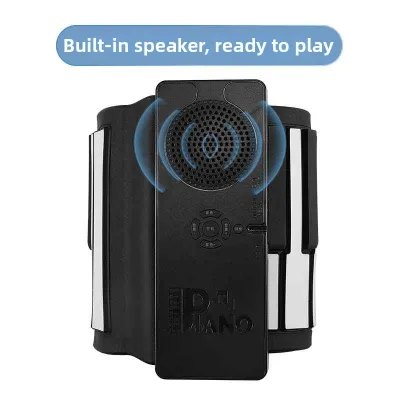
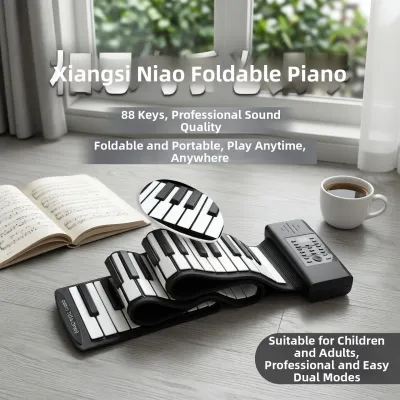
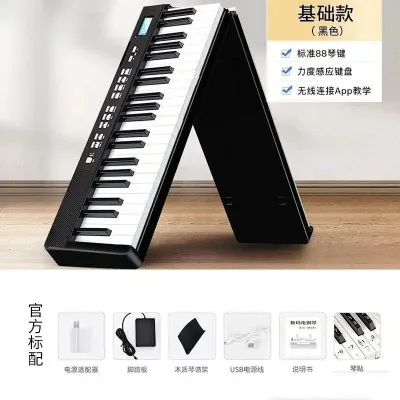
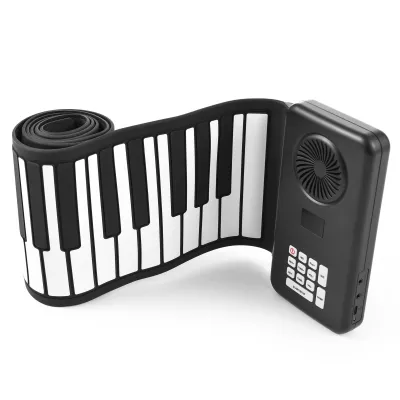
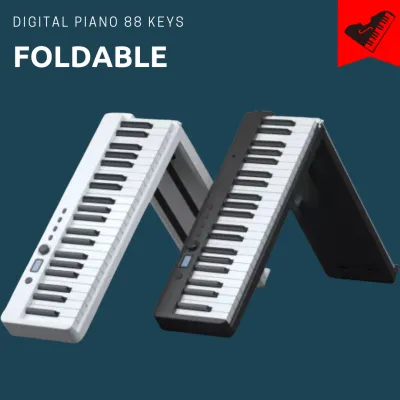
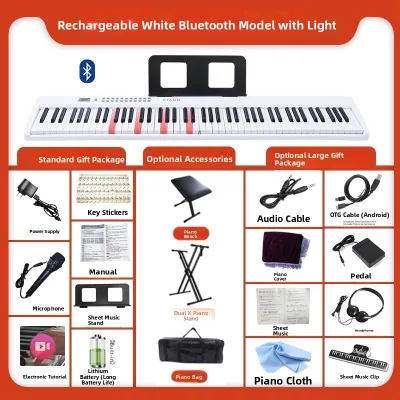
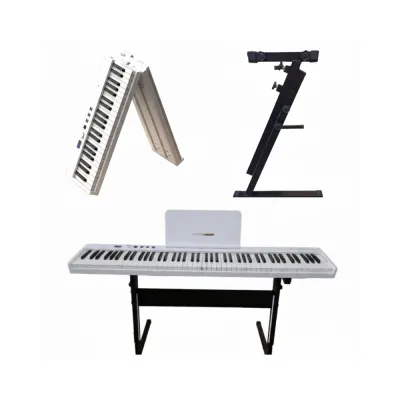
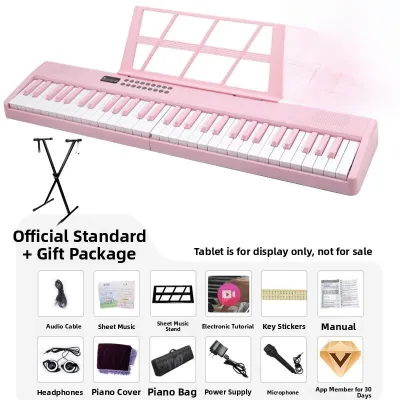
Prices are valid at publication and may change. Please refer to the product page for the latest price.
To develop proper finger technique as a beginner, your foldable piano must meet specific physical baselines. The keys should be of standard width and length to ensure your muscle memory translates accurately to other instruments. Additionally, the keybed must feature touch sensitivity, also known as velocity sensitivity, which ensures that pressing a key harder produces a louder sound, while a gentle touch produces a softer tone. Without this basic feature, learning dynamic expression—a core component of early piano education—becomes virtually impossible.
Essential Hardware Specifications to Verify
When evaluating different foldable 88-key pianos, you should systematically check several hardware specifications to ensure you are investing in a durable and functional instrument. The first and most critical aspect is the key action. Since you cannot easily test every model in person, look closely at the manufacturer’s specifications regarding key resistance. If possible, seek out models that describe their action as “semi-weighted” rather than “synth-action” or “unweighted.” When testing a physical unit, press the keys slowly to feel if the resistance is consistent across the entire length of the keyboard, and listen for any excessive mechanical clicking or squeaking, which indicates poor build quality.

The sound engine is another vital component that directly impacts your practice experience. Pay close attention to the polyphony limit, which refers to the maximum number of individual notes or voices the piano can produce simultaneously. For an 88-key instrument, a minimum of 64-note polyphony is highly recommended, though 128-note polyphony is ideal. When you play complex chords while holding down the sustain pedal, a low polyphony limit will cause older notes to cut off abruptly, resulting in a choppy and unnatural sound. Additionally, verify that the default grand piano sample sounds natural and resonant, rather than thin or overly synthetic.
Because these instruments are designed to fold, the structural integrity of the hinge mechanism is paramount. A poorly designed hinge can cause the keyboard to sag in the middle when unfolded, creating an uneven playing surface and putting unnecessary strain on the internal electronic ribbon cables. Look for models that feature robust locking pins, sliding metal latches, or reinforced hinge joints that click securely into place. The entire chassis should feel rigid when fully opened, with no noticeable flexing or twisting when you apply moderate downward pressure to the center keys.
Finally, consider the power options available for your chosen model. Most modern foldable pianos feature built-in rechargeable lithium-ion batteries alongside standard USB-C or AC adapter inputs. A built-in battery offers incredible convenience, allowing you to practice anywhere without being tethered to a wall outlet. However, you should verify the estimated battery life and ensure the instrument can operate continuously while plugged into a charger. If you plan to use the piano primarily at home, a reliable direct AC power connection is preferred to avoid the performance degradation that can occur as a rechargeable battery begins to lose its capacity over time.
Beginner-Focused Learning and Connectivity Features
Modern digital pianos offer a wealth of technology designed to accelerate the learning process, and foldable models are no exception. One of the most important features to look for is MIDI connectivity, typically delivered via a USB-C or USB-B port. This interface allows you to connect your piano directly to a tablet, smartphone, or computer. By linking the keyboard to interactive educational software or digital audio workstations, you can access real-time feedback on your note accuracy, timing, and dynamics, making self-guided practice sessions far more engaging and productive.
In addition to external connectivity, built-in practice tools are incredibly beneficial for early-stage students. A built-in metronome is an absolute necessity for developing a strong sense of rhythm and tempo. Look for models that allow you to easily adjust the beats per minute and time signature with dedicated physical buttons rather than buried digital menus. Some keyboards also include basic lesson modes, split-keyboard functions that allow a teacher and student to play in the same octave range simultaneously, and a selection of backing tracks to help you practice playing along with an ensemble.
For those living in shared spaces or high-density housing in Singapore, silent practice is a crucial consideration. Ensure the foldable piano features a dedicated headphone jack, preferably a standard 3.5mm or 6.35mm stereo output. Using headphones not only prevents you from disturbing family members or neighbors during late-night practice sessions, but it also helps you focus entirely on your playing without external distractions. Check that the headphone output delivers a clean, static-free signal with adequate volume control.
Lastly, do not overlook pedal compatibility. The sustain pedal is an essential tool for creating smooth transitions between notes and chords, and you will begin using it early in your learning journey. Most foldable pianos come packaged with a small, plastic button-style sustain pedal. While this is sufficient for the first few weeks, you should verify that the keyboard features a standard 1/4-inch sustain pedal input jack. This allows you to upgrade to a more realistic, heavy-duty piano-style damper pedal that won’t slide around on the floor during active use.
Managing Space, Climate, and Setup in Singapore
Owning a foldable piano in Singapore requires a clear understanding of how to handle and maintain the instrument within the local environment. The process of folding and unfolding the keyboard must always be approached with care. Never force the mechanism if you encounter resistance; instead, double-check that all safety locks, latches, or pins are fully disengaged before attempting to fold the chassis. Forcing a locked hinge can permanently damage the structural frame or sever the delicate internal wiring that connects the two halves of the keybed.
Storage habits also play a significant role in preserving the longevity of your instrument. When the piano is folded, store it in a dedicated, padded gig bag to protect the keys from dust, pet hair, and accidental impacts. While it may be tempting to slide the folded piano vertically into a narrow gap between a wardrobe and the wall, storing it horizontally on a flat shelf or under a bed is generally safer. Vertical storage can sometimes place uneven pressure on the hinge joint or cause the internal keys to shift slightly over time, potentially leading to sticky or misaligned keys.
Singapore’s tropical climate, characterized by high humidity and warm temperatures, presents unique challenges for electronic musical instruments. High humidity can cause moisture to build up on internal circuit boards, leading to corrosion, short circuits, or unresponsive keys. To mitigate this risk, avoid storing your piano near open windows, damp areas, or directly under air conditioning vents where rapid temperature changes can cause condensation. Placing a few rechargeable silica gel packs inside your piano’s gig bag is an excellent, low-cost way to absorb excess moisture and protect the sensitive electronics.
The surface on which you place your piano during practice is just as important as the instrument itself. Because foldable pianos are inherently lighter and less rigid than standard digital pianos, they are highly susceptible to wobbling if placed on an unstable surface. Avoid using flimsy folding tables or lightweight single-X stands that sway from side to side. Instead, opt for a sturdy, height-adjustable double-X stand or a heavy-duty table-style keyboard stand. Ensuring the stand is perfectly level and secure will prevent the piano from bouncing or shifting while you play, allowing you to focus entirely on your hand posture and technique.
Building Your Model Shortlist
To build a practical shortlist of foldable 88-key pianos, you should first categorize the available options on the market by budget and feature set. In Singapore, entry-level models typically range from S$150 to S$300. These instruments are highly portable and offer basic digital sounds, making them suitable for casual hobbyists or those testing their initial interest in the piano. Mid-range models, priced between S$300 and S$600, generally offer improved key action, higher polyphony, more robust hinge designs, and better overall sound quality, representing a more sustainable investment for serious beginners.
As you browse online marketplaces and retail stores, be vigilant against common red flags. Avoid ultra-cheap, unbranded models that do not clearly state their key dimensions or touch-sensitivity specifications. Many of these generic keyboards feature keys that are narrower or shorter than standard acoustic piano keys, which can severely hinder your ability to transition to a real piano later. Additionally, read customer feedback carefully to identify any recurring complaints regarding keys failing to register notes, uneven volume levels, or flimsy hinge locks that break after a few weeks of use.
Before finalizing your purchase, verify the warranty coverage and after-sales support options. Buying from an authorized local distributor or a reputable music retailer in Singapore ensures that you receive a valid local warranty, typically spanning 6 to 12 months. This provides peace of mind, as you can easily return or repair the instrument locally if any manufacturing defects arise. Conversely, purchasing from parallel importers or unverified overseas sellers on e-commerce platforms may leave you without any recourse if the keyboard arrives damaged or fails shortly after delivery.
Whenever possible, try to visit a physical music showroom in Singapore to test different models in person. Even if you plan to purchase the instrument online to take advantage of promotions, spending a few minutes playing a physical unit is invaluable. Pay close attention to how the keys feel under your fingers—ensure they do not feel too light, mushy, or stiff. Listen to the sound quality through both the built-in speakers and a pair of headphones, and practice folding and unfolding the display model to assess the ease of use and sturdiness of the hinge mechanism.
Frequently Asked Questions (FAQ)
Can a beginner learn proper technique on a foldable piano?
While a foldable piano is an excellent, space-saving tool for learning notes, rhythm, and basic music theory, it has physical limitations that make it less ideal for advanced technique. Because these instruments lack a fully weighted hammer action, they do not build the finger strength and control required to play an acoustic piano with nuanced dynamics. A beginner can certainly start their journey on a foldable model to gauge their interest and learn the basics, but they should plan to upgrade to a standard digital piano with fully weighted keys once they progress to intermediate pieces that require precise touch control.
Do foldable 88-key pianos require regular tuning?
No, foldable 88-key pianos are entirely digital instruments and do not require acoustic tuning. The sounds are produced electronically using pre-recorded digital samples or synthesis engines, meaning the pitch will always remain perfectly in tune regardless of temperature or humidity changes. However, they do require basic physical maintenance to ensure longevity. Keep the keybed free of dust by wiping it with a dry microfiber cloth, avoid spilling liquids on the chassis, and periodically inspect the folding hinge and power ports for any debris or wear.

Community discussion
Share your experience or ask a question. Comments are reviewed before publication.