
Starting your musical journey in Singapore often begins with a spatial puzzle. For many aspiring pianists living in high-density housing like HDB flats or condominiums, finding room for a traditional acoustic piano or even a bulky digital console is a significant hurdle. A foldable piano offers a practical, highly portable solution that fits easily into compact living spaces and can be tucked away in a wardrobe when not in use. To make an informed purchase, you must look beyond the novelty of a folding frame and carefully evaluate key specifications, structural stability, and local support options.
While these instruments provide unprecedented convenience, they are not all created equal. Some models are designed as serious entry-level instruments with touch-sensitive keys and realistic sound engines, while others are little more than basic toys that can hinder your learning progress. By understanding what to look for in terms of key action, polyphony, and build quality, you can select a reliable foldable piano that supports your learning goals without cluttering your home.
Why a Foldable Piano Might Be Your Best First Instrument
Traditional digital pianos are excellent for classical training, but they present significant physical challenges for modern urban living. A standard digital console can weigh anywhere from 15 to 40 kilograms and occupies a permanent footprint of about 1.4 meters by 0.4 meters. In a compact Singaporean apartment, dedicating this amount of floor space to a new hobby can feel like a major compromise, especially if you are not yet certain of your long-term commitment to the instrument.
Products mentioned in this guide

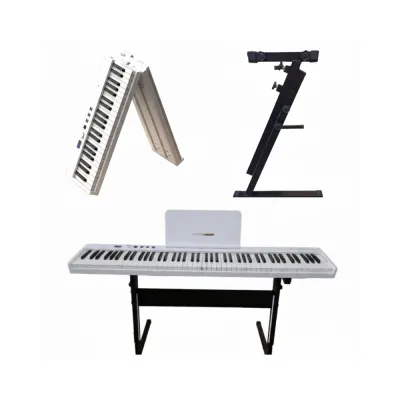
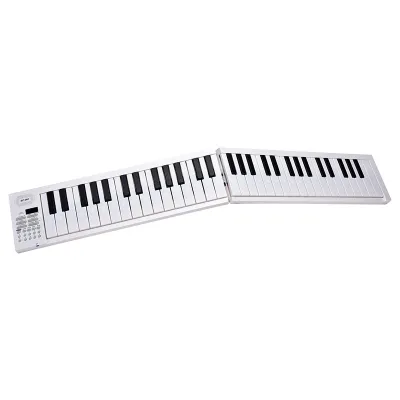
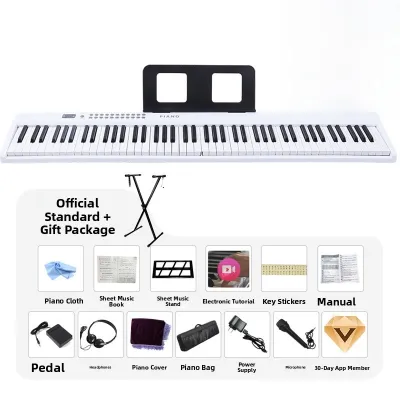
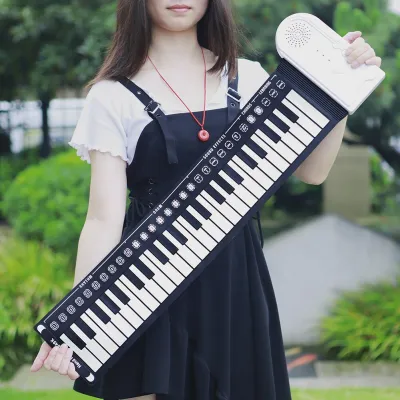
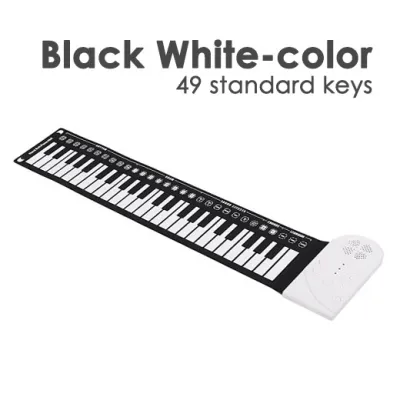
Prices are valid at publication and may change. Please refer to the product page for the latest price.
A foldable piano addresses this challenge by utilizing a hinged chassis that allows the keyboard to fold in half or in thirds. This design reduces the storage footprint by 50% or more, enabling you to slide the instrument under a bed, place it on a closet shelf, or store it vertically in a narrow gap between furniture. For students living in shared rental rooms, frequent travelers who want to practice on the go, or families introducing children to music for the first time, this portability is a game-changer.
However, choosing a foldable design requires an honest acknowledgment of the physical trade-offs involved. The central hinge introduces a structural joint that is inherently less rigid than a solid, single-piece keyboard frame. If placed on an uneven surface or an unstable stand, the keyboard may flex slightly while playing, which can affect your tactile feedback. Additionally, because the internal components must be split or routed around the hinge, built-in speakers are often smaller and positioned on the sides or bottom of the chassis, which can impact the overall sound projection and richness.
Essential Specifications to Check Before Buying
When shopping for a foldable piano, the sheer variety of options on online marketplaces can be overwhelming. While budget models can start under S$150, investing in a reliable beginner instrument with touch sensitivity is crucial. To filter out low-quality toys and identify genuine beginner instruments, you must focus on three essential technical specifications: key count, touch sensitivity, and polyphony.

First, prioritize an 88-key layout. While 49-key and 61-key models are highly portable, they lack the range required for standard beginner piano curricula. Most classical pieces, modern pop arrangements, and graded exam exercises assume a full 88-key range. Learning on a shorter keyboard will quickly limit your progress, forcing you to upgrade much sooner than expected. An 88-key foldable piano ensures you can practice any piece of music without running out of keys on either end of the spectrum.
Second, verify that the keyboard features touch sensitivity, also known as velocity sensitivity. This feature ensures that the volume of the sound corresponds to the force with which you strike the keys. Playing softly produces a quiet tone, while striking the keys firmly produces a louder, brighter sound. Without touch sensitivity, every note is played at a uniform volume, making it impossible to develop musical expression, dynamics, or proper finger control. Always check the product specifications explicitly for this feature, as many budget-friendly models omit it entirely.
Third, pay close attention to the polyphony specification. Polyphony refers to the maximum number of individual notes or voices the piano’s internal processor can produce at the exact same time. When you play a chord while holding down the sustain pedal, each note continues to ring out, consuming polyphony. If your keyboard has a low polyphony limit, such as 32 notes, older notes will be cut off abruptly as you play new ones, resulting in a choppy, unnatural sound. For a smooth and realistic playing experience, look for a minimum of 64-note polyphony, though 128-note polyphony is highly recommended for more complex pieces.
Evaluating Key Action and Sound Engine Quality
The tactile feel of the keys and the realism of the sound engine are the two most critical factors influencing your skill development. Traditional acoustic pianos use a complex system of wooden hammers and gravity to create resistance, a feel known as fully weighted hammer action. In the realm of foldable pianos, achieving a true fully weighted feel is exceptionally difficult due to the weight and space constraints of a folding chassis.
Most high-quality foldable pianos utilize semi-weighted or light-weighted key actions. Semi-weighted keys use a combination of springs and small metal weights under each key to provide a moderate level of resistance. While this does not perfectly replicate the heavy feel of an acoustic piano, it offers enough physical feedback to help beginners build finger strength and control. Avoid non-weighted keys, which offer no resistance at all and feel like cheap plastic buttons; these will make it very difficult to transition to a real piano later on.
To evaluate the quality of the sound engine, look for manufacturers that use multi-layer stereo sampling. This technology records actual acoustic grand pianos at various volume levels, ensuring that the digital playback sounds natural and resonant. Since you cannot always test these instruments in person, spend time listening to unedited, independent user demonstrations online. Listen carefully to how the sound decays after a key is struck—high-quality sound engines have a smooth, natural fade, whereas lower-quality engines may sound artificial, static, or cut off prematurely.
Furthermore, consider how you will listen to your playing. While built-in speakers are convenient for casual practice, they are often limited to 2 to 5 watts of power, which can sound thin or tinny. A high-quality headphone output is essential for serious practice, especially during late-night sessions in quiet Singaporean neighborhoods. Ensure the keyboard features a standard 3.5mm or 6.35mm headphone jack and supports low-latency audio processing, so there is no perceptible delay between your finger striking the key and the sound reaching your ears.
Space, Portability, and Setup Requirements
Before finalizing your purchase, it is vital to measure your available space and understand the physical logistics of setting up and storing a foldable piano. An 88-key foldable piano typically measures around 120 to 130 centimeters in length when fully extended, which is identical to a standard piano keyboard. However, when folded, its length is halved to approximately 60 to 65 centimeters, with a thickness of about 10 to 15 centimeters.
Measure your intended storage location—such as a wardrobe shelf, a drawer, or the space under your bed frame—to ensure the folded unit will fit comfortably. Additionally, consider the weight of the instrument. Most foldable models weigh between 3 and 5 kilograms. While this is light enough to carry in a backpack, it still requires a stable surface for playing. Placing a foldable piano on a flimsy folding table or a soft bed can cause the central hinge to sag, misaligning the keys and potentially damaging the internal connections.
The type of folding mechanism also plays a crucial role in the instrument’s durability. Most models feature a central hinge secured by a manual slide-and-lock latch. Look for designs that use reinforced polymer or metal locking mechanisms rather than thin plastic clips, as these latches must withstand the repeated stress of folding and unfolding. A robust lock ensures the keyboard remains perfectly flat and rigid during intense practice sessions.
Finally, verify which accessories are included in the box. A complete beginner setup should include a music sheet rest that clips securely onto the keyboard, a sustain pedal, a power adapter, and a padded carrying bag. The quality of the included sustain pedal is particularly important; many budget models include a small, flat plastic foot-switch that slides easily across the floor. If possible, look for packages that include a more substantial, chrome-plated pedal that mimics the feel of an acoustic piano pedal, or plan to purchase one separately.
Verifying Brand Reliability and Local Support
As foldable pianos have grown in popularity, the market has been flooded with generic, unbranded products. While these listings often feature attractive prices, they frequently lack quality control, reliable customer service, and long-term durability. To protect your investment, you must establish a framework for verifying brand reliability and local support in Singapore.
Begin by examining the product listing for red flags. Be wary of listings that do not clearly state the manufacturer’s brand name, use heavily machine-translated English descriptions, or offer vague technical specifications. A reputable brand will have an official, professional website where you can easily download the product’s user manual, view detailed specifications, and check for firmware updates. If you cannot find an official website or a clear way to contact the manufacturer, it is best to avoid the product.
Next, check for authorized local distributors and physical service centers in Singapore. Purchasing an instrument with a local warranty—typically covering 6 to 12 months—provides peace of mind. If the keyboard develops a defect, such as a dead key or a faulty hinge, a local service center allows you to bring the instrument in for a quick repair or replacement. Conversely, buying from an overseas seller without local representation means you may have to pay high shipping fees to send the heavy keyboard back for warranty claims, which often costs more than the instrument itself.
Additionally, look into the manufacturer’s history of product support. Reliable brands occasionally release firmware updates to improve touch sensitivity curves, fix software bugs, or enhance MIDI compatibility with computers and tablets. Check the brand’s support portal to see if they actively maintain their products. A brand that provides regular updates and clear, accessible documentation is far more likely to deliver a reliable, long-lasting instrument.
Your Pre-Purchase Decision Checklist
To help you navigate the buying process and build a reliable shortlist, use this step-by-step verification checklist before adding a foldable piano to your cart:
- Verify Key Count: Confirm the keyboard has exactly 88 keys to ensure compatibility with standard beginner lessons.
- Check Touch Sensitivity: Ensure the product description explicitly states "touch-sensitive" or "velocity-sensitive" keys.
- Confirm Polyphony: Look for a minimum of 64-note polyphony (128-note is preferred) to prevent note drop-off.
- Assess Key Action: Opt for semi-weighted keys over non-weighted keys to help build finger strength.
- Measure Your Space: Double-check the folded and unfolded dimensions against your storage space and playing desk.
- Inspect the Hinge Lock: Ensure the folding mechanism features a secure, robust locking latch.
- Review Included Accessories: Confirm the package includes a sustain pedal, music rest, power adapter, and carrying bag.
- Check Warranty Terms: Verify that the seller offers a local Singapore warranty with a physical service center for repairs.
When shopping on e-commerce platforms, always read the seller’s return policy carefully. Ensure you can return the instrument if it arrives damaged, has keys that do not sound, or does not match the advertised specifications. Look for sellers with high ratings and positive customer feedback specifically mentioning prompt delivery and helpful customer service.
Finally, there are certain conditions under which you should pause and consult a professional music teacher before making a purchase. If your primary goal is to prepare for formal classical examinations, such as those conducted by the Associated Board of the Royal Schools of Music (ABRSM) or Trinity College London, a foldable piano will not be sufficient for long-term study. In these scenarios, a music teacher can help you evaluate whether you should invest in a traditional digital piano with fully weighted hammer action from the outset, or if a foldable model is acceptable solely as a temporary, highly portable practice tool for travel.
Frequently Asked Questions (FAQ)
Can I use a foldable piano for formal piano exams?
No, foldable pianos are generally not suitable for formal graded piano examinations. Standard exam boards require candidates to perform on instruments with fully weighted hammer-action keys and progressive damper pedals to demonstrate proper classical technique, dynamic control, and articulation. A foldable keyboard is an excellent tool for initial note-learning, finger coordination, and travel practice, but you will need to transition to a standard digital or acoustic piano as you progress to intermediate grades.
Do foldable pianos require special maintenance for the hinges?
Yes, the folding mechanism requires careful handling to ensure longevity. Always unfold and lock the keyboard on a flat, stable surface to avoid putting uneven stress on the central hinge. Periodically inspect the hinge area for dust, debris, or loose screws, and clean it gently with a dry microfiber cloth. Avoid forcing the mechanism if you feel resistance, as this can damage the internal ribbon cables that connect the two halves of the keyboard.

Community discussion
Share your experience or ask a question. Comments are reviewed before publication.