
Choosing your first tenor ukulele is an exciting milestone, but navigating the extensive catalog of an industry giant like Kala can feel overwhelming. The tenor size is highly favored by both beginners and experienced players for its rich, resonant voice, comfortable fret spacing, and versatile projection. Unlike smaller soprano or concert models, a tenor ukulele offers a larger body and a longer scale length, making it an excellent platform for exploring diverse musical styles, from simple strumming to intricate fingerstyle arrangements.
To find the perfect model for your current skill level and long-term goals, you must look beyond aesthetics. The ideal instrument balances structural durability, tonal quality, and playability while fitting comfortably within your budget. By understanding how Kala structures its lineup, matching physical specifications to your playing style, and knowing what to inspect before finalizing your purchase, you can confidently select a tenor ukulele that will support your musical journey for years to come.
Decoding the Kala Tenor Ukulele Lineup
Kala uses a structured system of model prefixes and suffixes to identify the materials, construction, and features of each instrument. Understanding these codes is the first step in narrowing down your options. The standard prefix “KA” designates the core Kala brand, which is typically followed by letters indicating the primary wood or series, and ends with a “T” for tenor. For example, in the model KA-T, the “T” simply stands for tenor, while the “KA” indicates the standard mahogany line. Suffixes provide additional clues: “C” indicates a cutaway body shape, “E” or “EQ” denotes built-in electronics, and “G” signifies a high-gloss finish instead of the standard satin.
Products mentioned in this guide
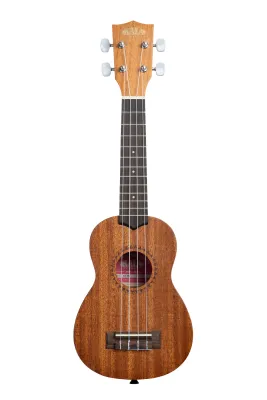
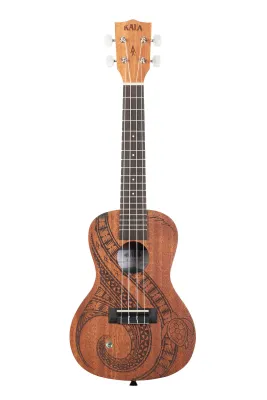
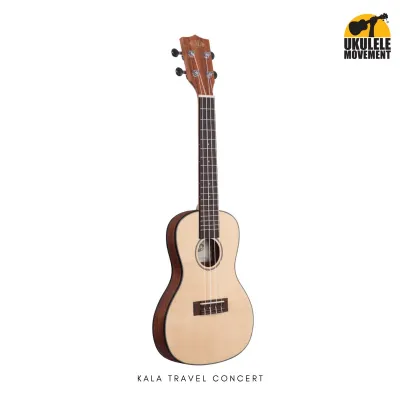
Prices are valid at publication and may change. Please refer to the product page for the latest price.
When browsing the catalog, pay close attention to how the wood construction is described, as this directly impacts both tone and maintenance. Laminate models are constructed from layered wood, making them highly durable and exceptionally resistant to changes in temperature and humidity. This resilience is particularly advantageous in tropical climates like Singapore, where moving between humid outdoor air and dry, air-conditioned indoor spaces can stress natural wood. Laminate instruments are generally more affordable and serve as excellent, low-maintenance entry points for beginners.
Solid-top models feature a solid piece of wood for the soundboard (the top of the ukulele), while the back and sides are made of laminate. The top is the most critical component for sound production; a solid top vibrates more freely than laminate, resulting in greater volume, sustain, and a tone that matures and improves over years of playing. All-solid wood models use solid timber for the entire body. While they offer the most complex and resonant acoustic profiles, they are more sensitive to environmental changes and require consistent humidity monitoring to prevent cracking or warping.
Kala categorizes its instruments into distinct series tiers to help players identify suitable options. The Satin Mahogany and Gloss Mahogany series represent the classic entry-level tiers, focusing on reliable construction and traditional styling. Moving up, the Exotic Mahogany, Bocote, and Ziricote series utilize striking laminate veneers to offer unique visual patterns while maintaining the durability of laminate construction. For advancing players seeking enhanced tonal depth, the Solid Spruce Top and Solid Mahogany series offer intermediate-to-advanced performance without the premium price tag of fully custom instruments.
Matching Specifications to Your Playing Style
The physical dimensions of a tenor ukulele significantly influence how comfortable it feels in your hands. A standard Kala tenor features a scale length of approximately 17 inches (43 cm) and an overall length of about 26 inches (66 cm). This longer scale creates higher string tension compared to soprano or concert models, which translates to a tighter feel under the fingers and improved tuning stability. The wider fret spacing on a tenor neck provides ample room for complex chord fingerings and fingerstyle patterns, making it highly suitable for players with larger hands or those transitioning from the guitar.

Nut width and neck profile are equally important for playability. Most Kala tenor models feature a nut width of approximately 35mm (1.37 inches) paired with a comfortable, shallow C-shaped neck profile. This design allows your thumb to rest naturally on the back of the neck, facilitating clean chording without causing hand fatigue during long practice sessions. If you plan to play high up the fretboard, consider a model with a cutaway body shape, which provides easier physical access to the frets past the 12th fret.
Different tonewoods impart distinct acoustic characteristics to the instrument, allowing you to match the ukulele to your preferred musical genres. Mahogany is the traditional choice, offering a warm, balanced, and mellow tone with strong mid-range presence that complements vocal accompaniment. Spruce tops provide a bright, punchy sound with excellent projection and clear highs, making them ideal for instrumental fingerstyle playing. Exotic woods like Koa or Acacia deliver a sweet, bright, and traditional Hawaiian voice, while Cedar offers a dark, complex warmth that responds beautifully to a delicate touch.
Deciding between an acoustic-only and an acoustic-electric model depends on your immediate and future performance needs. Acoustic-only models are lighter, structurally simpler, and allow your entire budget to go toward the quality of the wood and construction. They are perfect for home practice, casual gatherings, and pure acoustic enjoyment. Acoustic-electric models feature an under-saddle piezo pickup and an onboard preamp, allowing you to plug directly into an amplifier, PA system, or recording interface. If you intend to perform live, join a local ukulele group, or experiment with loop pedals and effects, investing in an acoustic-electric model from the start saves you the hassle of retrofitting a pickup later.
Setting a Realistic Budget and Value Expectations
Establishing a clear budget helps you focus on models that offer the best value for your current skill level. In the general market, Kala tenor ukuleles can be grouped into three broad price tiers. The entry-level tier ranges from approximately S$100 to S$200, consisting primarily of high-quality laminate mahogany models. These instruments prioritize structural integrity, reliable tuning, and straightforward playability, making them perfect for absolute beginners who want a dependable starting instrument without a significant financial commitment.
The mid-range tier spans from S$200 to S$450, where you will find exotic laminate woods, solid-top models, and entry-level acoustic-electric options. In this range, manufacturers invest more in cosmetic details, such as wood binding, gloss finishes, and upgraded hardware like high-ratio geared tuners. This tier represents the sweet spot for committed beginners and intermediate players who want an instrument that sounds excellent, looks unique, and can grow with them as their skills advance.
Premium models priced above S$450 feature all-solid wood construction, advanced electronics, and intricate decorative appointments. While these instruments offer the ultimate tonal richness and projection, they require a higher level of care and environmental maintenance. For most beginners, starting with a high-quality laminate or a solid-top model in the entry-to-mid-range tiers provides the best balance of durability, sound quality, and financial practicality.
When evaluating the overall value of a purchase, consider what accessories are included in the package. Some models are sold as starter kits that include a padded gig bag, a clip-on chromatic tuner, a strap, and instructional materials. A padded gig bag is essential for protecting your instrument from scratches and minor impacts during transport, while a reliable tuner ensures you can quickly keep your strings in pitch. If these accessories are not included, be sure to factor their cost into your total budget to avoid unexpected expenses.
Building Your Shortlist: A Step-by-Step Selection Process
To narrow down the extensive Kala catalog to a manageable shortlist, follow a structured selection process. Begin by defining your primary use case and environment. If you need a durable instrument for travel, outdoor play, or high-humidity environments, prioritize laminate models. If your primary goal is to practice at home and develop a refined ear for tone, focus your search on solid-top models. Next, decide whether you require built-in electronics based on your performance and recording aspirations.
Once you have defined your technical requirements, establish your strict budget limit, keeping in mind the cost of essential accessories. Use this budget to filter out models that are either too basic for your long-term goals or unnecessarily expensive for a starting player. At this stage, you can also select your aesthetic preferences, choosing between the classic look of satin mahogany, the striking grain patterns of exotic laminates, or the clean contrast of a spruce top.
Before making a final decision, verify the availability and warranty terms of your shortlisted models. Always purchase from an authorized local music retailer or a reputable online store to ensure you receive a genuine Kala product backed by a valid manufacturer warranty. Authorized dealers can also assist with initial setup and future maintenance, providing valuable peace of mind that discount online marketplaces cannot offer.
Finally, research user feedback and community forums for any batch-specific observations regarding your chosen models. Look for consistent comments regarding factory setup quality, fret finishing, or hardware performance. While individual reviews can vary, identifying recurring patterns in user feedback can help you know exactly what to look out for when your instrument arrives, ensuring you do not end up with a unit that requires extensive adjustments.
Pre-Purchase Checks and Setup Verification
When your new ukulele arrives, performing a thorough physical inspection is crucial to ensure it is free from manufacturing defects and ready to play. Begin by running your fingers gently along both sides of the fretboard. The metal fret ends should feel smooth and flush with the wood; sharp or protruding fret ends, often called fret sprout, indicate that the wood has dried out and shrunk, which can make playing uncomfortable. Next, inspect the body for any visible cracks in the finish or wood, particularly around the joints where the neck meets the body and where the bridge is glued to the top.
Examine the tuning machines to ensure they turn smoothly without slipping, grinding, or feeling excessively loose. Check that the strings sit securely in the nut slots at the headstock and are tied correctly at the bridge. Pluck each string individually while pressing down on every fret along the neck to check for fret buzz, which occurs when a vibrating string contacts a fret wire further up the fretboard. If you encounter persistent buzzing or dead notes, the instrument may require a truss rod adjustment or fret leveling.
Understanding the importance of a professional setup can dramatically improve your playing experience. The “action” refers to the height of the strings above the frets. If the action is too high, pressing the strings down requires excessive finger pressure, leading to hand fatigue and poor intonation. If the action is too low, the strings will buzz against the frets. A professional technician can adjust the nut slots, saddle height, and neck relief to optimize playability, making the instrument significantly easier and more enjoyable to play.
Before finalizing your purchase, familiarize yourself with the retailer’s return and exchange policies. Ensure you have a clear window—typically 7 to 14 days—to return or exchange the instrument if you discover any structural defects or playability issues that cannot be easily resolved with a standard setup. Keep all original packaging, tags, and receipts intact until you are completely satisfied with the quality, sound, and feel of your new Kala tenor ukulele.
Frequently Asked Questions (FAQ)
Is a tenor ukulele too big for a beginner?
A tenor ukulele is not too big for a beginner and is actually highly recommended for adult players. While it is larger than soprano and concert models, the overall length of 26 inches remains compact and easy to hold. The longer scale length provides wider spacing between the frets, which makes it much easier to press down clean chords without accidentally muting adjacent strings. This extra physical space is particularly beneficial for players with larger fingers or those who find smaller ukulele sizes cramped and difficult to navigate.
Do I need an acoustic-electric Kala tenor as a beginner?
As a beginner, you do not strictly need an acoustic-electric model unless you plan to perform live or record directly into an audio interface immediately. Acoustic-only models are lighter, less expensive, and allow your budget to go entirely toward the quality of the wood and construction. However, if you anticipate playing in a band, participating in open mics, or using amplification in the near future, choosing an acoustic-electric model from the start is a practical way to future-proof your investment without needing to install an aftermarket pickup later.

Community discussion
Share your experience or ask a question. Comments are reviewed before publication.