
Choosing your first musical instrument is an exciting milestone, but navigating the diverse lineup of Korg keyboards can feel overwhelming for a complete beginner. To find the model that best suits your needs, you must first clarify your primary musical goals. The ideal choice depends heavily on whether you want to replicate the feel of a traditional acoustic piano, explore modern music production, or enjoy casual playing with built-in backing tracks. By understanding how different keyboard categories, key actions, and connectivity options align with your learning path, you can make an informed decision that supports your musical journey for years to come.
Identifying Your Musical Goals and Keyboard Categories
Before exploring specific models, it is essential to define what you want to achieve during your practice sessions. Beginners typically fall into one of two categories: those seeking a traditional piano-learning experience, and those interested in casual playing, songwriting, or electronic music production. Matching your goals to the correct instrument category prevents frustration and ensures you do not outgrow your keyboard too quickly.
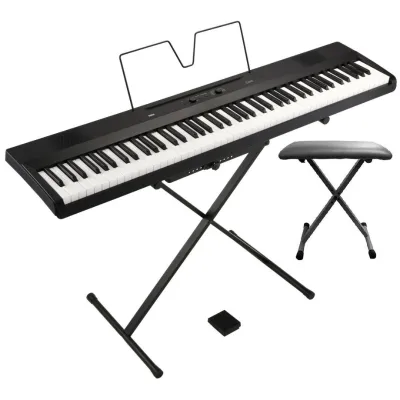
For traditional piano practice, a digital piano is the standard recommendation. These instruments focus on replicating the sound and feel of an acoustic piano. They typically feature 88 keys—the full range of a standard piano—and weighted keys that build finger strength and proper playing technique. If your goal is to take formal piano lessons, prepare for graded exams, or play classical repertoire, starting with an 88-key digital piano is highly beneficial.
Products mentioned in this guide
![Korg Digital Keyboard Piano EK-50 Professional Portable Entertainer Black 61 Keys Velocity Sensitive EK 50 EK50 Electronic Digital Instrument The Music Works Store [PREORDER]](https://img.lazcdn.com/g/p/50c60fa066b8426f27d568cb2ea6e2de.jpg_400x400q80.jpg_.webp)
![Korg Microkey2 - 37 Keys Wireless/USB MIDI Controller [Bluetooth Option Available]](https://img.lazcdn.com/g/p/208f7a9b4ace322ae2e06d9eafe66c24.jpg_400x400q80.jpg_.webp)
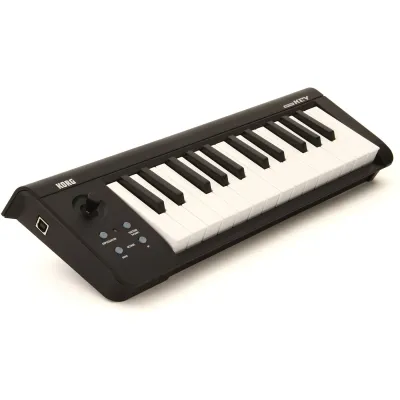
Prices are valid at publication and may change. Please refer to the product page for the latest price.
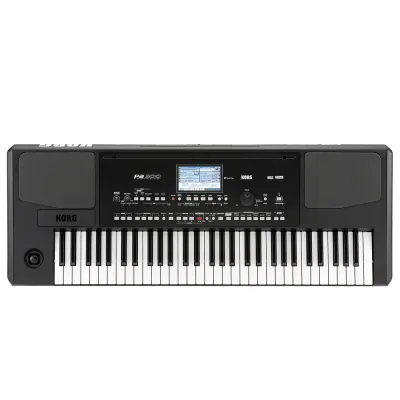
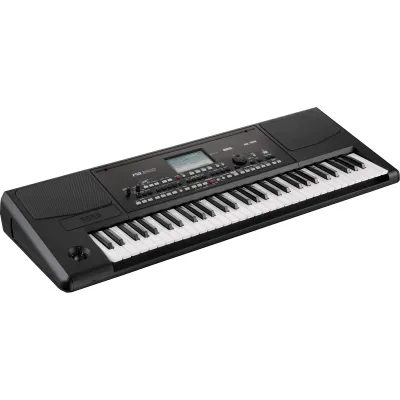
If your interests lean toward casual playing, exploring different instrument sounds, or composing your own music, an arranger keyboard or a synthesizer may be more appropriate. Arranger keyboards are designed for solo entertainment, featuring built-in accompaniment styles, rhythms, and hundreds of instrument voices. These models often have 61 keys, which are lighter and easier to press. They allow you to play along with a virtual backing band, making practice sessions highly interactive and engaging for hobbyists who want to play popular songs quickly.
Physical space and portability are also critical considerations, especially for those living in compact urban environments like apartments or condominiums in Singapore. A full-sized 88-key digital piano requires a dedicated stand and a permanent spot in your home. In contrast, a 61-key arranger keyboard or a slim, lightweight digital piano can be easily stored in a closet or under a bed when not in use, making them excellent options for homes where floor space is limited.
Evaluating Key Action and Touch Sensitivity
The physical feel of the keys is one of the most important factors in your development as a keyboard player. Key action refers to the mechanical design of the keys and how they respond to the physical pressure of your fingers. Understanding the differences between non-weighted, semi-weighted, and fully weighted actions will help you choose an instrument that supports your physical technique.

Non-weighted keys are highly common in entry-level arranger keyboards and basic controllers. These keys use simple springs to return to their original position, offering very little physical resistance. While they are easy for young children or absolute beginners to press, they do not simulate the feel of an acoustic piano. Semi-weighted keys offer a middle ground, combining spring tension with light weights to provide a bit more resistance. This action is versatile and works well for playing organ sounds, synthesizer leads, and casual pop music.
Fully weighted keys, often referred to as hammer action, use a mechanical system designed to mimic the actual hammers inside an acoustic piano. When you press a weighted key, you feel a distinct resistance that requires more finger strength. Many Korg digital pianos utilize graded hammer action, where the lower keys feel slightly heavier than the higher keys, just like on an acoustic grand piano. Developing your skills on a fully weighted keyboard is essential if you plan to transition to an acoustic piano in the future, as it teaches you how to control your hand posture and finger dynamics.
Alongside key action, velocity sensitivity—also known as touch response—is a non-negotiable feature for any beginner keyboard. Velocity sensitivity ensures that the volume and tonal character of the sound change based on how hard or soft you strike the keys. Without this feature, every note you play will sound at the exact same volume, making it impossible to play expressively or master basic musical dynamics. When researching Korg models, always consult the official manufacturer specifications to confirm the key action type and ensure that touch sensitivity is supported.
Essential Learning Features and Connectivity
Modern technology has transformed the way beginners learn to play the keyboard. Built-in tools and digital connectivity can make your daily practice sessions more efficient, structured, and enjoyable. When comparing different Korg models, look for specific features designed to assist self-guided learners.
A built-in metronome is an indispensable tool for developing a strong sense of rhythm and timing. Practicing with a metronome helps you maintain a steady tempo and gradually increase your playing speed as you master difficult passages. Additionally, some beginner-friendly keyboards offer a partner mode or duo mode, which splits the keyboard into two identical pitch ranges. This allows a teacher and student, or parent and child, to sit side-by-side and play the exact same notes simultaneously without needing two separate instruments.
Connectivity options are equally important for integrating your keyboard with modern learning resources. USB-MIDI connectivity allows you to connect your keyboard directly to a computer, tablet, or smartphone. This connection enables you to use interactive educational software, music notation programs, and digital audio workstations. Some advanced models also feature Bluetooth MIDI or Bluetooth Audio. Bluetooth MIDI allows for a wireless connection to learning apps, while Bluetooth Audio lets you stream backing tracks or tutorial videos from your phone directly through the keyboard’s built-in speakers, allowing you to play along seamlessly.
Finally, pay close attention to the audio output options. A dedicated headphone jack is essential for silent practice, allowing you to practice at any hour of the day or night without disturbing family members or neighbors. If you plan to perform in larger spaces or connect your instrument to external sound systems, verify whether the keyboard has dedicated line-out ports or if it relies solely on the headphone output for external amplification.
Final Verification and Purchasing Checklist
Once you have identified a Korg keyboard model that matches your musical goals and space requirements, there are several practical steps you should take before finalizing your purchase. Ensuring compatibility, completeness, and local support will protect your investment and prevent unexpected setup issues.
Power Compatibility and Plug Types
- Verify that the keyboard's power adapter is compatible with the electrical standards in Singapore, which require a voltage of 230V at a frequency of 50Hz.
- Confirm that the power supply comes with a standard Type G (three-pin) plug to ensure safe and direct connection to your wall outlets without the need for temporary adapters.
Included Accessories and Total Cost
- Check the official product packaging list to see which accessories are included in the box. Essential items include a power adapter, a music rest for holding sheet music or a tablet, and a sustain pedal (also called a damper pedal).
- If these accessories are not included, research their individual prices and factor them into your total budget. A sturdy keyboard stand and a comfortable bench are also highly recommended additions for maintaining proper playing posture.
Authorized Dealers and Warranty Support
- Purchase your instrument through an authorized local dealer in Singapore rather than unauthorized online marketplaces or parallel importers.
- Buying from an authorized source ensures that your keyboard is covered by a valid local warranty, giving you access to professional after-sales service, genuine replacement parts, and technical support if any hardware issues arise.
Frequently Asked Questions (FAQ)
Do I need an 88-key keyboard to start learning piano?
You do not strictly need an 88-key keyboard to begin your musical journey, but your choice should align with your long-term goals. A 61-key or 76-key model is often sufficient for the early stages of learning, practicing basic scales, and playing popular music or modern pop songs. These smaller sizes are also highly practical if you have limited living space or need a highly portable instrument. However, if you intend to study classical music, take formal piano examinations, or develop advanced classical techniques, an 88-key keyboard is necessary. Classical repertoire frequently utilizes the full range of the piano, and practicing on a smaller keyboard will eventually limit the pieces you can play.
Can I use a Korg keyboard with online learning apps?
Yes, most modern Korg keyboards can be used with popular online learning apps and interactive piano tutorials. To do this, your keyboard must support MIDI data transmission, which is typically achieved via a USB-MIDI port or built-in Bluetooth MIDI. By connecting your keyboard to a tablet, smartphone, or computer, the learning app can detect the exact notes you play in real-time, providing instant feedback on your accuracy and timing. Before purchasing, always check the system requirements of your preferred learning app and verify the keyboard’s official specifications to ensure compatibility with your specific device and operating system.

Community discussion
Share your experience or ask a question. Comments are reviewed before publication.