
To choose the right Minna no Nihongo books, you must match your current Japanese proficiency to one of the four core levels—Beginner 1, Beginner 2, Intermediate 1, or Intermediate 2—and pair the all-Japanese Main Textbook with the corresponding Translation and Grammatical Notes in your native language. Because this series uses an immersive, direct-method approach, attempting to study with the Main Textbook alone often leads to frustration. By identifying your current language baseline and selecting the appropriate companion workbooks, you can build a highly effective, structured study routine tailored to your personal learning goals.
Identify Your Level and Select the Core Textbooks
The Minna no Nihongo series is divided into two primary stages: the beginner level and the intermediate level. Each stage is split into two volumes, creating a clear four-step progression. The first beginner volume covers the absolute basics, starting from lesson 1 through lesson 25. The second beginner volume continues immediately after, covering lessons 26 through 50. Together, these two beginner volumes introduce the foundational grammar, vocabulary, and polite sentence structures required to reach a basic conversational standard.
Transitioning to the intermediate level requires a solid grasp of all beginner material. The first intermediate volume contains 12 comprehensive lessons designed to bridge the gap between basic expressions and more complex, natural Japanese. The second intermediate volume completes the intermediate journey with another 12 lessons, focusing on formal speech, written essays, and nuanced social interactions.
Products mentioned in this guide
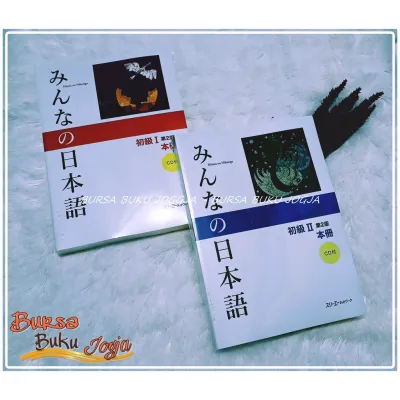
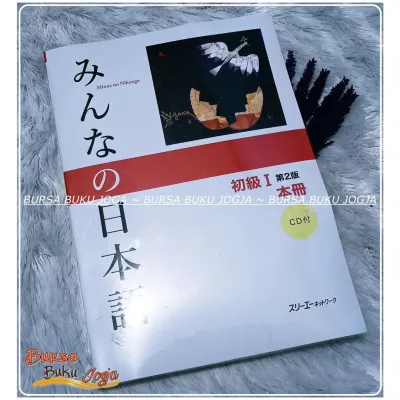
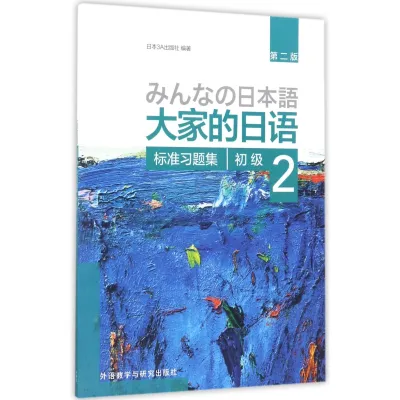
![[QiaoFan] Everyones Japanese Beginner 12 Second Edition Intermediate 12 Smart Edition Textbook Learning Tutoring Exercise Set Vocabulary Sentence Patterns Reading Listening Writing Minna no Nihongo Beginner Level 12 Second Edition Intermediate 12 Sma](https://img.lazcdn.com/g/p/90c3d3b1fefa4282365c177a8a12f03b.jpg_400x400q80.jpg_.webp)
![[QiaoFan] Everyones Japanese Smart Textbook Learning Tutoring Exercise Set Vocabulary Sentence Patterns Reading Listening Writing Minna no Nihongo Beginner Level Second Edition Intermediate 12 Sma](https://img.lazcdn.com/g/p/2c7c7cbf5daf3cad7ada3bda81252d21.jpg_400x400q80.jpg_.webp)
Prices are valid at publication and may change. Please refer to the product page for the latest price.
The defining characteristic of the Main Textbook is its complete lack of translation. From the very first page of the beginner book, every instruction, vocabulary word, grammar exercise, and dialogue is printed entirely in Japanese characters. This immersive design forces you to process the language directly rather than translating it in your head. However, this also means that the Main Textbook is not designed to be used in isolation; it requires a companion book to explain what the words and grammar points actually mean.
To determine where you should start, you can use several observable checkpoints. If you cannot yet read hiragana and katakana smoothly, you must master these two phonetic scripts before opening the first beginner volume. If you have studied Japanese previously but cannot reliably conjugate verbs into the polite form or distinguish between polite and casual speech, starting from the beginning of the first beginner volume is highly recommended.
If you already understand basic sentence patterns and can conjugate verbs into various forms, you might be ready to skip directly to the second beginner volume. A reliable way to verify this is to look at the table of contents for the first volume; if you can comfortably explain the grammar rules of lessons 20 through 25 to someone else, you can safely begin with the second volume. For those who have completed the equivalent of a basic elementary course or passed introductory proficiency exams, starting with the first intermediate volume will provide the appropriate level of challenge.
Choose the Essential Companion Books for Your Study Routine
Once you have selected your core textbook, you must choose the essential companion books to make your study sessions productive. The most critical companion is the Translation and Grammatical Notes. This book acts as the key to unlocking the Main Textbook. It provides complete vocabulary lists for each lesson, detailed explanations of every new grammar structure, and English translations of the main dialogues and practice examples.

When purchasing the Translation and Grammatical Notes, you must pay close attention to the language edition. The publisher produces these companion guides in a wide variety of languages, including English, Chinese, French, Spanish, and Vietnamese. Because the cover designs are highly uniform across different language versions, it is easy to accidentally purchase a translation guide written in a language you do not speak. Always verify the exact language specified in the product description or on the back cover before completing your purchase.
To reinforce what you learn in the Main Textbook, you will also need a dedicated practice book. The series offers two primary options for general practice: the Standard Problem Book and the Grammar Workbook. Understanding the differences between these two books will help you select the one that best matches your learning style.
The Standard Problem Book is designed for quick, comprehensive reviews. It features short exercises for each lesson that test your overall comprehension of the vocabulary, grammar, and listening points covered in the main text. This book is ideal for learners who want to quickly verify their understanding and move forward.
In contrast, the Grammar Workbook focuses heavily on repetitive syntax drills and mechanical practice. If you find yourself struggling with particle placement, verb conjugations, or sentence structure, this workbook provides the intensive, repetitive writing practice needed to build muscle memory. It is particularly useful for self-learners who need extra reinforcement to ensure they are not just memorizing answers but truly understanding the underlying grammar mechanics.
For a complete and effective study loop, you should bundle the Main Textbook with the Translation and Grammatical Notes and at least one of these practice workbooks. A typical core textbook might cost around S$30 to S$45 at local retailers, so planning your bundle carefully prevents unnecessary spending. A typical study session should begin with reading the vocabulary and grammar explanations in the translation guide. Next, you should work through the corresponding exercises in the Main Textbook. Finally, you should complete the practice pages in your chosen workbook to solidify your knowledge before moving on to the next lesson.
Target Specific Skills with Supplementary Workbooks
Beyond the core textbooks and standard workbooks, the Minna no Nihongo ecosystem includes a variety of specialized supplementary books. These materials are designed to target specific language skills, such as listening comprehension, reading stamina, or kanji recognition. Depending on your personal learning goals, adding one or two of these targeted workbooks can help you overcome specific learning bottlenecks.
For learners who want to focus on conversational fluency and auditory processing, the Listening Comprehension workbook is an invaluable addition. This book provides structured listening exercises that match the vocabulary and grammar of each lesson in the Main Textbook. It helps train your ear to natural Japanese speech speeds, common conversational contractions, and realistic daily scenarios that are difficult to master through reading alone.
If your goals are more academic or exam-oriented, you should consider the dedicated Kanji workbooks and Reading Comprehension materials. The Kanji workbooks introduce Chinese characters in the exact order they appear in the main lessons, allowing you to learn reading and writing in a highly contextualized manner. The Reading Comprehension books offer short essays, letters, and advertisements that use only the grammar and vocabulary you have learned up to that point, helping you build reading speed and comprehension without feeling overwhelmed by unfamiliar words.
Choosing which supplementary books to buy depends entirely on your primary learning objectives. If your main goal is to speak and understand spoken Japanese for travel or casual conversation, prioritizing the Listening Comprehension workbook is the most efficient path. If you are preparing for standardized language proficiency exams or plan to use Japanese in a professional or academic setting, investing in the Kanji and Reading Comprehension workbooks will ensure you develop the necessary literacy skills.
Verify Editions, Languages, and Formats Before Checkout
Before you finalize your purchase at an online marketplace or local bookstore, you must verify several critical product specifications. The Minna no Nihongo series has undergone revisions, and buying mismatched editions can cause significant confusion during your studies.
First, ensure you are purchasing the second edition of the beginner books. The second edition features updated vocabulary, replacing obsolete terms with modern terminology, and offers clearer grammar explanations and improved illustrations. If you accidentally purchase a first-edition workbook to pair with a second-edition Main Textbook, you will find that the page numbers, vocabulary lists, and exercise questions do not align.
Second, double-check the exact language of the Translation and Grammatical Notes. Because online listings often use generic titles or identical cover images for different language editions, you should look for the specific language name or the unique ISBN of the English edition to avoid receiving a book you cannot read.
Third, consider the trade-offs between physical books and digital formats. Physical books are highly recommended for language learning because they allow you to write directly on the pages, which helps reinforce character stroke order and spelling. They also make it much easier to flip back and forth between the grammar explanations in the translation guide and the exercises in the Main Textbook.
If you prefer digital formats for portability, ensure your reading device is compatible and has a screen large enough to display dense grammar tables and small kanji characters clearly. Additionally, verify how the audio materials are delivered. While older printings of the books included physical CDs, modern editions typically provide audio access via QR codes, direct web downloads, or dedicated publisher apps. Check the product details on the retailer’s page to confirm that you will have a reliable method to access the audio tracks on your preferred device.
Frequently Asked Questions (FAQ)
Do I need the Translation and Grammatical Notes if I have a teacher?
If you are taking a structured course with a professional teacher, you may not strictly need to purchase the Translation and Grammatical Notes. In a classroom setting, your teacher will guide you through the all-Japanese Main Textbook, explaining the grammar concepts and translating vocabulary in real time. However, if your class moves quickly or if you prefer to preview lessons before class, having the translation guide can be incredibly helpful. For independent self-learners, this companion book is absolutely essential, as the Main Textbook does not contain any explanations in English or other foreign languages to help you understand the rules on your own.
Can I use an older edition instead of the latest release?
While the core grammar structures of the Japanese language have not changed, using an older edition of Minna no Nihongo is generally not recommended. The second edition introduced significant updates to vocabulary, replacing outdated terms with modern words that you are much more likely to encounter in daily life. Furthermore, mixing different editions of the Main Textbook and the workbooks will lead to frustrating mismatches in lesson content, exercise questions, and page numbers. To ensure a smooth and frustration-free learning experience, it is best to invest in the latest second-edition books for all components of your study bundle.
Are the audio tracks included with the physical books?
In modern printings of the second edition, physical CDs are rarely included. Instead, the publisher has transitioned to digital audio delivery. You can typically access the audio tracks for listening exercises and dialogues by scanning QR codes printed inside the books, downloading the files directly from the publisher’s official website, or using a dedicated mobile application. Before purchasing, check the retailer’s product description or the publisher’s official specifications to confirm the exact method of audio access, and ensure your smartphone, tablet, or computer is compatible with the required download or streaming method.

Community discussion
Share your experience or ask a question. Comments are reviewed before publication.