
Protecting your first digital keyboard is one of the most practical steps you can take to ensure its longevity and maintain its playability. Unlike traditional acoustic pianos that feature heavy, built-in wooden fallboards to shield their keys, modern digital keyboards leave their sensitive electronic components, key beds, and control interfaces exposed to the surrounding environment. A well-chosen piano cover acts as a reliable barrier against dust, accidental liquid spills, and ambient humidity, preventing costly maintenance issues down the road. By understanding how to select the right fit, material, and style, you can keep your instrument in pristine condition for years of daily practice.
Understanding Your Keyboard's Dimensions and Fit Requirements
Finding the right cover begins with obtaining accurate measurements of your digital keyboard. Do not rely solely on the generic key count of your instrument, as two different 88-key keyboards can vary significantly in physical size due to their chassis designs, built-in speakers, and control panels. To get a precise fit, you will need to measure three primary dimensions using a standard measuring tape: the maximum length from left to right, the total depth from the front of the keys to the back of the chassis, and the height from the base of the keyboard to its highest point.
When measuring, it is essential to account for real-world clearance requirements. If you prefer to leave your music stand attached to the keyboard during storage, you must measure the height with the stand in place and look for a cover that features a dedicated zippered slot or a flexible opening to accommodate it. Additionally, consider the cable connections at the rear of your instrument. Power adapters, sustain pedal jacks, and USB MIDI cables often protrude from the back panel; failing to allow an extra two to three centimeters of depth clearance can put unnecessary strain on these connectors when the cover is pulled tight.
Products mentioned in this guide
![[SG SELLER] 61 / 88 Keys Dust Cover SUITABLE for Portable Keyboard + Digital Piano](https://img.lazcdn.com/g/p/b8becedab44cdc205ad44c3d32b299b5.jpg_400x400q80.jpg_.webp)
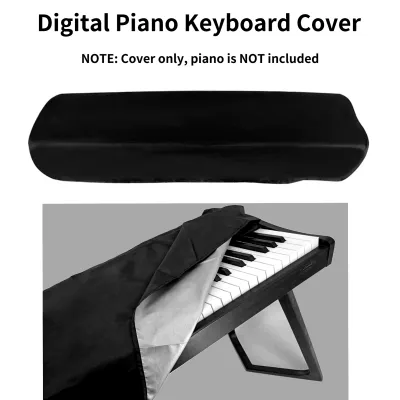
![[SG FREE ] 88 Keys Black Soft Piano Key Cover Keyboard Dust Proof Moisture Flannel Cloth](https://img.lazcdn.com/g/p/5d7eec5e7f5126a2ea8148873b689965.jpg_400x400q80.jpg_.webp)
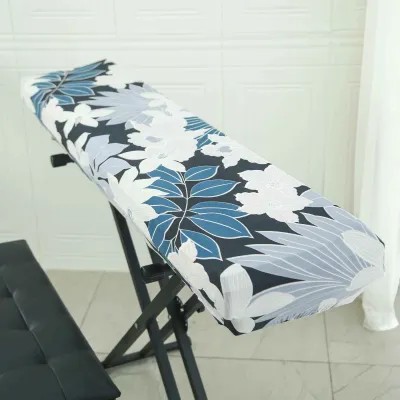
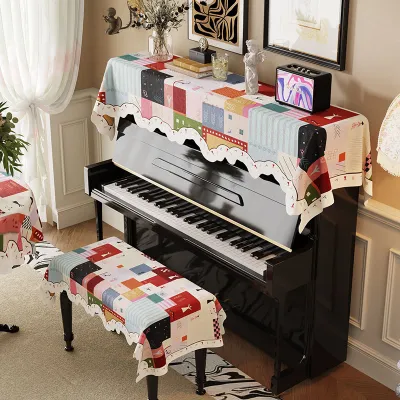
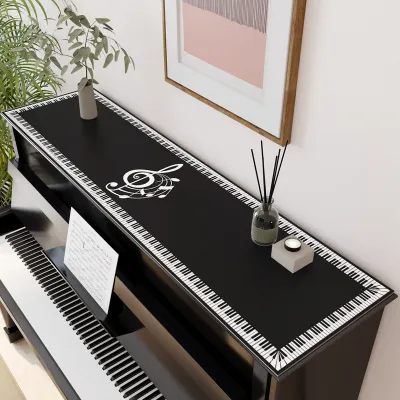

Prices are valid at publication and may change. Please refer to the product page for the latest price.
As you begin shopping, you will generally choose between custom-fit and universal stretch covers. Custom-fit covers are designed for specific keyboard models, offering a tailored, neat appearance that matches the exact contours of the instrument. While they look highly professional, they are less versatile if you decide to upgrade your keyboard in the future. Universal stretch covers, typically made from spandex or nylon blends, feature elasticized edges or drawstrings that allow them to conform to a wide range of keyboard shapes. These are highly adaptable and easy to slip on, though they may not offer the same structured aesthetic as a tailored cover.
Evaluating Cover Materials for Everyday Protection
The material of your piano cover determines how well it shields your keyboard from specific environmental hazards. Breathable fabrics, such as cotton blends, linen, and lightweight velvet, are excellent choices for standard dust protection. These materials allow air to circulate freely around the instrument, which prevents moisture from becoming trapped underneath the cover. This breathability is particularly important if your keyboard is kept in a room with fluctuating temperatures, as trapped condensation can slowly corrode internal electronic contacts over time.

In tropical climates like Singapore, managing ambient humidity and protecting against sudden liquid spills are major priorities. Water-resistant or coated materials, such as high-density oxford fabric or polyurethane-coated polyester, provide an excellent defense against accidental spills, pet accidents, and moisture from nearby open windows. If you choose a water-resistant cover, ensure that you occasionally remove it to let the instrument air out, preventing any ambient humidity from being sealed against the plastic chassis.
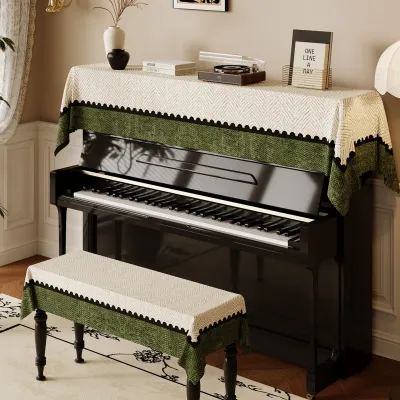
Another critical factor is the inner lining of the cover. Digital keyboards with high-gloss plastic finishes or polished wooden side panels are highly susceptible to micro-scratches. Coarse synthetic fabrics can act like fine sandpaper when dragged across these delicate surfaces during daily removal and placement. To prevent this cosmetic wear, look for covers that feature a soft, non-abrasive inner lining, such as brushed microfiber, soft flannel, or satin, which will glide smoothly over the instrument without leaving hairline scratches.
Matching Covers to Common Beginner Keyboard Series
Navigating the sizing options for beginner keyboards requires a clear understanding of standard layout categories. Entry-level keyboards generally fall into 61-key, 76-key, or 88-key configurations. A typical 61-key keyboard is compact and lightweight, making it highly compatible with small, universal stretch covers. In contrast, a full-sized 88-key digital piano has a much wider footprint to accommodate weighted hammer-action keys, requiring a substantial, heavy-duty cover that can drape fully over the extended chassis.
Different manufacturers design their entry-level series with unique physical profiles that affect how a cover sits. For example, some portable keyboard series feature prominent, raised control panels with rotary knobs and sliders, while others maintain a completely flat, minimalist top surface. Built-in carrying handles or integrated music rests can also create unusual contours. If a cover is too rigid or lacks sufficient depth, these raised elements can cause the fabric to bunch up, leaving the outer edges of the keybed exposed to dust.
To ensure a proper match, always verify the manufacturer-recommended accessory specifications before looking at third-party alternatives. Many major brands publish the exact physical dimensions of their instruments in the user manual or on their official websites. When browsing third-party covers on an online marketplace, compare these official dimensions against the internal measurements listed by the cover manufacturer. It is wise to select a cover that is slightly larger than your keyboard—by roughly one to two centimeters in each direction—to ensure it can be slipped on and off without a struggle.
Building Your Shortlist: Cover Types and Trade-offs
To finalize your purchase decision, it helps to categorize the available cover types and weigh their practical trade-offs. The three most common styles are full-enclosure dust covers, top-only or spandex stretch covers, and padded gig-bag style covers. Each style serves a distinct purpose depending on how you use and store your instrument.
| Cover Type | Protection Level | Daily Convenience | Ideal Use Case |
|---|---|---|---|
| Full-Enclosure Dust Cover | High (covers top, front, and sides) | Moderate (requires complete removal and folding) | Stationary home setups on permanent stands |
| Top-Only / Spandex Cover | Moderate (covers keys and control panel) | High (quick to slip on and off with elastic edges) | Daily practice sessions with frequent breaks |
| Padded Gig Bag | Maximum (impact, dust, and moisture protection) | Low (requires packing, zipping, and unpacking) | Frequent transport, travel, or long-term storage |
Matching the cover style to your daily routine is key to maintaining consistent protection. If you practice multiple times a day, a highly convenient top-only spandex cover is often the best choice, as it can be removed in seconds and does not require meticulous folding. However, if your keyboard is set up in a multi-use living space where it might be bumped by family members or exposed to direct sunlight, a heavier full-enclosure cover made of thick velvet or canvas will provide better physical shielding. For students who transport their keyboard to weekly music lessons, a padded gig bag is essential for transit, but keeping a lightweight dust cover on your home stand will save you from having to pack and unpack the heavy bag every single day.
Pre-Purchase Verification and Care Guidelines
Before finalizing your purchase on any online marketplace, take a moment to perform a few quick quality checks. Verify the seller’s return and exchange policies to ensure you can return the cover if the fit is too tight or if the material does not match your expectations. Read through customer feedback specifically looking for mentions of chemical odors; some synthetic water-resistant coatings can emit strong fumes when new, requiring you to air them out in a well-ventilated space before placing them on your instrument.
Proper maintenance of the cover itself is vital to protect your keyboard from transferred dirt. Dust and pet hair will naturally accumulate on the outside of the cover over time. Check the care label for specific washing instructions, as washing spandex in hot water or drying it in a high-heat machine can destroy its elasticity. Similarly, harsh detergents can strip away water-resistant coatings on polyester fabrics. Hand washing in cool water with a mild detergent and allowing the cover to air dry in a shaded area is generally the safest way to preserve the fabric’s protective qualities.
Finally, establish a clean routine for handling your cover during practice sessions. Avoid the temptation to bunch the cover up and throw it onto the floor while you play, as this allows the inner lining to pick up floor dust, hair, and debris. When you place the cover back onto the keyboard, those particles will be transferred directly onto your keys and control panel. Instead, fold the cover neatly and place it in a dedicated basket, drawer, or on a nearby chair to keep the interior surface clean and dust-free.
Frequently Asked Questions (FAQ)
Can I use a standard cloth or towel instead of a dedicated piano cover?
Using a standard household towel or a basic cotton sheet is not recommended for protecting a digital keyboard. Many common household fabrics, especially terry cloth towels, shed fine lint and fibers over time. These microscopic fibers can easily slip between the keys and settle onto the delicate rubber contact domes beneath the keybed, eventually causing keys to become unresponsive or produce erratic volume levels. Additionally, a simple cloth lacks a tailored fit or elastic edges, making it easy to knock off accidentally and leaving the corners of your instrument exposed to dust and spills.
Will a tight stretch cover damage the keys or buttons over time?
An excessively tight stretch cover can potentially cause issues with your keyboard’s mechanical parts. If a cover is too small, the constant downward tension of the elastic can exert continuous pressure on the keys, keeping them partially depressed for long periods. This sustained pressure can weaken the internal springs or hammer-action mechanisms over time and may wear out the sensitive contact sensors beneath the keys. If you notice that the seams of your stretch cover are pulling apart, or if you can visibly see keys being pushed down when the cover is on, the cover is too small and should be replaced with a larger size.
Do I need a cover if my keyboard is stored in a closed room?
Yes, a cover is still highly beneficial even if your keyboard is kept in a closed room. Microscopic dust is made up of skin cells, fabric fibers, and outdoor particulates that circulate through ventilation systems and settle on surfaces regardless of whether doors and windows are closed. Over time, this fine dust accumulates inside the key switches and slider tracks of your digital keyboard, leading to scratchy volume controls or dead keys. In humid environments, this dust can absorb moisture from the air, creating a sticky residue on internal circuit boards that is difficult and expensive to clean.

Community discussion
Share your experience or ask a question. Comments are reviewed before publication.