
Choosing the right piano cover for your first keyboard is a simple yet vital step in protecting your musical investment. As a beginner, your choice should depend on your instrument’s exact size, its physical form factor, and the specific environmental risks in your home, such as dust, pet hair, or accidental liquid spills. The ideal cover fits snugly, allows the instrument to breathe, and provides reliable protection without requiring you to spend excessively on premium, brand-specific accessories.
For a new player, the keyboard is more than just a musical tool; it is a sensitive electronic device. Dust particles can easily slip between the keys, settling on the contact pads underneath. Over time, this accumulation can interfere with the sensors, leading to unresponsive keys or erratic volume levels. By selecting a suitable cover early on, you establish a protective barrier that preserves the playability and longevity of your instrument.
Measure Your Keyboard Size and Form Factor
Before you begin browsing online marketplaces or music shops, you must accurately classify your instrument. Keyboards generally fall into two main categories: portable keyboards and digital pianos. Portable keyboards typically feature 61 or 76 unweighted keys, resulting in a shorter, shallower, and lighter chassis. Digital pianos, on the other hand, usually have 88 fully weighted keys designed to mimic an acoustic piano, which makes them significantly longer, wider, and heavier.
Products mentioned in this guide
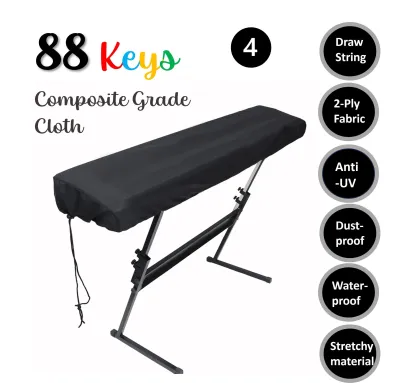
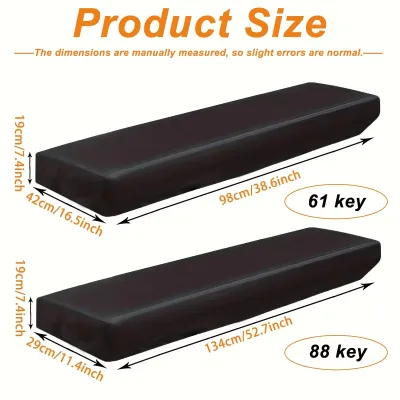

![Clairevoire Digital Piano Cover for Yamaha P525 | P515 [52.6 x 14.8 inches | 133.6 x 37.6 cm] Waterproof](https://img.lazcdn.com/g/p/fbf8cf005b55db7ed2299c70407fd75f.jpg_400x400q80.jpg_.webp)
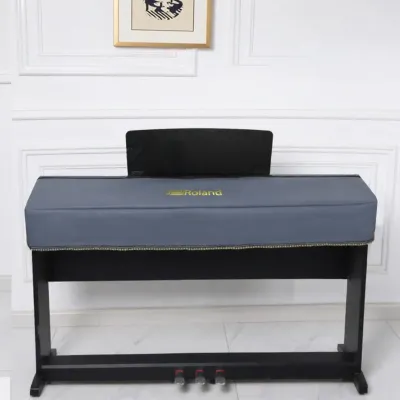
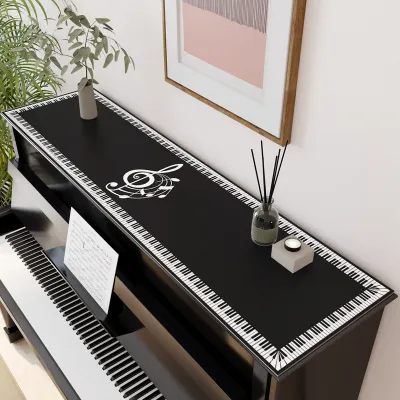
Prices are valid at publication and may change. Please refer to the product page for the latest price.
To ensure a proper fit, do not rely solely on the number of keys when shopping for a cover. Instead, use a flexible measuring tape to record the exact physical dimensions of your instrument. Measure the maximum length from the leftmost edge of the chassis to the rightmost edge. Next, measure the width from the front edge of the keys to the very back of the casing. Finally, measure the height from the flat surface of your stand or desk to the highest point on the keyboard’s top panel.
When taking these measurements, pay close attention to any protruding components. Many keyboards feature control knobs, pitch bend wheels, sliders, or a music rest. If your music rest is non-removable, you will need a cover with extra depth or a dedicated zippered opening to accommodate it. If the music rest is removable, decide whether you plan to take it off every time you finish playing, or if you prefer a cover that can drape over both the keyboard and the rest simultaneously.
Additionally, consider how your keyboard sits on its stand and how cables are routed. If your instrument remains permanently mounted on a double-X stand or a heavy-duty Z-stand, a standard slip-on cover might bunch up or fail to pull down completely over the sides. Look for covers that feature adjustable drawstrings, elasticized hems, or specialized corner cutouts. These design elements allow the cover to fit neatly around the stand’s support arms and accommodate power cables, sustain pedal connections, and headphone jacks without pulling the fabric out of place.
Choose the Right Material and Protection Level
Keyboard covers are available in a wide variety of fabrics, each offering a different balance of dust protection, liquid resistance, and ease of handling. Lightweight options made from nylon, polyester, or spandex blends are highly popular for daily use. These materials are thin, easy to fold, and highly effective at blocking fine dust particles and pet hair. Spandex and Lycra covers are particularly forgiving because they stretch to conform to the unique contours of different keyboard models, providing a clean, tailored appearance.

If your keyboard is located in a multi-purpose room, a dining area, or a space shared with young children, you may want to prioritize liquid protection. Accidental spills from water glasses or sweet drinks can cause catastrophic damage to internal circuit boards. For these environments, look for heavier fabrics such as high-density Oxford cloth or padded quilted materials. These fabrics often feature a water-resistant backing or tight weave that repels liquids, giving you time to wipe away a spill before it penetrates the instrument.
However, it is crucial to distinguish between water-resistant and fully waterproof materials. Many product listings use these terms interchangeably, but true waterproof covers are often made of thick, non-porous vinyl or plastic. While these materials offer excellent spill protection, they lack breathability. In warm, humid climates like Singapore, trapping air underneath an airtight plastic cover can lead to condensation. This trapped moisture can settle on the metal contacts inside your keyboard, causing corrosion and electrical faults over time.
To prevent moisture damage, prioritize covers that offer a balance of protection and ventilation. Breathable woven fabrics allow ambient moisture to evaporate naturally while still keeping dust out. When evaluating a cover, check the manufacturer’s product specifications and material labels. Look for descriptions that explicitly mention breathable weaves or ventilation features, rather than assuming that a heavier, thicker cover is automatically better for your instrument’s long-term health.
Match the Cover to Your Environment and Playing Habits
Your household environment and daily routine should heavily influence the style of cover you select. If you live in a high-traffic household with active pets or young children, your keyboard faces physical risks beyond simple dust accumulation. Cats, for instance, are often attracted to the flat, elevated surface of a keyboard stand. A thin, lightweight dust cover can easily snag under a pet’s claws or slide off entirely. In these scenarios, a heavy-duty, padded cover or a thick velvet cover with secure under-keyboard straps is highly recommended to cushion minor impacts and keep the cover firmly in place.
Conversely, if you are a dedicated beginner who practices multiple times a day, convenience is key. A cover that is difficult to put on or take off will quickly become a source of frustration, which might tempt you to leave the keyboard unprotected. For frequent players, a lightweight stretch-fit cover with an elastic hem is the most practical choice. These covers can be slipped off in a single motion, folded into a compact square that fits easily into a drawer or a stand accessory pouch, and replaced just as quickly when your practice session ends.
For scenarios where the keyboard will be stored away for extended periods, such as during a long holiday or a move, a simple top-drape dust cover is insufficient. Dust can still enter from the sides and bottom of the chassis. For long-term storage, look for a full-enclosure gig bag or a zippered utility sleeve. These options seal the entire instrument, protecting it from dust, insects, and ambient humidity changes while it is stored in a closet, under a bed, or in a dedicated storage room.
Build Your Shortlist and Verify Before Buying
As a beginner, you do not need to spend a significant portion of your budget on accessories. A reliable, high-quality keyboard cover typically costs between S$15 and S$40. Spending more than this is rarely necessary unless you require a highly specialized, custom-tailored cover for a premium console digital piano. Focus your budget on finding a cover made of durable, breathable fabric with sturdy stitching rather than paying a premium for official brand logos.
When compiling your shortlist, always prioritize physical measurements over generic product labels. A product advertised as a “61-key keyboard cover” is designed based on average dimensions, but a 61-key synthesizer can have a completely different shape and depth compared to a 61-key arranger keyboard. Compare your recorded measurements directly against the exact dimensions provided in the product’s sizing chart. If your keyboard’s dimensions fall near the upper limit of a cover’s size range, it is generally safer to select the next size up to avoid over-stretching the fabric.
Before finalizing your purchase on an online marketplace or from a local music retailer, take a moment to verify the seller’s return and exchange policies. Because fit can be highly specific, having the option to exchange the cover if it does not fit over your music rest or stand brackets provides valuable peace of mind. Additionally, read through user reviews to see if other buyers have paired that specific cover with your exact keyboard model, as this can give you a highly accurate preview of how the cover will perform in real-world conditions.
Frequently Asked Questions (FAQ)
Can I use a generic stretch cover for a digital piano with a built-in stand?
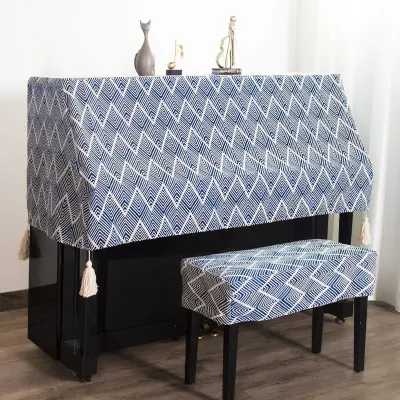
Generic stretch covers are often designed for portable keyboards that sit on open metal stands, and they may not fit properly on digital pianos with integrated wooden console stands or side panels. The solid wooden sides of a console piano prevent a standard elastic hem from wrapping underneath the chassis, which can cause the cover to slip off or bunch up awkwardly at the corners. If you own a console-style digital piano, look for covers specifically designed for digital pianos. These models often feature side slits, adjustable hook-and-loop straps, or a flat-drape design that hangs elegantly over the top and sides of the wooden cabinet without requiring an elastic wrap-around.
How do I clean and maintain a piano cover?
To keep your keyboard cover clean and free of dust buildup, always check the manufacturer’s care label for specific washing instructions. Many synthetic covers made of nylon, polyester, or spandex can be machine-washed on a cold, gentle cycle and hung up to air dry. Velvet or padded covers, however, may require hand washing or spot cleaning with a damp cloth to avoid damaging the fabric fibers or protective coatings. Most importantly, ensure the cover is completely dry before placing it back onto your keyboard. Putting a damp cover over your instrument can trap moisture against the keys and control panel, which can lead to mold growth or severe damage to the internal electronics.

Community discussion
Share your experience or ask a question. Comments are reviewed before publication.