
To protect your musical investment, choosing the right size and style of piano cover requires matching your specific instrument type—whether it is an acoustic grand, an upright, or a portable digital keyboard—with your local environment and daily usage patterns. A properly fitted cover shields delicate internal components from dust, buffers against minor physical impacts, and helps manage exposure to ambient moisture. Finding the ideal fit involves taking precise physical measurements of your instrument and selecting a high-quality piano cover cloth that balances breathability with robust surface protection.
Before purchasing any accessory, always verify the cover’s physical dimensions, compatibility with your specific piano model, and the authorized source of the material specifications. Do not rely on brand names or generic category terms to guarantee a perfect fit; always refer to your instrument’s exact model specifications and physical measurements.
Identify Your Instrument Type and Protection Needs
Every piano is vulnerable to environmental hazards, but the specific risks depend heavily on whether you own a traditional acoustic instrument or a modern digital keyboard. Acoustic pianos, with their intricate wooden soundboards, felt hammers, and copper-wound metal strings, are highly sensitive to fluctuations in temperature and humidity. In tropical climates like Singapore’s, high relative humidity can cause wooden components to swell, keys to stick, and internal strings to rust over time. Conversely, digital pianos and portable keyboards are packed with sensitive electronic circuit boards, sensors, and key contacts that are easily compromised by fine dust particles and accidental liquid spills.
Products mentioned in this guide
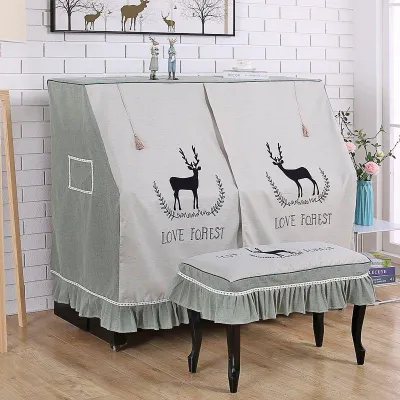
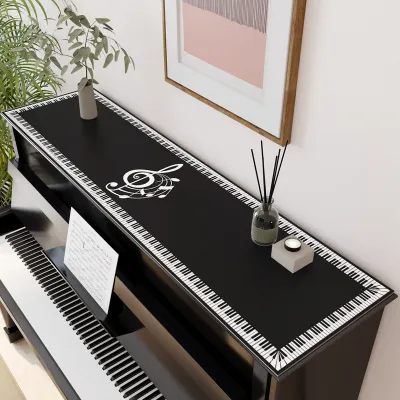

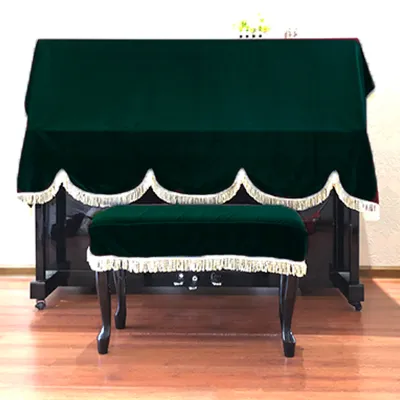
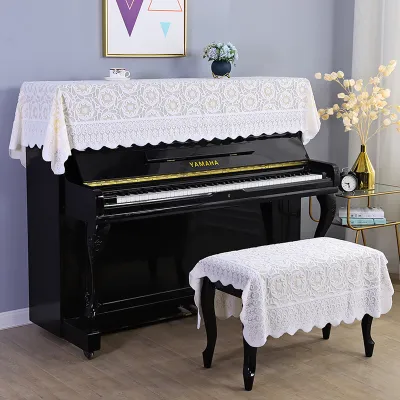
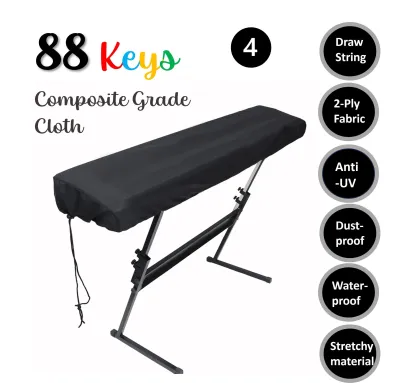
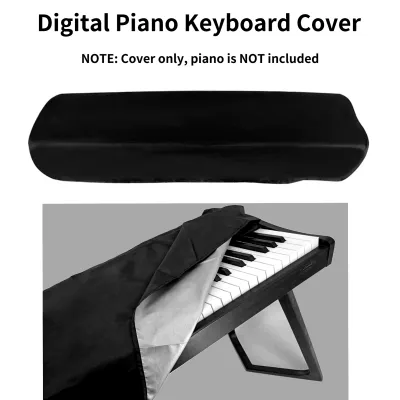

Prices are valid at publication and may change. Please refer to the product page for the latest price.
Before choosing a cover, assess the primary threats in your home. If your instrument sits near an open window, it faces constant exposure to dust, ambient moisture, and direct sunlight, which can fade wood finishes and degrade plastic keys. Homes with pets or young children present additional risks, such as pet hair, dander, and accidental scratches or bumps. Identifying these specific environmental factors allows you to determine how much of the instrument needs to be covered and how dense or protective the cover material must be.
How to Measure Your Piano for a Perfect Fit
A cover that is too small will fail to protect the entire instrument, while one that is too large can drape awkwardly on the floor, trapping dirt or creating a tripping hazard. To avoid these issues, always measure your instrument manually rather than relying solely on generic size categories.

Measuring Acoustic Pianos (Upright and Grand)
To measure an upright piano, you need three primary dimensions: the total width across the widest part of the cabinet, the total depth from the back of the piano to the front of the keyboard, and the height from the floor to the very top of the lid. When measuring height, check whether you want the cover to clear the floor by a few centimeters to prevent it from dragging or gathering dust near the casters. Beginners using entry-level upright acoustic pianos from brands like Kawai or Yamaha should note that while these brands have standardized cabinet classes, individual model designs can still vary by several centimeters.
For a grand piano, measurements are taken differently. You must measure the overall length from the front of the keyboard to the curved tail at the very back, along with the width of the keyboard lid. Be sure to account for any protruding elements, such as the music desk or lid props, especially if you plan to keep the music rest raised under the cover. If your bench matches the piano and you wish to cover it as well, measure its length, width, and height separately to find a coordinating bench cover.
Measuring Digital Pianos and Keyboards
Digital keyboards and stage pianos vary widely in shape and stand configurations. Begin by measuring the physical length, depth, and height of the keyboard unit itself. Do not rely entirely on the key count (such as 61, 76, or 88 keys) to determine size, as bezel sizes, control panels, and built-in speakers can add several centimeters to the overall dimensions of different models. For instance, if you are a beginner starting out with a popular digital keyboard from brands like Yamaha, Roland, or Casio, you must verify the exact dimensions of your specific model rather than purchasing a generic “88-key” cover.
Next, measure the height including the stand if you plan to use a full-length cover. Ensure you account for the depth of the music rest, particularly if it is non-removable. You must also check the rear of the keyboard for cable routing and sustain pedal connections; the cover should have enough slack to drape over these cables without bending or putting stress on the input jacks.
Choosing the Right Cover Style for Your Setup
The style of cover you select should match how frequently you play and where your instrument is positioned in your home.
Full Covers vs. Top Covers (Dust Cloths)
Full covers wrap around the entire body of the piano, extending down to the floor for uprights or draping completely over the rim and legs of a grand piano. These are highly effective for long-term storage, empty rooms, or homes undergoing renovation where dust levels are temporarily high. However, because they are bulky, removing and replacing them can be cumbersome if you practice daily.
Top covers, often referred to as dust cloths, cover only the top surface, the music stand, and the keyboard area. They provide quick, convenient access for daily players while still keeping dust off the keys and the upper cabinet. If you live in a busy household where the piano is played multiple times a day, a top cover offers a practical compromise between accessibility and basic protection.
Padded and Quilted Covers
Padded and quilted covers feature an outer protective fabric layer, a middle layer of soft padding, and a smooth inner lining. These covers are designed primarily for high-traffic environments, such as music schools, community centers, or multi-use living spaces where physical bumps and scratches are common. Quality covers in Singapore typically range from budget-friendly dust cloths around S$20 to premium custom-fit padded covers exceeding S$150.
While padded covers provide excellent impact resistance and a minor buffer against rapid temperature shifts, they are heavier and more expensive than standard single-layer cloths. They are also highly useful when preparing an instrument for a local move, protecting the polished exterior from accidental scrapes during transit.
Keyboard Bags and Cases
If you own a portable digital keyboard that frequently travels between home, rehearsals, and gigs, a stationary cover is not enough. Soft gig bags made of heavy-duty nylon offer lightweight protection against dust and light rain during transport, often featuring backpack straps and accessory pockets for cables and pedals.
For serious travel, air transit, or touring, a hard flight case with a rigid exterior shell and custom-cut foam interior is necessary to protect against severe impacts. When selecting either a bag or a case, always cross-reference the internal dimensions of the bag with your keyboard’s exact model specifications to ensure a snug fit that prevents the instrument from shifting inside during transit.
Selecting the Best Piano Cover Cloth and Material for Your Environment
The fabric of your piano cover cloth plays a direct role in how well it protects your instrument and preserves its finish. Common materials include natural cotton, soft velvet, durable nylon, and synthetic polyester blends. Each material offers distinct functional advantages depending on your primary protection goals.
For instruments with high-gloss, polished ebony finishes, a soft inner lining is essential. Materials like velvet, flannel, or brushed microfiber glide smoothly over the polished wood or polyester lacquer, preventing micro-scratches that can dull the finish over time. Tightly woven synthetic outer layers, such as polyester or nylon blends, are highly effective at repelling dust and resisting minor liquid spills, making them excellent choices for busy households.
However, a critical safety boundary must be observed: never trap moisture against an acoustic piano. In humid environments, non-breathable plastic or heavy, airtight synthetic covers can trap ambient moisture inside the cabinet, leading to mold growth, rusted strings, and sluggish key action. Ensure that your chosen cover is made of breathable fabric that allows air circulation. Always verify that the piano is completely dry and at room temperature before covering it. Before purchasing, check the product label for exact material composition and care instructions, and consult your piano manufacturer’s care guide if you have a specialized or antique finish.
How to Apply and Maintain Your Piano Cover
Using a cover correctly is just as important as choosing the right size. Before draping the cloth over your piano, always gently clean the instrument’s surface with a soft, dry microfiber cloth. If you skip this step, fine dust particles sitting on the wood can get trapped beneath the cover; as the cover shifts, these particles can act as a mild abrasive, scratching the delicate finish.
When applying the cover, lift and drape it gently rather than dragging it across the surface. Take extra care around delicate components like hinges, music desks, and lid props to avoid catching or pulling on them. If your cover features drawstrings, elastic bands, or straps, secure them snugly but without applying excessive tension that could warp plastic parts on a digital keyboard or strain the stand.
Maintaining the cover cloth itself is vital for long-term protection. Over time, the cover will accumulate dust, pet hair, and environmental oils. Wash the cover periodically according to the manufacturer’s care label. Generally, using a gentle cycle with mild detergent, avoiding harsh bleaching agents, and air-drying the cloth will prevent shrinkage and maintain its protective qualities. Always ensure the cover is completely dry before placing it back onto your piano.
Frequently Asked Questions (FAQ)
Should I cover my piano every day?
Yes, covering your piano daily is highly beneficial, especially to protect the keys and internal action from dust. If you find a full cover too tedious to remove daily, consider using a lightweight top cover or keyboard runner cloth for everyday use, reserving the full cover for periods when the instrument will sit idle for several days or longer.
Can a piano cover trap moisture and cause damage?
Yes, if the cover is made of non-breathable materials like heavy plastic or vinyl, it can trap humidity against the wood and metal parts of an acoustic piano. To prevent this, choose breathable fabrics such as cotton or specialized velvet, maintain steady room ventilation, and ensure the instrument is completely dry before covering.
Do I need a cover for a digital piano?
While digital pianos are not vulnerable to soundboard warping from humidity, they are highly sensitive to dust. Fine dust can settle inside the key contacts, sliders, and electronic sensors, leading to unresponsive keys or noisy volume pots. A simple, breathable dust cover is highly recommended to extend the lifespan of your digital instrument.

Community discussion
Share your experience or ask a question. Comments are reviewed before publication.