
Selecting the right piano X-stand in Singapore requires balancing stability, space efficiency, and instrument weight. For most beginners, a double-braced X-stand provides the safest foundation for full-sized 88-key digital pianos, while a lighter single-braced stand is highly practical for compact 61-key keyboards. Because Singaporean homes, such as HDB flats, often require multi-functional spaces, choosing a stand that folds flat and adjusts easily is essential for maintaining a comfortable, clutter-free practice environment.
Understanding X-Stand Designs for Entry-Level Keyboards
When shopping for a keyboard stand, the first decision you will face is choosing between a single-braced (single-X) and a double-braced (double-X) design. Single-braced stands feature a single set of crossing metal legs that form a basic ‘X’ shape. These stands are lightweight, highly portable, and generally more affordable, making them a popular choice for beginners. However, their simpler structure means they have a lower weight capacity and may exhibit slight lateral wobble when subjected to energetic playing.
In contrast, double-braced stands utilize two parallel sets of crossing metal bars, which significantly enhances their structural rigidity. This double-braced configuration minimizes side-to-side movement, providing a much more stable platform for your instrument. The metal tubing used in double-braced models is often thicker, offering peace of mind that your keyboard is secure. While they are slightly heavier and bulkier to transport, the added stability is often worth the trade-off, especially for heavier instruments.
Products mentioned in this guide
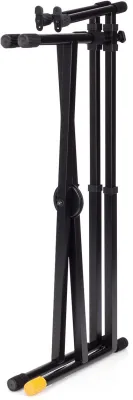

![[SG Seller] Double X Adjustable Portable Self-installation piano Keyboard Stand](https://img.lazcdn.com/g/p/b80c0e4f73cccbdb23d62602c484413c.jpg_400x400q80.jpg_.webp)
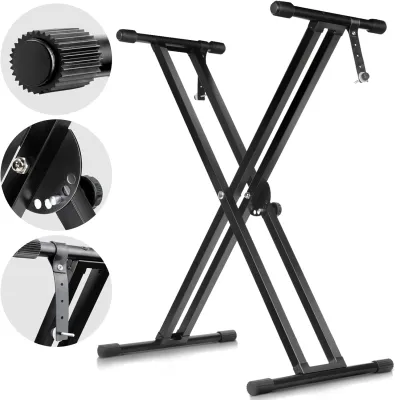
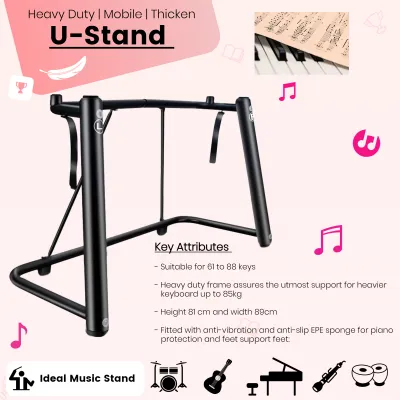


Prices are valid at publication and may change. Please refer to the product page for the latest price.
Weight capacity is a critical factor when pairing a stand with your specific keyboard model. A standard 61-key beginner keyboard typically weighs between 3 kg and 6 kg, which a single-X stand can easily support without any structural strain. However, if you are using a 76-key or a fully-weighted 88-key digital piano, the instrument’s weight can range from 12 kg to over 20 kg. For these larger models, a double-X stand is highly recommended to prevent the metal from bowing or collapsing under the load.
Knee clearance and seated playing comfort are also heavily influenced by the stand’s design. Because the legs of an X-stand cross in the center, they can restrict your legroom when you sit down to play. If the stand is set to a lower height, the legs spread wider, which further reduces the space available for your knees and feet. This can make it difficult to sit close enough to the keyboard to maintain proper posture, which is a vital consideration for long practice sessions in cozy Singaporean study rooms or bedrooms.
Portability is another key consideration for students who need to transport their gear. If you plan to carry your stand to weekly music lessons or jam sessions around Singapore, a lightweight single-X stand is much easier to manage on public transport. It folds down to a very slim profile that can easily fit into a car boot or be carried over your shoulder. Double-X stands, while offering superior stability, are noticeably heavier and more cumbersome to carry over long distances.
Essential Stability and Adjustability Features to Verify
To ensure your keyboard stand is safe and ergonomic, you must evaluate its physical adjustability and locking mechanisms. The central locking mechanism is the most critical component, as it holds the entire weight of your instrument. Look for stands that feature a heavy-duty pull-pin system or a spring-loaded clutch that clicks securely into pre-drilled holes. Avoid cheap models that rely solely on friction-based tightening knobs, as these can slip over time, causing the stand to collapse unexpectedly.

The contact points between the stand and the floor are equally important for maintaining stability. High-quality stands are equipped with thick, textured rubber end caps on both the top arms and the bottom feet. These rubber caps prevent the metal frame from sliding on smooth flooring surfaces, such as polished marble, vinyl, or ceramic tiles, which are common in Singaporean homes. They also protect your floors from unsightly scratches and help dampen the vibrations generated during enthusiastic practice sessions.
Height adjustment ranges must be versatile enough to accommodate different playing styles and user heights. Whether you prefer sitting on a standard piano bench or standing during a performance, the stand should allow you to position the keys at a comfortable elbow height. For seated players, this is typically around 70 to 75 cm from the floor. Proper height alignment is essential for preventing wrist strain, reducing shoulder tension, and helping beginners develop correct hand posture from day one.
Many modern X-stands also feature micro-adjustment capabilities to handle uneven flooring. These stands include rotating end caps or adjustable leveling feet that can be turned to compensate for minor floor irregularities. This feature is incredibly useful if you plan to set up your keyboard on a tiled balcony, a slightly uneven living room floor, or near a sliding door track. A quick twist of the leveling foot can eliminate annoying wobbles and ensure a perfectly stable playing surface.
Matching the Stand to Your Specific Keyboard Model
Before purchasing any stand, it is vital to verify its physical compatibility with your specific keyboard model. Start by measuring the depth of your keyboard’s bottom chassis and comparing it to the length of the stand’s top support arms. If the support arms are too short, the keyboard may overhang excessively, making it prone to tipping forward or backward. Always cross-reference the manufacturer’s specified weight of your keyboard with the safe load limit of the stand to ensure a safe match.
Understanding your instrument’s center of gravity is crucial for preventing accidental tipping. Keyboards with heavy internal speakers or weighted key actions often have a different center of gravity than lightweight synthesizer models. If you play with a heavy touch or frequently use the extreme upper and lower registers, a narrow stand can easily tip sideways. Ensuring the top arms of the stand are spaced widely enough to cradle the outer edges of the keyboard’s base helps distribute the weight evenly.
You should also examine the underside of your keyboard to identify the location of essential ports and compartments. Some X-stands have wide top bars or support straps that can block battery compartments, headphone jacks, pedal inputs, or power ports. Choosing a stand with adjustable arm widths or minimalist support pads ensures you can plug in your sustain pedal and power adapter without any physical interference, keeping your setup clean and functional.
If you plan to expand your musical setup in the future, consider whether the stand supports optional tier extensions. These add-on brackets attach directly to the top arms of your existing X-stand, allowing you to mount a second lightweight keyboard, a laptop, or a music sheet holder. This is an excellent way to future-proof your setup without needing to purchase an entirely new stand or take up valuable extra floor space in your home.
Where to Source Keyboard Stands in Singapore
When looking to purchase a keyboard stand in Singapore, you have several practical channels to choose from, each offering distinct advantages. Visiting dedicated musical instrument retailers, particularly those located in established music hubs like Bras Basah Complex or Peninsula Plaza, allows you to test the stands in person. You can physically assess the thickness of the metal, test the locking mechanisms, and seek advice from knowledgeable staff. Buying from a local physical store also ensures you receive immediate assembly assistance and a reliable local warranty.
For budget-conscious beginners, general online marketplaces offer a wide selection of affordable X-stands, with prices clearly listed in S$. When shopping online, it is crucial to read customer reviews carefully, verify the seller’s rating, and check the shipping dimensions to avoid high delivery fees for bulky items. Ensure the online platform offers a clear return policy in case the stand arrives damaged or does not match the advertised specifications.
Evaluating bundled deals is another excellent way to maximize value. Many local retailers and online stores offer package deals that bundle a beginner keyboard with a matching stand, bench, and headphones. These bundles often provide significant savings compared to buying each item individually. Furthermore, the retailer has already verified the compatibility of the stand with the specific keyboard model, saving you the hassle of measuring and cross-referencing specifications.
To ensure safety and durability, always check for authorized distributors when purchasing well-known stand brands. Substandard or counterfeit stands made from thin, low-grade metal tubing or weak plastic joints can fail under load, risking serious damage to your keyboard. Inspecting the welding joints and the quality of the metal finish can help you identify a well-constructed stand that will last for years of daily practice.
Safe Setup and Daily Use Guidelines
Proper assembly and daily maintenance are essential for ensuring the safety of your keyboard setup. When unfolding your X-stand, always follow the manufacturer’s instructions carefully. Ensure the locking pin is fully engaged and any safety knobs are tightened securely before placing your keyboard on top. Keep your fingers clear of the crossing joints during adjustment to prevent painful pinching.
Position your keyboard setup on a flat, level surface away from high-traffic areas where family members, guests, or pets might accidentally bump into it. In Singapore’s warm and humid climate, avoid placing the stand in direct sunlight or near open windows where rain might splash. Prolonged exposure to moisture can lead to rust on metal parts and degrade the rubber end caps, reducing their grip and stability over time.
Develop a habit of performing quick visual checks before each practice session. Verify that the tightening knobs are secure, the rubber grips are intact, and there are no signs of metal fatigue or stripped threads on the locking mechanism. Taking a few seconds to inspect your stand can prevent costly accidents and ensure a safe, worry-free playing experience.
If you notice any structural bending, severe rust, or if the locking mechanism fails to click securely into place, stop using the stand immediately. Do not attempt to repair a compromised locking pin with makeshift solutions like tape or wire. Consult the manufacturer or replace the stand promptly to ensure your instrument remains safe and secure.
Frequently Asked Questions (FAQ)
Can I use a generic table or a guitar stand instead of an X-stand?
Using a standard dining table or desk often results in an incorrect playing height, which can lead to poor posture, wrist fatigue, and long-term discomfort. Dining tables also lack the necessary knee clearance, forcing you to sit at an awkward angle. Guitar stands are structurally designed for vertical instruments and are completely incapable of supporting the wide, horizontal frame and heavy weight of a keyboard, posing an immediate tipping hazard.
Do I need a double-X stand for a lightweight 61-key beginner keyboard?
For a lightweight 61-key keyboard weighing under 6 kg, a high-quality single-X stand is generally sufficient and offers the benefit of being lighter and easier to fold. However, if you plan to upgrade to a heavier 88-key digital piano in the future, or if you play with an energetic, heavy-handed style, investing in a double-X stand from the start provides extra stability and saves you from having to buy a new stand later.
How do I prevent the keyboard from sliding off the X-stand?
To prevent your keyboard from sliding, ensure the stand’s built-in rubber grips are clean and free of dust, which can reduce friction. Many X-stands come with safety straps that screw directly into the threaded holes on the underside of compatible keyboards, securing them firmly to the stand. Alternatively, placing a thin sheet of non-slip rubber matting between the keyboard and the stand’s top arms can provide excellent secondary grip without damaging the instrument’s finish.

Community discussion
Share your experience or ask a question. Comments are reviewed before publication.