
To start learning the piano effectively, the ideal portable keyboard is an 88-key instrument featuring fully weighted, touch-sensitive keys. This configuration closely replicates the feel, resistance, and layout of a traditional acoustic piano, allowing you to build the necessary finger strength and muscle memory from day one. However, the right choice ultimately depends on your budget, available living space, and long-term musical goals. If space is exceptionally tight or your initial budget is modest, a high-quality 61-key touch-sensitive keyboard can serve as a temporary starting point, though serious students will eventually need to transition to a full-sized layout to play standard repertoire.
Navigating the vast array of digital instruments can feel overwhelming for a beginner. By focusing on key specifications—such as key action, connectivity, physical footprint, and learning features—you can avoid common purchasing pitfalls. This guide will break down these essential technical details, helping you choose a portable keyboard that supports your learning journey without causing unnecessary frustration.
The Core Decision: Matching Keyboard Specs to Your Learning Goals
Before browsing online marketplaces or visiting local music showrooms, you must define your primary musical objectives. If your goal is to learn classical piano, jazz, or traditional solo pieces, your technical requirements will be highly demanding. These genres rely heavily on dynamic expression, complex finger work, and a wide range of pitches. For this path, an 88-key digital piano with fully weighted hammer action is essential. Practicing on an instrument that lacks these features can lead to poor habits, such as weak finger joints and an inability to control volume levels when transitioning to an acoustic piano.
Products mentioned in this guide
![Yamaha NP-15 Portable Keyboard Piano 61-Key Black/White Piaggero Digital Musical Instrument NP15 [LIMITED STOCK]](https://img.lazcdn.com/g/p/0ec95af5f3240a6cd4d0139cd77da0f4.jpg_400x400q80.jpg_.webp)
![[ammoon]61 Keys Digital Electronic Keyboard / Piano With MicrophoneUSB CableUser Manual](https://img.lazcdn.com/g/p/e4a8e0dd7c6374c271afdc54fc91cc43.jpg_400x400q80.jpg_.webp)
Prices are valid at publication and may change. Please refer to the product page for the latest price.
Conversely, if your interest lies in casual music exploration, songwriting, electronic music production, or playing simple pop accompaniments, your needs may differ. In these scenarios, a 61-key or 76-key keyboard with synth-action or semi-weighted keys may be entirely sufficient. These instruments are designed for versatility, offering hundreds of instrument sounds, built-in rhythm accompaniments, and seamless integration with computer software. They allow you to explore music theory and basic keyboard geography without the physical weight and higher cost of a fully weighted digital piano.
Touch sensitivity is a non-negotiable feature for any beginner, regardless of the key count. Touch-sensitive keys detect the velocity of your key strikes; pressing a key quickly produces a loud sound, while pressing it slowly produces a soft sound. Without this feature, every note you play will sound at the exact same volume, making it impossible to develop dynamic control or emotional expression. When evaluating specifications, always verify that the keyboard lists “touch-sensitive,” “velocity-sensitive,” or “touch response” keys.
Choosing between authentic acoustic feel and ultra-lightweight portability involves clear trade-offs. Fully weighted 88-key portable pianos typically weigh between 11kg and 15kg, making them somewhat cumbersome to move frequently. They also require a sturdy, dedicated stand to prevent wobbling. On the other hand, lightweight 61-key keyboards often weigh under 5kg and can be easily stored in a closet or under a bed when not in use. You must weigh the physical constraints of your living space against your dedication to mastering traditional piano technique.
Key Count and Key Action Explained for New Learners
Understanding the physical layout and mechanical design of a keyboard is crucial to making an informed purchase. The number of keys on an instrument dictates the range of music you can play without adjusting octave settings.

Comparing Key Layouts
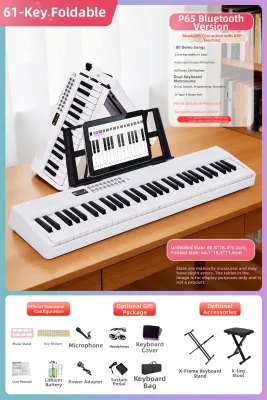
- 61-Key Layouts: This size covers five full octaves, which is sufficient for early beginner method books, basic chords, and simple pop melodies. It is highly compact and budget-friendly, making it an excellent choice for young children or those testing their interest in music.
- 76-Key Layouts: Covering six octaves, this intermediate size offers a bit more breathing room. It allows you to play most classical pieces from the Baroque and Classical eras, as well as modern pop arrangements, without running out of keys on the high or low ends.
- 88-Key Layouts: This is the standard size for acoustic pianos, spanning over seven octaves. It is the only layout that guarantees you will never outgrow your instrument, allowing you to play any piece of sheet music exactly as written.
Decoding Key Action Mechanisms
- Synth-Action: These keys are light, thin, and spring-loaded. They offer virtually no resistance and rebound instantly. While excellent for playing fast synthesizer leads or organ riffs, they do not prepare your fingers for the physical demands of an acoustic piano.
- Semi-Weighted Action: This mechanism combines spring tension with light weights attached to the underside of the keys. It offers a moderate level of resistance, making it a comfortable middle ground for casual players who want a bit more control than synth-action provides.
- Fully Weighted (Hammer Action): This design uses actual mechanical hammers inside the keyboard body to simulate the leverage and resistance of an acoustic piano's action. Many advanced models feature "graded" hammer action, where the keys on the lower end feel heavier than those on the higher end, mimicking the physics of thicker acoustic strings.
Pre-Purchase Specification Checklist
When reviewing product manuals or specification sheets, look for these specific terms to verify the quality of the key bed:
- Adjustable Touch Curves: Ensure the keyboard allows you to adjust the touch sensitivity levels (e.g., Light, Normal, Heavy, Fixed) to match your finger strength.
- Escapement or Let-Off Simulation: This feature replicates the subtle "click" felt when gently pressing an acoustic piano key, providing a more authentic tactile response.
- Key Surface Texture: Look for matte-finished or synthetic ivory and ebony keytops. These textures provide grip and prevent your fingers from slipping, which is especially helpful during warm, humid days.
Built-in Learning Tools and Connectivity Requirements
Modern digital keyboards offer a variety of built-in tools designed to assist self-study and complement formal lessons. However, not all digital features are created equal, and some can actually hinder your progress if used incorrectly.
An indispensable built-in tool is the metronome. Developing a precise sense of rhythm and timing is one of the hardest challenges for beginners. A built-in metronome allows you to practice scales and pieces at a slow, controlled tempo before speeding them up. Additionally, a basic onboard recording function is highly valuable. Recording your practice sessions lets you listen back objectively, helping you spot uneven phrasing, rushed tempos, or missed notes that you might not notice while actively playing.
Connectivity options are vital for integrating your keyboard with modern learning platforms. A USB-MIDI port (often labeled USB to Host) is the industry standard for connecting your keyboard to a computer, tablet, or smartphone. This connection allows your keyboard to communicate with interactive learning apps, digital sheet music readers, and music notation software. Some keyboards also offer Bluetooth MIDI, which provides a wireless connection to your devices, reducing cable clutter around your practice space. Bluetooth Audio is another convenient feature, allowing you to stream backing tracks or video lessons from your phone directly through the keyboard’s internal speakers or headphones.
While digital features can enhance learning, beginners should be cautious of gimmicky additions. Keyboards with light-up keys or falling-note visual guides can make learning feel like a video game, but they often discourage students from learning how to read traditional sheet music. Relying on visual cues on the keyboard bed can slow down your sight-reading development and make it difficult to play on standard pianos. Similarly, having hundreds of sound effects, drum beats, and novelty sounds can easily distract new learners from focusing on fundamental techniques like hand posture, finger independence, and tone production.
Portability, Setup, and Space Considerations for Your Home
Before finalizing your purchase, you must consider where the keyboard will live in your home and how it will fit into your daily routine. A keyboard that is difficult to set up or takes up too much space can quickly become a barrier to regular practice.
First, evaluate the physical footprint of the instrument. An 88-key keyboard is approximately 1.3 meters wide, requiring a dedicated wall space or corner. You must also factor in the stand and bench.
Choosing the Right Stand
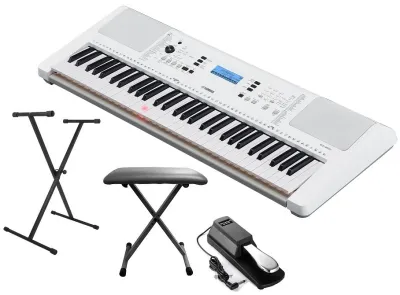
- X-Stands: These are highly portable, affordable, and easy to fold away. However, they can restrict your legroom, making it difficult to sit with proper posture, and they may wobble slightly when playing energetically.
- Z-Stands: These offer excellent stability and plenty of leg clearance, allowing you to sit comfortably. They are slightly bulkier than X-stands but are highly recommended for heavier 88-key instruments.
- Furniture-Style Wooden Stands: These stands are designed for specific keyboard models, turning your portable instrument into a semi-permanent piece of furniture. They offer the greatest stability and aesthetic appeal but eliminate portability.
Weight is another critical factor if you plan to move the keyboard frequently. If you need to transport your instrument to weekly lessons, rehearsals, or community events, look for a model that weighs under 12kg. Instruments heavier than this are generally designed to stay in one place, requiring a semi-permanent setup.
Finally, perform a pre-purchase hardware check to ensure you have all the necessary accessories. Verify whether the power adapter is included in the box, as some ultra-portable models are sold without them or rely primarily on battery power. Check the size of the headphone jack; many portable keyboards use a professional 6.35mm (1/4-inch) jack, which will require an inexpensive adapter if you plan to use standard 3.5mm consumer headphones. Lastly, ensure the keyboard has a dedicated input for a sustain pedal, which is essential for expressive playing.
Building Your Conditional Shortlist for Purchase
To help you narrow down your options, use the following scenarios to match your specific living situation, budget, and musical goals to the right category of portable keyboard.
Scenario A: Strict Budget and Limited Space
If you are living in a compact apartment, have limited floor space, or want to keep your initial investment under S$300, focus your search on high-quality 61-key or 76-key electronic keyboards. Prioritize models that offer touch-sensitive keys, a sturdy music rest for sheet music or a tablet, and a USB-MIDI port. While you will eventually need to upgrade to an 88-key weighted instrument as your skills progress, this setup allows you to learn basic music theory, hand coordination, and simple melodies without a major financial or spatial commitment.
Scenario B: Serious Classical or Jazz Student
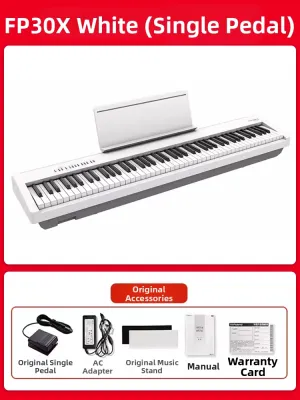
If your goal is to master classical repertoire, prepare for graded music examinations, or play complex jazz arrangements, you should invest in an 88-key digital piano with fully weighted hammer action. Look for models that support a triple-pedal unit (sustain, soft, and sostenuto) and come with a stable Z-stand or matching wooden furniture stand. Budgeting between S$600 and S$1,200 for a reputable entry-level digital piano will ensure you have an instrument that can support several years of rigorous practice without holding back your technical development.
Scenario C: Frequent Traveler or Gigging Beginner
If you need an instrument that can easily travel with you to outdoor sessions, community gatherings, or band practices, prioritize ultra-lightweight 88-key or 76-key models. Look for instruments that weigh under 10kg, offer battery-powered operation, and feature a durable plastic chassis. Ensure the keyboard has robust physical line-out ports (rather than just a headphone jack) for connecting to external amplifiers or PA systems, and check that it fits easily into a padded gig bag with backpack straps.
Regardless of which scenario fits your needs, always verify the warranty terms and return policies before completing your purchase. In Singapore, reputable music retailers typically offer a 1-year to 2-year local warranty on digital instruments. Purchasing from an authorized dealer ensures that you receive genuine parts, reliable customer service, and protection against manufacturing defects.
Frequently Asked Questions (FAQ)
Do I need a sustain pedal when I first start learning?
When you first begin learning the piano, your primary focus will be on finger independence, hand posture, and reading basic notation, meaning you will not need a sustain pedal for the first few weeks. However, as you progress to playing legato passages and connecting chords, a sustain pedal becomes absolutely essential to prevent your music from sounding choppy. Most entry-level keyboards include a basic plastic foot switch in the box, but these can easily slide around on tiled or wooden floors. It is highly recommended to upgrade to a heavy-duty, metal piano-style sustain pedal with a non-slip rubber bottom and a standard 1/4-inch jack for a more realistic playing experience.
Can I use a portable keyboard with a tablet for lessons?
Yes, most modern portable keyboards can be easily connected to a tablet (such as an iPad or Android device) to run interactive learning apps, display digital sheet music, or access video tutorials. To do this, you will need to check the physical ports on both devices. If your keyboard has a USB-B port (often called a printer port), you will need a USB-B to USB-C cable, or an appropriate adapter like an Apple Camera Connection Kit, to link it to your tablet. Alternatively, if your keyboard supports Bluetooth MIDI, you can connect the devices wirelessly through the settings menu of your chosen learning app, though you should verify that your tablet’s operating system is compatible with the app’s requirements.
Is it better to buy a used acoustic piano or a new portable keyboard?
For beginners, a new portable keyboard is often the more practical and cost-effective choice. Acoustic pianos offer an unmatched organic sound and physical response, but they require significant maintenance and space. In tropical climates like Singapore, high humidity can cause wooden piano parts to warp, keys to stick, and strings to rust, requiring the constant use of an internal heater rod or a dehumidifier. Acoustic pianos also require professional tuning at least once or twice a year, which typically costs between S$100 and S$150 per session. A portable keyboard offers volume control for quiet practice, headphone compatibility, zero tuning costs, and resistance to humidity. If you do decide to purchase a used acoustic piano, always have it thoroughly inspected by a qualified piano technician before buying to ensure there are no hidden structural or mechanical issues.

Community discussion
Share your experience or ask a question. Comments are reviewed before publication.