
Quick Answer: Matching Your Learning Goals to a Roland Keyboard
Choosing your first Roland keyboard depends heavily on whether you want to replicate the feel of a traditional acoustic piano or explore modern music production and songwriting. For those focusing on classical training or formal lessons, a digital piano with fully weighted keys is the most appropriate choice because it builds the necessary finger strength and technique. Conversely, if your goals involve playing pop music, experimenting with diverse instrument sounds, or producing tracks in a compact space, a portable arranger keyboard with lighter, semi-weighted keys offers greater flexibility.
In Singapore, entry-level setups typically range from around S$500 to S$1,500, depending on the key action, speaker quality, and included accessories. Balancing these factors early on ensures you invest in an instrument that supports your learning path without unnecessary complexity.
Core Specifications to Evaluate Before Buying
To make an informed decision, you must understand the technical specifications that directly influence how a keyboard feels and sounds. The most critical factor is the key action, which determines the physical resistance of the keys. Fully weighted keys, often utilizing a graded hammer action, simulate the mechanical weight of acoustic piano hammers, where lower notes feel heavier than higher ones. This resistance is vital for developing finger independence and dynamic control. In contrast, semi-weighted or synth-action keys rely on springs rather than weights, offering a lighter touch that is highly responsive for playing fast synthesizer lines or organ parts but less effective for classical piano training.
Products mentioned in this guide
![Roland GO:KEYS 5 Portable Music-Making Electronic Keyboard 61 Keys Zen-Core Engine Bluetooth Battery-Powered GO KEYS 5 [LIMITED STOCK/PREORDER]](https://img.lazcdn.com/g/p/d90271e7533f2be96df92acba29b1521.jpg_400x400q80.jpg_.webp)
![Roland E-X20 Portable Keyboard Arranger 61 Keys Velocity Sensitive EX20 with Power Adapter EX 20 Arranger Keyboard Absolute Piano The Music Works Store [PREORDER]](https://img.lazcdn.com/g/p/92ed80a4b5740c71196f747e18036c1c.jpg_400x400q80.jpg_.webp)
![Roland FP-90X Portable Digital Piano 88 Keys Fully Weighted Keyboard Escapement and Ivory Feel Bluetooth FP90X FP 90 X [LIMITED STOCK]](https://img.lazcdn.com/g/p/5db2ada92dc8a33ee8382f610822149b.jpg_400x400q80.jpg_.webp)
Prices are valid at publication and may change. Please refer to the product page for the latest price.

Another essential specification is polyphony, which refers to the maximum number of individual notes or voices the keyboard can produce simultaneously. When you play a chord while holding down the sustain pedal, each note continues to sound, consuming polyphony. For complete beginners, a minimum of 64-note polyphony is recommended, though 128-note or 256-note polyphony is common in modern instruments and prevents notes from cutting off abruptly during complex passages. Additionally, pay attention to the sound engine, which is the software technology responsible for generating the instrument’s tones. Roland instruments often feature proprietary sound modeling or sampling technologies designed to recreate the complex resonances of an acoustic grand piano.
Connectivity is equally important for modern learners. Look for keyboards equipped with Bluetooth MIDI or USB-to-Host ports, which allow you to connect the instrument to tablets, smartphones, or computers. This connectivity enables the use of interactive learning applications, interactive sheet music, and digital audio workstations. Furthermore, ensure the keyboard has a dedicated headphone jack (either 3.5mm or 1/4-inch) for silent practice, which is particularly beneficial for maintaining good neighborly relations in high-density residential areas.
Navigating Roland's Beginner-Friendly Keyboard Categories
Roland offers several distinct product lines tailored to different stages of musical development and living arrangements. When browsing these categories, it is helpful to focus on the overall design philosophy of each series rather than getting lost in minor model variations. For instance, some series are designed as self-contained, furniture-style instruments that remain stationary in a living room, while others are highly portable slabs that can be packed into a gig bag or stored under a bed when not in use.
In Singapore’s typical high-density housing, physical footprint and speaker placement are major considerations. Stationary digital pianos often feature integrated wooden stands and three-pedal units, providing a stable playing platform but requiring a dedicated permanent space. Portable keyboards, on the other hand, can be mounted on folding metal stands, offering flexibility for multi-purpose rooms. Speaker placement also varies; portable models usually have top-facing or rear-facing speakers, while console models utilize the cabinet structure to project sound downward and forward, creating a more immersive acoustic experience.
Additionally, evaluate the built-in learning tools provided within each category. Many beginner-focused instruments include built-in metronomes, rhythm accompaniments, and lesson functions that allow you to practice left- and right-hand parts independently. Some series also feature onboard recording capabilities, letting you capture your practice sessions to objectively assess your progress and identify areas that require improvement.
Digital Pianos with Weighted Keys
If your primary goal is to learn traditional piano literature, classical pieces, or prepare for graded music examinations, a digital piano with weighted keys is the standard recommendation. These instruments are designed to replicate the touch, response, and layout of an acoustic upright or grand piano. A full 88-key layout is essential here, as it ensures you will not run out of keys when attempting advanced classical repertoire or modern arrangements that span the entire keyboard range.
When selecting a weighted digital piano, verify that the keybed features a graded hammer action and escape mechanism simulation, which mimics the subtle “click” felt when gently pressing an acoustic piano key. Compatibility with a standard sustain pedal (often called a damper pedal) is also crucial; look for inputs that support half-pedaling, a technique that allows for nuanced control over note sustain. While these digital pianos excel at realistic piano tones, they typically offer a more streamlined selection of secondary sounds, such as electric pianos, organs, and strings, prioritizing acoustic realism over extensive sound libraries.
Portable and Arranger Keyboards
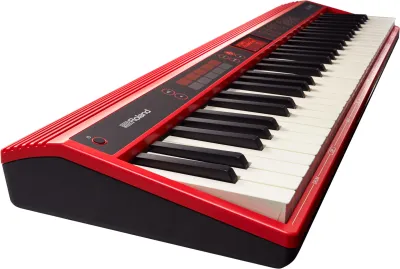
For beginners who are more interested in modern pop, electronic music, songwriting, or music production, a portable arranger keyboard presents a highly versatile alternative. These instruments prioritize lightweight designs, ease of transport, and a vast array of onboard sounds and backing rhythms. Instead of heavy weighted keys, they typically feature 61 or 73 semi-weighted or synth-action keys, making them significantly lighter and easier to move around.
While a 61-key keyboard does not cover the full range of an acoustic piano, it is generally sufficient for learning basic chords, melodies, and pop songs. Most portable models include an octave shift function, allowing you to access higher or lower registers quickly when needed. The primary trade-off is the key feel; the lack of mechanical resistance means these keyboards do not build the same finger strength required for acoustic pianos. However, the abundance of built-in drum patterns, auto-accompaniment styles, and sound effects can make daily practice highly engaging and creative for self-guided learners.
A Practical Buying Checklist for First-Time Buyers
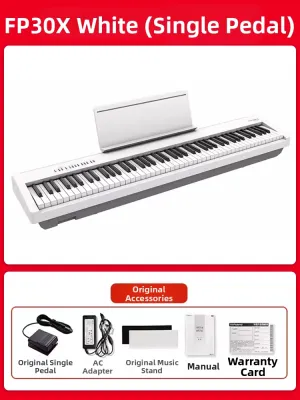
Before finalizing your purchase, it is important to verify exactly what is included in the box to avoid unexpected additional costs. Many entry-level keyboards are sold as bare units, meaning you may need to purchase essential accessories separately. Use the following checklist to ensure you have everything required for a complete and functional setup:
- Power Supply: Verify that a compatible AC power adapter is included, as some highly portable models are designed to run on batteries and may not bundle the adapter by default.
- Music Rest: Ensure a sturdy music rest is included to hold your sheet music, books, or tablet at an ergonomic viewing angle.
- Sustain Pedal: Check if a sustain pedal is bundled. Many entry-level models include a basic plastic foot switch, which tends to slide around on tiled or wooden floors; you may want to budget for a heavier, piano-style damper pedal.
- Keyboard Stand: A stable stand is critical. Avoid placing the keyboard on a standard dining table, as the height is usually incorrect for proper playing posture. Look for sturdy double-X stands, Z-stands, or dedicated wooden stands designed for your specific model.
- Adjustable Bench: A proper keyboard bench allows you to adjust your seating height precisely, which is essential for preventing wrist and back strain during long practice sessions.
- Headphones: For quiet practice, invest in a comfortable pair of over-ear headphones. Check whether your keyboard's headphone output requires a 3.5mm mini-jack or a larger 1/4-inch adapter, and purchase an adapter if necessary.
- Warranty and Support: Always purchase from authorized local dealers in Singapore to ensure your instrument is covered by a valid local warranty. Parallel imports may seem cheaper initially but often lack local repair support or parts availability if a technical issue arises.
Setting Up Your New Keyboard for Effective Practice
An ergonomic physical setup is vital for preventing physical fatigue and developing correct playing habits from day one. Position your keyboard stand so that the keys are at a height where your elbows are bent at approximately a 90-degree angle when your hands rest on the keys. Your shoulders should remain relaxed, and your forearms should be parallel to the floor. Adjust your bench height accordingly, and sit on the front half of the bench with your feet flat on the floor to provide a stable foundation for your posture.
Once the physical setup is complete, integrate your learning tools. If you plan to use educational software, connect your tablet or computer to the keyboard using a high-quality USB cable or via Bluetooth MIDI. Ensure the keyboard is positioned within stable range of your home Wi-Fi network if your learning apps require an active internet connection. Keep cables neatly routed and secured to prevent tripping hazards, especially in high-traffic areas of your home.
Finally, establish a basic maintenance routine to protect your investment. Singapore’s tropical climate can introduce dust and humidity, which can affect the internal electronics and key sensors over time. Always cover your keyboard with a fitted dust cover when it is not in use. Clean the keys regularly using a dry, lint-free microfiber cloth; avoid using harsh chemical cleaners, alcohol, or wet wipes, as these can damage the key finish. Position the instrument away from direct sunlight, open windows, and direct airflow from air conditioning units to prevent temperature fluctuations and moisture buildup.
Frequently Asked Questions (FAQ)
Do I need an 88-key keyboard to start learning?
For absolute beginners, a 61-key keyboard is often sufficient for the first few months of learning basic music theory, single-note melodies, and simple chord shapes. However, as you progress to classical repertoire, pieces that require independent left- and right-hand movement across wider octaves, or formal graded exams, an 88-key keyboard becomes necessary. Starting with an 88-key weighted keyboard from the beginning is highly recommended if your budget and living space allow, as it avoids the need to upgrade and relearn key touch dynamics later on.
Can I use a Roland keyboard with third-party learning apps?
Yes, most modern Roland keyboards equipped with USB-MIDI or Bluetooth MIDI connectivity are compatible with popular third-party piano learning applications. These apps detect the notes you play in real-time to provide instant feedback on pitch and timing. Before purchasing, always check the specific application’s system requirements and supported device list to ensure compatibility with your keyboard model and operating system.

Community discussion
Share your experience or ask a question. Comments are reviewed before publication.