
Choosing the right size piano cloth cover requires identifying your instrument’s specific category, taking precise physical measurements of its width, depth, and height, and selecting a cover style that accommodates its unique design features. A properly fitted cover protects delicate internal actions and keys from dust without trapping moisture or creating an unsightly, loose drape. By taking a few minutes to measure your instrument accurately, you can avoid the hassle of returns and ensure your keyboard or piano remains in pristine playing condition.
Identify Your Instrument Type and Baseline Size
Before pulling out a tape measure, identify the specific category of your instrument. Keyboards and pianos vary in their physical footprints, even when sharing the same number of keys. A standard 88-key digital stage piano has a much slimmer profile than an 88-key digital console piano with an integrated wooden cabinet, while acoustic uprights and grand pianos require entirely different coverage patterns.
Portable digital keyboards typically fall into standard key counts: 61-key, 76-key, and 88-key configurations. While these numbers give you a baseline, the physical chassis around the keys dictates the actual space the instrument occupies. Some models feature thick plastic borders, built-in speakers, or extensive control panels that add several centimeters to the overall width and depth.
Products mentioned in this guide
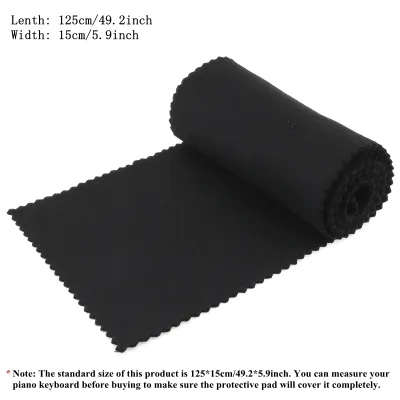

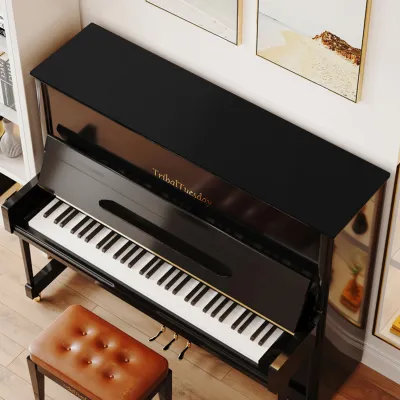
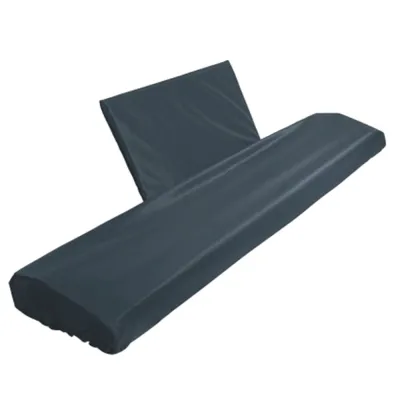

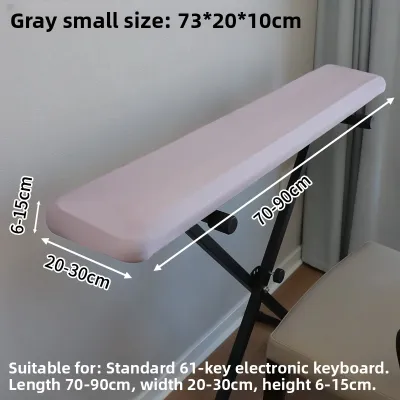
![[ammoon]61 / 88 Key Digital Piano Keyboard Dustproof and Waterproof Cover Electronic Organ Electronic Piano Keyboard Dust Cover](https://img.lazcdn.com/g/p/bf29434508907027828e2b9dca03f3d2.jpg_400x400q80.jpg_.webp)

Prices are valid at publication and may change. Please refer to the product page for the latest price.
You must also account for integrated components that cannot be easily removed during daily storage. Built-in music stands, raised control knobs, extended side panels, or sliding key covers alter the vertical and horizontal profile of the instrument. If your digital piano has a fixed music desk that does not fold flat, a standard flat cover will stretch awkwardly or fail to cover the keys entirely.
To establish a reliable starting point, locate the manufacturer’s specification sheet for your exact model. This document, usually found in the user manual or on the official brand website, provides the official physical dimensions. Keep these manufacturer specifications as a baseline reference, but do not rely on them exclusively, as they may omit external accessories or custom stands you have added.
How to Measure Your Piano or Keyboard Accurately
To ensure your piano cloth cover fits perfectly, take manual measurements of your instrument in its actual playing setup. Relying on generic size labels often leads to a cover that is either too tight to pull over the corners or so loose that it drags on the floor. Grab a flexible tape measure and prepare to record three critical dimensions: width, depth, and height.

Begin by measuring the total width of the instrument from the outermost left edge to the outermost right edge. Make sure to span the entire body, including any protruding side handles, built-in speakers, or decorative wooden end panels. If you are measuring an acoustic upright piano, measure across the widest part of the cabinet, which is typically the top lid or the front edge of the keyboard bed.
Next, measure the depth from the very front edge of the keys to the absolute back of the instrument. Pay close attention to any rear protrusions, such as power cable inputs, hinge mechanisms, or music desk mounts that stick out past the main chassis. For digital keyboards, this measurement must cover the entire horizontal surface from the front lip of the keys to the back edge of the control panel.
Measuring the height requires identifying the correct starting and ending points based on your instrument type. For a digital keyboard on a stand, measure from the bottom base of the keyboard chassis to its highest point, which might be the top of the control panel or a folded music stand. For an acoustic upright piano, measure vertically from the floor to the top lid to determine the drop length needed for a full-cabinet cover.
Always record all your measurements in a single unit, such as centimeters, to prevent calculation errors when browsing product listings. Many online marketplaces and specialty music shops list cover dimensions in both metric and imperial units, so having a clean, single-unit record makes comparison straightforward. Double-check your numbers twice to ensure accuracy before moving to the selection phase.
Select the Right Cover Dimensions and Fit Style
Once you have your exact measurements, translate them into the dimensions of the actual cloth cover. A cover that matches your instrument’s measurements exactly will be too tight to put on easily and may strain the seams. To prevent this, add a standard allowance of two to three centimeters to your width and depth measurements to allow the fabric to glide on and off smoothly.
You must also choose a fit style that aligns with your daily usage habits and aesthetic preferences. A fitted cover with elastic hems offers a snug, modern look that hugs the contours of a digital keyboard, preventing drafts and keeping dust out of the keybed. Alternatively, a loose drape style offers a classic look and allows for quick, effortless removal before practice sessions, making it highly popular for acoustic pianos.
When shopping for a cover, verify whether the manufacturer’s stated dimensions represent the maximum footprint of the cover or just the top surface area. Some covers are designed with tapered sides, meaning the top panel is narrower than the bottom opening. Ensure the cover’s dimensions can accommodate the widest and deepest points of your instrument, rather than just the keybed itself.
The weight and thickness of the cloth material play a significant role in how the cover hangs. Heavy fabrics like velvet, thick cotton, or quilted blends provide excellent dust and light impact protection, but they require a slightly more generous fit to drape naturally without bunching at the corners. Lighter fabrics like linen or thin microfiber drape easily but may slide around if the cover is too large.
Avoid Common Sizing Mistakes When Buying
One of the most frequent mistakes musicians make is purchasing a cover based solely on the key count of their instrument. Assuming all 88-key keyboards are identical in size often results in a cover that is either too small to stretch over a bulky digital console or far too large for a slim stage piano. Always prioritize physical measurements over generic key-count labels.
Another common error is assuming that a cover designed for a traditional acoustic upright piano will fit a digital console piano. Digital consoles are engineered to be much shallower than their acoustic counterparts to save space in modern homes. Using an acoustic upright cover on a digital console will result in excess fabric sagging at the back, which looks untidy and can trap unwanted moisture.
Avoid the temptation to buy an oversized cover just to be safe. While spending S$30 to S$80 on a quality cover is a minor investment, it saves you from costly professional cleaning fees down the road. A cover that is excessively large will pool on the floor, where it easily collects dust, pet hair, and dirt from the ground. This excess fabric can also drape over the pedal lyre, interfering with your footwork during play, or get caught under the legs of your keyboard stand and piano bench.
Finally, ensure that your measurements isolate the instrument itself from its supporting structure. Do not include the height or width of the keyboard stand, wooden legs, or piano bench in your primary calculations unless you are intentionally buying a full-length cover that wraps around the entire stand. Focus strictly on the chassis that houses the keys and internal electronics to get a clean, functional fit.
Verify the Fit and Adjust the Drape
When your new piano cloth cover arrives, place it over your instrument immediately to verify the fit before disposing of the packaging. Check that all keys, control buttons, and digital displays are fully enclosed and protected from airborne dust. Ensure that heavy fabric does not press down too hard on delicate LCD screens or fragile slider knobs, which could cause wear over time.
Take a close look at the lower sections of the instrument to ensure the cover does not obstruct critical functional areas. The fabric should hang clear of the pedal lyre on an acoustic piano and should not block the ventilation ports of a digital keyboard. Digital instruments require adequate airflow to prevent internal components from overheating during extended use, so never block these vents with heavy, unbreathable fabric.
Smooth out any major folds or wrinkles in the cloth once it is in place. Deep creases can trap ambient moisture against the wood or plastic finish, potentially causing uneven wear or discoloration over time. In humid climates like Singapore, protecting your instrument from dust while ensuring proper ventilation is crucial to prevent moisture buildup under the cover. If the fabric is stiff, follow the manufacturer’s care instructions to wash or gently steam the cover to help it drape naturally over the contours of your instrument.
If you find the cover is slightly loose but otherwise acceptable, you can make minor adjustments to tidy up the appearance. Use discreet folding techniques at the back of the instrument, or secure the excess fabric using safe, non-adhesive clips that will not scratch the finish. This keeps the front presentation clean and ensures the cover remains securely in place without slipping.
Frequently Asked Questions (FAQ)
Can I Use the Same Cloth Cover for a Keyboard and an Acoustic Piano?
While it is technically possible to drape a large piece of cloth over both types of instruments, using a single cover designed for one on the other is rarely ideal. Acoustic pianos are significantly deeper and taller than portable digital keyboards, meaning an acoustic cover will completely overwhelm a slim keyboard, pooling on the floor and collecting dirt. Conversely, a keyboard cover will fail to reach the back of an acoustic piano, leaving valuable wood finishes and internal strings exposed to dust. For temporary protection during a move or renovation, a simple flat sheet can work, but dedicated, model-specific covers are highly recommended for proper long-term protection and aesthetic appeal.
Should the Cloth Cover Touch the Floor or the Pedals?
A properly sized piano cloth cover should never touch the floor. The ideal bottom boundary for a full cover is just above the pedals or the top crossbar of your keyboard stand. Allowing the fabric to drag on the floor creates a pathway for dust, pet hair, and floor moisture to travel up the cloth, and it also presents a tripping hazard in your practice space. When measuring the drop length for your cover, aim for a clearance of at least five to ten centimeters from the floor, ensuring the pedals remain completely unobstructed and easy to operate.
How Do I Measure a Grand Piano for a Cloth Cover?
Measuring a grand piano requires accounting for its unique, asymmetrical curved rim. To find the correct size for a full cover, measure the maximum length from the very front of the keyboard bed to the furthest point of the curved tail at the back. Next, measure the width across the keyboard end from left to right. If you only want to protect the keys, a simple keyboard-only dust cover that rests on the keybed is sufficient. However, if you are purchasing a full cover, ensure you measure the height of the lid when closed to prevent the fabric from pulling too tight over the heavy hinges and lid corners.

Community discussion
Share your experience or ask a question. Comments are reviewed before publication.