
To find the correct piano cloth cover size for your keyboard, you must measure the physical dimensions of your instrument—specifically its length, depth, and height—rather than relying solely on the number of keys. While keyboards are commonly categorized by key count (such as 61, 76, or 88 keys), actual physical sizes vary significantly between different brands and models due to varying bezel widths, control panels, and built-in speakers. A precise measurement ensures the cloth drape provides complete coverage to protect sensitive electronics and key contacts from dust, moisture, and ambient debris.
Quick Sizing Guide by Keyboard Key Count
When shopping for a piano cloth cover, products are frequently categorized by standard key counts. While these categories serve as a helpful starting point, they represent broad physical ranges rather than exact fits.
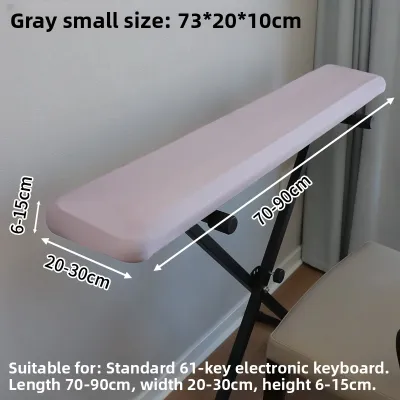
A standard 61-key keyboard typically measures 90 to 100 centimeters in length and 30 to 40 centimeters in depth. Covers for these models are compact and lightweight, making them easy to slip on and off quickly.
Products mentioned in this guide
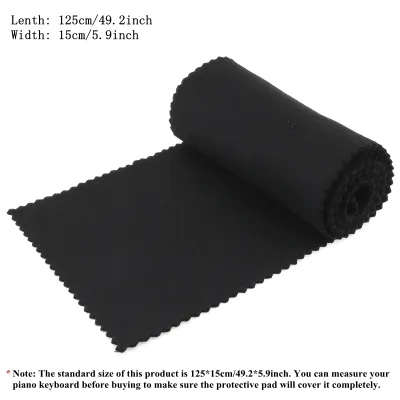

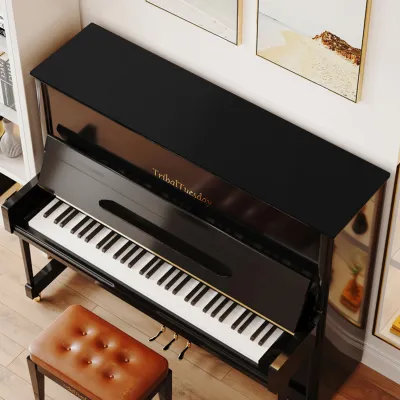
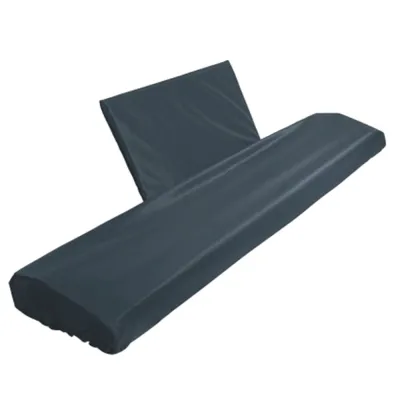

![[ammoon]61 / 88 Key Digital Piano Keyboard Dustproof and Waterproof Cover Electronic Organ Electronic Piano Keyboard Dust Cover](https://img.lazcdn.com/g/p/bf29434508907027828e2b9dca03f3d2.jpg_400x400q80.jpg_.webp)
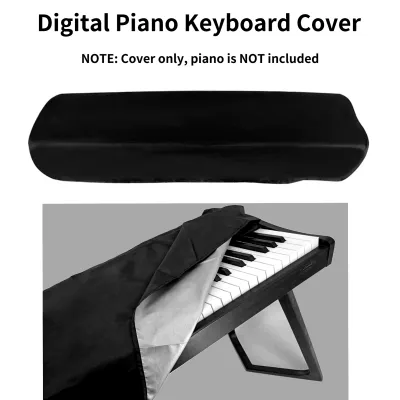
Prices are valid at publication and may change. Please refer to the product page for the latest price.
Intermediate 76-key keyboards usually range from 115 to 125 centimeters in length. Their depth varies widely depending on the layout of the top control panel and synthesiser interfaces.
Full-sized 88-key digital pianos typically measure 130 to 145 centimeters in length. Because they feature weighted hammer-action keys, their chassis is usually deeper and taller, requiring a substantially larger cover.
You will choose between universal-fit and custom-tailored covers. Universal covers use elasticized edges or stretchy fabrics to fit a range of models, though they can pull tightly and leave some areas exposed. Custom-tailored cloth covers, made from heavy woven fabrics like velvet or cotton, drape naturally but require exact physical dimensions since they do not stretch.
To ensure a proper fit, locate your instrument’s model number on the rear panel or underside. You can then find the official physical specifications in your user manual or on the manufacturer’s website.
How to Measure Your Keyboard for a Perfect Fit
To guarantee a beautiful fit without slipping, take three primary physical measurements using a standard measuring tape. Measuring your physical setup accounts for any aftermarket accessories or specific placement constraints.

First, measure the overall length from the outermost left edge to the outermost right edge. Include any plastic molding, wooden end blocks, or protective corner bumpers.
Next, measure the total depth from the front edge of the keys straight back to the rear edge. If your keyboard has a slanted control panel or protruding rear ports, keep the tape measure parallel to the keys to capture the maximum depth.
Finally, measure the maximum height from the bottom of the base to the highest point on the top panel. Pay close attention to protruding elements like volume sliders, pitch bend wheels, or knobs, which can lift a flat cover and reduce side coverage.
If you keep your music rest attached, measure the height from the keyboard base to the top of the rest, and the depth from the front keys to the back of the rest. This setup requires a larger cover or a design with a dedicated slot.
Next, calculate the drape allowance. For a non-stretch cloth cover to hang elegantly, add 5 to 10 centimeters to your measurements on each side. For example, if your keyboard is 130 centimeters long, a cover measuring 140 to 150 centimeters in length allows the fabric to drop gracefully over both ends, keeping dust out.
Adjusting for Fabric Type and Playing Setup
The cover material plays a significant role in how it fits and how much tolerance you have. Different fabrics behave uniquely under tension and drape differently over corners.
Stretchy materials like spandex or polyester blends are highly forgiving, pulling taut over the edges to create a snug barrier. You can often select a size slightly smaller than your keyboard’s dimensions, as the fabric expands. However, excessive stretching can thin the fabric, allowing fine dust to pass through the weave.
Rigid, non-stretch woven cloths like velvet, heavy cotton, or linen offer a classic aesthetic and excellent dust protection. Because these materials do not stretch, the cover must be slightly larger than the keyboard. If a rigid cover is even slightly too small, it will sit awkwardly and leave corners exposed.
Your playing setup also influences the ideal dimensions. If your keyboard sits flat on a desk, a shorter drop length prevents excess fabric from bunching. If mounted on an open stand, such as an X-stand or Z-stand, a longer drape can hang down freely, protecting the underside of the keybed.
Consider the routing of your cables and accessories. Power cords, sustain pedal jacks, and audio cables protruding from the rear or sides require clearance. Ensure your cover has enough depth to fall loosely over these connections without bending cables at sharp angles or pulling tightly against input ports.
Common Sizing Mistakes to Avoid
Many keyboard owners experience frustration when a new cover does not fit. Most issues stem from a few common assumptions and overlooked physical details during measurement.
The most frequent mistake is assuming all keyboards with the same key count share identical dimensions. A slim 88-key MIDI controller is vastly different from an 88-key digital stage piano with built-in speakers and wooden side panels. The stage piano can easily be 10 centimeters deeper and 5 centimeters taller, meaning a generic 88-key cover will not fit both properly.
Another oversight is forgetting to measure the keyboard with the music stand attached. If you leave the music stand upright, a standard flat cover will drape over it like a tent, lifting the fabric and leaving the keys exposed to dust. You must either purchase a cover with a built-in slot or buy an oversized cloth that drapes over the entire assembly.
Additionally, do not ignore the extra thickness of decorative side panels and wooden end blocks. Premium digital pianos often feature wooden cabinetry that adds several centimeters to the overall length and depth. Always measure the absolute outer boundaries of these elements to ensure the cover slides over them smoothly.
Frequently Asked Questions (FAQ)
Can I use a larger cover for a smaller keyboard?
Yes, you can use a larger cloth cover, but there are practical trade-offs. A cover that is too large will drape heavily over the sides, often pooling on the floor or desk. While this still provides excellent dust protection, it increases the risk of accidental snagging.
If you use an oversized cover, you can fold or tuck the excess material neatly behind or underneath the keyboard. Ensure the folded fabric does not block any active ventilation ports or cooling grilles on the back or bottom of the instrument.
Do I need a different cover size if my keyboard is on a stand?
If your keyboard is mounted on a stand, you do not necessarily need a different cover size, but you may want to adjust the drop length. A standard flat cover sits on top of the keys and drapes slightly over the edges, which leaves the underside exposed to rising dust and drafts when on an open stand.
For keyboards on stands, choosing a cover with a longer drop length or a fitted design that wraps around the bottom of the chassis provides better protection. Ensure the fabric drapes naturally around the stand’s support arms without being bunched or stretched tight.

Community discussion
Share your experience or ask a question. Comments are reviewed before publication.