
Selecting the ideal starting point in a structured language curriculum requires an honest appraisal of your current functional abilities rather than a guess based on how long you have been exposed to the language. For learners eyeing the Talk to Me in Korean curriculum, choosing the correct book level ensures you do not waste resources on concepts you have already mastered or become discouraged by material that is far too advanced. By systematically evaluating your reading speed, grammatical grasp, and listening comprehension, you can align your skills with the publisher’s framework and select the exact volume that will support your learning journey.
The most reliable method to determine your starting level is to combine a practical self-assessment of your real-world language use with the publisher’s official diagnostic tools. Because language acquisition is rarely perfectly linear, you might find that while you recognize many vocabulary words, your grasp of sentence structure requires you to start at a lower level than expected. Taking the time to verify your proficiency before purchasing ensures a smoother transition into active study and helps you build a highly functional vocabulary.
Evaluate Your Current Korean Skills
Before browsing specific book covers or curriculum lists, you must establish a clear baseline of your actual language skills. The first and most critical milestone is your relationship with Hangul, the Korean alphabet. If you still rely on romanization—the representation of Korean sounds using the Latin alphabet—to read or pronounce words, you should begin with foundational materials designed for absolute beginners. True readiness for higher-level textbooks requires the ability to read Hangul characters directly and fluidly, as advanced volumes phase out romanized guides entirely to encourage natural reading habits.
Products mentioned in this guide
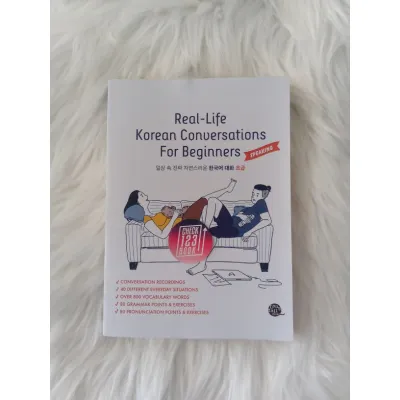
Prices are valid at publication and may change. Please refer to the product page for the latest price.
Next, assess your ability to handle basic, everyday interactions without assistance. Ask yourself if you can comfortably introduce yourself, exchange standard greetings, ask for directions, and describe your immediate daily routines. If you struggle to conjugate basic verbs in the present tense or find yourself hesitating over simple subject and object particles, starting with early beginner textbooks will help solidify these essential building blocks. Skipping these fundamentals often leads to persistent confusion when complex sentence structures are introduced later.
For those who already possess some conversational experience, the evaluation must shift toward intermediate grammar, honorifics, and listening comprehension. Consider whether you can easily distinguish between different levels of politeness, such as formal and informal language, and whether you can connect clauses using various conjunctions. If you can follow the gist of a slow, clear conversation between native speakers but struggle to explain complex opinions or understand nuanced grammatical endings, you are likely transitioning into the intermediate phase. Documenting these specific strengths and weaknesses will give you a clear set of criteria when comparing book contents.
Map Your Skills to the Talk to Me in Korean Series
Once you have documented your current abilities, you can map them directly to the curriculum structure of the Talk to Me in Korean series. The publisher organizes its core curriculum into distinct levels, generally grouped into beginner, intermediate, and advanced tiers. The beginner tier focuses heavily on essential sentence patterns, basic particles, and everyday vocabulary, making it ideal for those who are still building confidence in simple speech. The intermediate tier introduces more complex sentence connectors, idiomatic expressions, and nuanced grammatical structures, while the advanced tier challenges learners with specialized vocabulary, formal writing styles, and rapid conversational patterns.

To find your exact match within these tiers, obtain the table of contents or the curriculum guide for the volumes you are considering. Scan the list of grammar points and vocabulary topics covered in each chapter. As you review these lists, note which concepts you can explain clearly to someone else, which ones you recognize but cannot use actively, and which ones are entirely new. A good rule of thumb is to start with a book where approximately twenty to thirty percent of the material feels familiar; this provides a comfortable review buffer while ensuring you are consistently challenged by new concepts.
To validate your self-assessment, utilize the official placement tools provided by the publisher. The official website features a diagnostic placement test designed to evaluate your grammar and comprehension, offering a direct recommendation for a starting volume. Additionally, downloading sample chapters or previewing pages online allows you to experience the layout, explanation style, and pacing of a specific level firsthand. This hands-on verification prevents the common mistake of purchasing a book based solely on its level number, which may not correspond directly to general academic language frameworks.
Verify Formats and Supplementary Materials Before Buying
Selecting the right level is only half the battle; you must also ensure the book’s format and accompanying materials align with your study habits and technical setup. Many language textbooks rely heavily on audio components to teach correct pronunciation and listening comprehension. Before finalizing your purchase, verify how the audio tracks are delivered—whether through downloadable files, a dedicated mobile application, or physical media. Ensure that you have a compatible device and that the publisher’s digital platforms or apps are fully accessible in your region, such as Singapore, without licensing or regional restrictions.
Furthermore, examine the language of instruction used within the specific edition you plan to buy. Early levels typically feature detailed explanations in English to help English-speaking learners grasp difficult grammatical concepts. However, as the levels progress, the amount of English instruction decreases, eventually transitioning to explanations written entirely in Korean. Make sure you are comfortable with the ratio of English to Korean in your chosen volume so you do not find yourself overwhelmed by instructions you cannot read.
Finally, consider the role of supplementary materials in your study plan. The core textbooks focus primarily on explaining grammar rules and providing contextual examples, but they may offer limited practice exercises. If you learn best through repetition, writing practice, and active recall, you should check if the level you are purchasing has a matching workbook or supplementary vocabulary guide. Verifying these details beforehand helps you budget accurately and ensures you have all the necessary tools on hand when you begin your studies.
Frequently Asked Questions (FAQ)
Can I skip levels if I already know some Korean?
Yes, you can skip levels if you already have a foundation in the language, but doing so requires caution. Because the curriculum builds sequentially, skipping a volume might cause you to miss specific grammatical nuances or vocabulary sets that are assumed to be known in later books. To verify if you are truly ready to skip a level, review the table of contents of the book you wish to bypass and ensure you can comfortably construct sentences using every single grammar point listed. If you find even a few unfamiliar structures, it is often safer to complete that volume or use it as a quick reference before moving forward.
Do I need to buy the workbook along with the main textbook?
While the main textbook is sufficient for understanding the grammar rules, purchasing the companion workbook is highly recommended for most self-study learners. The main textbooks focus on explanation and demonstration, which means they contain relatively few exercises to test your knowledge. The workbooks provide structured opportunities to practice writing, translation, and comprehension, helping to lock the new patterns into your long-term memory. If you prefer a highly interactive learning style or want to ensure you can actually produce the language rather than just recognize it, the workbook is a valuable addition to your study toolkit.

Community discussion
Share your experience or ask a question. Comments are reviewed before publication.