
Selecting the correct ukulele string size depends entirely on the scale length of your instrument, which is the distance between the nut and the saddle. Because ukuleles come in four primary sizes—soprano, concert, tenor, and baritone—each requires strings of a specific length and thickness to achieve the correct tension at standard pitch. Installing strings designed for a different size can lead to poor playability, tuning instability, or even structural damage to your instrument. By measuring your scale length and matching it to the manufacturer’s specifications on the packaging, you can confidently purchase the right set for your ukulele.
Identify Your Ukulele Size and Scale Length
To find the perfect strings, you must first determine the exact size of your ukulele. While many instruments have labels inside the soundhole indicating their size, these labels can sometimes be missing, faded, or ambiguous. The most reliable way to identify your instrument is by measuring its scale length, which is the vibrating portion of the string. Use a physical measuring tape or a long ruler to measure the distance from the front edge of the nut (where the strings rest near the tuning pegs) to the center of the saddle (the strip on the bridge where the strings rest on the body).
Standard ukuleles fall into four size classifications based on scale length. A soprano ukulele, the traditional size, features a scale length of approximately 13 inches (33 cm). A concert ukulele has a scale length of around 15 inches (38 cm). The tenor ukulele, favored for its deeper tone, has a scale length of roughly 17 inches (43 cm). Finally, the baritone ukulele, the largest standard size, has a scale length of approximately 19 inches (48 cm).
Products mentioned in this guide
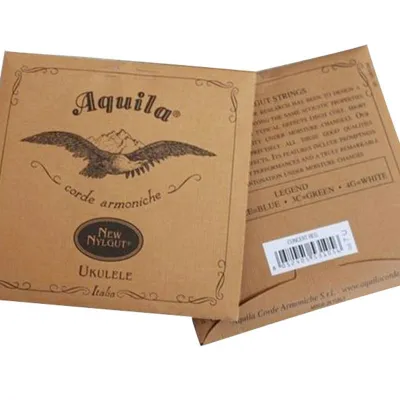

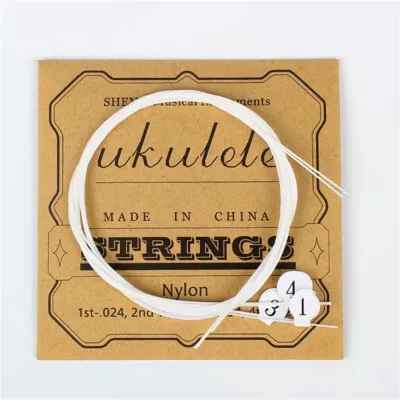
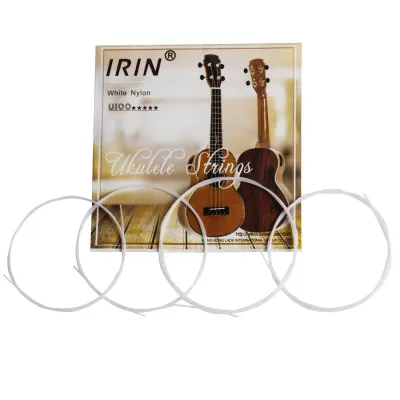
Prices are valid at publication and may change. Please refer to the product page for the latest price.
Specialty sizes require extra care. A sopranino ukulele is smaller than a soprano, with an 11-inch scale length requiring specific short-scale strings. Bass ukuleles feature thick polyurethane strings and a scale length of 20 to 21 inches. Additionally, hybrid “longneck” models combine a smaller body with a longer neck. A longneck soprano, for example, uses a soprano body but a concert-scale neck. In all hybrid cases, select strings based on the scale length of the neck rather than the body size.
Match String Sets to Your Ukulele Type
Once you verify your scale length, match it to a corresponding string set. Manufacturers design each set with specific gauges to exert the correct tension when tuned to pitch over a specific distance. Mixing string sizes across different ukulele types causes playability and structural issues. Installing tenor strings on a soprano ukulele results in loose, floppy strings that cannot hold a clear tone. Conversely, putting soprano strings on a tenor ukulele requires stretching them beyond their limit, which can warp the neck, lift the bridge, or snap the strings.

Tuning standards also dictate your choice. Soprano, concert, and tenor ukuleles use standard G-C-E-A tuning. You must choose between re-entrant tuning (high G) and linear tuning (low G). Low-G sets include a thicker, often metal-wound fourth string that requires proper nut slot clearance. Baritone ukuleles are tuned to D-G-B-E, matching the top four strings of a guitar. Because of this lower pitch and longer scale, baritone strings are much thicker and cannot be tuned to G-C-E-A without risking damage to the instrument.
When shopping online or in a local music shop, always inspect the packaging labels carefully. Reputable manufacturers print the intended instrument size prominently on the front of the package. On the back, they typically list the recommended scale length range in inches or centimeters, along with the exact gauge of each individual string. If you are purchasing strings for a hybrid or non-standard instrument, compare your measured scale length directly against these printed ranges rather than relying solely on the front-cover marketing terms.
Understand String Materials and Tension Preferences
After narrowing down the size, select a string material that matches your tonal and physical preferences. Traditional nylon strings offer a warm, mellow sound and are soft on the fingertips, making them comfortable for beginners. However, nylon is highly susceptible to temperature and humidity. In warm, humid tropical environments like Singapore, nylon strings stretch continuously, requiring frequent retuning before they finally settle.
Fluorocarbon strings are a popular modern alternative. Made from a dense polymer, they are thinner than nylon strings of the same tension, resulting in a brighter, punchier tone. Because the material is highly stable and impervious to moisture, fluorocarbon strings hold their tune exceptionally well in humid climates and resist sweat degradation. Another option is synthetic gut, often marketed as Nylgut, which replicates the warm, resonant qualities of historical animal gut strings while offering modern durability and tuning stability.
Tension preferences also affect playability and sound. High-tension strings require more finger pressure but drive the soundboard harder, producing increased volume and sustain. This suits advanced players or those who prefer dynamic fingerpicking. Standard or low-tension strings are easier to press down, reducing finger fatigue. Consider your playing comfort alongside your tonal goals; a quiet, dark-sounding wooden ukulele may benefit from bright, high-tension fluorocarbon strings, while a bright laminate instrument sounds more balanced with mellow, standard-tension nylon.
Step-by-Step Guide to Ordering and Verifying Your Strings
To ensure a seamless replacement process, follow this structured checklist before purchasing and installing your strings.
First, complete your pre-purchase verification. Measure your ukulele’s scale length to confirm its size. Decide on your preferred tuning layout, specifically choosing between a high-G or a low-G configuration. Finally, select your preferred material and tension based on your local climate and playing style.
Second, inspect the packaging immediately upon delivery. Before opening any seals, verify that the printed size on the label matches your instrument. Check that the tuning layout matches your selection, ensuring the package explicitly states “Low G” if you intend to use linear tuning. Inspect the physical packaging for signs of puncture, water damage, or crushing, as moisture can compromise wound strings.
Third, know when to halt the installation. If you notice any discrepancy between the ordered specifications and the delivered package, do not open the inner plastic sleeves. Once the inner packaging is broken, many online marketplaces will not accept returns. If you observe visible kinks, discoloration, or fraying on the strings, contact the seller immediately for a replacement. Taking these precautions ensures you only install pristine, compatible strings.
Frequently Asked Questions (FAQ)
Can I use tenor strings on a concert ukulele?
Using tenor strings on a concert ukulele is not recommended because of the differences in scale length and string thickness. Tenor strings are engineered to reach standard pitch over a 17-inch scale. When installed on a shorter 15-inch concert scale, they will lack the necessary tension, resulting in a loose, floppy feel and a muddy tone prone to buzzing against the frets. Additionally, the excess length of tenor strings can crowd the tuning pegs, leading to overlapping winds that slip easily and cause severe tuning instability.
Do longneck ukuleles require special strings?
Yes, longneck ukuleles require strings that match their extended scale length rather than their body size. For example, a longneck soprano ukulele features a soprano-sized body but a concert-scale neck. If you attempt to use standard soprano strings, they will likely be too short to reach the tuning pegs, or they will be stretched to an unsafely high tension to reach pitch, risking damage to the neck. Always purchase string sets labeled for the scale length of the neck, which in this case would be concert-size strings.
How often should I replace my ukulele strings?
You should replace your ukulele strings when you observe physical wear or a noticeable decline in sound quality. Physical signs of aging include flat spots or notches on the underside of the strings where they press against the frets, discoloration, a sticky or rough texture, or fraying on wound strings. Auditory cues include a dull, lifeless tone, difficulty staying in tune, or poor intonation where notes sound out of tune as you play higher up the fretboard. Active players typically benefit from changing their strings every three to six months, while casual players may only need a fresh set once a year.

Community discussion
Share your experience or ask a question. Comments are reviewed before publication.