
To choose the right size dust cover for your piano or keyboard, you must first identify your instrument’s specific design, measure its physical dimensions accurately, and match those figures to a cover that accommodates any protruding components. A well-fitting cover acts as a primary shield against airborne particles, moisture fluctuations, and accidental spills, preserving both the delicate internal action and the external finish. Relying solely on generic labels like “88-key cover” often leads to a poor fit, as cabinet designs vary significantly between uprights, grands, and digital stage pianos. By taking precise measurements of width, depth, and height, you can select a cover that offers complete protection without putting undue stress on the instrument’s structure.
Identify Your Instrument Type and Coverage Needs
Every piano type has a distinct physical profile that dictates the style of cover it requires. Acoustic grand pianos, with their curved rims and horizontal soundboards, need specialized covers that drape over the entire top lid, rim, and underside if necessary. Upright acoustic pianos present a vertical profile, requiring a box-like cover that falls straight down from the top lid to either the keyboard level or all the way to the floor. Digital keyboards and stage pianos, which lack the bulky wooden cabinetry of acoustic instruments, typically use lightweight, flexible covers designed to wrap tightly around the keybed and control panel.
Environmental factors in your home or studio play a major role in determining the ideal material for your cover. If your instrument resides in a high-traffic area prone to dust, pet hair, or direct sunlight, a heavy-duty, UV-resistant fabric like padded quilted cotton or heavy polyester is highly beneficial. For humid environments, such as those found in tropical climates like Singapore, choosing a breathable fabric is essential to prevent moisture from becoming trapped underneath the cover, which can lead to mold growth on wooden components or rusted strings. Conversely, if the main threat is accidental liquid spills, a water-resistant nylon or vinyl exterior with a soft inner lining will provide the necessary barrier.
Products mentioned in this guide
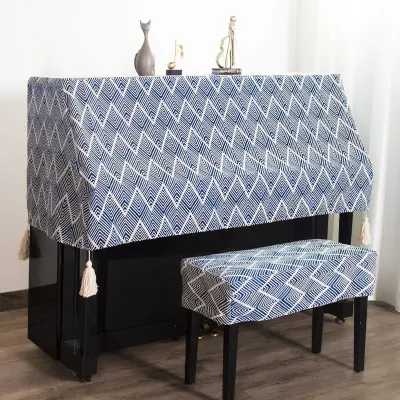
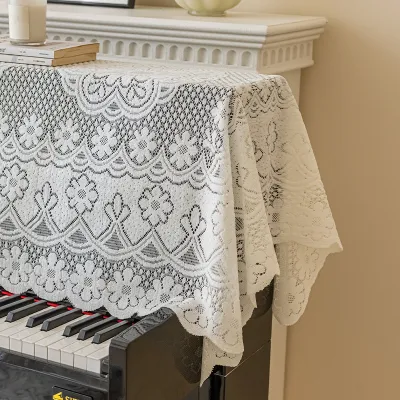
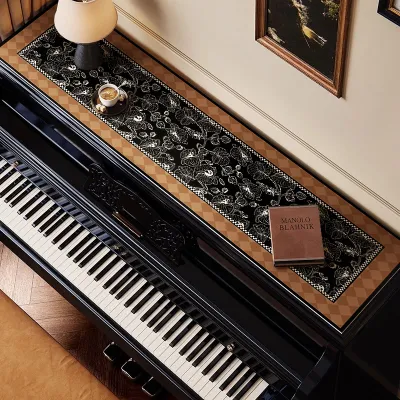
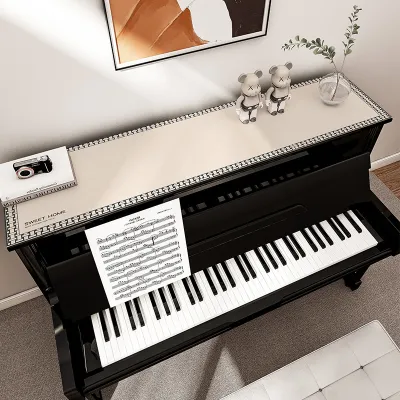

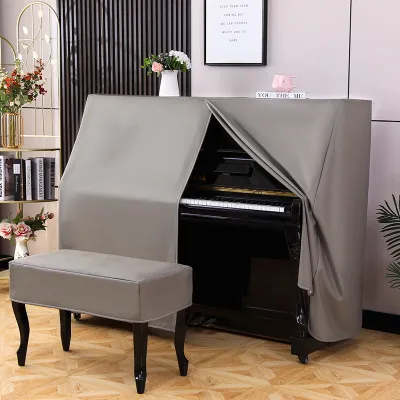
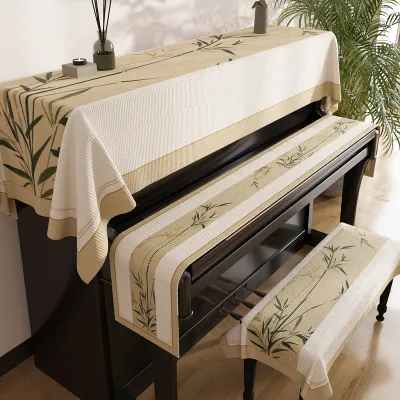

Prices are valid at publication and may change. Please refer to the product page for the latest price.
Your daily playing habits should also influence the style of cover you select. If you practice multiple times a day, a heavy, full-length cover that requires significant effort to remove and fold might discourage you from playing. In this scenario, a lightweight stretch-fit cover or a top-only cover that exposes the keys while protecting the internal cabinet is a practical choice. For instruments placed in long-term storage or located in secondary properties, a full-enclosure cover with secure fastenings offers the comprehensive protection needed during extended periods of non-use.
How to Measure Your Piano or Keyboard for a Dust Cover
Taking accurate physical measurements is the most critical step in securing a proper fit. Before you begin, gather a flexible sewing measuring tape, a notepad, and a pen to record your findings. Avoid using metal construction tape measures, as their stiff edges can easily scratch polished polyester or delicate wood finishes. If possible, have a second person assist you to hold the tape measure steady over longer spans, especially when measuring the wide lid of a grand piano or the full width of an upright.

To measure an upright piano, start with the width by running the tape measure horizontally across the widest part of the top lid, from the far-left edge to the far-right edge. Next, measure the depth by placing the tape at the back of the top lid and pulling it forward to the front edge of the lid; you must also measure the lower depth from the back of the piano to the front edge of the keyboard bed. For the height, measure vertically from the floor to the very top of the piano lid. If you prefer a half-cover that only shields the top and keyboard, measure from the top lid down to just below the keybed.
Grand pianos require a different measurement approach due to their unique contour. Measure the overall length from the front of the keyboard (the keys themselves) to the very back curve of the tail. Next, measure the width across the keyboard from left to right at its widest point. For digital keyboards, measure the width, depth, and height of the keyboard chassis itself. When measuring any instrument, always account for protruding parts such as integrated music desks, control knobs, or attached cables. If your music stand cannot be folded flat or removed, measure the height and depth with the stand in its upright position to ensure the cover does not stretch or tear when draped over it.
Matching Measurements to Dust Cover Sizes and Styles
Once you have recorded your instrument’s exact dimensions, compare them directly against the manufacturer’s sizing charts. Do not assume that a cover labeled for an “88-key keyboard” will fit your specific digital piano, as chassis depths can range from 25 centimeters to over 45 centimeters depending on the action and control interface. Look for detailed dimension listings that show the maximum width, depth, and height the cover can accommodate. If your measurements fall between two standard sizes, it is generally safer to select the slightly larger size to avoid putting tension on the seams or compressing the keys.
Different cover styles offer varying levels of adjustability and protection. Stretch-fit covers, often made of spandex or nylon blends, are highly versatile for digital keyboards because their elasticized edges can pull snug under the chassis, creating a dust-tight seal. Zippered covers provide excellent security for upright pianos, allowing you to open the front flap to play without removing the entire cover from the top cabinet. Tie-down or drawstring options are ideal for environments with drafts or active pets, as they prevent the cover from slipping or being pulled off accidentally.
When evaluating product specifications, pay close attention to the fabric’s weight and inner lining. A high-quality cover should feature a soft, non-abrasive inner lining, such as brushed flannel or microfiber, to prevent micro-scratches on high-gloss finishes. Ensure the product description specifies the exact dimensional tolerances, allowing for a few centimeters of clearance so the cover can be slipped on and off smoothly without snagging on the corners of the instrument.
Checking the Fit and Adjusting for Proper Protection
When your new dust cover arrives, carefully drape it over your instrument to verify the fit before discarding the packaging. A properly fitting cover should slide on easily without requiring excessive force or stretching. It should drape naturally over the corners, with the seams aligning closely with the edges of the piano cabinet. The keys, control panels, and delicate wooden surfaces should be completely covered, and the lower edge of the cover should sit neatly without dragging excessively on the floor or bunching up, which can accumulate dust and dirt.
An ill-fitting cover is easy to spot and can cause long-term issues if left unaddressed. If you notice that the seams are tightly stretched, the cover may put constant downward pressure on the keys or the music desk, potentially damaging the internal action or bending delicate plastic parts. Conversely, a cover that is far too loose will look untidy and allow dust to drift underneath the gaps. Furthermore, if a non-breathable cover fits too tightly around a wooden acoustic piano, it can trap ambient moisture, leading to tuning instability or mold growth on the soundboard.
If the fit is slightly loose, you can often make minor adjustments to secure the cover. Many models feature built-in drawstrings, elastic bands, or hook-and-loop straps that allow you to cinch the excess fabric around the base of the keyboard or behind the upright cabinet. Ensure that the cover does not interfere with the pedal lyre on a grand or upright piano, as fabric caught in the pedal mechanism can affect your playing and wear down the material. If the cover is clearly too small or cannot be adjusted to sit flat, return it immediately for a different size rather than risking damage to your instrument.
Frequently Asked Questions (FAQ)
Can I use a generic keyboard cover for a digital piano with a fixed stand?
Generic stretch covers are primarily designed for portable stage keyboards that sit on open X-stands or table stands. If your digital piano is mounted on a fixed wooden console stand, a generic cover may not fit properly because the wooden side panels and backboard block the elastic edges from wrapping underneath the chassis. For console-style digital pianos, it is best to choose a cover specifically tailored for digital uprights, or use a top-only drape that covers the keys and control panel while hanging neatly over the sides of the stand. Always check the depth and height specifications of the console stand to ensure the cover can fall naturally without being obstructed by the wooden support structure.
Should I leave the dust cover on while playing?
You should always remove the dust cover completely before playing your piano or keyboard. Attempting to play with a cover partially draped over the instrument can restrict your hand movements, block your view of the keys, and interfere with your posture. Additionally, loose fabric can easily catch on moving keys or get wedged inside the keybed, which can disrupt the action and potentially cause mechanical issues. Removing the cover entirely also allows you to inspect the instrument for any dust buildup or environmental wear, ensuring a safe, comfortable, and unobstructed practice session.

Community discussion
Share your experience or ask a question. Comments are reviewed before publication.