
Finding the right piano cover starts with three precise measurements: the total length, the total depth, and the total height of your instrument’s outer casing. Many musicians make the mistake of choosing a cover based solely on the number of keys, only to find the fabric too tight to stretch over the side panels or too loose to stay secure. By taking a few minutes to measure the entire physical footprint of your keyboard, you can protect your sensitive electronics, keys, and internal contacts from dust, spills, and sunlight.
To ensure a proper fit, you must look beyond the keybed itself and account for the entire chassis, including any protruding knobs, buttons, and rear cable connections. Whether you own a compact synthesizer, a portable stage piano, or a heavy console digital piano, the right cover acts as a shield against environmental hazards. This guide walks you through the exact steps to measure your instrument accurately, helping you make an informed purchase that keeps your gear in pristine condition.
Tools You Need Before Measuring
Before you begin taking measurements, gathering the right tools will ensure your numbers are accurate and easy to record. A flexible sewing tape measure is the ideal tool for this task because it easily contours around curved edges and fits into tight spaces without scratching the finish of your instrument. If you only have a standard metal construction tape measure, use extra caution to avoid scraping the plastic or wooden casing of your keyboard. Alternatively, a long rigid ruler can work for smaller instruments, though it may require more effort to align correctly.
Products mentioned in this guide
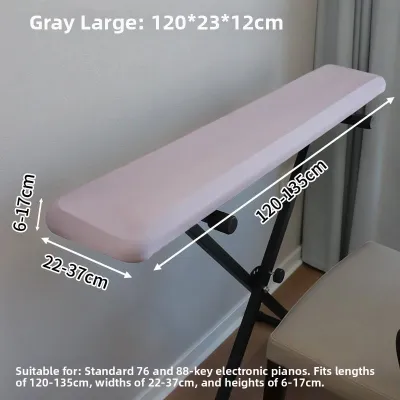
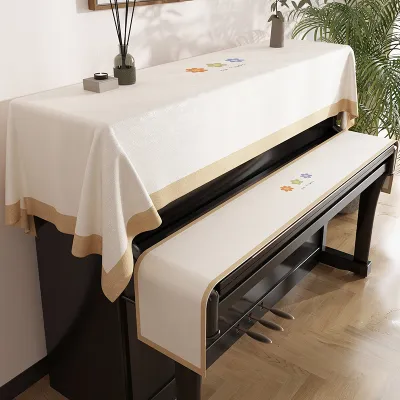
Prices are valid at publication and may change. Please refer to the product page for the latest price.
You will also need a reliable way to record your findings immediately. Keep a notepad and pen nearby, or open a digital note-taking application on your smartphone to log each dimension as you measure. Writing down the numbers prevents memory errors that could lead to ordering the wrong size. For larger instruments, such as full-sized 88-key digital pianos, having a second person hold one end of the tape measure can prevent slipping and ensure your horizontal lines remain completely level.
Step-by-Step Guide to Measuring Keyboard Dimensions
Capturing the exact dimensions of your keyboard requires a systematic approach that covers all three spatial planes. To get started, place your keyboard on a flat, stable surface or its dedicated stand, ensuring it is positioned exactly as you would store it when not in use. This setup allows you to access all sides of the instrument without having to tilt or hold it up, which can distort your measurements.

Measuring Length (Left to Right)
The length of your keyboard is the most critical dimension for determining the overall size category of your cover. To measure this accurately, stretch your tape measure from the absolute outer left edge of the casing to the absolute outer right edge. It is vital to measure the entire chassis rather than just the span of the keys themselves, as the plastic or wooden housing on either side can add several centimeters to the total length.
Be sure to include any built-in speakers, side panels, end blocks, or decorative trim in this measurement. If your keyboard features pitch bend wheels, modulation wheels, or control panels positioned to the far left of the keybed, ensure the tape measure extends completely past these components. Once you have captured this horizontal span, record the measurement in both centimeters and inches, as different manufacturers and online marketplaces use different units of measurement on their sizing charts.
Measuring Depth (Front to Back)
Measuring the depth ensures that your chosen cover will slide easily over the front edge of the keys and reach all the way to the back panel. Start by placing the end of your tape measure at the furthest protruding point on the front of the keyboard, which is typically the lip of the keys or the front edge of the lower casing. Extend the tape straight back to the rear edge of the instrument’s main body.
As you measure the depth, pay close attention to any control knobs, sliders, or buttons that stick up near the front or top face, as well as any cable connections plugging into the back. If your power supply, sustain pedal, or MIDI cables plug directly into the rear panel and protrude outward, you must account for this extra space so the cover does not pull too tightly against the plugs. Additionally, note whether you plan to keep your music stand attached or detached during storage, as an attached stand will significantly alter the depth profile.
Measuring Height (Top to Bottom)
The height measurement determines the vertical drop of the cover, which is essential for keeping dust from creeping under the edges and settling into the key action. To measure the height, start from the highest point on the control panel or the top of the casing and measure straight down to the bottom edge of the keyboard chassis. If your keyboard has a flat top, this measurement is straightforward, but instruments with angled control panels require measuring from the tallest peak.
You must also decide whether you want a half-cover that only shields the main body of the keyboard or a full-length drape that covers the stand, legs, and pedal unit. For a standard body-only cover, measuring the thickness of the keyboard chassis itself is sufficient. If you are purchasing a heavy, non-stretchy material like velvet or padded canvas, add a small clearance allowance of about one to two centimeters to the height to ensure the cover can drape naturally without bunching up at the corners.
Adjusting Measurements for Different Keyboard Types
Different styles of keyboards have distinct physical profiles, meaning your measuring strategy should adapt to the specific type of instrument you own. Portable keyboards, which typically feature 61 or 76 keys, are lightweight and often stored on temporary stands or placed in gig bags. For these models, focus your measurements strictly on the main body, as the covers designed for them are usually simple elasticized dust caps that wrap snugly around the edges of the chassis.
Console digital pianos, which feature 88 weighted keys and are housed in fixed wooden cabinets, require a different approach. These instruments are permanent furniture pieces in the home, meaning you may want a more aesthetic, structured cover. When measuring a console model, you must decide if you want a top-only runner that covers the keys and control panel, or a full-cabinet cover that drapes over the side supports and down toward the pedal board. If you choose a full cover, measure the entire wooden cabinet from the floor to the top surface, including the width of the side legs.
Synthesizers and professional stage pianos often feature complex control interfaces packed with protruding knobs, sliders, joysticks, and display screens. These components are highly sensitive to dust and physical impact, making a proper cover essential. When measuring these instruments, pay extra attention to the highest control knob or screen bezel, and ensure your depth measurement includes any front-facing headphone jacks or rear-facing expansion ports that might be in constant use.
How to Use Your Measurements to Choose a Cover
Once you have recorded your precise length, depth, and height, you can begin comparing these numbers against the sizing charts provided by cover manufacturers. Avoid buying a cover based solely on generic labels like “88-key piano cover” or “61-key keyboard cover.” Keyboards vary wildly in chassis design, and an 88-key stage piano can have a completely different footprint than an 88-key console digital piano. Always look for the specific internal dimensions listed in the product description to ensure a proper fit.
The material of the cover plays a significant role in how precise your measurements need to be. Stretchy materials, such as spandex, lycra, or high-density polyester blends, are highly forgiving and can easily expand to accommodate minor measurement discrepancies. If you choose a stretchy cover, you can select a size that is slightly smaller than your actual measurements, as the elastic tension will pull the fabric taut across the instrument for a clean, custom-fit look.
Conversely, structured or padded covers made from heavy canvas, velvet, or waterproof nylon offer superior protection but require exact sizing. These materials do not stretch, so choosing a cover that is even a fraction of a centimeter too small will prevent it from fitting over the corners of your keyboard. When purchasing a structured cover, always select a size where the internal dimensions are slightly larger than your keyboard’s measurements. Look for helpful design features like adjustable drawstrings, elastic hems, or Velcro straps, which allow you to tighten a slightly loose cover and secure it against drafts or curious pets.
Common Measuring Mistakes to Avoid
One of the most frequent mistakes musicians make when buying a piano cover is measuring only the keybed—the black and white keys—rather than the entire outer casing. While the keys are the most vulnerable part of the instrument, a cover must wrap around the outer frame to stay in place. Measuring only the keys will result in a cover that is far too small to fit over the plastic or wooden housing of the keyboard.
Another common oversight is forgetting to account for attached accessories and cable connections. If you leave your music stand, a microphone mount, or a tablet holder attached to the keyboard during storage, the cover must drape over these items. Failing to measure these protrusions will cause the cover to sit too high, leaving the front keys and side panels completely exposed to dust. Similarly, rear-facing cables that remain plugged in can add several centimeters to the depth of the instrument, so always measure with these cables connected to ensure the cover does not strain the ports.
Finally, never assume that all keyboards with the same number of keys share the same physical dimensions. A slim, portable 88-key digital piano designed for travel has a much smaller footprint than a professional 88-key workstation with built-in speakers and a wide control panel. Always take physical measurements of your specific model rather than relying on general assumptions or online forum recommendations, as even minor design updates between model generations can alter the chassis size.
Frequently Asked Questions (FAQ)
Should I measure my keyboard with the music stand attached?
Standard keyboard covers are designed under the assumption that the music stand is either detached or folded completely flat against the body of the instrument. If you prefer to leave your music stand upright and attached during storage, you must measure the total height from the bottom of the keyboard to the top of the stand. In this case, look for specialized covers that feature a dedicated music stand slit or an extra-wide top gusset designed to accommodate the stand without lifting the rest of the cover off the keys.
What if my keyboard dimensions fall between two cover sizes?
If your keyboard’s measurements fall between two available cover sizes, you should always size up rather than sizing down. A cover that is slightly too large will still drape over the instrument and provide full protection, whereas a cover that is too small will be completely unusable or will put excessive strain on the seams. You can easily secure a slightly loose cover by choosing a model with an adjustable drawstring, elastic edges, or Velcro straps to pull the excess fabric tight around the base.
Do universal piano covers fit all 88-key keyboards?
Universal piano covers do not fit all 88-key keyboards because of the massive variation in chassis designs across different brands and styles. While a universal cover made of stretchy spandex will easily fit most portable, slim-line 88-key digital pianos, it will not fit a console digital piano with a fixed wooden cabinet, integrated legs, and a built-in pedal board. Always verify the specific length, depth, and height limits of any universal cover against your actual physical measurements before making a purchase.

Community discussion
Share your experience or ask a question. Comments are reviewed before publication.