
A properly fitted full piano cover protects your instrument from dust, humidity, and accidental spills while maintaining a clean aesthetic in your space. Unlike half-covers that only shield the top panel, full covers drape down the sides and back, requiring precise dimensions to avoid being too tight or pooling excessively on the floor. Before browsing for a replacement, taking a few minutes to measure your instrument accurately will ensure you select a cover that offers reliable protection without interfering with pedals or ventilation.
In tropical climates like Singapore, where humidity levels fluctuate and dust accumulates quickly in open-plan living spaces, a well-fitting cover acts as a vital barrier. It helps stabilize the immediate microclimate around the soundboard and keys, reducing the frequency of tuning and maintenance visits. However, a cover that is too small will strain at the seams and leave vulnerable areas exposed, while an oversized cover looks untidy and can collect dirt along the floor. Finding the proper balance requires understanding your specific instrument type and taking systematic measurements.
Identify Your Instrument Type and Shape
Before pulling out a tape measure, you must categorize your instrument because cover designs vary significantly based on the structural shape of the piano. Acoustic upright pianos, grand pianos, digital console pianos, and portable keyboards each have distinct silhouettes and support structures. A cover designed for an acoustic upright will not fit a digital console piano properly, even if they share the same number of keys, due to differences in cabinet depth and leg design.
Products mentioned in this guide
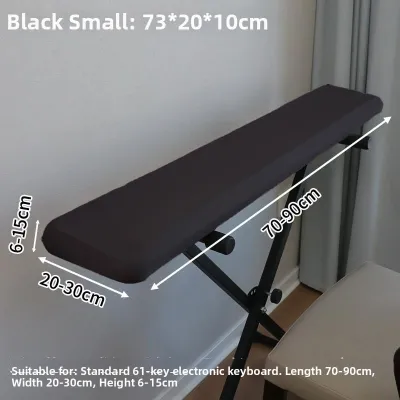
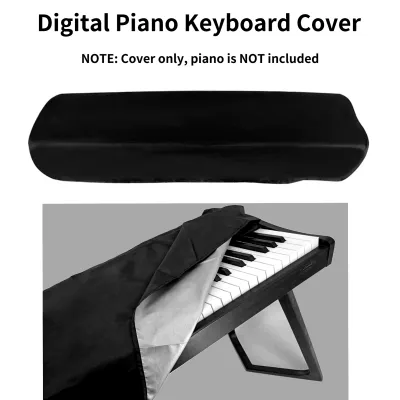
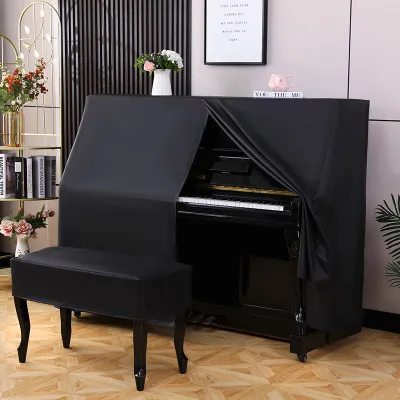

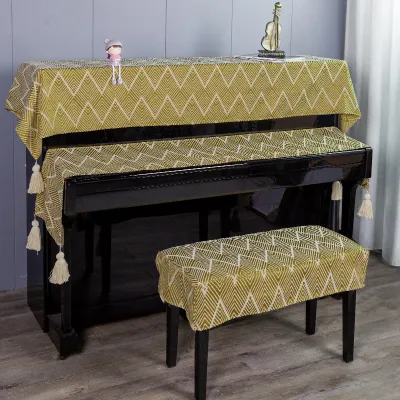
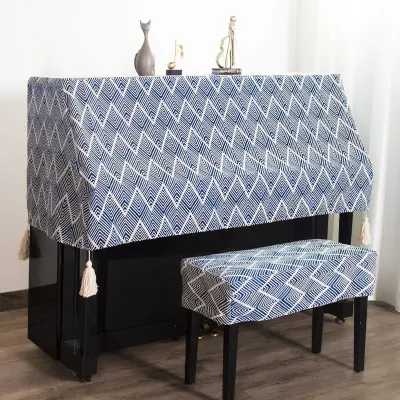
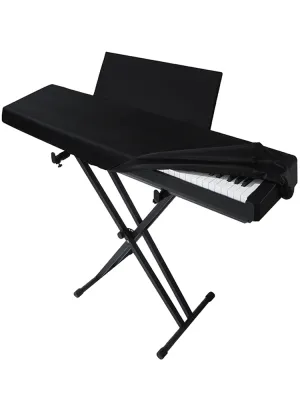
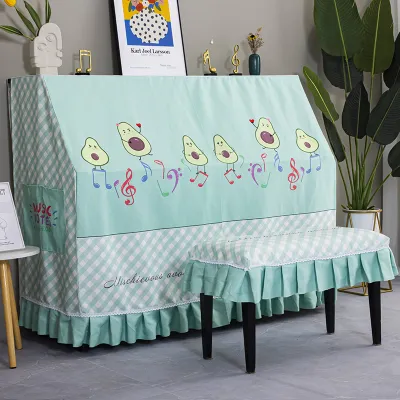
Prices are valid at publication and may change. Please refer to the product page for the latest price.
Acoustic upright pianos feature a tall, vertical back and a deep cabinet that houses the cast-iron plate and strings. Full covers for these instruments are typically heavy and structured, designed to drape completely to the floor or just above the wheels. Digital console pianos, while similar in appearance, often have much slimmer profiles, integrated stands with open backs, and different pedal lyre configurations. Portable keyboards and synthesizers are highly compact and usually sit on metal stands, requiring lightweight, flexible covers that wrap around the chassis rather than draping to the floor.
To simplify your search, check the manufacturer’s manual or the product label on the back or underside of your instrument for the exact model name. Many manufacturers and specialized accessory brands offer custom-fit covers tailored to specific popular models. Knowing your exact model number allows you to verify if a pre-made, model-specific cover is available before you resort to generic sizing options.
Step-by-Step Measuring Guide for Pianos and Keyboards
To find a cover that fits well, you need to record three primary dimensions: width, depth, and height. Having these numbers written down in both centimeters and inches will make it much easier to compare your instrument against various manufacturer size charts. Always use a flexible, non-stretch sewing tape measure rather than a stiff metal construction tape, as metal tapes can easily scratch the polished finish of your piano.

When taking measurements, ensure the instrument is in its standard resting or playing position. The top lid must be fully closed, the fallboard (key cover) should be shut, and any music desk or music rest should be folded down or removed if it is detachable. Measuring the piano while it is open or in use will result in an oversized cover that will sag and drape poorly once the instrument is closed up for storage.
Measuring Acoustic and Digital Console Pianos
For floor-standing instruments like acoustic uprights and digital console pianos, measuring height requires careful attention to the base. Start by measuring the height from the floor directly up to the highest point of the closed top lid. If your piano has castor wheels, include them in this vertical measurement, but note whether you want the cover to clear the wheels to prevent the fabric from dragging on the floor and gathering dust.
Next, measure the total width from the outermost edge of the left side block to the outermost edge of the right side block. Do not just measure the keyboard itself; the wooden cabinet or plastic housing often extends several centimeters past the keys on either side. For the depth, measure from the very back of the piano cabinet to the front edge of the keyboard shelf. If your digital console piano has protruding front legs or a pedal board that extends forward, make sure to measure from the furthest back point to the furthest forward point to ensure the cover can drape over the entire footprint.
Measuring Portable Keyboards and Synthesizers
Portable keyboards and synthesizers present a different set of measuring challenges because they lack a fixed wooden cabinet. When measuring these instruments, focus solely on the main chassis of the keyboard. Measure the width from the left end cap to the right end cap, the depth from the back edge to the front edge of the keys, and the height of the keyboard body itself from its bottom base to the top panel.
Do not include detachable accessories like music wire stands, external sustain pedals, or power cables in these primary measurements, as these items are typically removed before covering. However, you must decide whether the cover will only wrap around the keyboard body or if you want a larger cover that drapes over the entire keyboard stand. If you plan to cover the stand as well, measure the height from the floor to the top of the keyboard while it is mounted on the stand, and check if the stand’s legs extend wider than the keyboard itself.
How to Match Your Measurements to Cover Sizes
Once you have recorded your measurements, you can begin comparing them to available cover sizes on online marketplaces or specialty music retail sites. Never rely solely on generic labels such as “fits standard 88-key pianos” or “universal 61-key keyboard cover.” External dimensions vary widely between brands and models; an 88-key digital piano with a slim chassis will require a completely different cover size than an 88-key professional workstation synthesizer with extensive control sliders and pitch wheels.
When comparing your measurements to a manufacturer’s size chart, apply the standard rule of instrument covers: choose a cover that is slightly larger rather than one that is an exact match or slightly smaller. A cover that is too tight will put stress on the seams, make it difficult to put on and take off, and potentially press down on keys or control knobs. Aim for a cover that offers a clearance of about one to two centimeters in width and depth, while the height can be slightly shorter than your measurement to prevent the bottom hem from dragging on the floor.
Additionally, pay attention to the design features of the cover, such as split hems, side slits, or elasticized bottoms. Split hems or side slits are highly beneficial for upright pianos because they allow you to fold back the front portion of the cover to play without removing the entire heavy fabric sheet. For portable keyboards, an elastic drawcord or adjustable straps along the bottom edge will help secure the cover around the underside of the chassis, preventing dust from entering from below and keeping the cover secure if there is a draft.
Common Measuring Mistakes and Fit Issues to Avoid
One of the most common mistakes when measuring a piano is forgetting to account for small, protruding components that alter the overall silhouette. For example, some digital pianos have volume knobs, headphone hangers, or cable management clips that stick out from the sides or underside. If you measure only the flat panels of the cabinet, the cover may catch on these protrusions, causing the fabric to bunch up and leave other areas exposed.
Another frequent error is measuring the instrument while it is configured for active play. Leaving the music rest extended or keeping the fallboard open during measurement will lead you to purchase a cover that is far too deep or tall. When the piano is eventually closed, the excess fabric will pool on the floor, creating a tripping hazard and collecting dirt. Always return the piano to its fully closed, storage-ready state before taking your final measurements.
Finally, do not assume that all instruments within the same key-count category share the same dimensions. A 61-key synthesizer designed for touring often has a much thicker, rugged chassis than a slim 61-key beginner keyboard. Always measure your specific instrument rather than relying on general category guidelines, and double-check your numbers against the product specifications of the cover you intend to buy.
Frequently Asked Questions (FAQ)
Should I measure my piano bench to include it under the full cover?
No, standard full piano covers are designed to protect the instrument itself and do not extend to cover the bench. Piano benches have different heights and widths, and attempting to drape a single cover over both the piano and the bench will stretch the fabric awkwardly, leaving gaps where dust can enter. To protect your seating, you should purchase a separate, dedicated bench cover or use a matching fabric throw designed specifically for piano benches.
What if my keyboard is on a stand—does the cover need to reach the floor?
Most portable keyboard covers are designed to wrap snugly around the keyboard chassis itself rather than reaching the floor. This keeps the cover lightweight and easy to store when you are playing. If you prefer to protect the stand and any pedals underneath from dust, you will need to look for a specialized console-style cover or a large utility drape, making sure to measure the total height from the floor to the top of the keyboard while it is mounted.
Can I use a generic 88-key cover for a digital piano with a sliding key cover?
You must exercise caution and check the depth measurement carefully before purchasing. Digital pianos with sliding key covers often have a thicker, deeper top panel to accommodate the sliding mechanism when it is retracted. A generic 88-key cover designed for slim, portable keyboards may be too tight across the front edge, preventing the cover from draping straight down and leaving the lower keys or pedals exposed.

Community discussion
Share your experience or ask a question. Comments are reviewed before publication.