
Selecting the right HSK 1 study books and materials is the most critical first step for any beginner embarking on their Chinese language journey. To build a solid foundation, you need resources that balance Pinyin, Chinese characters, clear English explanations, and high-quality audio. Rather than relying on a single textbook, the most effective approach is to assemble a study stack consisting of a structured core textbook, a matching workbook, and supplementary tools like flashcards and graded readers. This combination ensures you develop listening, reading, and character recognition skills simultaneously.
Starting a new language can feel intimidating, but the HSK 1 syllabus is highly structured and achievable for self-study. By choosing materials that align with your learning style and goals, you can maintain high motivation and make steady progress. Whether you are studying to pass the official exam or simply want to learn basic conversational Chinese, the right resources will make your study sessions both productive and enjoyable.
Understanding HSK 1 Requirements and Your Learning Goals
Before purchasing any materials, it is essential to understand what the HSK 1 exam actually tests. The HSK 1 is the introductory level of the standardized Chinese proficiency test. It requires a grasp of approximately 150 core vocabulary words and basic grammatical structures. At this level, the official exam focuses entirely on listening and reading comprehension. There is no writing or speaking component in the test itself, which significantly influences how you should allocate your study time and select your books.
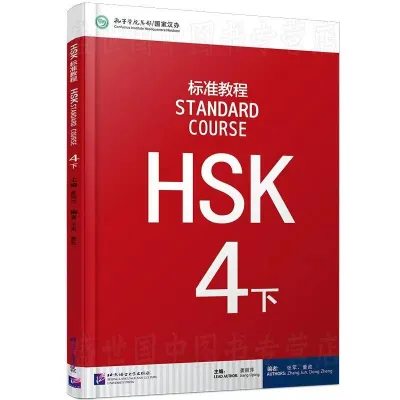
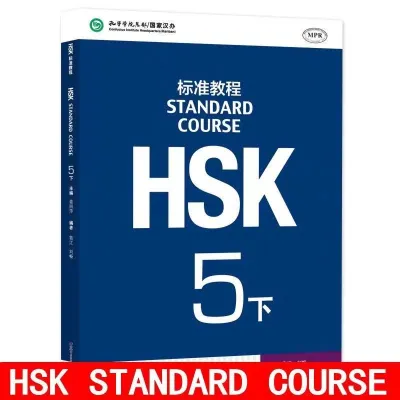
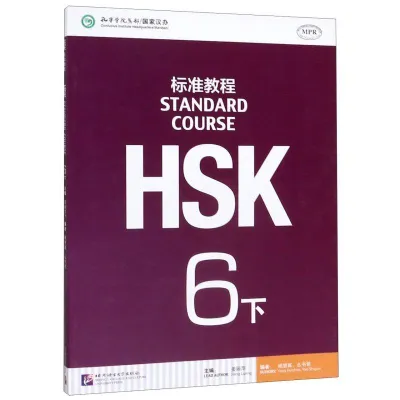
Products mentioned in this guide
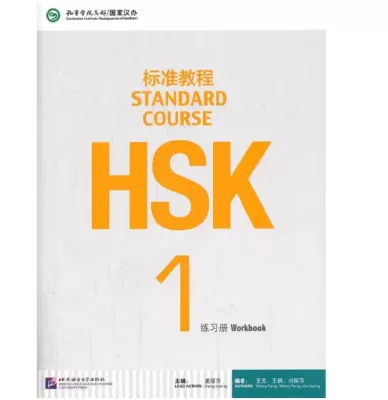
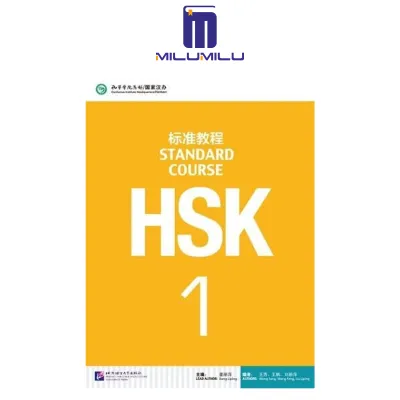
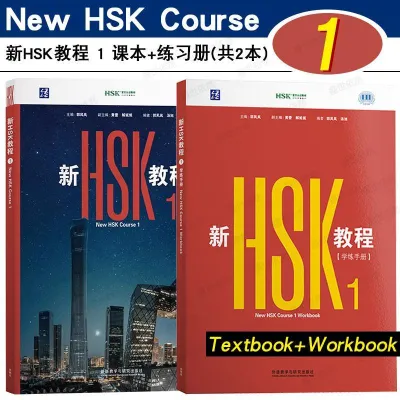
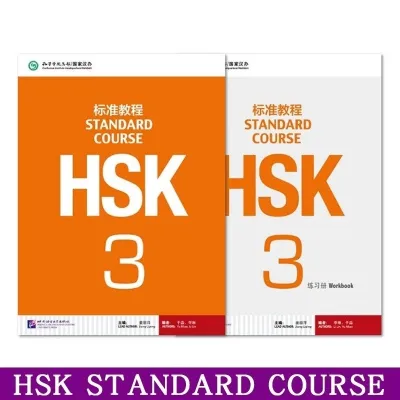
![(Paperback) [New product] NEW HSK 1 2 3 HSK 3.0 adult or kid book workbk (English & Chinese Ed) HSK1](https://img.lazcdn.com/g/ff/kf/S44e68aec8a34490886e93b5ff1279b66k.jpg_400x400q80.jpg_.webp)
Prices are valid at publication and may change. Please refer to the product page for the latest price.
Your choice of materials should align closely with your personal learning objectives. If your primary goal is to pass the official exam quickly, you should prioritize books that strictly follow the official syllabus and mirror the exact exam format. These resources often feature practice tests, mock questions, and test-taking strategies tailored to the exam structure, helping you build familiarity with the question types.
Conversely, if you are learning Chinese for practical daily communication or business, your focus should shift toward materials that emphasize conversational fluency. Look for textbooks that feature real-world dialogues, situational vocabulary, and cultural context. While these books will still cover the core HSK 1 vocabulary, they present the language in a more natural, conversational manner rather than focusing strictly on test patterns.
Setting a solid foundation at the HSK 1 level also prevents learning bottlenecks as you progress to higher levels. Even if you do not plan to take the official exam immediately, using structured materials ensures you do not skip essential grammar points. A systematic approach helps you transition smoothly to HSK 2 and beyond, saving you time and effort in the long run.
Core Criteria for Evaluating HSK 1 Textbooks
When browsing physical bookstores or online marketplaces, evaluating the pedagogical layout of a textbook is crucial. The first element to examine is how the book handles Pinyin, the phonetic system used to transcribe Chinese characters. A well-designed beginner textbook should include Pinyin alongside Chinese characters in the early chapters to help you master pronunciation. However, it should also offer a clear path toward character recognition, such as gradually reducing the size of the Pinyin or placing it in a separate section so you do not rely on it as a permanent crutch.

Another critical factor is the balance between bilingual explanations and immersive Chinese text. As a beginner, you require clear, concise English explanations for grammar points, sentence structures, and cultural nuances. Textbooks that attempt to be entirely monolingual too early can lead to immense frustration and slow down your progress. Look for books that explain complex concepts, such as measure words or particle usage, in plain English with plenty of examples.
Audio support is non-negotiable for mastering standard Mandarin pronunciation and passing the listening section of the exam. Before buying, verify the format and availability of the accompanying audio tracks. High-quality textbooks provide clear, professionally recorded audio spoken at a natural yet accessible speed for beginners. Ensure the audio files are easy to access, whether through downloadable links, dedicated mobile applications, or integrated QR codes on the pages.
It is also wise to look for audio that features standard Mandarin pronunciation, often referred to as Putonghua, without heavy regional accents. Exposure to clear, standard pronunciation ensures you develop accurate listening habits. This is particularly important for the HSK 1 exam, where the listening passages are spoken with high clarity and standard tones.
Finally, look for books that include stroke order guides and character writing grids. Even though the HSK 1 exam does not test handwriting, physically writing characters is one of the most effective ways to reinforce memory and recognize complex visual patterns. A textbook that breaks down characters stroke-by-stroke helps you build proper writing habits from day one, preventing the formation of incorrect muscle memory that is difficult to correct later.
Building a Complete HSK 1 Study Resource Stack
Core Textbooks and Workbooks
A structured curriculum is the backbone of your study plan. When selecting a core textbook, you will generally choose between official standard courses and independent publisher series. Official standard courses are designed in direct partnership with the exam organizers, ensuring absolute alignment with the test syllabus, vocabulary list, and question formats. Independent publisher series, on the other hand, often feature more modern layouts, colorful illustrations, and practical dialogues that make self-study more engaging.
Regardless of the series you choose, pairing your textbook with a matching workbook is essential. Textbooks introduce concepts, but workbooks provide the active recall practice necessary to lock those concepts into your long-term memory. Ensure the workbook you select includes a comprehensive answer key, especially if you are studying independently without a tutor. Without an answer key, you cannot verify your progress or correct mistakes.
When evaluating a workbook, look for a wide variety of exercise types. Effective workbooks go beyond simple multiple-choice questions to include matching exercises, fill-in-the-blank sentences, and listening comprehension drills. This variety keeps your study sessions engaging and prepares you for the diverse formats you will encounter in both real-world communication and the official exam.
To maximize the benefit of your workbook, try to structure your study sessions around the forgetting curve. For example, after completing a chapter in your textbook, wait a day before attempting the corresponding workbook exercises. This short delay forces your brain to work harder to recall the information, which significantly strengthens memory retention.
Vocabulary Flashcards and Graded Readers
Supplementary materials are vital for reinforcing memory retention and providing context for your newly acquired vocabulary. Flashcards are an incredibly efficient tool for memorizing the 150 required HSK 1 words. You can choose between physical flashcards and digital spaced-repetition systems. Physical flashcards offer a tactile learning experience and are excellent for studying away from screens, making them a popular choice for learners who want to minimize digital distractions.
If you choose physical flashcards, ensure they are designed specifically for beginner learners. The cards should clearly display the Chinese character on one side, with the Pinyin, English translation, and an example sentence on the reverse side. This layout prevents your brain from taking shortcuts, forcing you to actively recall the meaning and pronunciation of the character before flipping the card.
Graded readers are another highly effective tool that many beginners overlook. These are short storybooks written specifically for language learners, using a strictly controlled vocabulary. For HSK 1, look for graded readers that limit their vocabulary to the 150 basic words. Reading a complete story, even a very simple one, provides immense psychological encouragement and helps you see how individual vocabulary words function naturally within full sentences and paragraphs.
Using graded readers also helps you develop reading speed and context clues. Instead of translating word-for-word in your head, reading stories teaches you to comprehend sentences as complete thoughts. This skill is incredibly valuable for the reading comprehension section of the HSK 1 exam, where managing your time effectively is key to finishing all the questions.
Dictionaries and Translation Tools
As you begin reading and practicing, you will inevitably encounter words or characters you do not recognize. Having a reliable reference tool is essential for maintaining study momentum. While physical dictionaries are excellent for deep study and learning how to look up characters by radicals, they can be slow and overwhelming for absolute beginners. If you prefer a physical dictionary, look for compact, learner-friendly editions that prioritize high-frequency vocabulary and offer clear Pinyin indexing.
For daily study and quick lookups, digital dictionary applications are indispensable. When choosing a dictionary app, look for features like handwriting input and camera translation. Handwriting input allows you to draw a character directly on your screen to find its meaning and Pinyin, which is incredibly useful when you do not know how to pronounce a character. Camera translation lets you scan printed text instantly, saving time during reading sessions.
Additionally, prioritize digital tools that offer robust offline capabilities. Having access to a complete dictionary database without requiring an active internet connection ensures you can study anywhere, whether you are on an airplane, commuting on public transport, or in an area with poor cellular reception. This convenience removes barriers to study and helps you maintain a consistent daily learning habit.
Understanding the radical system is another benefit of using a good dictionary tool. Many digital dictionaries break down characters into their component radicals, explaining the historical meaning behind each part. Learning these building blocks early on demystifies complex characters, making them much easier to memorize and distinguish from one another.
Pre-Purchase Checks for Book Editions and Formats
Before finalizing your purchase, performing a few critical checks can save you from buying incompatible or outdated materials. First, verify the publication year and the specific edition of the book. The HSK syllabus undergoes periodic updates to align with modern language usage and educational standards. Ensure the books you select are updated to match the current HSK 1 syllabus guidelines, as using outdated editions might result in studying obsolete vocabulary or missing new exam requirements.
Second, double-check the language of instruction used throughout the book. Many HSK preparation materials are published globally and may feature explanations in languages other than English, such as Korean, Japanese, or French. Carefully read the product description or look at sample pages to confirm that all grammar explanations, vocabulary translations, and instructions are written in your preferred language of study.
Third, consider the compatibility of physical versus digital formats with your lifestyle and study habits. Physical books are ideal for writing practice, highlighting, and studying without screen fatigue. However, if you travel frequently or have limited storage space in your home, digital e-books or interactive PDF versions may be more practical. If you choose digital formats, verify that they render correctly on your specific tablet or e-reader, as complex Chinese character strokes and Pinyin tone marks can sometimes display incorrectly on unsupported devices.
Finally, check for potential region locks or technical restrictions on accompanying digital resources. Many modern textbooks include access codes for online learning platforms, downloadable audio tracks, or companion mobile apps. Verify whether these digital features require a specific regional app store account, a foreign phone number for registration, or if they are restricted by geographical location. Ensuring full access to these digital components before purchasing guarantees you receive the complete value of your study materials.
Whether you are spending S$20 on a basic workbook or investing in a complete multi-book study set, taking the time to perform these pre-purchase checks ensures your money is well spent. A well-chosen set of materials keeps your study sessions smooth, organized, and free from technical frustrations, allowing you to focus entirely on mastering the language.
Frequently Asked Questions (FAQ)
Do I need to buy the official HSK 1 textbook to pass the exam?
You do not strictly need to buy the official textbook to pass the HSK 1 exam. While official materials are highly structured and align perfectly with the exam’s formatting, many independent publishers produce excellent textbooks that cover the exact same 150-word syllabus. These third-party resources often feature more engaging layouts, practical conversational examples, and modern illustrations that some learners find more motivating. The key to passing the exam is not the specific brand of the book, but rather consistent practice, thorough vocabulary memorization, and regular listening exercises using any comprehensive, syllabus-aligned resource.
Should my HSK 1 book focus on handwriting characters or just reading pinyin?
Your focus should depend entirely on your long-term language goals. Because the official HSK 1 exam does not test handwriting, you can pass the test by focusing solely on Pinyin and character recognition. If your immediate goal is rapid conversational fluency or simply passing the first level, a book that emphasizes Pinyin and reading recognition is sufficient. However, if you plan to progress to higher HSK levels where writing is required, or if you want to develop comprehensive literacy, learning stroke order and practicing handwriting from the beginning is highly recommended. Writing characters physically aids visual memory, making it easier to distinguish between similar-looking characters.
How can I check if the audio tracks for a physical book are still accessible?
To verify audio accessibility before purchasing a physical book, start by carefully reading the product description on the publisher’s website or online marketplace listing. Look for explicit mentions of how the audio is delivered, such as via QR codes, direct MP3 downloads, or companion mobile apps. You can also search online forums or book reviews to see if other learners have reported issues accessing the audio files. If the book relies on a physical CD, ensure you have a compatible external disc drive, or check if the publisher provides a digital alternative on their official website.

Community discussion
Share your experience or ask a question. Comments are reviewed before publication.