
Andrew ukuleles represent an affordable entry point for aspiring musicians in Singapore who want to explore the instrument without making a significant financial commitment. As a brand frequently seen on regional ecommerce platforms and in budget-friendly music stores, these instruments appeal directly to students, parents, and casual hobbyists. However, whether an Andrew ukulele is a “good” choice depends entirely on the specific unit you receive and your willingness to inspect it for common mass-production variances. For a beginner, a budget instrument is only a bargain if it stays in tune and does not cause physical discomfort during practice.
By understanding what to look for in terms of build quality, playability, and hardware, you can make an informed decision that protects your budget and your musical progress. Let’s examine the essential standards an entry-level ukulele must meet and how to evaluate an Andrew model against them.
Setting the Baseline: What to Expect from an Entry-Level Ukulele
To evaluate any entry-level ukulele, you must first understand what makes an instrument suitable for learning. A beginner does not need a premium, solid-wood instrument handcrafted by a master luthier, but they do need a tool that functions reliably. The primary barrier to learning any stringed instrument is physical frustration, which often stems from poor playability rather than a lack of talent.
Products mentioned in this guide
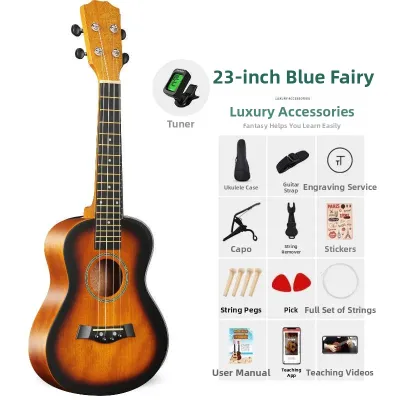
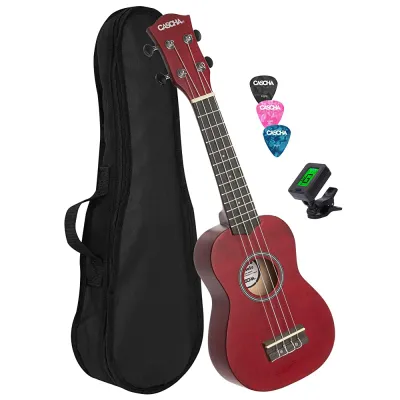
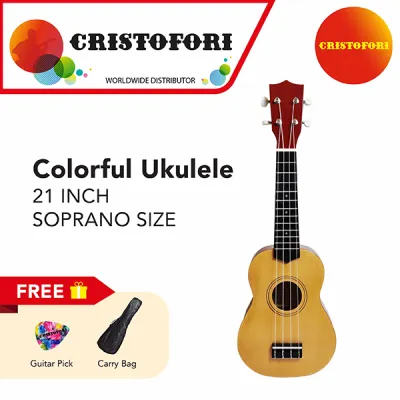
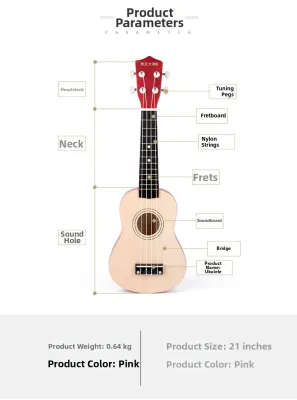

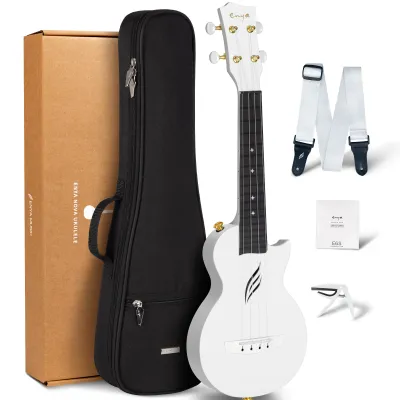

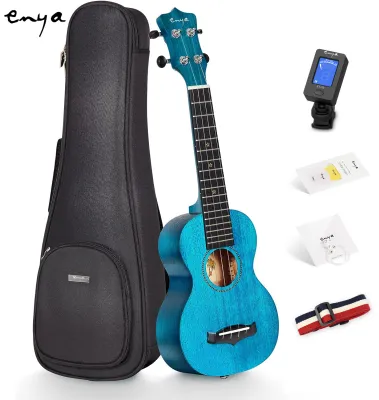
Prices are valid at publication and may change. Please refer to the product page for the latest price.
Playability is largely determined by string action, which is the height of the strings above the fretboard. If the action is too high, pressing down on the strings requires excessive finger pressure, leading to rapid fatigue, soreness, and discouraged practice sessions. Conversely, if the action is too low, the strings will vibrate against the frets, causing an annoying buzzing sound that ruins the tone. Smooth fret edges are equally critical; rough or sharp metal frets protruding from the sides of the neck can scratch your hands as you slide between chords.
Tuning stability is another non-negotiable factor for a beginner. If an instrument cannot hold its pitch for more than five minutes, you will spend more time tuning than playing, making it difficult to develop an ear for correct intervals. This stability relies on decent tuning pegs (machine heads) and a properly cut nut and saddle. While new nylon strings naturally stretch and go out of tune frequently during the first few days of use, the hardware itself must hold firm once the strings have settled.
At this price point, you should expect the instrument to be constructed primarily from laminate wood rather than solid wood. Laminate is made by gluing thin layers of wood together, which makes it highly durable and resistant to changes in temperature and humidity—a significant advantage in Singapore’s tropical climate. While solid wood offers superior resonance and matures in tone over time, laminate is far more practical for a beginner’s budget and daily handling.
Finally, while you should not expect the deep, rich resonance of a high-end instrument, an entry-level ukulele must deliver basic tonal clarity. Each note should ring out clearly without being muffled, dead, or excessively tinny. Adequate projection ensures that you can hear your mistakes and successes clearly, which is vital for building confidence and technique during your initial practice sessions.
Inspecting the Build: A Hands-On Checklist for Andrew Ukuleles
When purchasing an Andrew ukulele, especially from a local retailer or upon receiving a delivery from an online marketplace, performing a physical inspection is the best way to safeguard your investment. Because budget brands often prioritize high-volume production, individual quality control can vary, making a hands-on check essential.

Begin by checking the alignment of the neck. Hold the ukulele at eye level and look down the neck from the headstock toward the body, much like sighting a rifle. The neck should be straight or have a very slight, almost imperceptible upward curve. Any noticeable twisting, warping, or dramatic bowing will permanently compromise the instrument’s playability and is a clear sign to reject that specific unit.
Next, examine the body symmetry and structural joints. Inspect the areas where the neck meets the body (the heel) and where the bridge is glued to the soundboard. Look closely for any visible gaps, dried glue squeeze-out, or hairline cracks in the wood or laminate. The bridge must be completely flush against the body; even a tiny gap at the back of the bridge indicates that the tension of the strings is pulling it loose, which will eventually lead to structural failure.
Run your fingers gently along both sides of the fretboard. The metal frets should be cut flush with the wood. If you feel sharp metal edges poking out, this indicates that the wood has shrunk or the frets were not properly finished at the factory. While a technician can file these down, it is an extra expense that you should ideally avoid. Additionally, check that the plastic or bone nut at the top of the neck and the saddle on the bridge are securely seated and that the string slots are spaced evenly.
Cosmetic finish issues, such as minor paint overspray, tiny scratches in the clear coat, or slight discoloration in the wood grain, are common on budget instruments and do not affect playability. However, you must distinguish these harmless cosmetic flaws from structural issues. A cosmetic blemish is acceptable on a budget instrument, but a crack in the soundboard or a loose internal brace is not, as these will worsen over time and ruin the instrument’s sound.
Lastly, test the tuning machines on the headstock. Turn each peg slowly in both directions. The gears should rotate smoothly without catching, slipping, or feeling excessively loose. If a tuning peg feels gritty, spins without moving the post, or has loose screws, the hardware may fail prematurely, making it difficult to keep the ukulele in tune.
Testing Playability and Sound for a Comfortable Learning Curve
Once the physical structure passes inspection, you must test how the instrument performs when played. This step determines whether the ukulele will support your learning journey or act as a constant source of physical frustration.
Start by measuring or observing the string height. At the first fret (closest to the headstock), the gap between the bottom of the string and the top of the metal fret should be minimal—just enough for a thin business card to slide through. If the gap is too wide, holding down basic chords like F or B-flat will feel unnecessarily difficult. At the twelfth fret, the action should be comfortable, typically around 2.5mm to 3mm. High action at the twelfth fret makes playing higher up the neck painful and can pull notes sharp when pressed.
Next, play every single note on the fretboard one by one. Pluck each string at every fret, listening closely for any buzzing, rattling, or dead notes where the sound cuts out immediately. Fret buzz occurs when a string vibrates against a fret wire that is slightly higher than the others. If you encounter widespread buzzing across multiple frets, the instrument may require a professional setup, which adds to the overall cost.
Pay close attention to the strings that come pre-installed on the Andrew ukulele. Many budget brands ship their instruments with cheap black nylon strings that feel stiff and sound plasticky. Upgrading these to high-quality fluorocarbon or premium nylon strings can instantly transform the playability and tone of a budget instrument. If the ukulele sounds dull during your test, remember that a simple string change might be all it needs to sing.
Evaluate the physical comfort of the instrument in your hands. Hold the ukulele in a standard sitting or standing playing position without a strap. The body should feel balanced, not neck-heavy or bottom-heavy. The edges of the body should not feel sharp against your forearm, and the neck profile should fit comfortably in the palm of your hand, allowing your fingers to reach all four strings easily without straining your wrist.
Weighing the Cost Against Your Beginner Needs
In Singapore, budget is often a primary driver for beginners choosing their first instrument. Andrew ukuleles are generally positioned at the lower end of the price spectrum, making them highly competitive with other entry-level brands. However, evaluating the true cost requires looking beyond the initial price tag.
Compare the retail price of the Andrew model you are considering against the standard entry-level options available in local music shops. If the price is exceptionally low—for instance, under S$40—be prepared for the likelihood that the instrument may require some adjustments or have minor cosmetic flaws. If the price approaches S$80 or more, compare it directly to established entry-level brands to see if those alternatives offer better out-of-the-box quality control or better resale value.
Remember to factor in the cost of essential accessories. A bare ukulele is difficult to maintain and protect. You will need a digital clip-on tuner (or a reliable smartphone tuning app), a padded gig bag to protect the instrument from Singapore’s high humidity and accidental bumps, and a spare set of high-quality nylon or fluorocarbon strings. If the Andrew ukulele does not come as a bundle, purchasing these items separately can add S$20 to S$40 to your total startup cost.
Additionally, consider the potential need for a professional setup. If you purchase an instrument online and find that the string action is too high or the frets are uneven, taking it to a local guitar technician in Singapore for a basic setup can cost anywhere from S$30 to S$60. If the instrument requires this work to be playable, your budget purchase may end up costing the same as a higher-tier instrument that was set up properly at the factory.
Consider your long-term musical goals when evaluating the cost. If you are unsure whether you will stick with the ukulele past the first few weeks, a low-cost Andrew model minimizes your financial risk. However, if you are highly committed to learning, spending slightly more upfront on an instrument with better resale value might be wiser. Budget instruments generally do not hold their value well on the secondhand market, whereas recognized mid-range brands can be easily resold if you decide to upgrade later.
The Final Verdict: When to Buy, Pass, or Look for Alternatives
Deciding whether to buy an Andrew ukulele comes down to matching the specific instrument in front of you with your personal goals and budget constraints.
You should buy an Andrew ukulele if you can inspect it in person (or have a reliable return policy) and it passes your physical checks. If the neck is straight, the frets are smooth, the tuning pegs turn smoothly, and the action is comfortable, it represents excellent value. It is an ideal choice for a casual hobbyist, a child, or anyone who wants to try the instrument for a few months before deciding whether to invest in a premium model.
You should pass on an Andrew ukulele if you notice significant structural red flags during your inspection. Avoid any unit with a warped neck, a lifting bridge, visible cracks, or severe fret buzz that cannot be easily resolved. If you are buying online from a seller that does not offer returns or exchanges for playability issues, the risk of receiving a poorly finished unit may outweigh the cost savings.
Consider looking for alternatives if you have a slightly higher budget and want an instrument that will grow with you over several years. Established brands with consistent quality control may offer better long-term durability, richer tone, and higher resale value if you eventually decide to upgrade. Alternatively, searching the local secondhand market in Singapore for a gently used, mid-range ukulele can often yield a superior instrument for the same price as a brand-new budget model.
Frequently Asked Questions (FAQ)
Do I need to set up a new Andrew ukulele before playing?
A professional setup involves adjusting the string height at the nut and saddle, ensuring the frets are perfectly level, and optimizing the overall playability of the instrument. Many factory-fresh budget ukuleles are shipped with slightly high action to prevent fret buzz during transit, meaning they can benefit greatly from a setup. However, as a beginner, you do not necessarily need to pay for a professional setup immediately if the instrument feels comfortable to play and does not buzz. If you find your fingers hurting excessively or the strings feel very high off the fretboard, taking it to a local music shop for an adjustment is highly recommended.
What size Andrew ukulele is best for a beginner?
The best size depends on your hand size, comfort preferences, and the sound you prefer. Soprano ukuleles are the traditional, smallest size, offering a bright, classic sound, but their small fretboards can feel cramped for adults or those with thicker fingers. Concert ukuleles are slightly larger, providing a bit more fret spacing and a fuller sound, making them the most popular and versatile choice for adult beginners. Tenor ukuleles are larger still, offering the longest scale length, the widest fret spacing, and a deeper, more resonant tone, which is excellent for players who want more room to maneuver their fingers. For most beginners in Singapore, a concert-sized Andrew ukulele offers the ideal balance of portability, comfort, and classic tone.

Community discussion
Share your experience or ask a question. Comments are reviewed before publication.