
Maxwell Maltz’s 1960 classic Psycho-Cybernetics remains a cornerstone of self-improvement literature, but its relevance today depends entirely on how you approach its mid-20th-century framing. If you are looking for the foundational roots of self-image psychology and are willing to filter out dated medical analogies, the book offers profound, practical value. However, readers seeking modern, peer-reviewed neuroscience or rapid-fire action steps may find its style and terminology out of step with contemporary standards.
Evaluating a book written over six decades ago requires balancing historical context with practical utility. While the field of personal development has evolved significantly, many of the core mechanisms Maltz described continue to influence modern coaching and cognitive behavioral practices. By understanding what still works, what has aged poorly, and how to apply these concepts today, you can decide whether this classic deserves a spot on your reading list.
Core Concepts That Still Hold Up
The most enduring contribution of Psycho-Cybernetics is its exploration of the “Self-Image.” Maltz, a plastic surgeon, observed that altering a patient’s physical appearance did not automatically change their internal state or level of confidence. He concluded that we possess an internal mental blueprint that dictates how we perceive our capabilities, limits, and worth. This early mapping of the self-image closely aligns with what modern cognitive behavioral therapy (CBT) identifies as core beliefs—the deeply ingrained assumptions that shape our thoughts, emotions, and behaviors.
Products mentioned in this guide
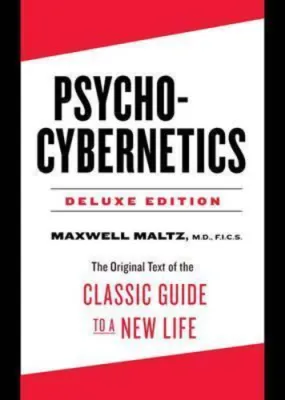


Prices are valid at publication and may change. Please refer to the product page for the latest price.
Another foundational concept is the “Servo-Mechanism” theory. Maltz compared the human mind to an automatic goal-striving machine, drawing on the mid-century science of cybernetics (the study of control systems and communications in machines and living things). He argued that when you feed your mind a clear, vivid goal, your subconscious works automatically to achieve it, much like an autopilot system. Today, this concept underpins modern goal-setting and habit-formation strategies, emphasizing that sustainable change begins with shifting your identity rather than relying solely on willpower.
By separating these timeless psychological principles from their era-specific delivery, readers can find a robust framework for personal growth. The idea that your brain is a goal-directed system that responds to the mental pictures you feed it remains highly actionable. It provides a logical explanation for why positive visualization and mental rehearsal can produce observable improvements in performance, a technique now widely used by elite athletes and performers worldwide.
Outdated Elements to Read With a Critical Eye
While the core principles remain valuable, readers must navigate several outdated elements with a critical eye. Written in 1960, the book relies heavily on the scientific terminology and medical references of its time. Maltz’s mechanical metaphors, while innovative in the early days of computer science, can feel overly simplistic or rigid to modern readers accustomed to more nuanced discussions of neuroplasticity and brain chemistry.

Furthermore, the book contains absolute statements and specific assertions about brain function that lack modern empirical backing. Maltz often presents clinical anecdotes and personal observations as universal scientific truths. While his insights as a surgeon were groundbreaking, they do not carry the weight of contemporary peer-reviewed clinical trials. Readers should treat these stories as illustrative parables rather than rigorous scientific evidence.
Finally, the social norms, gender roles, and communication styles reflected in the historical case studies are distinctly mid-century. The examples of housewives, corporate executives, and salespeople reflect a different era of professional and personal life. To get the most out of the text, modern readers must actively translate these dated scenarios into contemporary contexts, focusing on the underlying psychological dynamics rather than the specific social details of the stories.
Who Should Read It and Who Should Skip It
Psycho-Cybernetics is highly recommended for readers who enjoy exploring the historical roots of self-improvement theories. If you appreciate a vintage, conversational writing style and enjoy understanding why certain self-help concepts work, this book offers a rich and rewarding experience. It is particularly suited for those who prefer deep, reflective reading over quick-fix summaries and are willing to spend time contemplating the philosophical implications of their self-image.
Conversely, this book is not recommended for readers who prefer fast-paced, highly structured modern reads. If you require the latest neuroscientific data, brain scans, or peer-reviewed studies to validate your reading choices, you will likely find Maltz’s anecdotal evidence frustrating. Similarly, those seeking rigid, step-by-step checklists, worksheets, or immediate action plans may find the narrative style too abstract and slow-moving.
For readers who want the core concepts without committing to the full original text, alternative pathways exist. Modern adaptations, such as those updated by the Psycho-Cybernetics Foundation, offer a streamlined version of Maltz’s work with updated language and contemporary examples. Alternatively, reading modern books on identity-based habits and cognitive behavioral principles can provide similar practical benefits without the need to filter out historical context.
How to Apply Its Principles in Modern Life
To translate Maltz’s classic theories into actionable everyday practices, you must integrate them with modern self-regulation techniques. The book’s famous “Mental Rehearsal” technique—spending time visualizing successful outcomes—can be highly effective when combined with contemporary mindfulness routines. Instead of passive daydreaming, practice active, sensory-rich visualization for 10 to 15 minutes daily, focusing on the specific actions, emotions, and physical sensations associated with achieving your goals.
To ensure these practices lead to real-world progress, establish clear self-verification metrics. Rather than tracking vague feelings of confidence, monitor observable shifts in your behavior and mindset. For example, if your goal is to improve your professional communication, track concrete actions such as the number of times you speak up in meetings or how consistently you initiate difficult but necessary conversations. This grounds your mental rehearsal in tangible, measurable progress.
It is also crucial to recognize the boundaries of self-regulation techniques. While adjusting your self-image and practicing visualization can improve performance and confidence, they are not universal solutions for deep-seated psychological challenges. If you are experiencing persistent anxiety, clinical depression, or trauma, these self-help techniques should not replace professional mental health support. Knowing when to seek guidance from a qualified therapist or counselor is a vital part of any personal development journey.
Edition and Format Considerations for Buyers
When deciding to purchase Psycho-Cybernetics, selecting the right edition and format can significantly impact your reading experience. Physical books, such as paperbacks or hardcovers, are ideal for active study, allowing you to easily highlight key passages, write notes in the margins, and flip back to reference specific exercises. E-books offer excellent portability and searchability, making them convenient for reading on the go.
Audiobooks are a popular choice for commuters, but they present unique challenges for this specific title. Because the book contains several visualization exercises and mental rehearsals that require quiet reflection, listening while driving or multitasking may prevent you from fully engaging with the material. If you choose the audiobook format, consider setting aside dedicated, quiet time to pause the recording and complete the exercises.
Before purchasing, verify the differences between the available editions. The original 1960 text preserves Maltz’s authentic voice but contains the outdated references mentioned earlier. Modern revised or anniversary editions, often updated by contemporary authors or foundations, update the terminology and add modern commentary. To ensure you receive a complete, unabridged, and high-quality copy, purchase your book through authorized local bookstores in Singapore or reputable online marketplaces rather than unverified third-party sellers.
Frequently Asked Questions (FAQ)
Is Psycho-Cybernetics considered a religious or spiritual book?
No, Psycho-Cybernetics is not a religious or spiritual text. Its foundations lie in medicine, plastic surgery observations, and early cybernetic theory. While Maltz occasionally references philosophical concepts, his approach is grounded in the mechanical metaphor of the mind as a goal-striving system rather than theology, mysticism, or esoteric beliefs.
Do I need a background in psychology to understand it?
You do not need any background in psychology or science to understand the book. Maltz deliberately wrote for a general audience, using highly accessible analogies, mechanical metaphors, and everyday language to explain complex mental mechanisms. The concepts are presented in a straightforward, conversational manner that anyone can grasp and apply.

Community discussion
Share your experience or ask a question. Comments are reviewed before publication.