
Whether the AK HC5 is a good choice for a beginner piano player depends on how its technical specifications align with essential learning milestones. For someone just starting out, a keyboard is not merely a tool for playing notes; it is the foundation upon which physical technique, muscle memory, and musical expression are built. If the AK HC5 meets core industry baselines regarding key action, polyphony, and touch sensitivity, it can serve as a practical starting instrument. However, if its specifications fall short of these benchmarks, aspiring players risk developing poor physical habits that are difficult to correct later. Evaluating this model requires a careful look at its technical specifications and physical design to determine if it fits your specific learning path and living space.
Core Requirements for a Beginner Piano Keyboard
Selecting the right instrument during the early stages of musical education directly impacts both physical technique and long-term motivation. When you first begin learning, your fingers must adapt to the physical resistance of the keys to build strength, dexterity, and independence. If a keyboard’s keys are too light or completely unresponsive to how hard they are pressed, you will struggle to transition to an acoustic piano later. Furthermore, an instrument that sounds artificial or fails to respond dynamically can quickly discourage a new learner, leading to abandoned practice sessions.
To support proper skill development, any beginner keyboard must meet several non-negotiable baseline features. The first is key count: while a 61-key layout is generally sufficient for basic melodies, simple pop arrangements, and early music theory exercises, a full 88-key layout is eventually required for classical progression and formal graded exams. The second feature is touch sensitivity, also known as velocity response, which ensures that the volume of the sound changes based on the force of your keystroke. Finally, the keyboard must offer adequate polyphony, which is the maximum number of individual notes that can sound simultaneously without cutting off.
Products mentioned in this guide

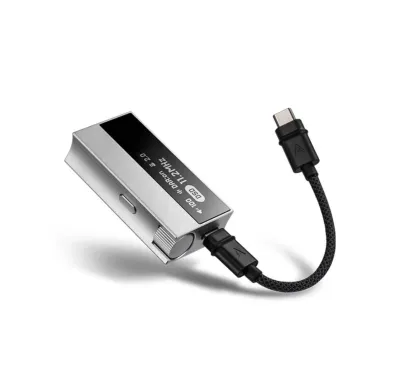
Prices are valid at publication and may change. Please refer to the product page for the latest price.
Before committing to any purchase, you should locate and review the AK HC5’s official manufacturer specification sheet. This document is the most reliable source of truth, allowing you to verify these baseline metrics rather than relying on generic marketing descriptions. Pay close attention to the listed key count, the presence of touch sensitivity, and the polyphony limit to ensure the instrument can support your educational goals.
Evaluating the AK HC5 for Skill Development
Key Action and Touch Response
The physical feel of the keys is the most critical factor in determining whether a keyboard is suitable for piano practice. Keyboards generally fall into three categories: unweighted, semi-weighted, and fully weighted (often called hammer action). Unweighted keys offer almost no resistance and are typical of budget synthesizers, making them unsuitable for building finger strength. Semi-weighted keys add a light spring resistance, which is easier on young hands but still lacks the realistic feel of an acoustic piano. Fully weighted keys mimic the physical levers and hammers of an acoustic instrument, providing the authentic resistance needed to develop proper classical technique.

You must verify the AK HC5’s specific key action type in its official technical specifications to understand how it will affect your finger fatigue and technique building. If your goal is to learn traditional piano, a keyboard with fully weighted hammer action is highly recommended to ensure your fingers learn to control the weight of the keys. If the AK HC5 features unweighted or semi-weighted keys, it may serve well for casual hobbyists or music production beginners, but it will eventually limit your progress if you transition to classical repertoire.
Touch sensitivity is equally crucial for learning dynamic control, which is the ability to play softly (piano) or loudly (forte). Without velocity response, your playing will sound flat, mechanical, and expressionless. When reviewing the AK HC5, check if the touch sensitivity is adjustable, as this allows you to customize the keyboard’s responsiveness to your current finger strength. If you have the opportunity to test the instrument in person, play a single key repeatedly from very soft to very loud to ensure the volume transitions smoothly without sudden, unnatural jumps.
Sound Quality and Polyphony
An instrument’s audio engine provides the acoustic feedback that guides your playing and trains your ears. A key component of this engine is polyphony, which is the limit on how many notes can play at the same time. While an absolute beginner might only play one or two notes at once, using the sustain pedal or playing dense chords quickly consumes polyphony. For example, if you hold down a chord with the sustain pedal active, every note continues to ring out; if the keyboard’s polyphony limit is too low, older notes will abruptly cut off to make room for new ones.
You should guide your search by checking the AK HC5’s polyphony limit and primary piano sample quality in the product manual or official spec sheet. A baseline of 64-note polyphony is acceptable for early lessons, but 128-note polyphony or higher is preferred for long-term usability. Additionally, look for details on how the primary piano sound was recorded; high-quality digital keyboards use multi-layered stereo samples from acoustic grand pianos to capture the rich tonal variations of a real instrument.
While beginners might not notice subtle differences in tone immediately, poor or highly artificial sound can actively hinder your motivation and ear training. To develop a strong sense of pitch and harmony, you need to hear clean, mathematically accurate intervals and rich overtones. If the default piano sound is thin, nasal, or synthetic, it can make practice sessions feel uninspiring, making it harder to sustain the daily habit required to master the instrument.
Learning Features and Connectivity
Modern digital keyboards often include built-in tools designed to support daily practice routines and make learning more engaging. When evaluating the AK HC5, look for practical features such as an integrated metronome, which is essential for developing a steady sense of rhythm. Other helpful tools include built-in rhythm accompaniments for timing practice, basic recording capabilities that let you listen back to your playing objectively, and split or layer modes. A split mode that divides the keyboard into two identical registers (often called duet mode) is particularly useful for side-by-side teacher-student instruction.
Connectivity options are another vital consideration, especially if you plan to integrate your keyboard with modern learning methods. Verify whether the AK HC5 features USB-to-Host (MIDI) connectivity, which allows you to connect the keyboard to a computer, tablet, or smartphone. This connection turns your keyboard into a MIDI controller, enabling you to interact with interactive learning software, notation programs, and digital audio workstations. Some advanced models also offer Bluetooth MIDI or Bluetooth Audio, reducing cable clutter in your practice space.
Before purchasing, advise yourself to confirm which specific operating systems and learning apps the AK HC5 is officially compatible with by consulting the manufacturer’s documentation. While standard USB-MIDI is generally plug-and-play across Windows, macOS, iOS, and Android, some proprietary learning features or companion apps may have specific system requirements. Ensuring compatibility beforehand prevents the frustration of discovering that your preferred educational software cannot communicate with your keyboard.
Practical Setup: Space, Portability, and Budget
Beyond the technical specifications, you must assess how the physical instrument fits into your daily life and living environment. In Singapore, where residential space in HDB flats and apartments is often limited, the physical footprint of the keyboard is a major consideration. Before purchasing the AK HC5, measure your available space carefully. A standard 88-key digital keyboard is approximately 1.3 to 1.4 meters wide, while a 61-key model is closer to 1 meter wide. Ensure you have enough clearance not only for the keyboard itself but also for a stable stand and a bench that allows you to sit with proper posture.
Portability is another factor to evaluate, especially if you plan to move the instrument around your home or transport it to weekly lessons. Check the unit’s weight in the official specifications; keyboards weighing under 12 kilograms are generally easy to carry, while heavier models are better suited for a permanent spot. Additionally, check the power options: verify if the AK HC5 can run on batteries for cord-free convenience, or if it relies strictly on a standard AC adapter plugged into a wall outlet.
When planning your budget, remember to factor in the cost of essential accessories that are rarely included with the keyboard itself. To play comfortably and safely, you will need a sturdy double-X or Z-frame stand to prevent the keyboard from wobbling, an adjustable bench to maintain correct elbow height, and a high-quality sustain pedal. If you live in a high-density residential area, a good pair of closed-back headphones is also essential for silent practice. Check current authorized retail listings in Singapore for bundled packages, which often include these accessories at a lower total cost in SGD than buying them individually.
Final Verdict: Is the AK HC5 Right for Your Learning Journey?
Synthesizing your evaluation of the AK HC5 comes down to matching its verified specifications with your specific musical goals and budget. If your research confirms that the AK HC5 offers touch-sensitive keys, a minimum of 64-note polyphony, and a key action that fits your current needs, it serves as a highly viable starting point for casual learning and hobbyist play. Its built-in learning features and digital connectivity can successfully guide you through the initial stages of music theory and basic keyboard geography without a massive upfront investment.
However, you should reconsider this model if the verified specifications reveal that it lacks touch-sensitive keys or has unweighted action with very low polyphony. Serious students, particularly those aiming to progress through classical grades or develop professional piano technique, should avoid instruments that do not mimic the physical behavior of an acoustic piano. In such cases, it is wiser to look at alternative entry-level digital pianos with 88 fully weighted keys to avoid developing bad physical habits that will hinder your progress.
As a practical next step, visit a local music showroom in Singapore to test the physical key feel and listen to the sound engine in person. Experiencing how the keys respond to your fingers is the best way to confirm if the instrument feels right for you. If you choose to purchase online, ensure you buy from an authorized local distributor and review their official warranty and return policies so that your investment is fully protected.
Frequently Asked Questions (FAQ)
Do I need an 88-key keyboard to start learning piano?
For the first year of basic lessons, music theory, and simple pop melodies, a 61-key keyboard is generally sufficient. It provides enough range to cover most beginner method books and simple two-handed exercises. However, if you plan to study classical music, take formal graded exams, or play advanced classical repertoire, you will eventually need a full 88-key keyboard. An 88-key instrument is necessary to develop correct spatial awareness across the entire range of the piano and to play pieces that utilize the extreme high and low registers.
Can I use headphones with the AK HC5 for silent practice?
Yes, almost all modern digital keyboards include a dedicated headphone output, which is highly practical for silent practice in Singapore’s high-density housing. You should check the AK HC5’s official specification sheet to determine whether the headphone port is a standard 3.5mm (1/8 inch) mini-jack or a larger 6.35mm (1/4 inch) stereo jack. If your headphones use a different plug size than the keyboard’s port, you can easily resolve this by purchasing a simple, inexpensive headphone adapter.

Community discussion
Share your experience or ask a question. Comments are reviewed before publication.