
Quick Verdict: Is It the Right Fit for You?
Choosing your first instrument is a pivotal step in your musical journey. The casio cdp s110 has emerged as a popular contender for beginners, offering a highly streamlined experience that prioritizes piano fundamentals over digital bells and whistles. If your primary goal is to build authentic acoustic piano playing habits on a reasonable budget, this model is an exceptionally strong entry-level choice.
The primary decision factors for this model revolve around available living space, budget constraints, and your learning goals. It excels at providing a realistic key touch and a compact footprint, making it ideal for those who want to focus strictly on classical or pop piano fundamentals. However, if you require advanced sound design, hundreds of instrument voices, or built-in accompaniment rhythms, this minimalist design may fall short of your expectations.
Who Should Consider the Casio CDP-S110?
Space-Constrained Environments: Living in high-density urban areas like Singapore often means working with limited floor space. In typical HDB flats or condominiums, dedicating a large area to a traditional acoustic piano or a bulky cabinet-style digital piano is not always practical. With a depth of just 232 mm, this instrument boasts an exceptionally slim profile that fits easily into tight study corners, narrow corridors, or bedroom setups without dominating the room.
Products mentioned in this guide
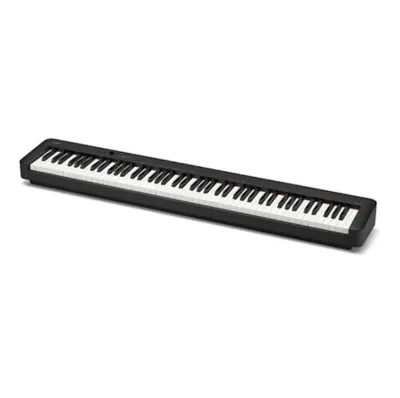
![Casio CDP-S110 Digital Piano [FREE X-STAND] Portable 88 Weighted Keys Instrument for Beginners](https://img.lazcdn.com/g/p/1ca75d35c2c7652c9fdadfa1cdd44a96.jpg_400x400q80.jpg_.webp)
![Casio CDP-S110 Digital Piano [FREE X-STAND] Portable 88 Weighted Keys Instrument for Beginners](https://img.lazcdn.com/g/p/5693253c712767ff3f21ce90308ba7d4.jpg_400x400q80.jpg_.webp)
![Casio CDP-S360 / S160 / S110 Digital Piano 88-Key Scaled Hammer Action II | Authentic Casio SG Warranty [Ready Stock]](https://img.lazcdn.com/g/p/1b920e6eca20123a09ec20aa661b0663.png_400x400q80.png_.webp)
Prices are valid at publication and may change. Please refer to the product page for the latest price.

Fundamental-Focused Learners: Students following a structured piano curriculum need an instrument that encourages focus. Many entry-level keyboards come cluttered with flashing lights, hundreds of sound effects, and auto-play buttons that can distract a beginner from actual practice. This model offers a clean, distraction-free interface, allowing you to focus entirely on reading sheet music, developing finger strength, and mastering proper hand posture.
Mobile Students: Portability is a major advantage for students who do not have a permanent practice space. Weighing only 10.5 kg, this digital piano is easy to move between rooms, pack into a gig bag, or transport to weekly music lessons and jam sessions. Its ability to run on six AA batteries also means you can play in spaces without immediate access to a wall outlet, such as a balcony or a shared community space.
Evaluating Core Features for Beginner Needs
To determine whether this digital piano aligns with your long-term learning trajectory, we must evaluate its core specifications. We break down its keyboard action, sound quality, and connectivity options to show how these technical features translate into practical benefits for daily practice.
Keyboard Action and Touch Response
The most critical component of any digital piano is its keyboard action. The instrument features Casio’s Scaled Hammer Action Keyboard II, which utilizes physical weighted hammers to simulate the feel of an acoustic piano. This system is “scaled,” meaning the keys in the lower register require a slightly heavier touch to press down, while the keys in the higher register feel lighter, mimicking the natural physics of acoustic piano strings.
For a beginner, practicing on weighted keys is non-negotiable for building proper finger strength and control. Non-weighted keyboards or basic synthesizers do not provide the tactile resistance needed to develop independent finger articulation. If a student practices solely on non-weighted keys, they will find it incredibly difficult to play on an acoustic piano during music exams or lessons, as the keys will feel heavy and unresponsive to their untrained fingers.
The key surfaces feature a fine-textured finish that simulates the feel of ebony and ivory. This texture is not just aesthetic; it provides essential grip that prevents your fingers from slipping during longer practice sessions, which is particularly beneficial in Singapore’s warm, humid climate. However, touch preference is highly subjective, and we strongly advise visiting a physical showroom to test the key resistance yourself to ensure it feels comfortable for your hand size and strength.
Sound Quality and Polyphony Limits
The instrument utilizes a stereo grand piano sound engine, delivering a natural, resonant tone that captures the nuances of an acoustic grand piano. Its built-in dual 8-watt speakers are perfectly tuned for standard home practice in a quiet room, providing clear audio without distorting at moderate volumes. While they lack the deep, room-shaking bass resonance found in larger cabinet-style digital pianos, they offer a balanced output that is highly satisfying for daily practice.
A key technical specification to understand is polyphony, which refers to the maximum number of individual notes the piano can produce at the exact same time. This includes the notes you press down with your fingers, as well as the notes that continue to ring out when you use the sustain pedal. This model offers a maximum polyphony of 64 notes.
For absolute beginners, 64-note polyphony is entirely sufficient for early-stage classical pieces, scales, and basic pop songs. You will not experience any dropped notes or abrupt audio clipping during standard play. However, as you progress to intermediate classical repertoire that requires rapid arpeggios and heavy, continuous use of the sustain pedal, a 64-note limit can occasionally cause older sustained notes to cut off to make room for new ones. We recommend verifying these limits against your long-term learning goals on the manufacturer’s official specification sheet.
Connectivity and App Integration
Modern digital pianos leverage external devices to enhance the learning experience and keep students engaged. The instrument features a USB Type-B port, allowing you to connect the piano directly to a computer, tablet, or smartphone. This connection turns the piano into a MIDI controller, enabling compatibility with popular interactive learning software and sheet music apps.
Casio’s official companion application, Casio Music Space, is a powerful tool for beginners. The app allows you to view digital sheet music, play along with interactive lessons, and control the piano’s settings—such as changing tones or adjusting metronome speeds—directly from your mobile device’s touchscreen. This visual interface makes modifying settings much more intuitive than memorizing key combinations on the physical piano.
Before purchasing, it is essential to verify your specific device’s compatibility, whether you use iOS or Android. You will need a compatible USB cable or adapter (such as a USB-to-Lightning or USB-to-USB-C OTG adapter) to establish a stable connection between the piano and your device. These adapters are rarely included in the standard retail package and must be purchased separately.
When to Look for Alternatives
While the Casio CDP-S110 is an exceptional entry-level instrument, it is not the perfect fit for every musician. Understanding its limitations will help you avoid buyer’s remorse down the road.
Need for Extensive Sound Libraries: The instrument is designed to be a streamlined piano, offering only 10 built-in tones, focusing primarily on acoustic and electric pianos, organs, and strings. If your musical interests lie in electronic music production, synthesizers, or you want to experiment with hundreds of instrument voices and drum kits, you will find this selection extremely limiting.
Advanced Rhythm and Sequencing: This model lacks built-in auto-accompaniment, rhythm backing tracks, or multi-track recording capabilities. If you want to compose complex arrangements directly on the keyboard or play along with automated drum loops, you should look at portable arranger keyboards instead.
Professional or Stage Use: The 8-watt speakers are designed for intimate home practice and do not have the projection required for live band performances or larger venues. Furthermore, the lack of dedicated Left/Right auxiliary audio outputs means you must rely on the headphone jack to connect to external PA systems, which is not ideal for professional setups.
If you require these advanced features, we recommend looking at higher-tier digital pianos or dedicated arranger keyboards that offer robust sound engines and professional connectivity options.
Pre-Purchase Checklist for Singapore Buyers
To ensure a smooth buying experience and avoid unexpected costs, keep this checklist in mind before making your purchase:
Space Measurement: Measure your designated practice area carefully. While the instrument is slim, you must account for the physical footprint of the stand, the depth of an adjustable bench, and the clearance needed for the power cord and sustain pedal behind the keyboard.
Accessory Verification: Check exactly what is included in the retail package. The standard box typically includes the digital piano, a basic SP-3 sustain pedal (a plastic foot switch), a music rest, and an AC power adapter. For a proper playing posture, you will need to purchase a sturdy stand and an adjustable keyboard bench separately.
Warranty and Support: Ensure you buy from an authorized local dealer in Singapore. This guarantees that your instrument comes with a valid local warranty, protecting you against manufacturing defects and ensuring access to official repair services.
Frequently Asked Questions (FAQ)
Can I use headphones with the Casio CDP-S110 for silent practice?
Yes, the instrument features a standard 3.5mm stereo mini-jack for headphones, allowing for completely silent practice at any time. This is particularly useful for Singaporeans living in high-density housing where sound travels easily between units. When choosing headphones, check their impedance rating. Standard consumer headphones with low impedance (under 32 ohms) will work perfectly and provide excellent volume levels without requiring an external headphone amplifier.
Does the Casio CDP-S110 come with a stand and bench?
No, the standard retail package does not include a stand or a bench. It is sold primarily as a portable keyboard unit. However, many authorized music retailers in Singapore offer bundle deals that package the piano with a matching wooden stand, an X-stand, or an adjustable bench. Always read the product listing or bundle description carefully before checking out to ensure you have everything needed for a complete setup.

Community discussion
Share your experience or ask a question. Comments are reviewed before publication.