
The Casio CT-S1 is a highly popular option for those starting their musical journey, but whether it is the right choice depends heavily on your long-term learning goals. If you are looking for a compact, budget-friendly instrument to learn basic music theory, practice simple melodies, and explore keyboard playing, it offers an excellent entry point. However, if your primary goal is to master classical acoustic piano technique, you will need to carefully evaluate its physical key action and specifications against the demands of traditional piano training.
Key Action and Feel: Checking the Physical Response
When learning the piano, the physical response of the keys is critical for developing finger strength and proper playing technique. The Casio CT-S1 features 61 full-size keys, which is standard for portable keyboards but fewer than the 88 keys found on a traditional acoustic piano. While 61 keys are sufficient for beginner method books and early-stage pieces, you will eventually run out of range as you progress to intermediate classical repertoire.
It is essential to verify the touch response mechanism of any keyboard you consider. The CT-S1 offers touch-sensitive keys, meaning the volume changes depending on how hard or soft you strike them. This allows beginners to practice basic dynamics and musical expression. However, these keys are semi-weighted rather than fully weighted. They do not use a graded hammer action mechanism to simulate the physical resistance of real piano hammers. If your long-term goal is to transition to an acoustic piano, you may find the transition challenging without the finger strength developed on a fully weighted keyboard.
Products mentioned in this guide
![Casio CT-S1 Digital Keyboard [FREE X-STAND] Portable 61 Keys Musical Instrument for Beginners](https://img.lazcdn.com/g/p/b5064a19d39246a082cd6dc113375f7c.jpg_400x400q80.jpg_.webp)
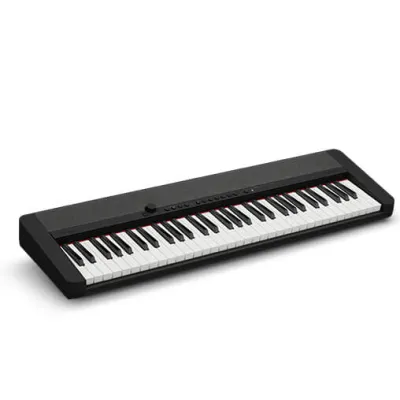
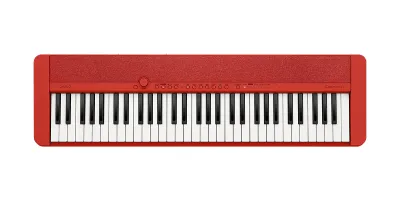
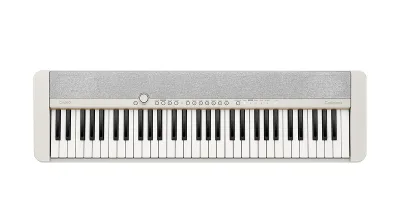
Prices are valid at publication and may change. Please refer to the product page for the latest price.
Learning Tools and App Connectivity for Self-Study
For self-directed learners, a keyboard’s educational features can significantly impact practice consistency. The Casio CT-S1 focuses on a minimalist design, omitting the cluttered buttons and built-in LCD screens found on many beginner keyboards. Instead of extensive onboard step-up lesson systems, it relies on external connectivity to expand its educational capabilities.

To access interactive lessons, you can connect the keyboard to a tablet or smartphone. Check the product specifications to verify compatibility with the manufacturer’s dedicated learning app, Casio Music Space, or other third-party MIDI-compatible software. This connection typically requires a USB cable or a compatible wireless MIDI and audio adapter, which may be sold separately. Utilizing these apps allows you to access digital sheet music, interactive tutorials, and real-time feedback on your playing. Additionally, the keyboard includes a built-in metronome with adjustable tempo controls, which is an indispensable tool for developing steady rhythm and timing from your very first lesson.
Sound Quality and Polyphony for Early Repertoire
The quality of the sound engine plays a major role in keeping beginners engaged during daily practice. The CT-S1 utilizes Casio’s AiX Sound Source, which is designed to produce realistic instrument tones. When practicing piano pieces, you can select the dedicated grand piano setting to emulate the resonance and decay of an acoustic instrument.
Another critical technical specification to check is polyphony, which refers to the maximum number of notes a keyboard can play simultaneously. The CT-S1 offers 64-note polyphony. For beginners playing simple melodies and basic chords, 64 notes are more than adequate. However, as you progress to early repertoire that requires holding down the sustain pedal while playing rapid arpeggios, lower polyphony can cause older notes to cut off abruptly. The built-in stereo speakers are positioned to project sound upward toward the player, providing a clear and immersive listening experience in a typical home room without the need for external amplification.
Portability, Setup, and Daily Practice Environment
One of the most practical advantages of a keyboard like the CT-S1 is its suitability for modern living spaces, such as apartments in Singapore where space is often at a premium. Weighing approximately 4.5 kilograms and featuring a highly compact footprint, this instrument is easy to move, store, or set up on a desk when not in use. It can be powered using the included AC adapter or via batteries for maximum portability.
For a productive daily practice environment, you must ensure you have the right accessories. Verify that the keyboard has a standard 3.5mm headphone jack, which is essential for silent practice during late hours without disturbing family members or neighbors. You will also need to check for a standard quarter-inch sustain pedal input. To maintain proper playing posture and prevent wrist strain, avoid placing the keyboard on a surface that is too high or unstable. Investing in a sturdy, height-adjustable keyboard stand and a matching bench will help you maintain the correct ergonomic alignment during long practice sessions.
Is the Casio CT-S1 the Right Fit for Your Goals?
To decide if the Casio CT-S1 is the right investment, you must weigh your immediate budget and space constraints against your musical aspirations. This model is highly suitable for casual hobbyists, children starting their first music lessons, or adult beginners who want an affordable and space-saving instrument to test their interest before committing to a larger purchase. Its portability also makes it an excellent secondary keyboard for practice on the go.
However, if you are committed to a formal classical piano curriculum, you will likely outgrow a 61-key, semi-weighted keyboard within the first year or two of study. In that scenario, saving for an 88-key digital piano with fully weighted, graded hammer action keys may be a more cost-effective long-term decision. Before making your purchase, always check the official specification sheet or the product box to confirm exactly what accessories are included—such as the music stand, power supply, or any bundled software trials—so you can budget accurately for your complete setup.
Frequently Asked Questions (FAQ)
Can I use this type of keyboard for formal piano exams?
Generally, 61-key semi-weighted keyboards are not suitable for formal classical piano examinations, such as those conducted by ABRSM or Trinity College London. These practical exams typically require an 88-key instrument with fully weighted keys to properly evaluate a candidate’s touch, dynamic control, and technical execution. You should always consult the current syllabus of your specific examination board to verify the exact instrument requirements before registering for an exam.
Do I need to buy a separate sustain pedal for piano practice?
Yes, a sustain pedal is essential for learning proper piano technique, as it allows notes to ring out and blend smoothly, which is required for legato phrasing. While the Casio CT-S1 supports a sustain pedal, the pedal itself is not always included in the standard retail box. You should carefully check the product listing or package contents before purchasing, as you may need to buy a compatible sustain pedal separately to complete your practice setup.

Community discussion
Share your experience or ask a question. Comments are reviewed before publication.