
Choosing your first digital piano is a critical step that shapes your early learning experience, finger strength, and musical ear. The Casio Privia PX-S1100 is a popular option for beginners, known for its exceptionally slim design and modern aesthetic. However, determining whether this specific model is the right investment for your home requires a careful comparison of its technical specifications against standard pedagogical requirements.
To make an informed choice, you must evaluate how the instrument’s key action, sound generation, and physical dimensions align with your personal learning goals. Rather than relying on general marketing claims, a successful purchase depends on verifying the exact features listed in the manufacturer’s documentation. This guide provides a structured framework to help you assess the PX-S1100, plan your practice space, and decide if this instrument fits your budget and musical journey.
Essential Features Every Beginner Piano Student Needs
A student’s first keyboard instrument must replicate the physical and acoustic properties of a traditional acoustic piano as closely as possible. The most fundamental requirement is a full 88-key layout, which ensures you can play any piece of music without running out of range. Standard piano literature and modern learning methods assume the student has access to the full range of keys from the very first lesson.
Products mentioned in this guide
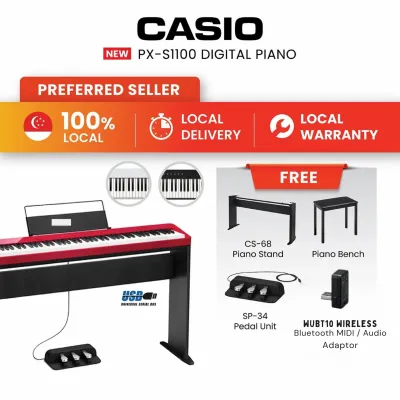
![Casio PX-S1100 Digital Piano [FREE BENCH] 88 Weighted Keys Portable Instrument for Beginners](https://img.lazcdn.com/g/p/08a3280191ee0773ee17d14c20790e30.jpg_400x400q80.jpg_.webp)
![Casio PX-S1100 White Digital Piano [FREE BENCH] 88 Weighted Keys Portable Instrument for Beginners](https://img.lazcdn.com/g/p/a1f8c88e81d7687a7cfc1a2264a5e81b.jpg_400x400q80.jpg_.webp)
Prices are valid at publication and may change. Please refer to the product page for the latest price.
Alongside the key count, fully weighted, touch-sensitive keys are indispensable for developing proper finger strength and hand technique. Acoustic pianos use a system of hammers and strings that resist the player’s touch, requiring physical effort to produce sound. A digital keyboard with weighted keys simulates this resistance, allowing beginners to transition smoothly to acoustic instruments in lessons or exams without feeling fatigued or losing control.
Touch sensitivity allows the instrument to respond dynamically to how hard or soft a key is pressed, which is vital for expressive playing. Without this feature, a student cannot practice playing softly (piano) or loudly (forte), severely limiting their musical development. Early ear training also relies on high-quality acoustic piano samples and adequate polyphony, which is the number of individual notes that can sound simultaneously. High polyphony prevents sustained notes from cutting off abruptly when playing complex chords or using a sustain pedal.
Finally, practical connectivity options support modern learning workflows and consistent practice habits. Dual headphone jacks allow for silent practice at any hour of the day without disturbing family members or neighbors. Data ports, such as USB connections, enable the keyboard to communicate with external devices, opening up opportunities to use interactive learning software and digital sheet music.
How to Verify the PX-S1100 Meets Your Learning Goals
When considering the Casio Privia PX-S1100, you should begin by reviewing the official product manual to confirm how its key action is engineered. The PX-S1100 is specified to feature Casio’s Smart Scaled Hammer Action Keyboard, which is designed to simulate the weight and response of an acoustic piano. You should verify the available touch sensitivity levels in the specifications, as having multiple adjustment levels allows you to customize the key response to your current finger strength.

The sound engine is another critical component to verify through the manufacturer’s technical specifications. The manufacturer specifies that the PX-S1100 utilizes the Multi-dimensional Morphing AiR Sound Source, which aims to reproduce the complex resonances of an acoustic grand piano. Check the manual to confirm the polyphony limit, which is rated at 192 notes, providing more than enough headroom for beginner and intermediate classical pieces.
Daily practice routines benefit significantly from built-in utility functions that you can verify in the product description. A built-in metronome is essential for developing a steady sense of rhythm, while an onboard MIDI or audio recorder allows you to listen back to your performances and identify areas for improvement. Confirming the presence of these tools ensures you will not need to purchase external hardware for basic practice needs.
Modern digital pianos often feature wireless capabilities to simplify connection to smart devices. For the PX-S1100, you should verify the inclusion or compatibility of the WU-BT10 wireless MIDI and audio adapter. This adapter allows you to connect the piano to Casio’s dedicated learning app, Casio Music Space, or other third-party educational software without cluttering your practice area with cables.
Fitting the Instrument Into Your Practice Space and Routine
Before purchasing any digital piano, you must measure your intended practice space and compare it against the physical dimensions of the instrument. The PX-S1100 is designed with a slim depth, with official specifications listing it at approximately 23.2 centimeters, making it one of the most compact 88-key digital pianos available. Verifying these dimensions helps you determine if the keyboard can sit on a standard desk, a portable stand, or a dedicated wooden furniture stand in your living area.
Weight is another crucial factor, especially if you plan to move the instrument between rooms or transport it to lessons. The manufacturer lists the weight of the PX-S1100 at approximately 11.2 kilograms without accessories, making it relatively portable compared to traditional digital console pianos. If you require a stable, permanent setup, you should check the availability of compatible matching wooden stands, such as the CS-68P, which secure the keyboard at the correct playing height.
The physical layout of the control panel and input jacks directly affects your daily comfort during long practice sessions. The PX-S1100 features a minimalist touch-panel interface that remains dark when powered off, which some users find elegant, while others may prefer physical buttons for quick navigation. You should check the placement of the headphone jacks, which are located on the front panel for easy access, and the power input on the rear panel to plan your cable routing safely.
Power management is also worth verifying to ensure safe and energy-efficient operation in your home. The instrument can be powered using the included AC adapter or via standard AA batteries for temporary portable use. Review the manual to confirm the presence of an auto-power-off feature, which automatically shuts down the keyboard after a period of inactivity to conserve energy and protect the internal circuitry.
Deciding If the PX-S1100 Is Your Best First Piano
To decide if the PX-S1100 is the right choice, you must weigh its verified features against your long-term commitment and budget. In Singapore, the PX-S1100 typically positions itself in the mid-range price bracket for beginner instruments, with retail packages often ranging between S$800 and S$1,200 depending on the bundled accessories. If you are uncertain about your long-term commitment, a more basic, non-weighted keyboard might represent a lower initial financial risk, though it will need to be replaced much sooner.
Conversely, if you are committed to classical training, you might want to compare the PX-S1100 against higher-tier digital pianos that feature longer key pivots and more advanced speaker systems. The ultra-compact design of the PX-S1100 means the physical pivot point of the keys is shorter than that of larger cabinet models. While this is rarely an issue for beginners, intermediate players may find it more challenging to play deep into the black keys.
Before making your final decision, it is highly recommended to visit a local musical instrument showroom to test the key feel in person. Pressing the keys yourself is the only way to determine if the resistance and surface texture feel comfortable to your hands. If you plan to order from an online marketplace, always verify the retailer’s return policy, shipping fees, and local warranty terms to protect your investment against potential manufacturing defects.
Frequently Asked Questions (FAQ)
Does the package include a dedicated piano stand and sustain pedal?
When purchasing the Casio Privia PX-S1100, you must carefully check the retailer’s product listing, as packaging configurations vary. The standard factory box typically includes the keyboard unit, a basic SP-3 switch-style sustain pedal, a music rest, and the AC adapter. It generally does not include a wooden furniture stand or a triple-pedal unit. If you prefer a traditional piano setup, you will need to purchase the matching CS-68P wooden stand and the SP-34 triple-pedal board separately, or look for a retailer bundle that includes these accessories.
Can I use the PX-S1100 with third-party piano learning apps?
Yes, the PX-S1100 is designed to connect with a wide range of third-party piano learning applications on iOS, iPadOS, and Android devices. You can establish a connection using a standard USB cable (Type-A to Type-B) connected directly to the keyboard’s USB TO HOST port, though you may need a compatible adapter for your tablet or phone. Alternatively, you can use the included WU-BT10 wireless adapter to establish a Bluetooth MIDI connection, allowing you to interact with educational software without physical cables.
Will I need to upgrade to a different piano as my skills improve?
The PX-S1100 is an excellent tool for the first few years of piano study, covering all the technical requirements of beginner and early intermediate levels. However, as you progress to advanced classical or jazz repertoire that demands highly complex pedaling and rapid, delicate key repetition, you may eventually outgrow the instrument. At that stage, transitioning to an acoustic piano or a premium digital console piano with a more advanced wooden key action and a multi-channel speaker system will help you continue developing your expressive capabilities.

Community discussion
Share your experience or ask a question. Comments are reviewed before publication.